Hey #Millenials! Have you ever attended a local #government meeting? No? Because your more conservative Boomer neighbors have. They're in the audience EVERY. SINGLE. MONTH. And they comment EVERY. SINGLE. MEETING. It drives local policy right and stymies a lot of good work.
@StephenJ_Caruso Old men are supposed to be talking politics in diners. Hipsters are supposed to be talking politics in coffee shops. Demographic shift???
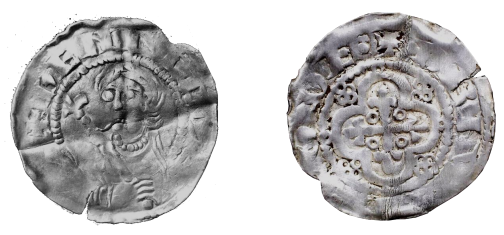
@CMaclean96 @DaveLowe1958 I was about to comment the same. I worked on the finework shillings in Cope and this looks identical. If you look at the edge, you should see a slight concavity at the center and a slight flair towards the sides.
This is incorrect. For starters, the example illustrated here are all modern forgeries. Numismatists today are confident that they were NOT used in brothels, as reverse dies are also paired with various Julio-Claudian portraits.
There were many brothels in ancient Rome, but standard Roman coins, Serters and Denars, were not used and were even banned from being there. Store-bought Tokens were used for Denar and Serters and images on them were often obscene. Reason is understandable, because on all Roman coins there was a head image of emperor of that period. Even picture of emperor entering the brothel was synonymous with humiliating and cursing him. Of course, punishment was severe.
In resorts like Herculaneum and Pompeii, brothels were much busier places.
Over time, such places encouraged their customers to use their own currency, called spintriae in Middle Ages. Prevalence of prostitution in Roman culture can be inferred from concentration of this coin in circulation and abundance of examples at these resorts in southern Italy already mentioned.
This was a fairly common phenomenon for those dealing with day-to-day money in brothel coins in Rome. On the obverse and reverse of coins were various sexual images, often depicting people making love. One of theories regarding the purpose of these coins was to advertise price of sexual activities. Moreover, the transfer of this money between two people (the buyer and the “seller”) created a certain privacy. This was especially useful for high-status people to hide what kind of work they did at night. According to some experts, price of event was written on back of pictures of these coins. It was a system that helped break down language barriers. If this theory is correct, it means that these coins are more of an ordering tool than a form of payment. For example, when you say "I want number 4" at McDonalds, the corresponding money is given.
A Roman brothel coin found in London in 2012 was under investigation. As it is known, Romans set up tents and camps in Ancient Britain. This strengthens the theory that coins in question were used as a tool to cross language boundaries. In Britain the spread of language was even slower, but these coins served to universalize language.
#archaeohistories
Their exact function is not known, but current theories suggest a form of gaming piece or a token with some relation to banqueting.
See Clare Rowan, Tokens and Social Life in Roman Imperial Italy (2023)
@profyarrow Oof, I'm the wrong person to ask! If they aren't letters, I would guess it's some sort of notational system. Sort of like marking the top bill on a stack of singles to indicate how many there are or where they're from or something.
@profyarrow I swear I have seen near-identical graffiti before. These aren't the precise coins I was thinking of, but I think it's enough to suggest they are intentional marks.