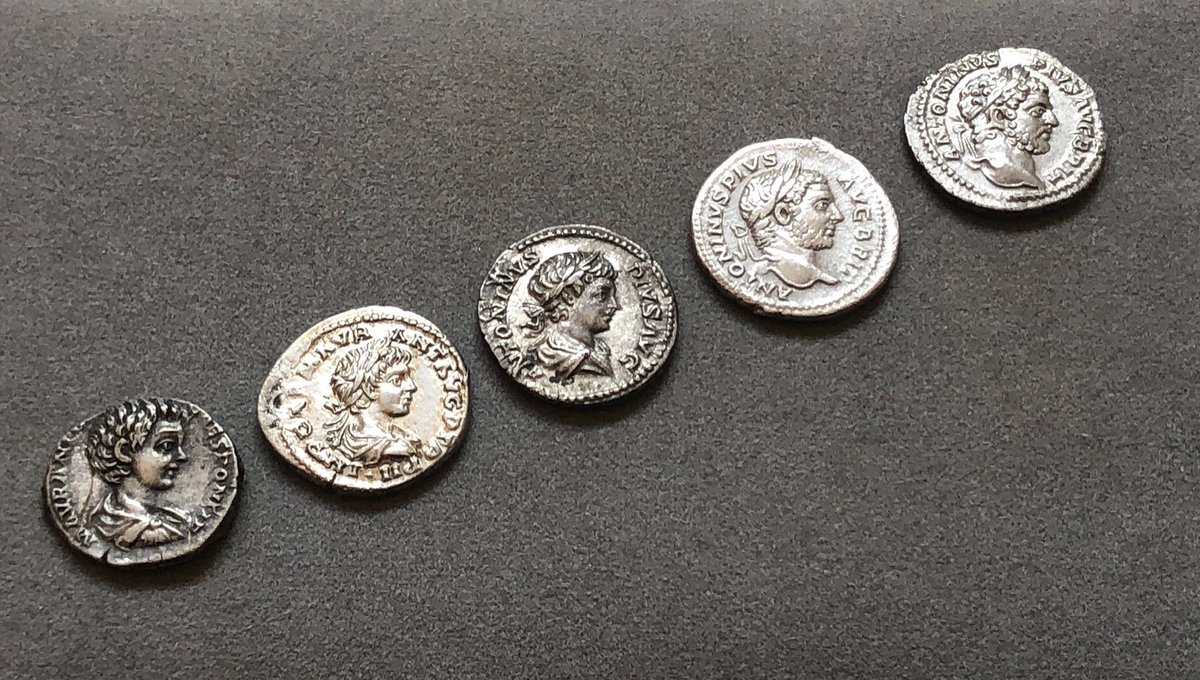
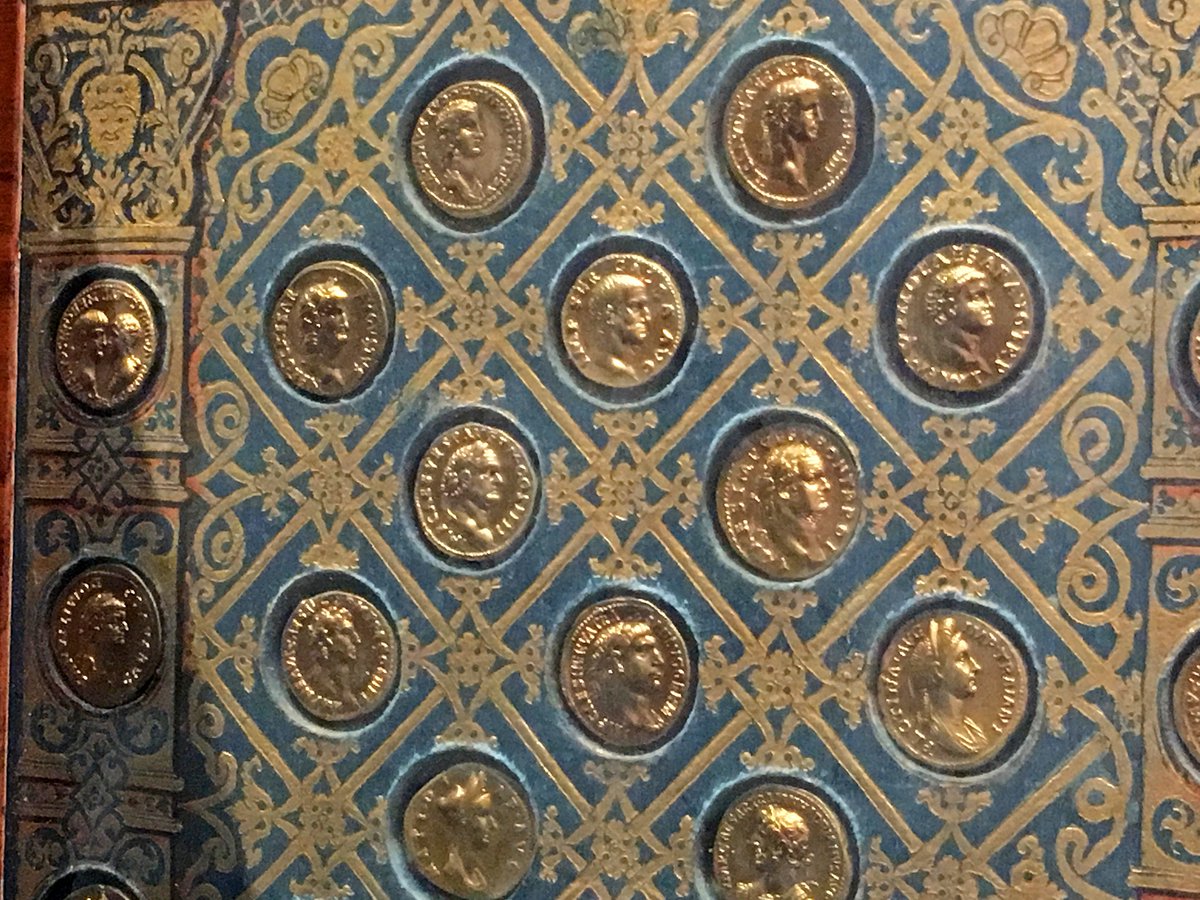
The "Codex Aureus", a literal 'golden book' of the Habsburg's Roman aurei, compiled in 1714 during the reign of Charles VI, Imperial Coin Collection, Vienna Kunsthistorisches Museum #roman#numismatics#austria
#Tetradrachm of #Ptolemy I Soter. Struck in Alexandria, Egypt, in the name of #AlexanderTheGreat ca. 303 BC. The deified portrait is that of Alexander wearing an elephant headdress as a symbol of his conquests in India. #AncientCoins#Numismatics
To item: https://t.co/kt0tHLF1lB
The “Milvian” (Battle) Pontem? This ancient bronze coin features a cross-braced wooden framework bridge (pontoon?) structure traversing water, c. 330 AD. A river (Tiber?) flows between two arched towers which appear to be floating between the river banks. https://t.co/Tr5LmtUsPk
The perfect #HappyNewYear coin: Commodus (assassinated on this day in 192 AD) depicted as Janus, god of new beginnings and transitions; the two faces of Janus look both to the future and the past. May the 2020’s be an ‘Optimus Maximus’ decade for you all! #Roman#2020NewYear
The State Department bureaucracy noticed this controversial MOU request over the holidays probably hoping it would not attract too much attention. Seems like their plan is working— only 10 comments so far.
Excavations in 1931 in #Herculaneum revealed intact roofs near the House of the Loom and these photos show how the imbrices (curved tiles) cap the edges of the tegulae (flat tiles).
[Images: Camardo & Notomista 2017]
This famous shield found at the Athenian Agora (B 262) probably originally hung in the Painted Stoa. It is inscribed, "The Athenians, from the Spartans, at Pylos"—a testament to Athenian pride in their victory over Sparta there in 425 B.C. #FridayFind
https://t.co/dowiiLeP5G




![pompei79's tweet photo. Excavations in 1931 in #Herculaneum revealed intact roofs near the House of the Loom and these photos show how the imbrices (curved tiles) cap the edges of the tegulae (flat tiles).
[Images: Camardo & Notomista 2017] https://t.co/4fZuzaq3dW](https://pbs.twimg.com/media/EGXQlLFX0AAL_wp.jpg)






![pompei79's tweet photo. Excavations in 1931 in #Herculaneum revealed intact roofs near the House of the Loom and these photos show how the imbrices (curved tiles) cap the edges of the tegulae (flat tiles).
[Images: Camardo & Notomista 2017] https://t.co/4fZuzaq3dW](https://pbs.twimg.com/media/EGXQlLHWwAAuwtP.jpg)