The Swedish government told her she owed 102% of her income in taxes. She was 68 years old, a children's book author, and held no political power. Yet, by writing a simple fairy tale, she helped topple a government that had ruled for 44 years.
Stockholm, 1976.
Astrid Lindgren opened her mail to find a tax assessment that defied logic. As Sweden’s most beloved author and the creator of Pippi Longstocking, her books had taught generations of children about courage, independence, and standing up to bullies. Now, she had to face a broken system of her own.
She read the document carefully, did the math, and realized the truth: due to a quirk in the law that combined regular income tax with self-employment fees, her marginal tax rate had hit 102%.
It was not a typo, nor was it a rounding error. One hundred and two percent.
If she paid what they demanded on her extra earnings, she would owe more than she actually made. She would literally go into debt for the privilege of working.
At 68 years old, she could have hired expensive accountants to quietly find loopholes and protect her wealth. She could have done what many powerful people do when systems overreach—safeguard her own position and leave everyone else to figure it out alone. Instead, she picked up her pen.
In March 1976, she published a satirical fairy tale in Expressen, a major Stockholm newspaper. It was called "Pomperipossa in Monismania" (Pomperipossa in Money-mania). It told the story of a successful author who loved her country and worked hard, only to discover a tax system designed to punish honesty and success.
The story was witty, precise, and impossible to misread. Pomperipossa was Astrid; Monismania was Sweden.
The ruling Social Democratic Party—which had governed Sweden for over forty consecutive years—was furious. Prime Minister Olof Palme went on the defensive, dismissively claiming in public that Lindgren was a wonderful storyteller but a terrible mathematician.
Astrid didn't back down. She stood by her numbers, and soon enough, the Ministry of Finance was forced to admit that her math was completely correct.
She began appearing on television and speaking out publicly, pointing out—with the calm, steady patience of someone used to explaining things to people who aren't listening—that a tax system taking more than 100% of a person's earnings wasn't progressive. It was absurd.
That September, Sweden held its national elections. For the first time in forty-four years, the Social Democratic Party lost power. While political analysts pointed to several contributing factors, like economic stagnation and inflation, everyone acknowledged that Astrid Lindgren’s tax revolt had fundamentally shifted the national conversation. She had made it safe to question a system that once seemed untouchable, giving a voice to frustrations millions of people felt but hadn't known how to articulate.
The new coalition government reformed the tax code, cutting the most extreme rates, and Astrid quietly went back to writing children's books.
But she never stopped paying attention. In the 1980s, when Sweden debated a new animal protection bill, she noticed loopholes that would still allow for cruel factory farming practices. She wrote articles, lobbied politicians, and testified before Parliament well into her eighties. In 1988, Sweden passed some of the strongest animal welfare laws in the world. It was widely nicknamed "Lex Lindgren" (Lindgren's Law) because everyone knew she was the driving force behind it.
Astrid Lindgren passed away in January 2002 at the age of ninety-four. Sweden honored her with a state funeral attended by the Royal Family and the prime minister, while thousands lined the streets of Stockholm.
But her true legacy lives on far outside of official ceremonies. Every child in Sweden still reads her books, every debate about fair taxation still references Pomperipossa, and animal welfare advocates across Europe still look to Lex Lindgren as proof of what is possible.
She never ran for office, nor did she ever build a formal political movement. She had no credentials in economics or public policy—just an extraordinary gift for storytelling. But she had spent decades writing about Pippi Longstocking, a girl who refused to follow rules that didn't make sense, stood up to bullies, and never shrank herself to make others comfortable.
Astrid Lindgren simply chose to live her life exactly like the hero she created. When authorities insisted that nonsense made sense, she refused to pretend along with them. And because she spoke up, the world listened.
Bagels & Co., a Kosher bagel shop in Queens, was attacked a few days ago.
A window was broken, and the planters outside the eatery were purposefully knocked over.
But the attacker didn't get what he was looking for.
Instead, hundreds of Jewish customers descended on the building yesterday afternoon, waiting in the hot sun for a delicious lunch and, more importantly, the opportunity to show the world that we will not be intimidated out of public life.
In 1972, Steve Jobs dropped out of Reed College after six months. He had no money, no plan, and no idea what he wanted to do with his life.
But he didn't leave.
He stuck around campus for another 18 months as a drop-in. Slept on floors. Returned Coke bottles for the 5 cent deposits to buy food. Walked 7 miles across town every Sunday night for one free meal at the Hare Krishna temple.
Without required classes, he wandered into whatever looked interesting. One of those rooms happened to be a calligraphy class.
"Reed College at that time offered perhaps the best calligraphy instruction in the country. Throughout the campus every poster, every label on every drawer, was beautifully hand calligraphed."
He learned about serif and sans serif typefaces. About varying the space between letter combinations. About what makes typography beautiful.
"It was beautiful, historical, artistically subtle in a way that science can't capture, and I found it fascinating."
But here's the part that matters:
"None of this had even a hope of any practical application in my life."
A college dropout learning calligraphy. No career path. No clear reason. Just curiosity.
Ten years later, he was designing the first Macintosh.
"When we were designing the first Macintosh computer, it all came back to me. And we designed it all into the Mac. It was the first computer with beautiful typography."
Then he said something that reframes how most people think about planning their lives:
"If I had never dropped out, I would have never dropped in on this calligraphy class, and personal computers might not have the wonderful typography that they do. Since Windows just copied the Mac, it's likely that no personal computer would have them."
A random class taken by a broke dropout in 1972 shaped every computer screen you've ever looked at.
Jobs explained the principle:
"You can't connect the dots looking forward; you can only connect them looking backwards. So you have to trust that the dots will somehow connect in your future."
This is pattern recognition in reverse. Most people try to plan forward, choosing only what seems useful now. Jobs wandered into calligraphy with no plan at all.
The pattern only emerged a decade later. And it changed everything.
"You have to trust in something. Your gut, destiny, life, karma, whatever. Believing that the dots will connect down the road will give you the confidence to follow your heart, even when it leads you off the well worn path."
The dots are always random when you're collecting them. The pattern only reveals itself after.
The best cultures don’t happen by accident.
They’re built with intention.
Dan Lanning said they spent 4 months defining the DNA of their program before ever putting it on a wall.
4 traits:
Connection - because players fight harder for people they truly know.
Growth - win or lose, it's “growth week.” The standard is always improving.
Toughness - handling hard without flinching.
Sacrifice - being okay with the team winning even when you don’t get the spotlight.
That’s leadership.
Not just demanding standards…
but building an environment where people want to live them out.
In 2004, I was a bartender at the Cask 'n Flagon next to Fenway Park. I'll never forget what this series was like in Boston.
Down 3-0, everyone in Boston said, "The curse is real, maybe next year."
Down 3-1, everyone said, "Well, we were bound to win one."
Heading into game 6, the city started to feel different. The series was 3-2, and everyone knew no one had ever come back from a 3-0 hole. Especially not the cursed Red Sox. Still...maybe?
There was no social media back then; everyone watched the same thing at the same time. It was one of a handful of truly shared social experiences I've been a part of. "Where are you watching the game?"
When they won game 6, people started to believe it was destiny. Every single bar and restaurant was showing the game, and people came out of their homes to watch it in public spaces, hoping to be part of something historic. French restaurants, coffee shops, and any place with a TV became a packed sports bar.
I was behind the bar for Game 7. The game was played at Yankee Stadium, but the bars next to Fenway were at capacity for hours before the game. I've never been in an environment like that since; the tension and the excitement, the "what if we actually do this?" People hung on every pitch.
When they made the final out just after midnight, the place exploded. People celebrated, thousands came down to the Fenway area and ran through the streets. I watched the broadcast show people running through the streets as they ran past the bar's windows. No phones, no selfies, no Instagram, just people living in the moment.
Everyone on that team has a special place in Boston sports history. Whenever I see this video, I'm reminded of how incredible sports can be sometimes.
I cannot believe we have to do this.
The New York Times, the paper of record, just published an op-ed accusing the State of Israel of systematic sexual violence against Palestinian detainees, including the claim that Israel is training dogs to rape prisoners.
One of their sources is a man who left his job after multiple people, including minors, accused him of sending them threatening and sexual messages.
The other is Euro-Med Human Rights Monitor, a group whose chairman was sanctioned by Israel as a Hamas operative and who publicly called the testimonies of Israeli women raped on October 7th “fabricated lies.”
The Times is using the words of a man credibly accused of sexually harassing children, and an organization led by a man who denies the rape of Jewish women, to build a case that Israelis are sexual predators.
This is the most serious accusation you can level at a country. It demands the most serious sourcing. The Times decided the opinion section was good enough.
It is not good enough.
And spare me the crocodile tears. The same people who spent two years calling the rape victims of October 7th liars, who told us “believe women” had an asterisk when the women were Jewish, are about to share this op-ed with tears in their eyes. They never cared about sexual violence. They cared about who they could pin it on.
I do not want to spend my day writing about this. But when the largest newspaper in the world launders this against my people, silence is complicity.
@nytimes owes our community, and its readers, an apology.
Joe Montana wasn’t supposed to make it.
In 1975, he was last on the depth chart at Notre Dame - even behind two walk-ons.
• 7th string as a freshman.
• Struggled to see the field.
• Missed 1976 with a separated shoulder.
• Started 1977 as 3rd string.
• Led 3 legendary comeback wins in 1977.
• Finished with a national championship in 1977.
Montana said, “So much credence was put on how you practice. And how you practice is how you play.”
He studied relentlessly, learned every protection, and stayed ready for his moment.
When it came - he delivered.
“Don’t complain about not getting a chance and then be unprepared when you finally do.” – Joe Montana
Alex Cora didn’t trade Mookie Betts.
Alex Cora didn’t miss out on multiple big-name free agent signings.
Alex Cora didn’t lowball Alex Bregman.
Alex Cora was asked to manage a team whose “leader” is a 22 year-old kid with 9 career homers.
Sell the team.
BRILLIANT
Rubio announces if you support Hamas then you are NOT entering the US, not even as a visitor.
“This is not about free speech, this is about people who do not have a right to be in the United States to begin with”
Luke Falk shared a Mike Leach story that stopped me cold:
Two kids. One rich. One poor.
Every training camp, Coach Leach told his team about these 2 kids.
The rich kid has two choices.
Get soft. Get entitled. Expect everything handed to him because he was handed more.
Or take the resources, the coaching, the opportunities, and compound them into something greater.
The poor kid has two choices too.
Say nobody gave him anything. Blame the world. Make his circumstances the reason he never became what he could have been.
Or outwork everyone in the room.
Luke said the locker room had both. Kids from wealth. Kids from nothing. Kids with every advantage. Kids who scraped for every inch.
Same choice for all of them.
Ownership or victimhood.
Fuel or excuse.
The rich kid can waste the head start or build on it.
The poor kid can drown in the deficit or weaponize it.
Greatness doesn't come from where you start.
It comes from which kid you choose to feed.
Credit to @coachlukefalk for continuing to share golden nuggets about Coach’s legacy
Competitive character is not “wanting to win.”
Everybody wants to win.
It’s whether your habits get sharper when you’re frustrated. Whether you can take hard coaching without making it personal. Whether you stop negotiating with the standard the second it gets uncomfortable.
Pressure doesn’t build character.
It audits it.
NEWS: Chaim Galbut has committed to Duquesne, where he'll aim to become the first observant Orthodox Jew to play four years of DI college basketball.
The 6'7 forward observes the Sabbath and was discovered on social media by Duquesne, throwing down dunks in a yarmulke.
Albert Einstein died with a speech for Israel in his hands.
This day (April 17) in 1955, the world’s most celebrated genius was hospitalized with internal bleeding. It was just 9 days before Israel’s 7th Independence Day & Einstein was scheduled to give a major televised address (to air on ABC, NBC & CBS) - he had a draft of his speech with him in the hospital.
Sadly for the world, Albert Einstein passed away the very next day. He was never able to share any more of his genius or the speech he intended to give marking Israel’s rebirth days later.
However, you can read here what Einstein intended to say:
“The establishment of Israel is an event which actively engages the conscience of this generation ... It is a bitter paradox to find that a State which was destined to be a shelter for a martyred people is itself threatened by grave dangers to its own security. The universal conscience cannot be indifferent to such peril.”
Einstein had been a passionate Zionist for decades.
In 1921, he toured America with Chaim Weizmann raising funds for Hebrew University in Jerusalem. The following year, he lectured there and proudly declared Jews were once again becoming “a force in the world.”
In a letter to Jawaharlal Nehru in 1947, Einstein wrote:
“Long before the emergence of Hitler I made the cause of Zionism mine because through it I saw a means of correcting a flagrant wrong ... The Jewish people alone has for centuries been in the anomalous position of being victimized and hounded as a people.”
When Israel offered him the presidency (a largely ceremonial position) in 1952, he declined with characteristic humility:
“I am deeply moved by the offer from our State of Israel ... but I lack both the natural aptitude and the experience to deal properly with people and to exercise official functions.”
Here, in the picture below, he is smiling and laughing with Israel’s first Prime Minister - David Ben-Gurion. Einstein supported the project for Jewish sovereignty from its earliest days. He even spoke at the 1939 Palestine Pavilion (a purely Jewish pavilion at the time) at the New York World’s Fair, calling the Zionist project “a refuge in a stormy sea of turmoil.”
Yet even in America, Einstein faced antisemitism. Princeton University wouldn’t hire Jewish professors until the late 1940s. That’s right - Princeton would not hire EINSTEIN to teach at its university because he was a Jew.
So while people often say “Einstein taught at Princeton,” that’s inaccurate. In truth, he worked at the Institute for Advanced Study, a prestigious but entirely separate entity located in the town of Princeton that had to be created by American Jews as a haven for refugee scholars escaping Nazi-occupied Europe.
While Einstein largely rejected organized religion, he described himself as having a “deep religiosity” rooted in wonder at the universe. For Einstein, Judaism was a cultural and ethical tradition; and he maintained his strong solidarity with the Jewish people.
Regarding being a Jew, Einstein once famously remarked:
“A Jew who abandons his Judaism is like a snail that abandons its shell. It’s still a snail.”
Einstein’s mind helped change our understanding of the world. Einstein’s heart never abandoned his people.
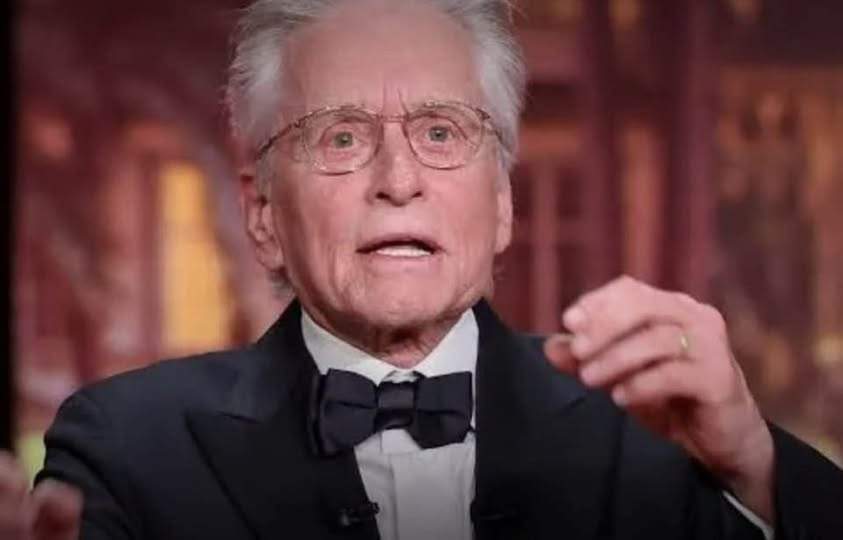
When a giant actor like Michael Douglas speaks, the entire media landscape trembles.
He’s not the kind of actor who posts a story and deletes it an hour later. He doesn’t write vague tweets that can be interpreted in every direction. Michael Douglas stood in front of cameras and stated plainly: the world has completely lost its moral compass.
Israel, he said, is on the front line of the struggle. Not a struggle over territory. Not a struggle for power. A struggle over the values of the entire Western world—democracy, freedom, human rights. All the things people love to talk about on Twitter but aren’t willing to fight for.
He outright rejected, without hesitation, any attempt to compare the IDF to extremist terrorist organizations. Such a comparison, he said, is an insult to reality. One side fires rockets at civilians and hides behind children. The other side calls civilians before a strike and tells them to leave. Comparing the two isn’t criticism—it’s moral blindness.
And then he said the sentence that summed it all up: a democracy must defend itself with force. Not with posts. Not with statements. With force.
Michael Douglas is not just an actor. He is a proud Jew who isn’t ashamed, doesn’t apologize, and doesn’t bow his head. While all of Hollywood stays silent out of fear, he stands tall.