Everyone knows the sky went dark at the Crucifixion of Jesus Christ. Almost no one knows it will happen again, exactly 2,000 years later.
So I tracked the sky of the year 33. What I found is hard to call a coincidence.
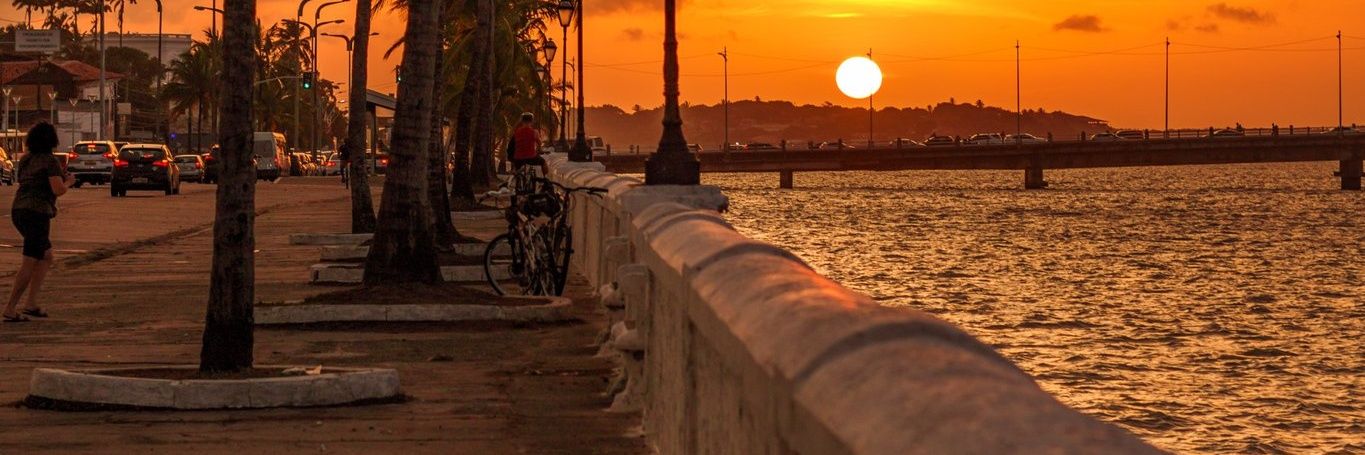
In the third month of the year 33, when Jesus was 33 years old, there was a total solar eclipse. The Sun went black in the constellation of Pisces, the Fish, the symbol of Jesus Christ. It marked the dawn of the Age of Pisces and the rise of Christianity. Its shadow crossed the icy ocean off Antarctica, at the bottom of the world.
Two weeks later, on April 3, 33 AD, the date many scholars give for the Crucifixion, the Moon rose over Jerusalem in eclipse. The Sun into darkness. The Moon into blood. Weeks later, at Pentecost, Peter preached those exact words (Acts 2:20).
The Age of Pisces had begun.
Now jump forward exactly 2,000 years.
March 30, 2033: a total solar eclipse in Pisces. This time the shadow curves around the Arctic, over the top of the world.
Two weeks later, on April 14, 2033, during Passover, the full Moon turns blood red, and it will be visible from Jerusalem. It is one of four blood moons in a row, a tetrad.
Same month. Same constellation. Same sequence: a black Sun, then a blood Moon at Passover.
And it gets stranger.
The Morning Star, Venus, shines beside the black Sun in both eclipses.
In both years, Venus passes between the Earth and the Sun right at the spring equinox: March 21 in 33 AD, and March 20 in 2033, the very day of the equinox. The equinox is the point in the sky that measures the Ages. Venus "dies" into the Sun and is reborn as the Morning Star.
In the last chapter of the Bible, Jesus says: "I am the bright and morning star." In the same chapter: "I am Alpha and Omega, the beginning and the end."
A beginning and an end, 2,000 years apart.
One more detail: the 2033 eclipse is the last total eclipse of its family, Saros 120, which has cast its full shadow on Earth since 1059. It closes a cycle.
South Pole and North Pole. Two eclipses at opposite ends of the Earth, like the two fish of Pisces, tied together but swimming in opposite directions. The masculine and the feminine. The life force and the spirit.
Make of this what you will.
But the signs are in the stars.
Peter wasn’t aiming for the ear.
Nobody swings a sword at an ear. You swing at a head.
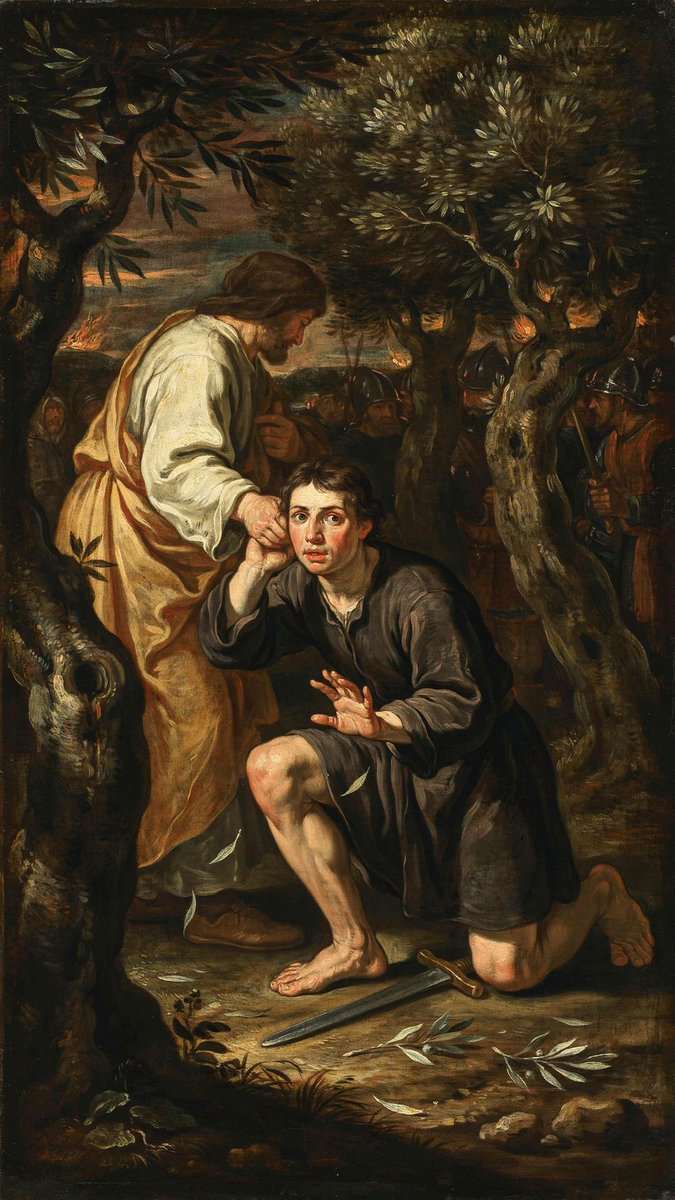
The man flinched, or the fisherman missed. The blade came down the side of his skull and took the ear with it.
All four gospels record it. Each one adds something.
Matthew and Mark say one of the disciples struck the high priest’s servant.
Luke, the physician, says it was the right ear. And Luke alone records what happened next.
John gives the two names the others leave out.
John 18:10. Then Simon Peter, having a sword, drew it, and smote the high priest’s servant, and cut off his right ear. The servant’s name was Malchus.
Picture the garden. A band of soldiers and temple officers, with lanterns and torches and weapons. Eleven frightened men with two swords between them.
Luke 22:49. Lord, shall we smite with the sword?
Peter didn’t wait for the answer.
He was trying to stop the cross. Again. He had tried once with words, and Jesus had called him Satan for it. Now he tried with steel.
John 18:11. Put up thy sword into the sheath: the cup which my Father hath given me, shall I not drink it?
Jesus had just spent the night on His face, accepting that cup. Peter tried to knock it out of His hand.
Then this.
Luke 22:51. And Jesus answered and said, Suffer ye thus far. And he touched his ear, and healed him.
Malchus didn’t ask. No faith is recorded. No thank you is recorded. He was a slave of the high priest, and he had come with the mob to take Jesus by force.
It is the only wound in the gospels made by a weapon. The weapon belonged to a disciple. The victim was an enemy.
And Jesus healed him.
Luke 6:27. Love your enemies, do good to them which hate you.
He had preached that on a hillside. Here He did it in the dark, with torches in His face.
Now look at the order.
John 18:12. Then the band and the captain and officers of the Jews took Jesus, and bound him.
Then. After the ear.
The last thing those hands did before the ropes went on was heal a man who came to arrest Him. It is the last healing recorded before the cross.
Think about what it did for Peter.
He had just attacked the high priest’s servant with a sword in front of armed soldiers. Men were crucified for less.
Nobody arrested him. At the trial, nobody mentioned it. They hunted all night for a charge against Jesus and never used that one.
There was no wound to show. The miracle that restored Malchus’s ear saved Peter’s life.
Jesus cleaned up the mess before He let them tie His hands.
Hours later, Peter is standing by a fire in the high priest’s courtyard. He has denied Jesus twice. Then a third man speaks.
John 18:26. One of the servants of the high priest, being his kinsman whose ear Peter cut off, saith, Did not I see thee in the garden with him?
Malchus’s relative.
The final denial came from a man who had watched Peter swing. Peter’s own violence walked up to the fire and identified him.
He had been brave enough to draw a sword against a crowd. He could not survive one question from that man’s family.
One more thing. Malchus saw Jesus speak three words and put the whole arrest party on the ground. Then he felt that hand on the side of his head.
And they still bound Him.
A miracle can touch your own body and leave your heart where it was.
Now you.
Some of you are Peter.
You’ve swung for Jesus. In an argument. In a comment section. At your own kitchen table. You were sure you were defending Him.
Look at what Peter cut off. An ear.
Romans 10:17. Faith cometh by hearing.
You cannot preach to a man whose ear you just took off. Jesus has never needed your sword. He has spent a long time healing what His followers cut.
Put it away.
And some of you are Malchus.
The wound didn’t come from an enemy of Christ. It came from one of His people. Someone who carried His name swung at you, and you have been bleeding ever since.
He did not do that.
Look at whose hand is on the wound.
He stopped His own arrest to reach for you.
He still heals ears.
Vcs aí da administração ou da contabilidade, me digam se estou certo ou errado.
Penso assim, se eu comprei por 5 e vendi por 15, então 15 é meu lucro Bruto e 10 é liquido, fico com o liquido e com os 5 faço mais 10 e agora tenho 20 liquido, com esses 20 invisto e terei 30 de bruto e 20 de liquido e assim por diante, o que faz ter prejuíso é mexer no lucro bruto, ou não saber a hora de mexer no liquido para se investir mais. Na minha opinião isso vai de vender chiclete no trem, até ser um super varejista.
Most people read Psalm 23 and picture a quiet religious moment.
But a shepherd reads it like a field manual.
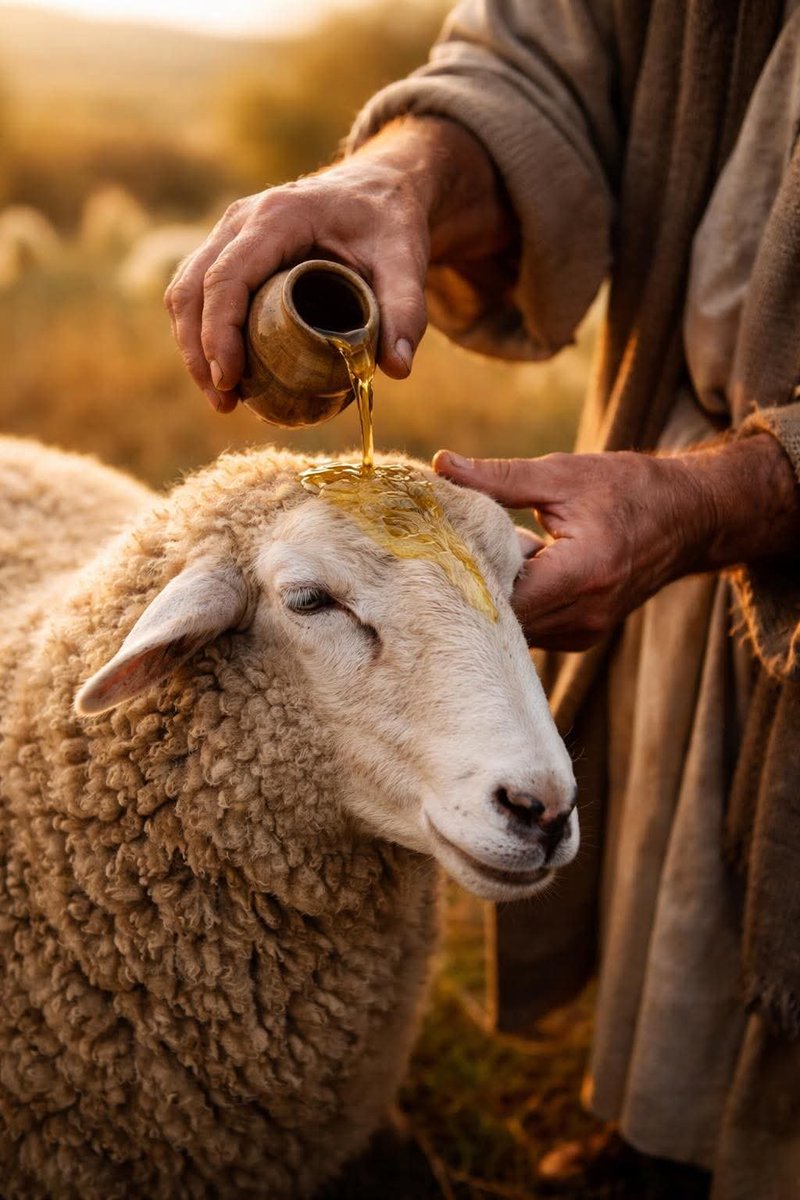
When David wrote, “You anoint my head with oil,” he wasn’t being poetic. He was being practical.
In the ancient world, sheep were constantly attacked by tiny enemies. Flies that laid eggs in their noses. Parasites that crawled into their ears. Infections that started small and ended with madness, injury, or death.
A sheep under attack would panic.
Rub its head against rocks.
Injure itself trying to escape what it couldn’t see.
So the shepherd would do something intimate and intentional.
He would take oil.
He would place his hands on the sheep’s head.
He would cover the vulnerable places.
The nose.
The ears.
The eyes.
Every opening where harm could enter.
That oil didn’t make the sheep stronger.
It made the sheep protected.
When the oil was present, the flies stayed away.
The irritation stopped.
The restlessness calmed.
Peace returned.
David wasn’t saying, “God makes me impressive.”
He was saying, “God keeps me safe.”
This wasn’t about appearance.
It was about covering.
The anointing wasn’t a spotlight.
It was a shield.
God’s anointing is not always loud.
Sometimes it’s silent prevention.
The battle you never had.
The attack that never landed.
The breakdown that never happened.
The chaos that never reached your mind.
Some of the greatest evidence of God’s presence in your life is not what you survived, but what never touched you.
The shepherd anointed the head because that’s where direction lives.
That’s where decisions form.
That’s where fear begins.
And God says, “Let Me cover that.”
You’re not crazy.
You’re not weak.
You’re not failing.
You might just need fresh oil.
Because when the Shepherd anoints you, the enemy doesn’t need to be defeated.
He just needs to stay away.
“You anoint my head with oil; my cup runs over.”
Not because life is easy.
But because I am covered. 🕊️
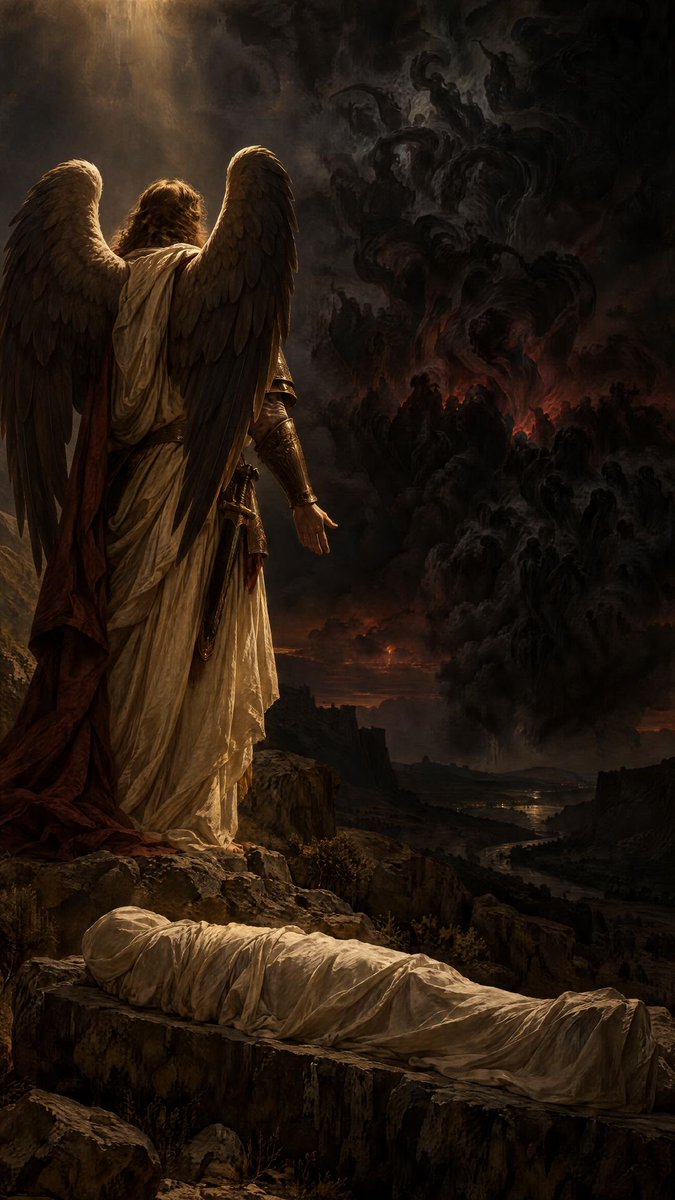
There’s a fight in the Bible between an archangel and the devil. Over a dead man’s body. And it’s mentioned in one verse.
“But when the archangel Michael, contending with the devil, was disputing about the body of Moses, he did not presume to pronounce a blasphemous judgment, but said, ‘The Lord rebuke you.’” - Jude 9
That’s all we get. No setting. No outcome. Jude mentions it in passing, as if his readers already knew the story.
So what is going on?
Start where Moses’ life ends. Deuteronomy 34 says Moses died on the edge of the Promised Land, and then something no other person in Scripture receives:
“He buried him in the valley in the land of Moab... but no one knows the place of his burial to this day.” (Deuteronomy 34:6)
He buried him. God Himself. No grave anyone could find. No tomb to visit.
Why the secrecy? We aren’t told. But Israel had a habit of turning sacred things into idols. Centuries later they burned incense to the bronze serpent Moses made in the wilderness, until King Hezekiah smashed it (2 Kings 18:4). A shrine at the grave of the greatest prophet who ever lived would have been almost irresistible.
Jude’s readers seem to have known a story about what happened at that burial. The early church writers Clement and Origen said it came from an ancient Jewish book, sometimes called The Assumption of Moses, whose ending is now lost. In the traditions that survive, the devil lays claim to the body. Some say he accused Moses of being a murderer, remembering the Egyptian Moses killed (Exodus 2:12).
Whatever the details, Jude’s point isn’t the fight. It’s how Michael fought.
Michael is the archangel. The great prince who stands guard over God’s people (Daniel 12:1), who leads the armies of heaven against the dragon (Revelation 12:7). If any created being had the standing to put Satan in his place, it was him.
And he wouldn’t.
He “did not presume to pronounce a blasphemous judgment.” He didn’t mock. He didn’t insult. He didn’t rebuke the devil in his own name. He said only: “The Lord rebuke you.”
Those exact words appear once before in Scripture. In Zechariah 3:2, Satan stands accusing the high priest Joshua, and the answer is the same: “The LORD rebuke you, O Satan!”
Even the mightiest angel knew whose authority it was.
Jude wrote this as a warning. He was facing false teachers who “reject authority, and blaspheme the glorious ones” (v.8), people who talked big about spiritual powers they didn’t understand (v.10). Arrogance dressed up as spiritual boldness.
It’s a warning for us too. Spiritual authority isn’t a volume level. It isn’t how loudly you rebuke, or how casually you talk about the devil. Michael’s greatest strength in that moment was knowing he wasn’t the source of it.
But here’s what makes this verse beautiful.
There is One who rebuked Satan in His own authority.
In the wilderness, after forty days of temptation, Jesus didn’t say “the Lord rebuke you.” He said: “Be gone, Satan!” (Matthew 4:10). And the devil left.
The authority Michael deferred to is the authority Jesus holds.
And where did Moses’ story end? Not in a lost grave in Moab. Over a thousand years later, Moses stood on a mountain in the Promised Land he was never allowed to enter, talking with Jesus in glory (Matthew 17:3).
The devil wanted that body. God had other plans for it.
You don’t stand against darkness in your own name.
You stand in His.