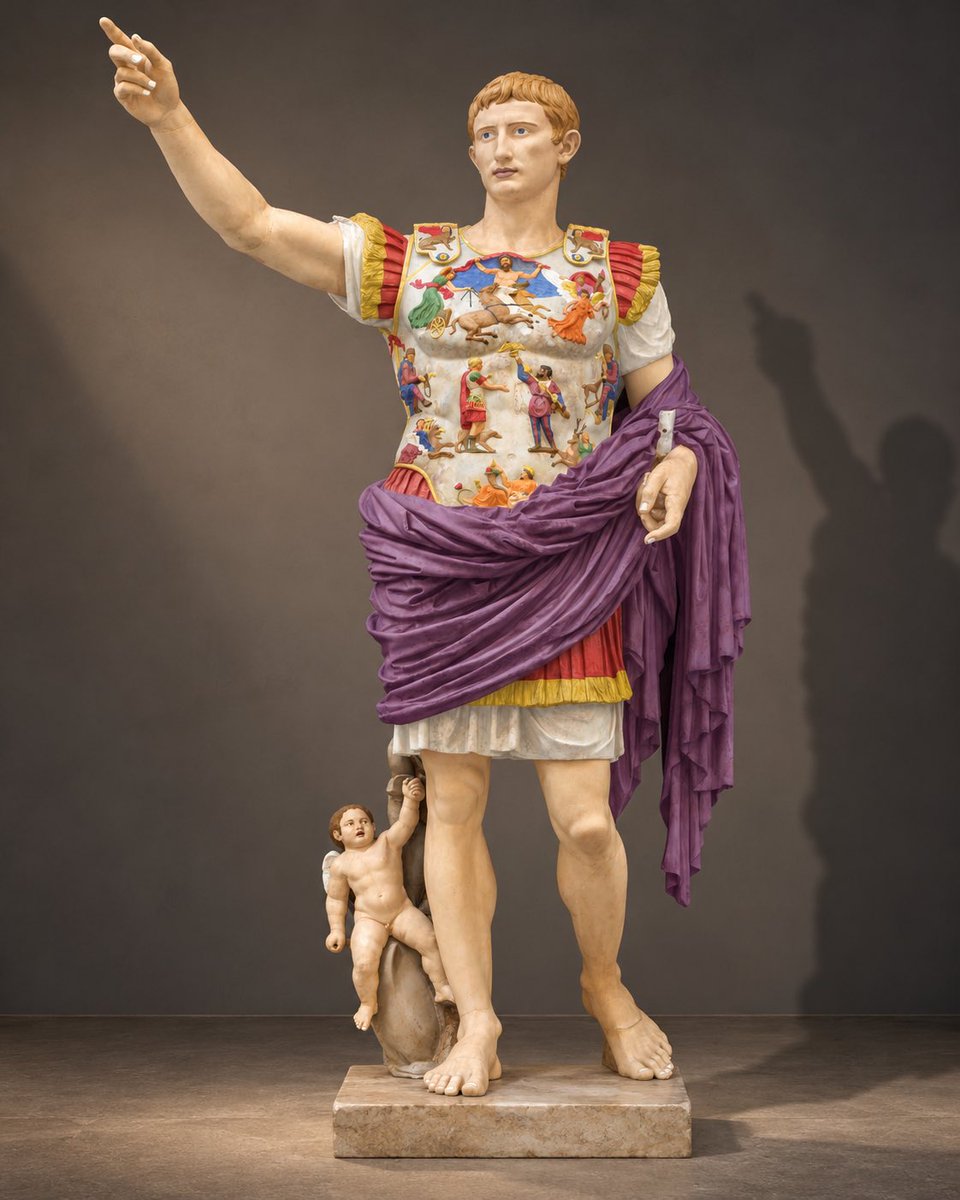
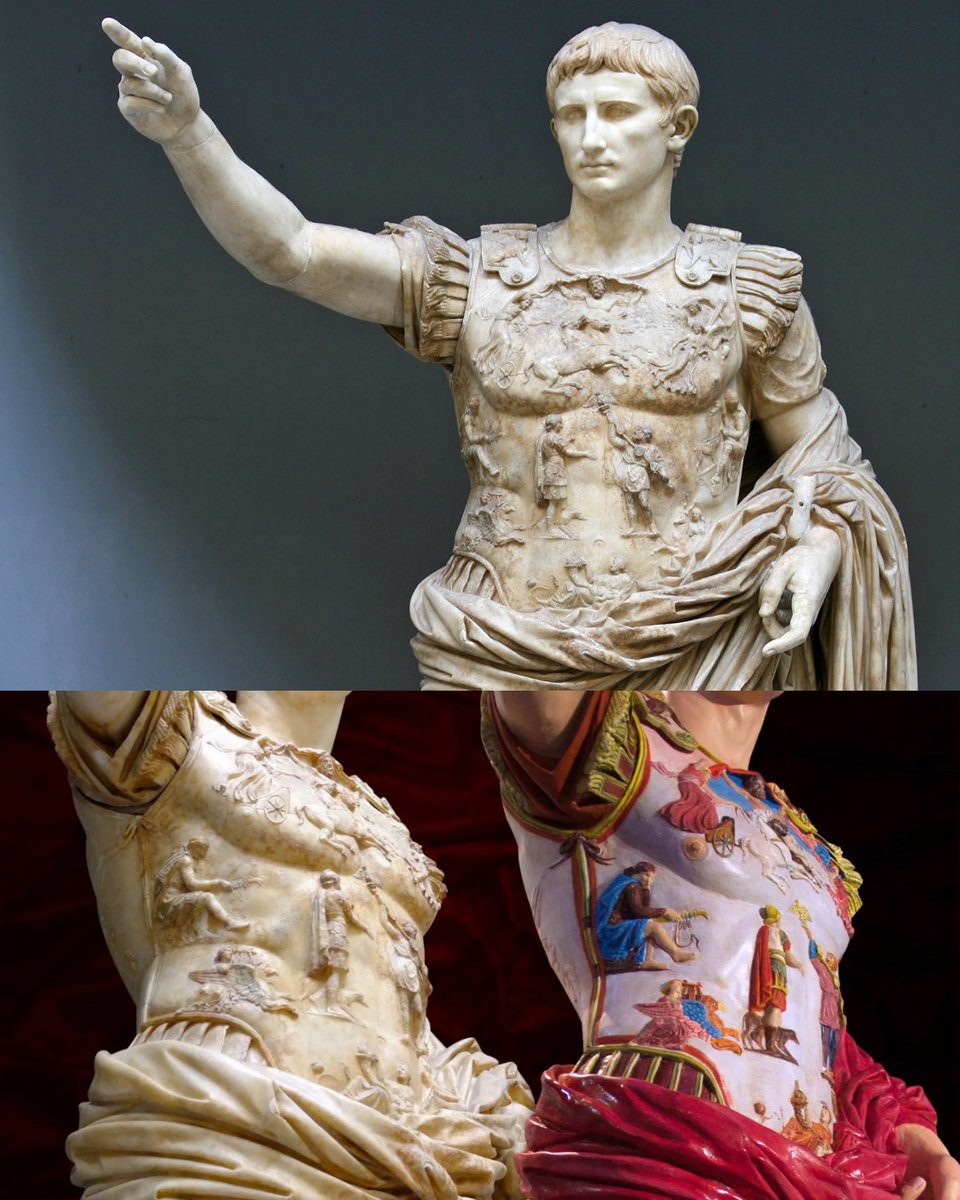
Roman Imperial sculpture, the Augustus of Primaporta: today (left), with possible spear (next), bronze original from c. 20 BC (next), and painted marble copy from c. 14-29 AD (last). 🇮🇹
Greek Hellenistic victory monument from Pergamon (left); detail of Greek bronze original The Dying Gaul by Epigonos (?) (2nd image); Roman marble copy with possible coloring (3rd image); The Dying Gaul today (right). 🇬🇷🇫🇷🇮🇹
Stages of the Spear Bearer (Doryphoros): Polykleitos’ Greek, Classical, bronze original (lost); bronze with inlaid eyes, color, and copper overlays; Roman marble copy with supports and color; present day. 🇬🇷🇮🇹
If you had seen this statue in ancient Rome, you might not have recognized it because it wasn’t white: his cloak was a vivid red, parts of his armor were picked out in blue, and the whole figure was painted to look as alive as possible...
It’s the Augustus of Prima Porta, a 2000 years old portrait of Rome’s first emperor, found on 20 April 1863 in the ruins of the country villa of his wife Livia, just outside Rome, where she spent her last years after his death in AD 14.
He’s dressed as a general, his cloak wrapped around his hips and his right arm raised as if he were about to speak to his troops, yet his feet are bare, which in Roman art was normally a privilege of gods and heroes.
When it was dug up, the first scholars to study it could still see faint traces of paint, and in 2002 restorers at the Vatican Museums began a careful cleaning that brought many more back to light. Analysing those traces with X-rays, they found bright red on Augustus’s tunic and cloak, and blue on the fringe of his armor and on the trousers of the Parthian on his breastplate, enough for the museum to create a full painted replica of how he may once have looked.
The breastplate carries the story he most wanted people to remember: at its centre, a Parthian king hands a Roman officer the military standards that Rome had lost in 53 BC at Carrhae, one of the most humiliating defeats in its history, and which Augustus managed to recover in 20 BC through negotiation rather than war. Above them the sky god spreads his cloak across the heavens, and below lies the goddess of the Earth, as if the whole universe had turned out to witness the moment...
Assyrian relief sculpture: today (left) and proposed color reconstruction (right). Lamassu from Palace of Sargon II, Dur-Sharrukin (Khorsabad), Iraq. 🐂🦁🦅🧔🏻♂️🇮🇶