This is a wrong understanding of the law. Form 6 is meant for eligible citizens whose names are not on the voter list. Section 31 of the RPA, 1950 punishes false statements, not a genuine application to get one’s name included. A genuine voter applying through Form 6 is not committing any offence.
California doesn't have the highest housing costs in America because of "Trump" in Washington.
It's because of Democrat policies in Sacramento.
So let's change them. Just Try It!
Just a request to everyone, folks! 🇮🇳
Keep supporting Indian players & teams throughout the year like this!!! 🙏
You can praise them or criticise them, just keep talking about them.
Keep following them. Keep supporting them.
ONE DAY, WE’RE GONNA BE A TRULY SPORTING NATION WITH LOTS OF CHAMPIONS! 🇮🇳🥹
- Tanmay, The Khel India 🫡
Get well soon Captain Smit Machchhar ❤️ You are a real Hero ! Thank you for your bravery, thank you for your courage & most of all thank you for putting others ahead of you when it mattered the most 🙏 May Bajrangbali always protect you. Loads of love n light from a frequent flyer & a proud fellow Indian 💕🇮🇳💕 Ting !
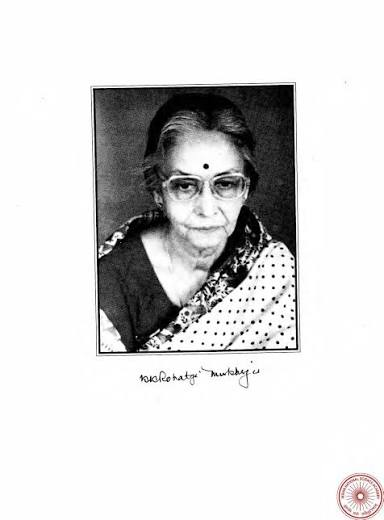
In 1952, a woman from Patna handed in a doctoral thesis at Oxford.
It was called Photochemistry of Anthracene Derivatives and contained the initial idea of electron transfer in excited molecules, which other scientists later established firmly.
She never became a household name. This is the story of how she began that work in India, with whatever light and instruments she could find.
Krishna Kamini Rohatgi was born on 2 August 1924 in Patna, in a joint family. She was the 2nd of 12 children. Her father had studied chemistry, though he never finished his MSc, and went into business.
But he built a library and a chemistry lab inside the family home, so that his children could learn science at their own doorstep.
Her mother, Shakuntala, believed in modern education. Music and painting were part of the lessons too, and the memoir calls Krishna Kamini an expert sitar player and a good painter.
She was schooled in Calcutta, and the marks kept coming. A 1st class with distinction in the 1939 Matriculation. An ISc with a star in chemistry in 1941. Honours in chemistry from Scottish Church College in 1943. In 1945, an MSc in physical chemistry from Calcutta University, 1st class, 2nd in order of merit.
In 1948 she began research at Jadavpur, under S. N. Mukherjee, on how the glow of anthracene in solution is quenched by chlorinated hydrocarbons. It was a puzzle that would hold her interest for her whole career.
In 1950 she went to Oxford to work under E. J. Bowen, FRS, and in 1952 she earned her DPhil.
Then she came home to a country where, the modern, systematic study of photophysics and photochemistry had barely been introduced in the early 50s.
She started it anyway, with the instruments and light sources she could find.
For her early research, her father gave her an instrument called a Lumetron. It is still there in the department.
In 1956 she went to Berkeley on a Fulbright/Smith-Mundt grant, measuring the lifetimes of excited molecules: how long a molecule holds its glow before letting go.
In 1958 she joined Jadavpur University as a reader, and in 1974 she became a prof.
She married the chemist Sushil Kumar Mukherjee, who later became vice-chancellor of Calcutta and Kalyani universities.
In 1964, she founded the Indian Photobiology Group, later the Indian Photobiology Society, bringing physicists, chemists, biologists and doctors together. That same year it was affiliated to the Association Internationale de Photobiologie.
Between 1966 and 1968 she organised 3 summer institutes for college teachers.
In 1978 she worked on flash photolysis at the Royal Institution with Sir George Porter, a Nobel laureate. The same year she published Fundamentals of Photochemistry. It received warm reviews from New Scientist and Photochemistry and Photobiology.
And in 1988, at the 10th International Congress on Photobiology in Jerusalem, she was president of the Association Internationale de Photobiologie, a post she held from 1984-88, and gave the presidential address.
Her former colleague, remembers how she arrived at Jadavpur at 10 each morning, driving her own car, one hand pulling a bag stuffed with books and papers, journals sliding from the other.
Her idea of rest was the library of the Indian Association for the Cultivation of Science, across the road. If she found an article worth reading, she photocopied it for her colleagues.
She spent her life measuring how long a molecule can hold its glow. In the last 10 years of her life, her memory slowly faded.
She died on 31 December 2009 in Nagpur, at her sister's home. She had no children of her own. As per her students, they lost an affectionate mother and a mentor.
Here is the question I cannot put down: if the light a molecule holds lasts only a flash, how long does the light a teacher leaves behind last?
P.S. Almost everything here comes from the INSA Biographical Memoir of Krishna Kamini Rohatgi-Mukherjee (2010), written about her by Subhash Chandra Bera, a former colleague.
A Muslim feels safe when around any other religion.
Any other religion fears for it's life when sorrounded by Muslims.
Thats the religion of peace for you
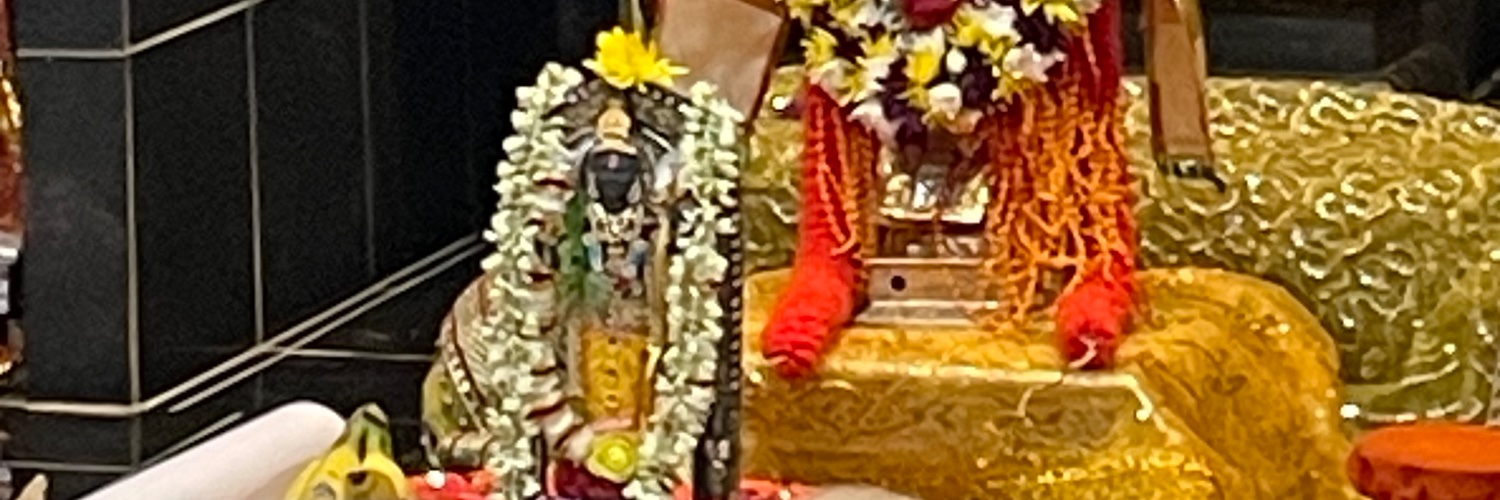
When Rama leaves for the forest, Kausalya's heart trembles, and prayers rise.
She invokes the guardians of the directions and the celestial powers: Brihaspati, the Moon, the Sun, Kubera and Yama, and asks them to protect her son as he enters the wilderness of Daṇḍaka.
And perhaps this is the deepest form of Matruprarthana.
Shivprabhat 🙏🏽
When Rama leaves for the forest, Kausalya's heart trembles, and prayers rise.
She invokes the guardians of the directions and the celestial powers: Brihaspati, the Moon, the Sun, Kubera and Yama, and asks them to protect her son as he enters the wilderness of Daṇḍaka.
And perhaps this is the deepest form of Matruprarthana.
Shivprabhat 🙏🏽
There was this lady here last year who had shifted to London and was taking potshots at India, you know the typical UPI jibes and stuff, it was later revealed that her parents were babus and when people called her out for that she ran away, babus and uffsers have looted this country like leeches in every way possible, and their children live a lavish life on that corrupt wealth while dissing the common people and this land.
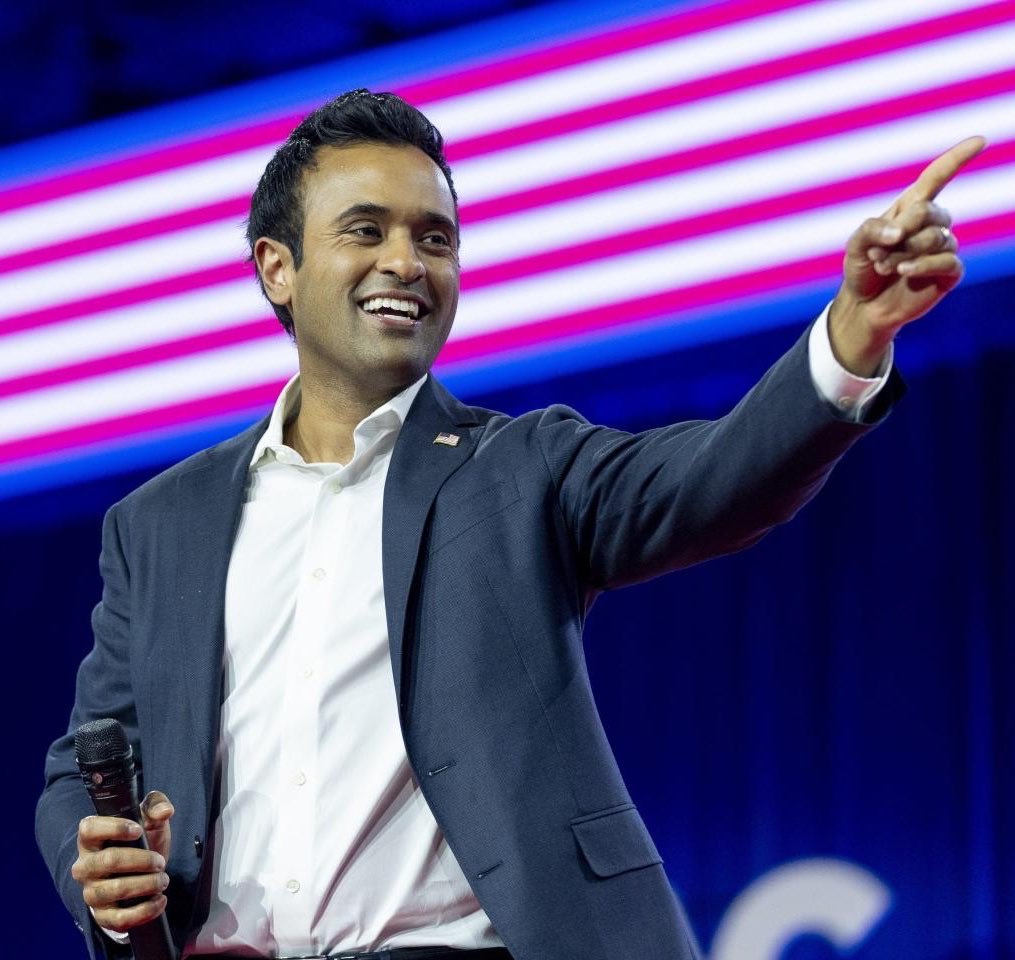
Can we talk about Vivek Ramaswamy? After decades of Conservatives having no representation in the Governor’s mansion, we FINALLY have a chance for MAGA to win!
Enter our hero Vivek Ramaswamy! A candidate ready to bring about real change to Ohio! Out with the establishment old guard and in with someone who actually wants the American people to succeed!
Abolish state income tax? Yes! Enshrine voter ID into the state Constitution? Yes!
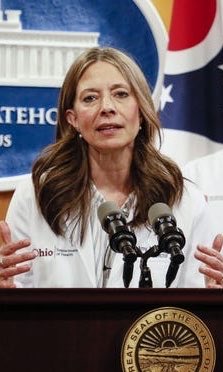
Ohio doesn’t need a crazy (maybe drunk) lockdown doctor like Amy Acton. We need a real patriot! We need Vivek Ramaswamy!