@Brutu24@aryaitihasa Indexes are garbage when u have to shift to the Middle East to clean toilets
Indexes say that the birth rate of kerala mias is greater than that of UP HINDUS.
Breeding like mosquitoes
@Brutu24@aryaitihasa Ur upper section of brain seems hollow,i am From haryana and communist leeches like u are looting and engulfing money from it.
Christian and mias contribute less than 2% to taxes
Stop engulfing hindu money u shameless cunt
https://t.co/vMNFSHVmRl
Dravidian signifies Place, Not Race
HINDUS ARE ONE !
Travid : Tra=3 +Vida=Ocean
"The land Surrounded by 3 Oceans"
~used first by adiShankara
Travid>Dravida>Dramila>Tamiz/TAMIL
#Thread Begins
For ease of those learnings Sanskrit through my posts, I will pin this post on my profile and attach all posts on Sanskrit in sequence so that one could learn from start and find posts easily.
उत्तराखंड-
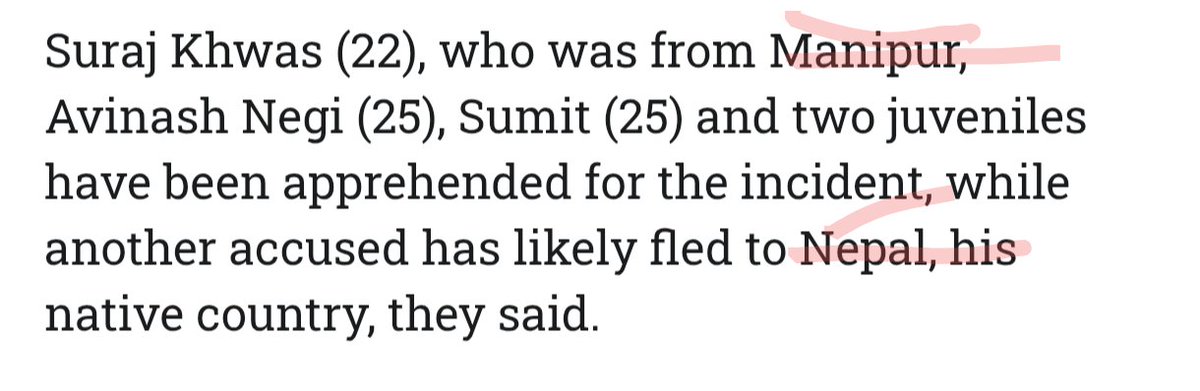
देहरादून में त्रिपुरा के छात्र एंजेल चकमा (उम्र 17 साल) की चाकुओं से गोदकर हत्या कर दी गई। एंजेल कुछ सामान खरीदने गए थे। तभी कुछ युवकों ने चाइनीज, चिंकी, मोमोज जैसे कमेंट्स किए। विरोध करने पर हमला बोल दिया। 17 दिन तक इलाज चला, फिर मौत हो गई।
वो देहरादून की जिज्ञासा यूनिवर्सिटी में MBA के छात्र थे। इस हत्याकांड में 5 आरोपी शौर्य राजपूत, अविनाश नेगी, सूरज खवास, आयुष बदोनी और सुमित गिरफ्तार हैं। मुख्य आरोपी यश अवस्थी की तलाश जारी है।
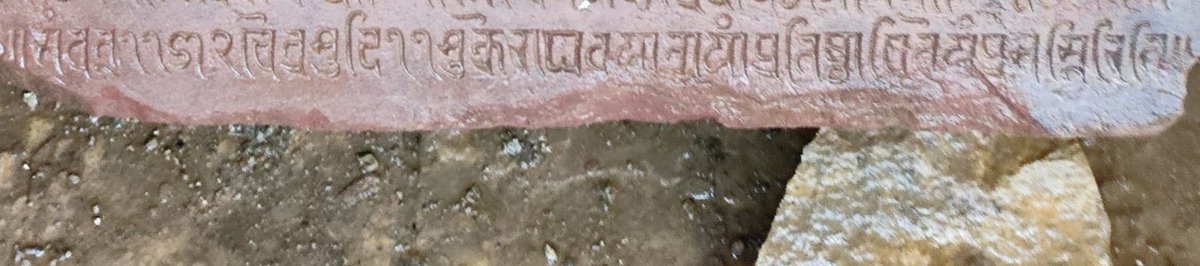
Inscription mentioning the Vedic 'Sapta Soma Yajna' tradition was found on a Yupa pillar at Prayagraj, dated to 2nd C A.D., it mentions a minister Sivadatta who performed 7 soma sacrifices
विद्वानग्निष्टोम पंचमम्
षष्ठस्तु प्रथमत्क्रतोःवान्युपमग्निष्टोमत्तु
सप्तमम् वाजपेयिकः
1]
New Inscription Found: A Milestone in the History of Rama Worship
We are delighted to announce a new archaeological discovery shedding light on the history of Rama worship: the oldest praśasti inscription devoted to Shri Rama.
A new, unpublished, 11th century inscription of Kirtivarman Chandela issued by his minister Vatsaraja was found by Sh. Rudra Vikrama Srivastava (Archaeologist) during an exploration at the Garhwa Fort in Prayagraj, Uttar Pradesh.
The reconstruction was meticulously done by Sh. Kushagra Aniket (Economist and Sanskrit Scholar), with help from Dr. Shankar Rajaram (Presidential Awardee and Sanskrit Scholar). The significance of the inscription became apparent after reconstruction efforts.
This inscription is the oldest praśasti (eulogy) to Shri Rama discovered in India. It predates the famous Vishnu-Hari inscription. It is also the earliest archaeological evidence of ceremonies surrounding the Rama-Navami festival. The inscription references the exile of Rama and mentions the construction of a temple (matha) at an earlier āśrama (resting place).
The inscription is on a large stone slab and consists of 16 lines, and barring a couple of letters on the left margin of every line, the rest is in an excellent state of preservation. The language is Sanskrit engraved in the characters of the 11th century Nagari script. The inscription was erected in 1095 CE (VS 1152) on the eleventh day of the waxing half of Caitra (Caitra śukla ekādaśī) at the conclusion of a ceremonial procession (Rāghava-yātrā).
The inscription is expected to be published in the near future.


![Param_Chaitanya's tweet photo. Inscription mentioning the Vedic 'Sapta Soma Yajna' tradition was found on a Yupa pillar at Prayagraj, dated to 2nd C A.D., it mentions a minister Sivadatta who performed 7 soma sacrifices
विद्वानग्निष्टोम पंचमम्
षष्ठस्तु प्रथमत्क्रतोःवान्युपमग्निष्टोमत्तु
सप्तमम् वाजपेयिकः
1] https://t.co/0vbi0qbxg8](https://pbs.twimg.com/media/F7VwDMiaIAA5BET.jpg)







![Param_Chaitanya's tweet photo. Inscription mentioning the Vedic 'Sapta Soma Yajna' tradition was found on a Yupa pillar at Prayagraj, dated to 2nd C A.D., it mentions a minister Sivadatta who performed 7 soma sacrifices
विद्वानग्निष्टोम पंचमम्
षष्ठस्तु प्रथमत्क्रतोःवान्युपमग्निष्टोमत्तु
सप्तमम् वाजपेयिकः
1] https://t.co/0vbi0qbxg8](https://pbs.twimg.com/media/F7VwDtBaUAAADIJ.jpg)