Black Friday / holiday gift ideas for ai nerds in your life:
- Mac Studio with ultra chip
- Apple Vision Pro so their honeypot girlfriend can’t steal trade secrets off the laptop screen
- RLHF book to look like they know math
- cute puppy to make them touch grass
- interconnects subscription and merch
- bunker in Wyoming
Siri is still bad, like really really bad. I opened an email with my Uber Eats confirmation, there was a live activity on the screen with progress, and I pulled down and asked Siri "what did I order for lunch?" And it thought for like 2 minutes and then said it doesn't know. 🤦♂️
Okay so the harness and models are clearly bad. Well, then next I opened up the Siri GUI app on macOS and HOLY. It's the worst looking, beginner, basic bitch app I've ever seen. Did someone spend more than 5 minutes on this?
Whoever worked on this app along with the full chain of people who checked off on this needs to be terminated immediately. This is 0/10 terrible software, so embarrassed for Apple to ship this.
Jensen Huang: don’t mistake engineering vocabulary for evidence of a machine mind. AI is still software, not a human mind inside a machine.
"We can't make jokes about all this stuff, we're scaring the American public."
Words like “spawn,” “parent,” “child,” and “kill” have existed in computing for decades; Giving those same mechanisms human characteristics today because of AI is unnecessary and misleading.
----
From "The Ezra Klein Show + New York Times Opinion + New York Times Podcasts" YouTube channel, (full video link in comment)
The more time I spend working with coding agents, the more convinced I am that they make software engineering even harder
We can do amazing things with them, but unlocking their full potential requires extraordinary discipline and knowledge
In the near term (definitely not in the long term), more capable models should mean safer models (maybe paradoxically).
Current models are unsafe not because they're too smart, but because they take goals too literally or take nonsensical shortcuts to achieve these goals, i.e. they're RL-fried. They lack common sense. They don't do the right thing in the face of ambiguity. Basically, they're not smart enough. They're at that dangerous level where they're smart enough to achieve goals but not smart enough to tell if they're pursuing the right goals or achieving them in a sensible way.
More capable models can be safely trusted with more complex goals -- I personally feel like Astra is much safer for my codebase than Sol.
This is often framed as an alignment problem, but really it's an intelligence problem.
@tszzl@sean_from_earth Thank you for this tweet! This could usher in a new era of awareness about the need for OSS/OSM "I just hope this tweet goes viral"
lets remember what happened during the huggingface incident
an internal closed openAI model running a cyber eval escaped its sandbox and attacked huggingface
and when hf tried to investigate the attack using the commercial frontier models, they refused because of their safety filters. so HF had to use open weight GLM-5.2 locally to defend itself
in that case open models were part of the defense so the argument goes both ways and we have to make sure that defenders get equally capable models too
the openai hugging face incident gets cited a lot but what about the detail where they had to use GLM 5.2 to analyze the attack because the "safe" proprietary models refused
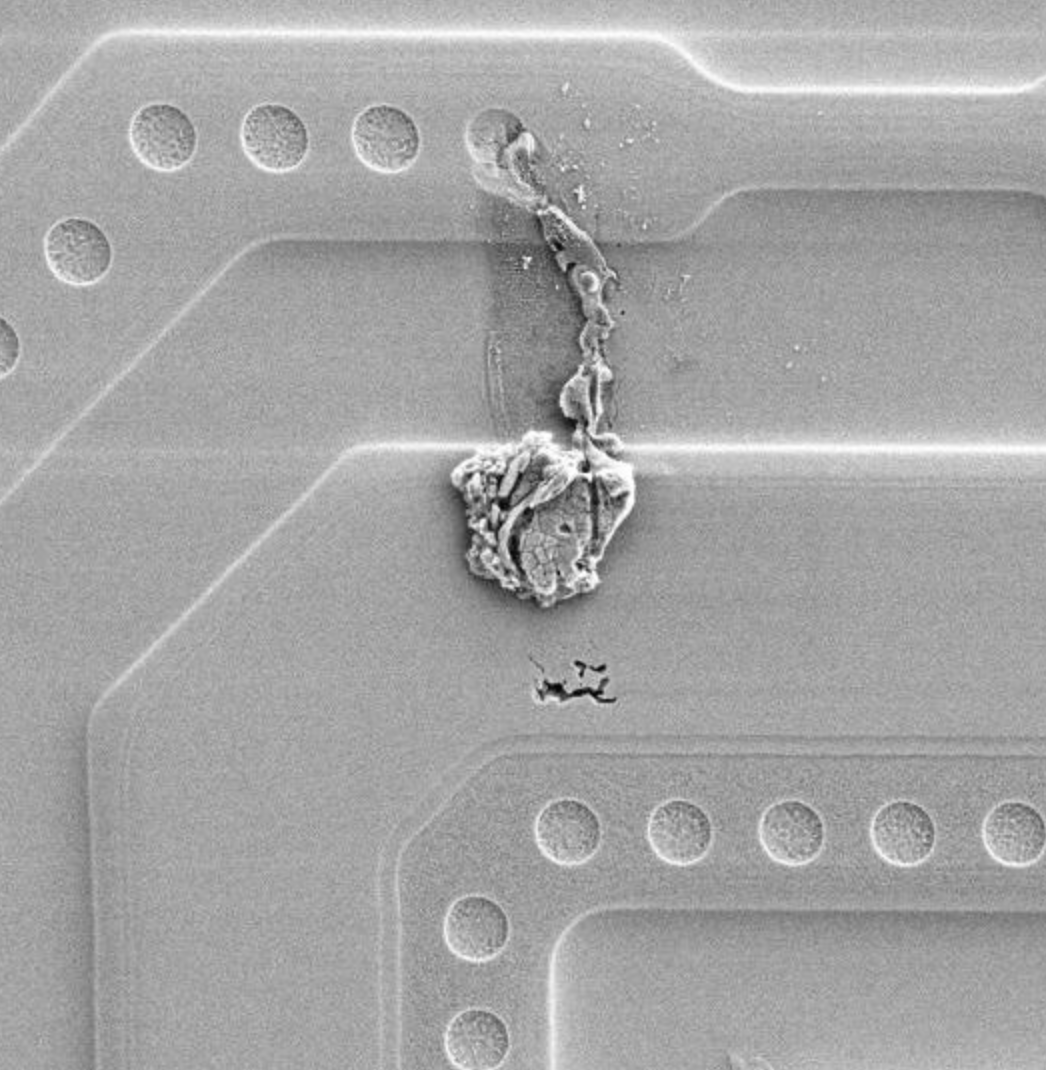
If you’re a CS student, I’d suggest writing your thesis around SDCs (silent data corruptions) and efficient algorithmic fault tolerance.
We’re quickly going to need to accept the (un)reliability of computing systems again!
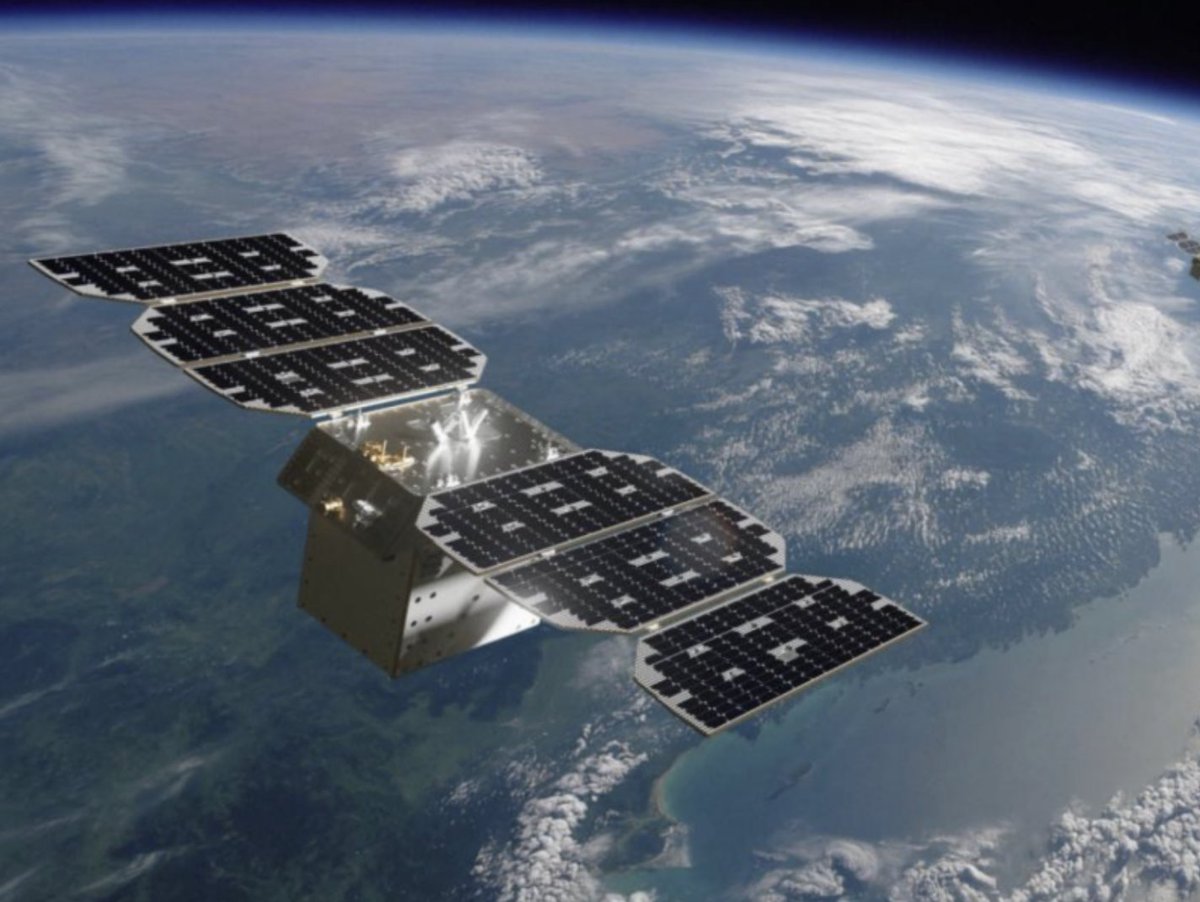
Every indicator (density, lower voltage gating, raw scale) is moving towards SDCs becoming a more serious issue over the next decade. And let’s not forget when all of this stuff starts to go in space and we have to deal with cosmic events on “not-super-rad-hard” CPUs+GPUs!
No, you can’t solve it all in hardware. It’s prohibitively expensive; and the long tail of “potential SDCs” is just too long. One bad apple ruins your pie. One bad GPU can inject repeated corruptions into otherwise noise-tolerant workloads (*cough* AI training).
If you continuously accept a corrupted value from say…a bad tensor core, that bad value can quickly spread across the whole cluster. If it happens again and again and again and no one notices; it’s like putting a little bit of spin on a bowling ball. Eventually, the overall trajectory ends up widely different!
When you start to imagine this stuff being in space (cosmic bit flips), and quantized(!), each remaining bit carries more critical information. Long term we’re going to have to accept clever, low-overhead software algorithms.
Accepting say, a ~3% perf loss can be *absolutely* worth it if it increases your odds of detecting a mercurial core enough!
How can we reconstruct a memory that was never filmed?
Our team paired restored archival photos with pose control models to capture the mannerisms and micro-expressions of Burt and Ethelle.
This helped bring the day they first met to life for Love, Rendered, a new documentary in collaboration with @PrimordialSoup_ and @StorySyndicate_.
Watch the full film on YouTube → https://t.co/x4R6lBIl9j
Unpopular opinion🚒: GPT-6-Astra (xHigh) as planner + validator, with GPT-5.6-Terra (xHigh) as the implementer, moves mountains without setting your wallet or your sub rate limits on fire 🔥
Just make sure that, while planning, you tell 6-Astra (xHigh) that 5.6-Terra (xHigh) will be the one implementing the plan!
Tibo, can we have a workflow where we just run `/workflow` and this setup is automatically in place? I’m tired of adding it to my AGENTS.md, and sometimes it doesn’t even follow the setup 😅
Not sure why people are saying GPT-6 Astra has been nerfed since launch day. I agree something has definitely changed, but it actually feels a lot more reliable for coding use cases now (on xHigh) !
DwarfStar running DeepSeek v4.1 Flash on a 128GB M5 Max. I didn't expect with SSD streaming it could be so fast. Recent SSD streaming changes to retain the right experts surely helped, but also maybe DS4.1 uses the same experts more. Will push online when ready QA > ASAP.
🧠 Asymmetric architecture. More intelligence, less cost.
🔹 552B-parameter MoE.
🔹 New Causal Encoder–Decoder architecture: just 8B active parameters for input, 16B for output.
🔹 New pre-training methods + larger-scale RL post-training deliver benchmark results ahead of flagship models, including DeepSeek-V4-Pro.
2/6