Spent so much time managing sessions via @t3dotcodes on my phone this weekend that my wife thinks I’m cheating. How can I explain this addiction to her guys 😬
Earlier this year I wrote five codebases from scratch in five months while running engineering at ZAR. Almost a thousand commits. I've been coding for thirty years and I've never shipped like that.
The cost of thinking fell through the floor, and I happened to be standing where it landed with arms wide open. That’s not news.
Companies sort people into departments because no single head used to be able to hold a problem big enough to matter. Now one person with a fleet of agents can do the work of a whole department, and the walls between departments are getting kicked down. Not really news either.
At my day job I have a front row seat to a second wall coming down that gets a lot less coverage. ZAR serves people in Bangladesh, Pakistan, Nigeria and other big emerging markets. For most of their lives, the country they were born in decided what the financial system would let them do. A dollar account was out of reach. Now we put one on a cheap phone, and it’s yet another way that where you live matters a lot less than it did. And you know what a lot of them are using those dollar accounts for? To buy subscriptions to Claude. To knock down some walls for themselves.
Presumably at some point those walls were load-bearing in some way? Look around, though. The walls are all coming down and the building is still standing. So when somebody fights hard to keep a particular wall standing, ask what it's protecting for them. And I hate to be that guy, but look at their social class and skin color too.
Cause you know what? There's so many brown-skinned kids who could have built the thing you're reading this on, if the walls weren’t in their way. They could have come up with the viral content you shared. They could have authored the books that trained the people that wrote the software that is used to generate that viral content.
Now that the walls are coming down, I suspect the world is about to meet a lot of those kids. That’s another billion or more people adding to global diversity of creativity and innovation. What an exciting time to be alive.
New on our Engineering blog: Creating in-house source control.
In May, we merged around 2,500 code changes per day. In September, we merged more than 30,000 per day. As a result, we became bottlenecked by developer infrastructure built for human (rather than agent) scale.
Here, we share how we built a new version control system—and fully migrated our monorepo from git—in five months: https://t.co/wzNkwHs7IN
Today we’re announcing Personal Agent Protocol — an open standard @Meta and @SierraPlatform are developing along with industry partners at @Genesys, @instinct, @RocketOTD, @Shopify, @stripe, and @Walmart. It will help define how personal agents interact with businesses and is open for anyone to implement.
Read more: https://t.co/9cWCVlCv8H
Spent a week comparing agent frameworks. Biggest takeaway: they've converged. The loop, tools, and memory are commodities now.
The moat is in what you build on top.
We'll be spending a lot more time trying to understand the outputs of language models. A few thoughts, tips & tricks:
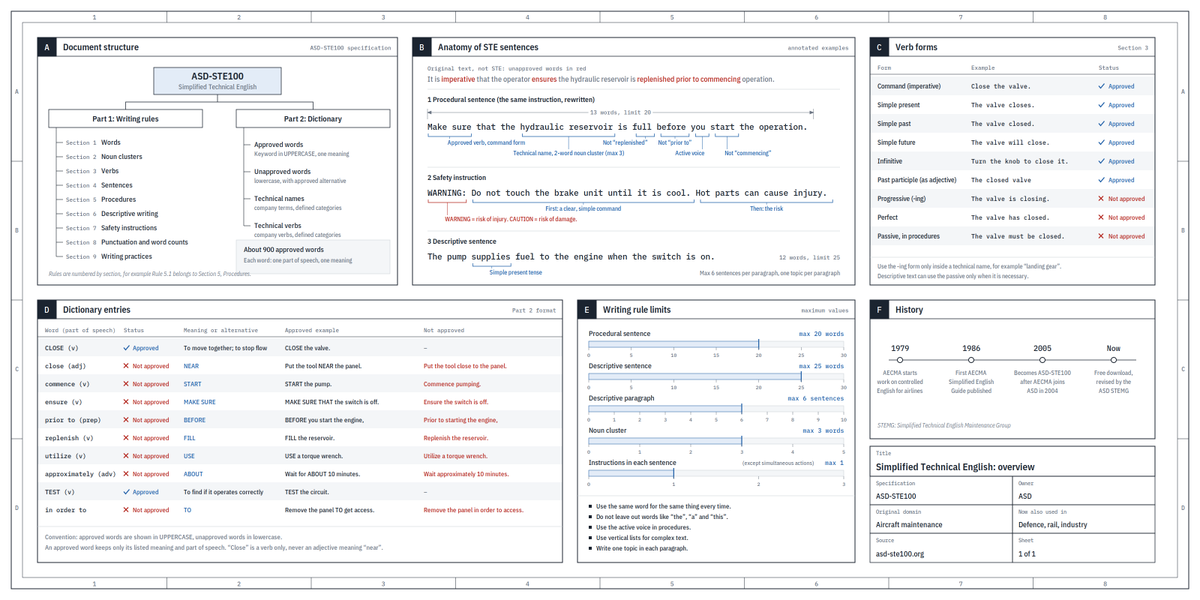
Writing. Something I've had success with: Ask your LLM to explain something in ASD-STE100, it's a controlled language specification originally developed for aerospace maintenance documentation. LLMs well-versed in this language and it comes with heavy constraints on clean writing style that I often find a lot more readable. Sometimes I've tried to soften it a bit e.g. ask for "80% of the way to ASD-STE100" because the spec is quite stringent. But even better:
Diagrams / images. Instead of writing, ask your LLM to create a diagram. These can be a lot easier to process, parse, and understand. But even better:
Web pages. Ask for output "in HTML" to get a beautiful, interactive webpage. LLMs are getting really good at frontend and can create beautiful experiences, animations, etc. But even better:
Explainer videos. The output format I am most bullish on is fully custom / bespoke explainer videos generated on any arbitrary topic. Experiment with things like "Create a 3b1b style video explainer on X. Use my ElevenLabs API key for audio narration". (you'd need an API key for the latter or you can ask your LLM to find you decent free alternatives that use your local compute). This is actually starting to work!
In summary:
- As LLMs get better, they will do more and more of the legwork autonomously, and a lot more of our work will rise up the abstractions into oversight and understanding.
- Luckily, LLMs can help here too because as intelligence and code are increasingly abundant, you can ask for large, custom, discardable software artifacts (e.g. web apps, video explainers) that would have never made sense to create before. Push the boundaries here and you'll be surprised.
published offshelf a chrome extension, offshelf saves the things you want to keep, articles, twitter/x posts and threads, with their images, everything is stored on your device, so you can read it later, even offline, no account nothing needed
link: https://t.co/7AdgWd9oqf
chrome: https://t.co/9Wg0hbEfLR
Been working on an evals and enforcement toolkit for conventions. Designed it to help enforce and measure code quality in repos for agents and devs. Open source, docs and GitHub in video description. https://t.co/oncIifyQbq
Hey rubyists, here's the best way to play with these new decision models like JEV from @typesafeai
Full-featured, and future-proof. Introducing https://t.co/uBODOfdVjm
LLM Knowledge Bases
Something I'm finding very useful recently: using LLMs to build personal knowledge bases for various topics of research interest. In this way, a large fraction of my recent token throughput is going less into manipulating code, and more into manipulating knowledge (stored as markdown and images). The latest LLMs are quite good at it. So:
Data ingest:
I index source documents (articles, papers, repos, datasets, images, etc.) into a raw/ directory, then I use an LLM to incrementally "compile" a wiki, which is just a collection of .md files in a directory structure. The wiki includes summaries of all the data in raw/, backlinks, and then it categorizes data into concepts, writes articles for them, and links them all. To convert web articles into .md files I like to use the Obsidian Web Clipper extension, and then I also use a hotkey to download all the related images to local so that my LLM can easily reference them.
IDE:
I use Obsidian as the IDE "frontend" where I can view the raw data, the the compiled wiki, and the derived visualizations. Important to note that the LLM writes and maintains all of the data of the wiki, I rarely touch it directly. I've played with a few Obsidian plugins to render and view data in other ways (e.g. Marp for slides).
Q&A:
Where things get interesting is that once your wiki is big enough (e.g. mine on some recent research is ~100 articles and ~400K words), you can ask your LLM agent all kinds of complex questions against the wiki, and it will go off, research the answers, etc. I thought I had to reach for fancy RAG, but the LLM has been pretty good about auto-maintaining index files and brief summaries of all the documents and it reads all the important related data fairly easily at this ~small scale.
Output:
Instead of getting answers in text/terminal, I like to have it render markdown files for me, or slide shows (Marp format), or matplotlib images, all of which I then view again in Obsidian. You can imagine many other visual output formats depending on the query. Often, I end up "filing" the outputs back into the wiki to enhance it for further queries. So my own explorations and queries always "add up" in the knowledge base.
Linting:
I've run some LLM "health checks" over the wiki to e.g. find inconsistent data, impute missing data (with web searchers), find interesting connections for new article candidates, etc., to incrementally clean up the wiki and enhance its overall data integrity. The LLMs are quite good at suggesting further questions to ask and look into.
Extra tools:
I find myself developing additional tools to process the data, e.g. I vibe coded a small and naive search engine over the wiki, which I both use directly (in a web ui), but more often I want to hand it off to an LLM via CLI as a tool for larger queries.
Further explorations:
As the repo grows, the natural desire is to also think about synthetic data generation + finetuning to have your LLM "know" the data in its weights instead of just context windows.
TLDR: raw data from a given number of sources is collected, then compiled by an LLM into a .md wiki, then operated on by various CLIs by the LLM to do Q&A and to incrementally enhance the wiki, and all of it viewable in Obsidian. You rarely ever write or edit the wiki manually, it's the domain of the LLM. I think there is room here for an incredible new product instead of a hacky collection of scripts.