Most sales problems are not motivation problems.
They’re structure problems.
Unclear messaging. Weak discovery. Inconsistent follow-up. Poor objection handling. Breakdown before the close.
I help small businesses, sales professionals, and owner-led teams identify where revenue is leaking in the sales process—and fix it with practical systems that improve trust, follow-up, objection handling, and closing.
DM “SYSTEMS” and I’ll send you my follow-up framework + help diagnose where your current process is breaking.
Simple Sales Systems. Ethical Growth.
When I type "brb", what I really mean is:
"Fret not, noble friend, for l shall vanish into the void for a fleeting moment, and return triumphant like the dawn.”
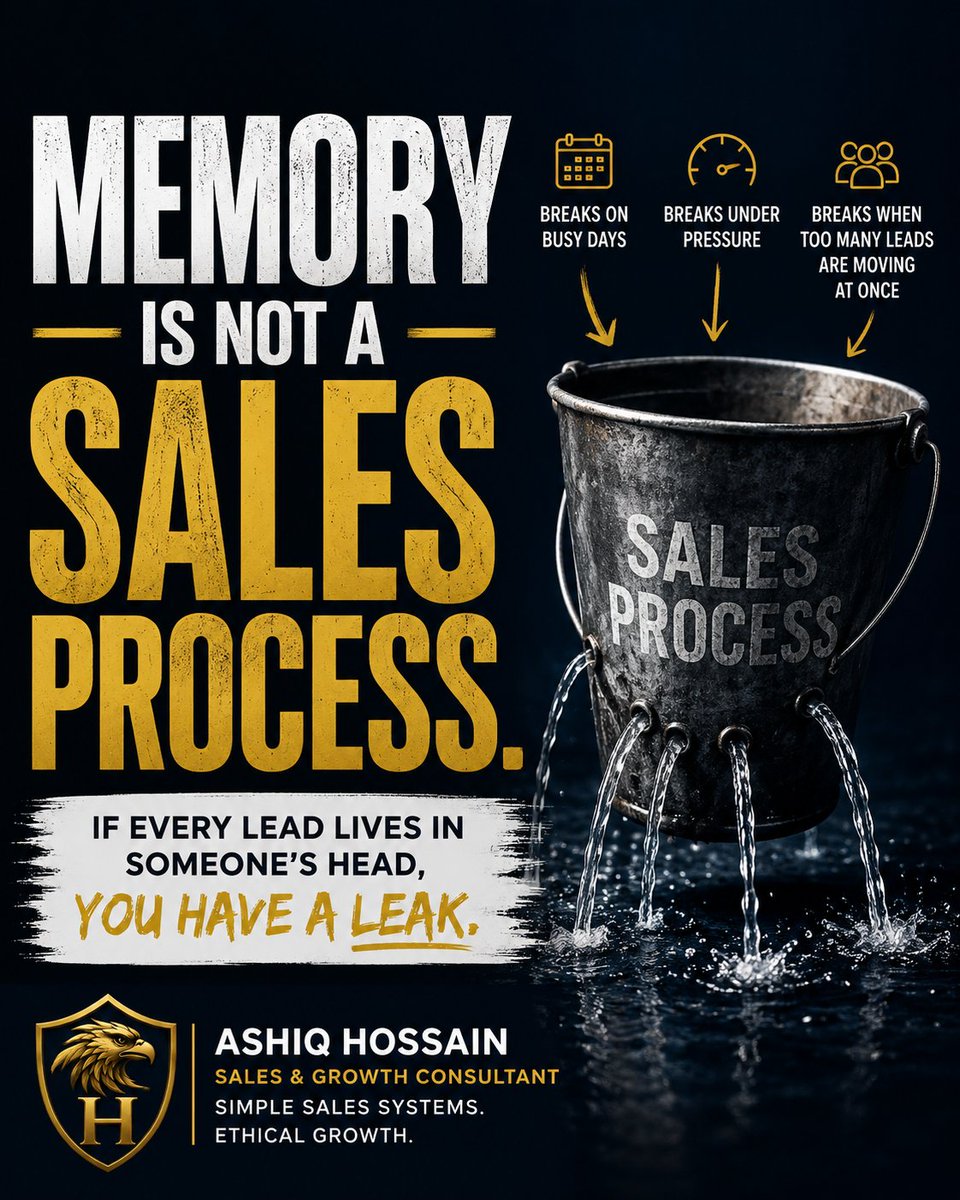
“Just checking in” is not a follow-up strategy.
It is a weak signal.
Weak follow-up asks for attention.
Strong follow-up gives the conversation somewhere to go.
Your answer may be correct.
But it will not feel correct to the buyer if they do not feel understood yet.
That is where pressure enters the conversation.
Not always because the salesperson is unethical.
Sometimes because they skipped the work.
Ask better questions.
A serious sales conversation starts with diagnosis.
Before you pitch, you need to understand:
What is the real issue?
Why does it matter now?
What have they already tried?
What happens if they do nothing?
What concern is underneath the concern?
Stop talking your way out of the sale.
A lot of salespeople lose control because they cannot handle silence. So they rush.
They over-explain
Over-defend
Over-close
While they are doing all that, they miss the real problem.
That is not selling.
That is panic with a script.
Most pricing objections are not really pricing problems.
Sometimes price is the issue.
But a lot of the time “too expensive” really means:
the value wasn’t clear
trust wasn’t there
the fit felt weak
the process felt rushed
the buyer wasn’t convinced yet
A lot of pricing objections were created earlier in the conversation.
And salespeople often make it worse by reacting too fast:
explaining more, defending more, pushing more.
Weak diagnosis creates weak persuasion.
The fix is often not a discount.
My advice to new grads:
Don’t make your whole strategy “apply, wait, hope.”
Pick one skill people actually pay for.
Use AI to sharpen your work, not replace your thinking.
Get proof by helping real people solve real problems.
Learn how to communicate.
Use early jobs as training, not your whole vision.
Build skills. Build judgment. Build value. Then build leverage.
#GradsGuide2026
A lot of people think they have a “closing” problem.
Usually they don’t.
They actually have one of these:
• Never built real trust early • Didn’t ask enough strong questions • Pitched way too soon • Never made the next step clear
So the deal stalls… and they call it a “closing issue.”
Most sales problems show up late, but they start early.
Sales isn’t about fancy closing lines.
It’s about strong structure from the first minute.
If the front half is weak, the back half always gets blamed.
The close rarely breaks on its own.
It just inherits the damage from everything before it.
What do you think is the #1 mistake that gets mislabeled as a closing problem?
This one stayed with me.
There’s a battle between two wolves inside us all.
One pulls toward anger, jealousy, greed, resentment, lies, and ego.
The other pulls toward peace, love, hope, humility, kindness, and truth.
Which one wins?
The one you feed.