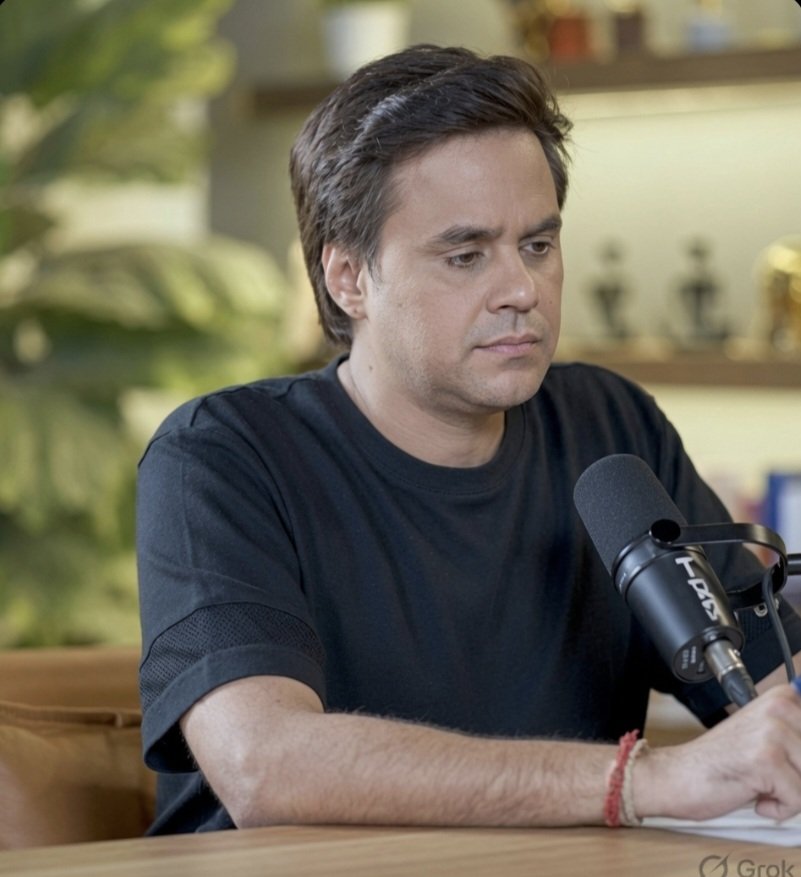
Anand Ranganathan explains the math behind his reservation stance 🚨
RJ Raunak: Anand sir, you criticize the current reservation system. But don't marginalized communities genuinely need it?
Anand Ranganathan: I fully support reservation, Raunak. But I believe it should be given only once per family.
RJ Raunak: Just once? Why restrict it like that?
Anand Ranganathan: Because quota seats are finite. Right now, if a wealthy family uses the quota for three generations grandfather, father, and son they consume three seats. As a result, three truly poor families from that exact same community get absolutely zero.
RJ Raunak: So you are saying the current system allows a few privileged families to hoard the benefits?
Anand Ranganathan: Exactly. Limiting it to one generation ensures the benefits stop looping at the top and finally reach the poorest people who actually need them.
Anand Ranganathan just dismantled a 70 year old system using logic math, and you can't even argue against it.🙏
Foreign hand in CJP protest is out as Greta Thunberg has claimed full ownership of the protest..
Joining hands is Jimmy Corbett..yea the same anti India dall@a who was seen with Rahul Gandhi
“India is just an assembly destination for foreign smartphones” to “India is mastering high bandgap compound semiconductor physics.”
Yes, Hamara Desh Badal Raha Hai 🙏
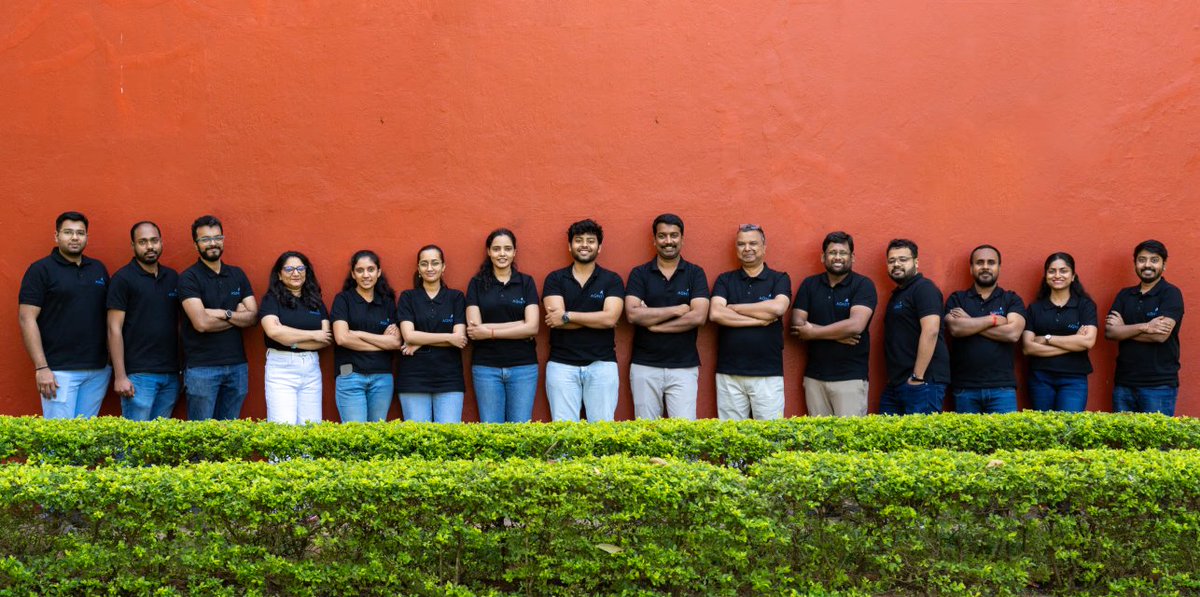
Agnit Semiconductors is India’s 1st vertically integrated Gallium Nitride (GaN) semiconductor manufacturing startup. Incubated out of the CeNSE lab at IISc BLR, they are growing custom material wafers, fabricating chips & packaging high frequency RF & power electronics.
Modern military hardware, whether it is the AESA radar on fighter jets/missile guidance systems/military communications/counter drone electronic warfare systems, relies heavily on RF GaN chips.
Historically, global supply chains for high end GaN power amplifiers have been heavily restricted under international arms control agreements/dominated by the US, Japan & Europe.
By establishing native epitaxy (growing GaN crystals on substrates) & custom device processing on Indian soil, Agnit gives India a sovereign, un-sanctionable supply of military grade RF power amplifiers.
Additionally, Cellular towers use base stations that consume massive amounts of electricity & generate extreme heat trying to push high-frequency signals. GaN chips can handle over 10x the power density & operate at significantly higher temperatures than traditional Silicon.
Agnit holds 15+ patents across the full GaN value chain, from the way the crystalline wafer is grown in MOCVD reactors to the circuit architecture itself.
They are built by a foundational team of PhDs & researchers, co-founded by Dr. Hareesh Chandrasekar, Dr. Digbijoy Neelim Nath, Prof. Srinivasan Raghavan & others, who spent ~18 yrs researching compound semiconductors before commercializing.
Deeptech semiconductor startups rarely go viral because they are not building consumer apps. That is exactly why it is on us to give them the shoutout they deserve. 🙏🙏
Picture a roaring, icy river slicing through the isolated Spiti Valley in 1972. The local villagers are completely cut off by a mountain collapse. The military says a traditional concrete/riveted steel bridge will take yrs to bring heavy machinery up the treacherous cliffs.
Then, a young woman steps out onto the frozen mud wearing a hard hat, carrying a set of rolled up blueprints under her arm.
She does not have bulldozers. She does not have massive cranes. Instead, she brings trucks loaded with small, lightweight steel components, like a adult-sized structural Lego set. In just 4 months, w/o a single piece of heavy machinery, her team hand-assembles a rock-solid, load-bearing steel bridge across the gorge.
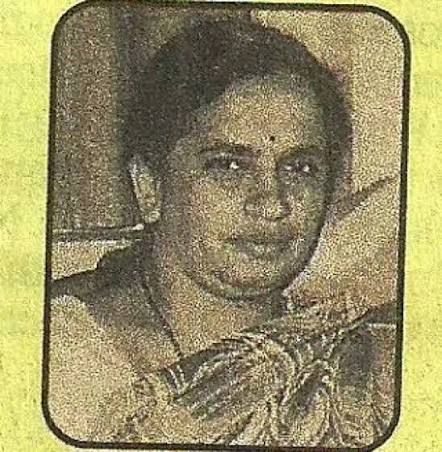
Her name was Shakuntala Bhagat & she was changing the rules of civil engineering forever.
Born in 1933, Shakuntala was the daughter of S.B. Joshi, a legendary figure known as the "Father of Bridge Engineering in India". While other young girls of the 1940s were expected to follow quiet, traditional paths, Shakuntala spent her childhood staring at bridge trusses & stress diagrams.
In 1949, she walked into the classrooms of VJTI in Bombay. The lecture hall went dead silent. Dozens of male students turned to stare at the only woman in the room. In 1953, at just 20 yrs old, she walked out with a degree, making history as India’s 1st female civil engineer.
She flew to the United States, earned her Master's in Structural Engineering from Penn & trained across Germany & the UK.
When she returned home in the 1960s, she joined IIT Bombay as an Assistant Prof, taking charge as the Head of the Heavy Structures Lab.
At IIT Bombay, Prof. Shakuntala was obsessed with a single problem: Why did Indian infra take so long to build?Traditional steel bridges relied on slow, dangerous, on-site welding & heavy riveting. If a flood wiped out a road in Arunachal Pradesh/Kashmir, cut-off communities had to wait yrs for a replacement bridge.
In the late 1960s, turning her small Bombay apartment into a late night workshop littered with steel prototypes & stress formulas, Shakuntala & her engineer husband, Anirudh Bhagat, cracked the code.
They invented & patented the Quadricon Modular Bridge System & the Bhagat Unishear Connector.
Instead of custom-casting a bridge for every river, their system used mass-produced, interchangeable, lightweight steel modules. They could be packed onto small trucks, hauled up narrow mountain tracks & assembled on-site using simple hand tools, reducing bridge construction time from yrs to weeks.
Yet, when they took this revolutionary idea to institutional investors & govt departments for R&D funding, they were met with cold skepticism.
"If advanced Western nations have not developed a total-system modular steel bridge like this, how can an Indian couple do it?"
The establishment refused to back them. She & her husband took massive personal financial risks, mortgaging their own assets to build & test the prototypes themselves. In 1972, the Invention Promotion Board awarded them the highest honor for the Unishear connector.
The skeptics were forced to eat their words.
Shahkuntala Bhagat went on to design & oversee the construction of 200+ Quadricon steel bridges worldwide, including 69 vital superstructures across India’s most dangerous border terrains, from the high passes of Kashmir to the dense forests of Arunachal Pradesh, as well as projects in the US, the UK & Germany.
In 1993, she was named Woman Engineer of the Year.
When she passed away in 2012 at the age of 79, she left behind an army of students & a country connected by her steel.
We celebrate the famous monuments of concrete and glass in our metros, yet few history books mention the woman in a hard hat who stood on freezing riverbeds to connect India's most forgotten corners.
The next time you travel through a remote mountain pass in the Himalayas & your vehicle rolls smoothly over a steel bridge spanning a deadly gorge, look closely at the steel joints beneath you. You are driving across the indestructible genius of Shakuntala Bhagat.
For centuries, Leprosy (Hansen's Disease) was treated as an incurable curse. Even after antibiotics were introduced, treatment required yrs of heavy drug regimens & nerve damage often persisted.
In the late 1970s, an Indian biochemist developed the world's very 1st immunotherapeutic vaccine for leprosy, using a harmless, non-pathogenic soil bacterium to awaken the human immune system.
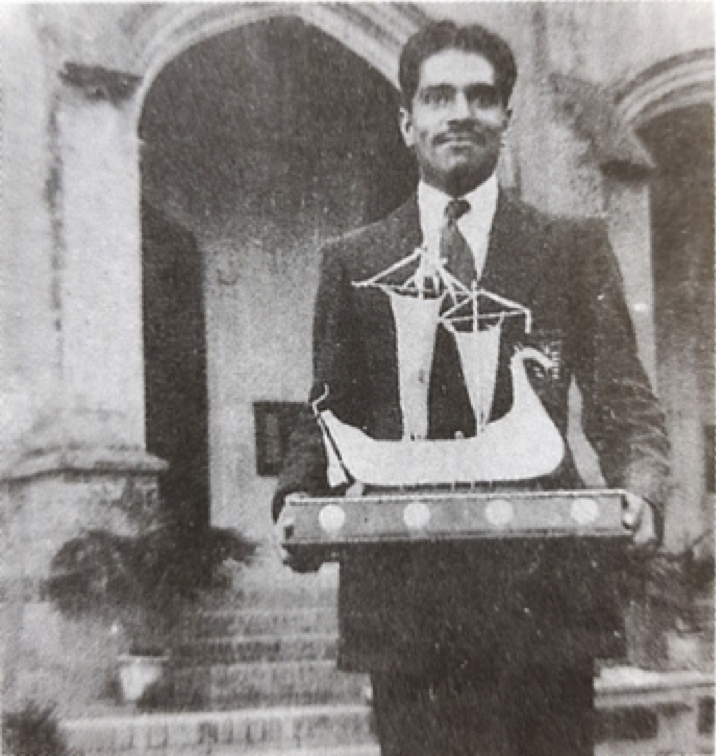
While global pharma labs focused exclusively on developing chemical antibiotics to kill Mycobacterium leprae, . Dr. Gursaran Pran (G.P.) Talwar at the National Institute of Immunology (which he founded) in New Delhi realized that the real problem was immune paralysis. In severe lepromatous leprosy, the patient's T-cells completely fail to recognize the pathogen.
Talwar screened dozens of soil mycobacteria & identified a specific, non-pathogenic strain named Mycobacterium w (Mw, now classified as Mycobacterium indicus pranii).
He discovered that when killed Mw bacteria were injected into leprosy patients alongside standard multi-drug therapy (MDT):
- It re-energized the patient's dormant cell-mediated immunity.
- It accelerated bacterial clearance from the skin & nerves by up to 50%.
- It significantly reduced the incidence of debilitating painful immune flare-ups (erythema nodosum leprosum).
The Mw vaccine became the world's 1st scientifically proven immunotherapeutic agent for leprosy, later found to also boost host immunity against drug-resistant tuberculosis & certain types of tumors.
Global health agencies spent decades searching for complex synthetic molecules, an Indian biochemist looked into the dirt under our feet and found a harmless soil microbe that taught the human immune system how to conquer 1 of the oldest afflictions in human history.
India ranks at the top in...
1. Army - - - - - No Reservation
2. ISRO - - - - - No Reservation
3.DRDO - - - - - No Reservation
4. Cricket - - - - No Reservation
India ranks the lowest in....
1. Education - - - - 60% Reservation
2. Medical - - - - - 60% Reservation
3. Gov work - - - - 60% Reservation
So make India great again end reservation.
#EndReservation
This Supreme court lawyer really cooked media on reservation 🚨
Question - What's your say on reservation?
Lawyer - Prime Minister is from the OBC community. Our President is from ST community. All the top officials are from backward caste. Where is the inequality today? You guys have everything
Come to court and you'll see a kid selling balloons every day. He's from the GC and he'll have to compete with rich kids who have all the facilities to secure a seat. My peon wanted to become a doctor and wanted to buy a sports bike but he couldn't because of reservation. Now his kid will face the same fate. If this sounds fair to you, you're inhuman."
Reservation will end soon, it's inevitable. Slowly every big guy is addressing pain of GC 🙏
My MBBS College Story
I received a scholarship of ₹54,000.
My friend A got ₹1,10,000, while my friend C got nothing.
The irony is that friend C, who is poorer than both of us, had to pay the highest fees.
It put me on a guilt trip when I saw my friend C’s face after I got the scholarship and my friend C didn’t.
This is legal terrorism against GC.
It’s time for One Nation, One Scholarship, One Fee.
In the early 1950s, a silent shadow hung over the stunning valleys of the Himalayas. Across a belt stretching 1000s of KMs from Jammu & Kashmir through Himachal Pradesh & Uttar Pradesh to the North-East, ~50% of the population suffered from swollen necks, massive thyroid goitres & severe physical & mental stunting.
Entire villages were trapped in a cycle of endemic cretinism. Global medical experts insisted the problem was far too massive to fix in a developing nation. Then, a young Oxford-trained pathologist stepped into the Kangra Valley with a crate of crude chemical salt, intent on proving them wrong.
In 1950s, Dr. Vulimiri Ramalingaswami, a brilliant researcher at the ICMR who would later become the Director of AIIMS & DG of ICMR, launched what became known as the Kangra Valley Experiment.
Western nations had previously tackled goitre by adding potassium iodide to table salt. But Western scientists scoffed at the idea of applying this solution to rural India. They argued: Indian monsoon humidity would dissolve & wash away the volatile potassium iodide during transit.
Traditional Indian cooking: boiling, frying & baking salt at high temperatures for hrs would completely destroy the delicate chemical compound.
The logistics of delivering fortified salt across 1000s of roadless mountain villages were biologically & structurally impossible.
Ramalingaswami refused to accept that millions of mountain children were condemned to brain damage & physical stunting by default.
Along with his team, Ramalingaswami designed a massive community trial tracking 100000+ villagers across 3 zones in Himachal Pradesh's Kangra Valley:
- Zone A received KI-fortified salt.
- Zone B received the plain-salt control.
- Zone C received KIO₃-fortified salt.
For yrs, Ramalingaswami personally trekked into remote Himalayan hamlets. He monitored salt distribution trucks, analyzed soil & water iodine levels & examined 1000s of necks & thyroid glands under primitive field conditions. He subjected iodized salt samples to punishing heat, open-air storage in humid huts & traditional Indian boiling to track every milligram of chemical decay.
By 1962, the preliminary results were clear: In the control zone given plain salt, goitre rates stayed high at around 38-40%. In the zones receiving iodized salt (both potassium iodide & potassium iodate), rates fell sharply, ~ by 50% & continued to decline with longer follow-up.
Ramalingaswami had mathematically proved that potassium iodate survived tropical humidity, months of transport in open jute sacks & high-heat Indian cooking w/o losing its protective power.
His empirical data forced the GoI to establish the National Goitre Control Programme in 1962 later the National Iodine Deficiency Disorders Control Programme, eventually making universal salt iodization the law of the land.
When global bodies like the WHO & UNICEF evaluated his Kangra Valley dataset, they adopted his exact chemical formulation, potassium iodate fortification, as the universal gold standard for tropical & developing nations worldwide.
Every single day when we open a packet of salt in our kitchen, we are holding a life saving chemical shield pioneered in the muddy tracks of the Kangra Valley.
W/o launching a single pharmaceutical drug/performing a single surgery, Vulimiri Ramalingaswami sustained a crippling neurological disease for 100s of millions of children & quietly saved the minds of an entire nation at the kitchen table.
What’s the difference between a Chinese communist and an Indian communist comrade?
Chinese comrades are nationalists. Indian comrades are anti-national bastards.
Chinese comrades respect Confucius and traditions. Indian comrades are those bastards who go against the Vedas and all.
The internet was busy debating jantar Mantar & a quiet facility in India witnessed something straight out of science fiction. An engine fired up. But it did not hum & it did not roar like a normal jet.
It detonated. Continuous supersonic shockwaves raced around a circular chamber 1000s of times/sec, harnessing controlled explosions to generate thrust.
The startup D-Propulse just gave the world a sneak peek of their air-breathing Rotating Detonation Engine (RDE) with an integrated aerospike nozzle.
Every jet engine on a commercial airliner, every fighter jet & every rocket we have ever seen operates on deflagration. We mix fuel with air/oxygen, ignite it & it burns relatively slowly at subsonic speeds. It is effective, but humanity has pushed this tech to its absolute physical limits.
RDEs throw that century-old playbook into the fire. Instead of burning fuel smoothly, an RDE explodes it intentionally. A continuous detonation wave sweeps around an annular (ring-shaped) channel at supersonic speeds, reaching over 2000 m/s. This is called Pressure-Gain Combustion.
It extracts 15-25% more thermal efficiency out of the exact same amount of fuel. In the world of high-speed flight, a 25% jump in efficiency is a completely different league.
Why this Matters for India?
For decades, the narrative surrounding Indian engineering was tied to catching up on legacy systems, spending billions trying to replicate 1970s turbofan engine metallurgy/importing critical defense tech.
D-Propulse is proving that India does not need to play catch-up anymore.
By leapfrogging straight to Pressure-Gain Combustion, an Indian deep-tech startup, guided by veteran scientists & built by young engineers is standing on the frontlines alongside research labs in the US, Japan & China.
Imagine hypersonic cruise missiles, ultra-long-range combat drones & spaceplanes that do not need heavy, complex moving turbopumps to break speed records. That is the realm this technology unlocks.
The future does not belong to those who build better versions of old machines. It belongs to those who rewrite the physics of how machines work.
More Indian soldiers have died at Siachen from extreme weather and terrain than from enemy fire. The world's highest battlefield, at -50°C and altitudes where oxygen is half that at sea level, is as lethal as any adversary. Three mechatronics engineers from SRM University in Chennai who skipped their campus placements are building the machine designed to change what soldiers have to carry into those conditions.
Vignesh M, Vibhakar Senthil, and Karthikeyan B enrolled in a robotics programme at SRM in their first year that asked them to identify real problems and engineer solutions. They built miniature surveillance robots, designed a single-seat solar-powered vehicle, and won competitions. They graduated with a shared conviction about where they wanted to direct their engineering: not toward IT, but toward the Indian armed forces. They turned down placement offers and kept building.
In 2019, after three years of research, field visits, and rigorous interactions with Indian Armed Forces officers and the Army Design Bureau to understand real operational requirements, they registered Torus Robotics in Chennai. They each invested personally and built entirely from the ground up.
At Siachen, soldiers routinely carry more than 60 kilograms in those conditions. The machine Torus built for those environments is the MARS UGV: fully electric, operating autonomously with a six-degree-of-freedom robotic arm for detecting and disposing of explosive devices, controllable from a kilometre away. Under an MoU with BEML, they are developing a logistics version designed to carry the equivalent payload of ten soldiers across high-altitude terrain.
Their indigenous motors are 50% lighter, 15% more efficient, and 10% more cost-effective than imported alternatives. India's powertrain dependence on China is among its most acute supply vulnerabilities in both defence and EVs. Torus is building the indigenous answer.
The company has delivered the MARS UGV to DRDO, received innovation grants from the Indian and Tamil Nadu governments, and was recognised as a Pioneer Defence Innovator by IDEX, which specifically cited them as the youngest defence startup to deliver an indigenous UGV to the Indian Defence. They won the Birla Global Innovation Challenge 2020.
Three engineers. SRM University. No corporate pedigree. A combat-ready unmanned ground vehicle delivered to the Indian Army.
At Siachen, a Jawan still carries 60 kilograms.
The machine Torus is building is designed to change that. One soldier at a time.
Since everyone is busy with the Jantar Mantar protests & convinced nothing worthwhile is happening in India, here is a brilliant engineering story from yesterday that probably escaped the headlines.
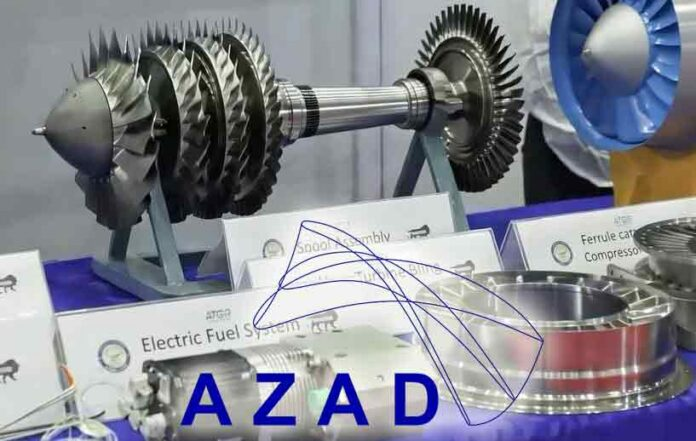
The delivery of the 1st indigenous expendable turbojet engine (Advanced Turbo Gas Generator) by Azad Engineering to GTRE.
Why does the word "expendable" matter so much?
Expendable engines do not power manned fighter jets that return to base; they power long range cruise missiles, stealth attack drones (UCAVs) & loitering swarms.
During geopolitical crises, global powers rarely stop us from buying missiles, they simply cut off the supply of small, specialized turbojet engines like French Safran/ Russian NPO Saturn engines needed to replenish our stockpile.
By owning the complete design & full production line for expendable engines domestically, India can manufacture long range land attack cruise missiles (like Nirbhay/ITCM variants) & stealth UCAVs at scale w/o asking for anyone's end user clearance.
In a high intensity war, we can churn out 100s of precision-guided standoff weapons every month. That is the difference b/w a nation that can fight a 3 day skirmish & a nation that commands true strategic deterrence.
What we are witnessing is the ancient Indian concept of Vishwakarma Vidya, where knowledge, craftsmanship & raw material come together in seamless harmony to protect the nation.
When a country learns how to tame flame & steel at 15000 RPM inside a missile engine, it breaks the geopolitical chains of dependency for generations to come.
If an Indian startup/defense firm wants to build rocket engines/satellite parts/surgical implants/advanced drone components, they need sub-micron precision metal parts made from heavy-duty alloys like Titanium & Inconel.
Historically, the ultra-precise 5-axis CNC machines required to carve these complex 3D parts had to be imported from countries like Germany/Japan/Switzerland at astronomical costs. To make matters worse, foreign suppliers face tight export controls on high-precision machining tech due to its dual-use potential in defense/missiles.
India had the engineering talent to design hardware, but was held back by a reliance on imported tooling & machining infrastructure.
A not so known startup Ethereal Machines is doing genuinely game-changing work for Indian deeptech & manufacturing, operating in a sector that rarely gets flashy headline attention compared to consumer tech.
Founded by Kaushik Mudda & Navin Jain out of RVCE in BLR, they hit on a fundamental bottleneck that was quietly crippling India’s hardware, aerospace & defense ecosystem.
Instead of just buying machines, Ethereal built their own multi-axis CNC machines from the ground up in India including their proprietary hardware, mechanics & complex CNC controller software. 🙏🙏
They built flagship proprietary machines like Halo, Aura & Nimbus that deliver sub 10 micron precision allowing intricate metal geometries to be carved in a single setup w/o manually repositioning the raw block.
Their early breakthrough was combining 3D printing (adding material) & multi-axis CNC milling (carving material away) into a single machine platform.
Instead of just selling machines, they run a massive 50K+ sq ft Smart Factory in Peenya, BLR operating 24/7. Startups in spacetech, drone tech, semiconductor equipment & medical devices can upload CAD designs & get aerospace-grade precision components delivered in days instead of months, cutting customer lead times by ~40%.
They became the 1st Indian company to win a CES "Best of Innovation" Award in Las Vegas for their hybrid manufacturing tech.
By controlling both the hardware & the software behind multi-axis machining, they give India's spacetech & defense ecosystem a local manufacturing fallback that cannot be disrupted by global supply chain shocks/export bans.
Top-tier deeptech investors like Peak XV Partners, Blume Ventures & Avataar Ventures backed them with major Series A & B funding rounds to set up a massive 300K sq. ft. mega-factory outside BLR.
Most people think of "Indian tech" as SaaS apps/fintech/q-com, Ethereal Machines is doing the heavy, unglamorous lifting, building the physical machine tools required to manufacture the rockets, drones, medical implants & chips of tomorrow right inside India. 🙏🙏
One thing is clear: the Delhi protesters want to plunge India into chaos, and stop the nation's progress. We must defeat this malicious agenda, which is aided and abetted by powers that want to destroy India.
We have a vibrant democracy and elections are the proper way to express our collective judgment.
🚨 BIG CLAIM BY REPUBLIC MEDIA
Leaked US Embassy alert dated July 17 WARNED citizens to STAY away from Delhi gatherings — 4 days before the violent protests on July 20.
Does a foreign hand have a role in the chaos unleashed on Delhi streets?
"If you ask a fish where it belongs, it will not point to an ocean. It will point to a mountain stream, where the current is violent enough to crush bones, yet gentle enough to give life."
In the quiet, dusty archives of global science, there sits a name that every top ichthyologist in London, Berlin & Washington speaks with reverence. He was a scientist so brilliant that he redefined how the world understands fish evolution, river geography & animal adaptation.
Yet, walk down his old neighborhood today, ask his modern descendants/local scholars & you will likely be met with a blank stare.
He was not a politician. He did not build empires. He spent his life listening to the silent whisper of wild Indian rivers.
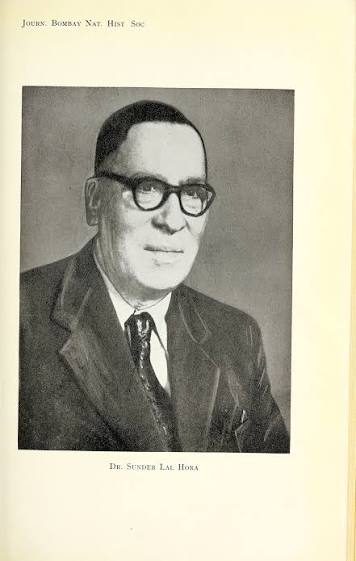
His name was Dr. Sunder Lal Hora, India’s greatest zoologist, the father of modern Indian ichthyology & the ghost pioneer whose groundbreaking Satpura Hypothesis stunned the global scientific community.
Born in 1896 in Hafizabad, Sunder Lal Hora was captivated not by textbooks, but by the furious mountain streams of the North-West. While other children saw rushing water, young Hora saw a battleground: How do tiny, fragile creatures survive in rapids that can wash away boulder-sized rocks?
Driven by an insatiable curiosity, he joined the Zoological Survey of India (ZSI) at a remarkably young age. Under the mentorship of British naturalists, Hora revolutionized zoology.
Equipped with basic nets, notebooks & relentless grit, he waded through the treacherous, malaria-dense torrents of the Western Ghats, Assam & the Himalayas. While others collected dead specimens for jars, Hora studied life in motion.
Dr. Hora made a discovery that blew the minds of biological oceanographers & evolutionary scientists worldwide: He mapped how stream-dwelling fish developed specialized adhesive suckers, flattened bodies & unique fins to lock themselves onto smooth underwater rocks against raging torrents. His anatomical studies were so precise they became benchmark references in European textbooks.
While studying hill-stream fishes in the Western Ghats (South India) & the Khasi Hills (Northeast India), Hora noticed something impossible: the exact same species of freshwater fish lived 1000s of KMs apart, separated by vast dry plains.
How could a tiny freshwater fish cross 1000s of miles of arid land w/o dying?
In 1937, Hora proposed the revolutionary "Satpura Hypothesis." He argued that millions of years ago, a continuous, humid, high-altitude mountain range: the Satpura line connected the Eastern Himalayas directly to the Western Ghats, serving as a wet, flowing bridge for aquatic life.
At a time when continental drift & plate tectonics were still fiercely debated, Hora used the humble anatomy of tiny fish to map the ancient geological climate of the Indian subcontinent!
Dr. Hora went on to become the Director of the Zoological Survey of India, authored 100+ research papers, discovered dozens of new species & earned accolades from the Linnean Society of London. He was consulted internationally on inland fisheries, ecology & wildlife conservation.
Yet, as decades passed, his name faded into obscurity within his own homeland. The textbooks forgot him, the mainstream media moved on & today, 1 of the greatest naturalists Asia ever produced rests quietly in the forgotten corners of history.
The Next Time You Stand Near a Mountain Stream...Look closely at the fast water beneath your feet. Beneath that foaming surface, tiny creatures are still clinging to the rocks using the exact mechanisms mapped out by an Indian genius nearly a century ago.
Empires rise & fall, names are forgotten by neighbors, but as long as India's rivers flow from the mountains to the sea, the silent legacy of Dr. Sunder Lal Hora lives on.
An Indian physicist won $3 million, nearly three times the Nobel Prize. He donated much of it to support science in India and then cycled to work the next day. His name is Ashoke Sen, and very few people outside physics know who he is.
Sen was born in Kolkata in 1956, the son of a physics professor. He studied at Presidency College, took his MSc at IIT Kanpur, and earned his PhD from Stony Brook University in 1982. After postdoctoral stints at Fermilab and SLAC, the two most prestigious physics labs in the United States, he had every reason to stay, but he came back to India.
In the early 1990s, string theory had a fragmentation problem. Five separate versions existed, seemingly describing different mathematical universes, with physicists increasingly unsure which one, if any, was correct. In 1994, Sen proposed S-duality: the idea that two string theories that appeared completely different were actually the same theory viewed from opposite mathematical perspectives. Strong coupling in one corresponded to weak coupling in the other. They were the same object, seen from different angles.
That single paper ignited what became known as the second superstring revolution. It gave Ed Witten, widely considered the greatest living theoretical physicist, the foundation to propose M-theory in 1995, the first serious candidate for a unified theory of everything.
In 1998, Stephen Hawking personally nominated Sen for Fellowship of the Royal Society. In 2012, he received the Breakthrough Prize in Fundamental Physics. He holds the Padma Shri (2001), Padma Bhushan (2013), and Dirac Medal (2014). He spent most of his career at the Harish-Chandra Research Institute in Allahabad, not at MIT or Princeton.
He chose India. He stayed in India. He did work from India that Stephen Hawking noticed, that Ed Witten built upon, and that earned him a prize with monetary worth three times the Nobel.
Then he cycled to work like just another day.....