Hormuz traffic sees a sharp d/d uptick
Confirmed Strait of Hormuz crossings rose to 70 on 24 June, up 105% day on day, as demining efforts advanced and operators increasingly used the Omani route. Commercial traffic accounted for most activity, with 53 transits, while low-risk vessels dominated the day’s profile. The US-Iran MoU framework and apparent lifting of the US blockade appear to have supported a short-term confidence boost, although IRGC warnings against use of the Omani route could create a new source of contention.
IMO-route use picked up slightly, but continued Dark routing, incomplete demining and unresolved issues over inspections, sanctions and future Strait governance mean the rebound is not yet a confirmed return to pre-crisis conditions.
Stay ahead of the market with #Kpler Insight: https://t.co/T7ZkXz7lzv
الصين تفجر أكبر قنبلة علمية وتدخل بالذكاء الاصطناعي إلى عصر "الماتريكس" الفعلي؛ فريق Qwen الشهير بنى شيئاً مرعباً سيغير طريقة تطوير الـ AI للأبد
الفكرة ببساطة: بدلاً من تدريب الذكاء الاصطناعي على كيفية استخدام الإنترنت أو نظام الأندرويد أو اللابتوب، قاموا ببناء موديل خارق اسمه Qwen-AgentWorld ومهمته أنه "يحاكي ويتخيل" أنظمة التشغيل والإنترنت والـ Terminal بالكامل داخل عقله البرمجي!
يعني الموديل أصبح عبارة عن "عالم افتراضي كامل" يضم 7 بيئات تشغيلية ضخمة داخله؛ يتفوق في دقة محاكاتها على أعتى الموديلات الحالية مثل GPT-5.4 و Claude Opus 4.8
Kpler's drone-based tank level data is sending a clear warning signal at cushing
The US crude market's most-watched inventory hub has shed around 11 million barrels since early May, and at the current draw pace, stocks are on course to test operational tank bottoms by mid-July. Some operators at the hub have already reached tank bottoms, with others closing in fast. With exports retreating only marginally from May's highs and domestic demand holding firm, the physical supply squeeze is set to push WTI spreads back into stronger backwardation — though if export economics ease, draw rates could slow, providing some relief.
Discover oil & chemicals intelligence in one complete solution: https://t.co/ULKiBJitnx
The Strait of Hormuz is no longer simply “open” or “closed.” Analysts warn that GPS spoofing, insurance hurdles, sanctions compliance, and new Iranian transit rules are creating major risks for physical oil flows—risks largely ignored by futures markets. #Oil#Hormuz #EnergyMarkets #OOTT
https://t.co/PTbXA83Lka
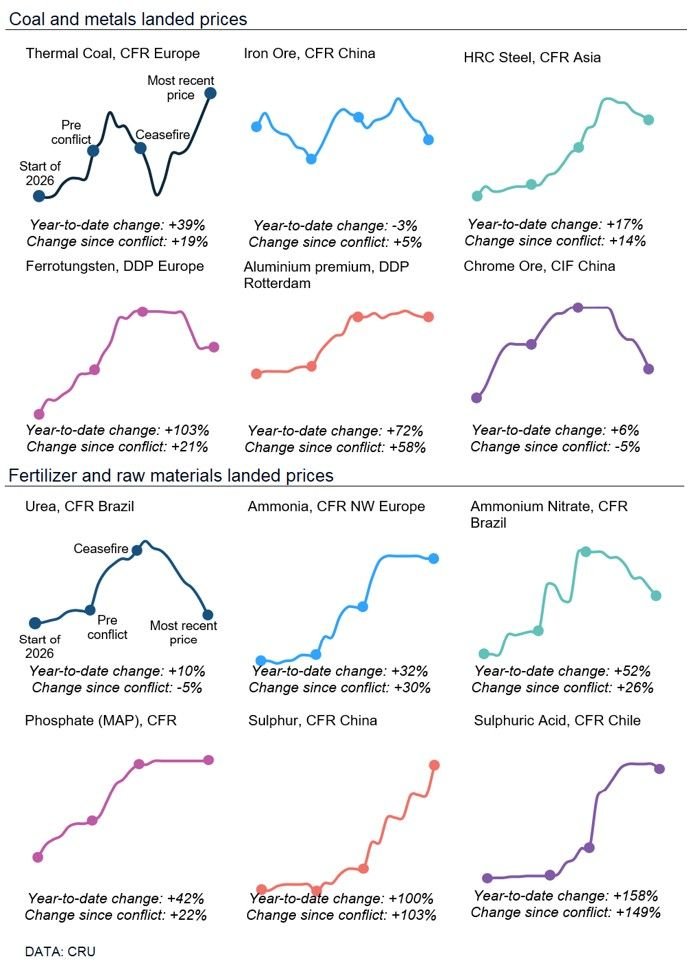
“Forget Hormuz, ferts are cheap again.”
Not really.
CRU’s latest charts show fertilizer and raw material prices are still far from comfortable across several markets. And this is happening in a part of the calendar that usually sees softer demand.
#fertilizer#oatt
The real reason oil is below $100/bbl. It isn’t fundamentals. It’s capital aversion. Policy uncertainty has made oil too volatile to hold. Investor VaR has collapsed by c.$5B. Open interest is at the lowest level in years. Global oil stocks are still drawing 5-6mb/d; however, investors say they don't care.
Start with investor VaR - the best measure of how much capital is willing to engage with oil. It has collapsed to $1.4B (see chart). Not forced out by rising rates, sanctions or external margin calls. Investors are simply choosing not to hold. The policy noise - deal on/off, attack, not attack - has made the carry uncompensable.
VaR compression has one direct consequence: it drains open interest. Contracts are closed. Market depth disappears. 2026 YTD open interest decline is the worst on record. Unlike 2022, there’s no rates shock or sanctions forcing the exit. This is capital aversion.
Managed Money VaR and YTD OI Change
This weekend saw a lot of dark ship-to-ship transfers of oil in the Middle East. It's not Iranian oil. Instead, this is oil coming from Iran's Arab neighbors. Yet another reason why oil isn't $200/barrel right now.
#OOTT#IranWar#Tankers
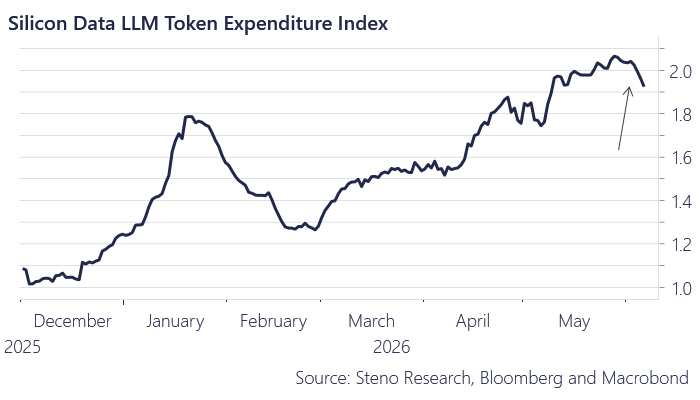
This is the chart that everyone should be watching.
If the Token Pricing rolls over, everything from the memory trade to the broader hard-ware and data-centre trade is over for this cycle imho.
The whole setup depends on this..
The world’s top iron ore producer, Vale, sees no evidence of war-related demand destruction in global metals markets and has experienced swelling margins as the Iran conflict disrupted raw-material flows, said CEO Gustavo Pimenta https://t.co/MtZzhde0ak
SK하이닉스 일본 주재원 계신 분이랑 커피챗 내용 간단하게 공유
1. 메모리 수요가 너무 강력해서 일본 고객들에게 줄 메모리가 없다.
미국이랑 중국 고객 주고 나면 일본에 줄 물량이 없다고 함. 그래서 일본업체들 찾아가서 매번 쓰미마셍 고개 숙인다고 함.
2. 메모리 부족으로 닌텐도 같은 전자제품 가격 계속 올리는 중.
메모리가 없어서 난야 같은 업체 뿐만아니라 윈본드 같은 업체도 찾는중.
CXMT는 기가바이트 통해서 이미 소비자용 제품으로 들어가고 있다고 함.
3. 일본에 있는 CXMT 한국엔지니어를 통해 듣기로는 CXMT 설계능력이 생각보다 엄청 뛰어나다고 함. 2-3년 격차가 아니라 그보다 더 좁혀질것 같다고 함. 진짜 중국의 똑똑한 인재들이 밤낮 안가리고 일한다고 함.
한국도 경계해야 할듯.
4. 메모리 가격은 계속 인상 중.. 몇프로인지는 밝힐 수 없지만 계속 인상중. 오늘 엔비디아 소캠에 메모리 줄었다는 이슈로 주가가 내리는데 메모리 가격은 오히려 올라서 영업이익은 계속 올라갈 전망.
*개인적으로 걱정되는건 이런 메모리 가격 상승이 Capex 투자 부담으로 이어져서 AI 싸이클이 빨리 끝날까봐 걱정임. 구글도 채권찍고 있고 빅테크들도 현금이 떨어져 가는게 걱정됨.
*투자권유, 매수,매도 추천 아닙니다.
Mysterious ‘cold blob’ in the Atlantic suggests the AMOC is weakening
A patch of ocean south-east of Greenland is the only place on Earth that is cooling, and it could be a sign that the warm water “conveyor belt” in the Atlantic is slowing down
https://t.co/iOP7S0fjUS
https://t.co/nKdwhlJCaW
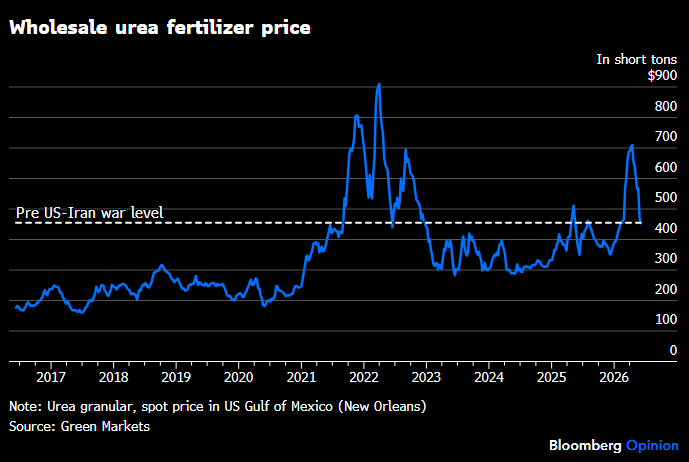
CHART OF THE DAY: The cost of the most important nitrogen fertilizer is back to pre-war levels in the US, benefiting from ample natural gas supply in America. Urea prices are sharply down too in Europe and Latin America, but remain elevated in most of Asia.
"BNP Paribas analyst Karl Ackerman expects the average selling prices (ASPs) of DRAM and NAND — which surged on AI demand — to peak in mid-2026, much earlier than his original forecast of mid-2027, before turning into quarter-over-quarter declines starting early next year. He argues that this is driven by aggressive capacity expansion from Chinese memory makers such as CXMT and YMTC, combined with reduced memory consumption from other industries due to soaring prices, including a 14% decline in global smartphone shipments this year. He also noted that growing concerns over future oversupply and margin deterioration within the next one to two years are beginning to weigh on the sector in advance."
I’m trying to remember the name of this analyst.
The first sustained credit default cycle in years has begun, and losses will exceed market expectations, according to Pimco's chief investment officer https://t.co/ObOIvVFx4T
Sam Altman said AI budgeting has recently become a "huge issue" for some companies, something that "never came up" earlier this year. https://t.co/P2zODBNmDp
There seem to be 2 completing views on oil market now:
1 - oil prices have been constrained given the 11-13mbpd off the market due to:
commercial inventory draws
SPR releases
China cut imports, used inventory, cut petchems
axios headlines + shorting
BUT when inventories are...
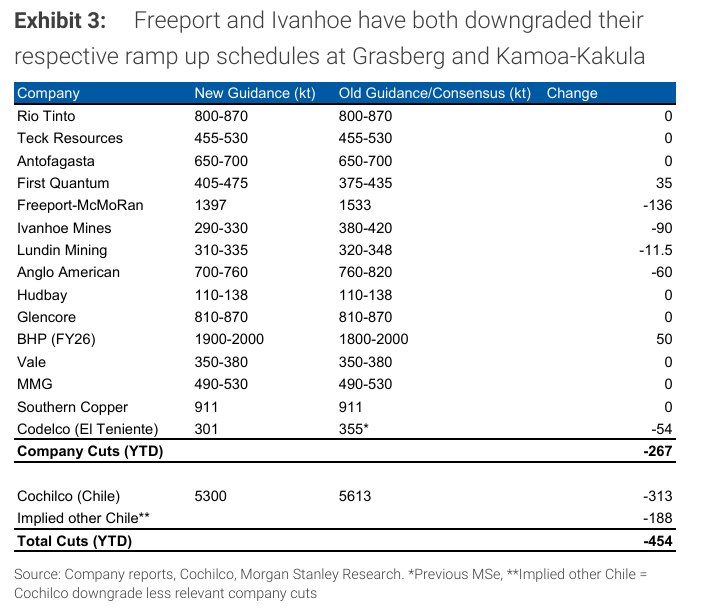
Honestly, looking at mining earnings over the last 12 months, it’s just been a non-stop parade of production guidance downgrades.
We’re deeply embedded in an era of structural bottlenecks and tight balances. The street is screaming for tech-critical minerals, but the physical supply is completely missing in action.
This is what happens when you stack a decade’s worth of massive underinvestment on the industry's capex. Of course, the supply wave will hit and flood the tape down the road, but that is definitely not a today story.
The emergence of these new structural demand segments hitting a wall of supply deficits is making the entire minerals space look incredibly attractive.
Copper and uranium are already total no-brainers, but look at how even the nickel market is quietly grinding back into balance. This macro run is far from over—we’ve got plenty of room to legs up.
#copper #uranium $HBM