@berichi Takk!! Ja, disputasen strømmes som et Teams-møte (lenke sendes til registrerte deltakere litt nærmere datoen). Dessverre tror jeg ikke det er muligheter for opptak, så tidsforskjellen blir nok det største hinderet! 😄
Very excited to be defending my PhD on 1st March! Join me in Brussels or online to hear about the construction of regions and the EU's role in the Arctic! 🎓❄️
Save the date for the public #PhD defence of @AslakBusch. His PhD thesis is entitled “In Pole Position? The Construction of Regions and the #EU’s Role in the #Arctic.” 🇪🇺🌏 Join us at the @VUBrussel campus on 1 March at 2pm CET.
https://t.co/JsufZXqTFb
My article on digital visual discourses and data-collection using search engines could not have found a better home! 💻 Can highly recommend the rest of the - fully Open Access - collection on interpretative methods coordinated by @ClaudiaWiesner8 and Kristin Eggeling! 👇
💡 Interpretative Methods in Political Science 💡
By studying how actors portray the Arctic ❄️, @AslakBusch critically evaluates a technique to tap into digital visual discourse 📸 using semi-automated #DataCollection utilising #SearchEngines 💻
👉 https://t.co/9Sfpb0Jlv9 #OA
And how was the train ride? A little bumpy, but who can complain when I could walk to the back of the train for views like this? Fingers crossed for more sleeper train connections throughout Europe (also to Scandinavia, please!!)
Time for #EISAPEC23 ! I'll be discussing the EU and the Arctic in two fantastic panels on Friday (Anthropocene) and Saturday (Role theory)! Also a great excuse to try the very convenient #europeansleeper from Brussels to Berlin 🚂
This is not just about consistency. In the EU-AC context, acting consistently with a role in an outside context turned out to be detrimental to pursuing its role in the #Arctic! Much to unpack about how #roles carry and influence actors across contexts (8/9)
This has implications for #roletheory. These are cases of role #spillover. As actors interact with each other in different contexts, they get to know each other and devleop expectations. These impressions carry across contexts! (7/9)
#EU role conceptions formulated toward animal rights and eastern Europe shaped its ability to consolidate a role in the #Arctic, despite continuing practical #cooperation. (6/9)
The seal ban controversy was settled by a #WTO ruling, but another issue had emerged in the meanwhile – Russia’s illegal annexation of Crimea and aggression in Donbas caused the #EU to impose heavy #sanctions. Since, Russia has blocked the EU’s formal observer application (5/9)
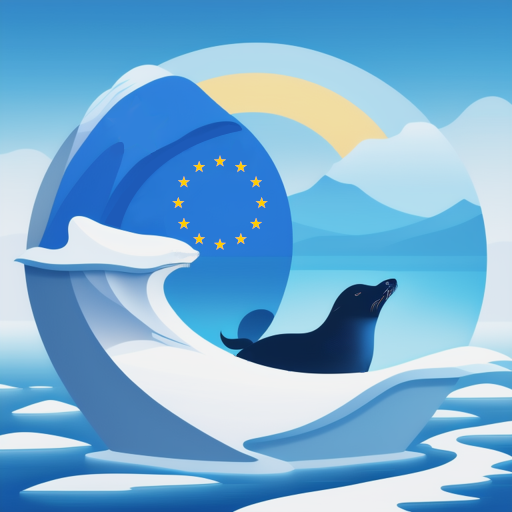
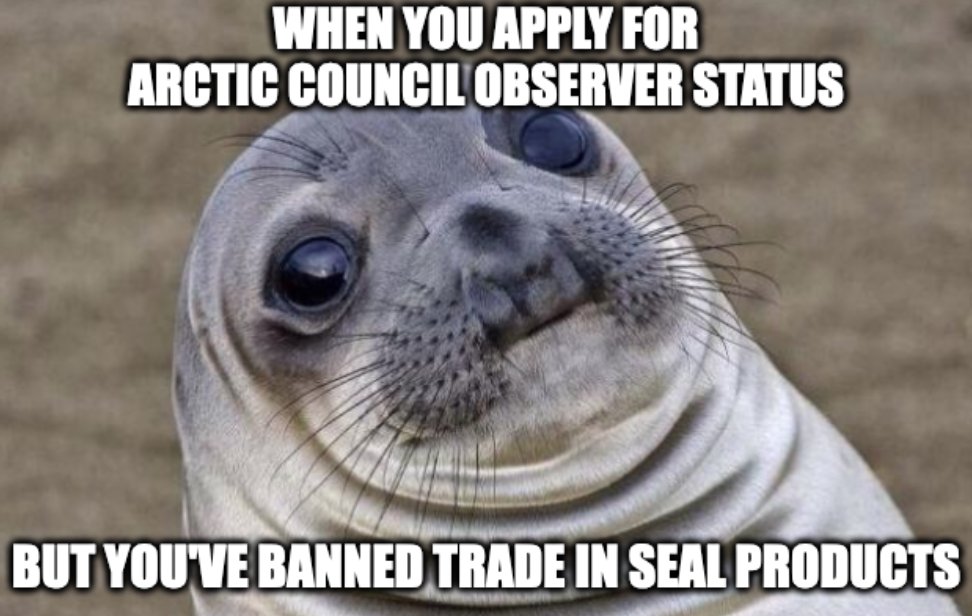
The #EU application was first hindered by a controversial ban on the trade of seal-derived products on the common market. Canada, Norway, Greenland and Inuit groups were critical of the economic and reputational harm the ban would entail (4/9)
The #EU applied for #ArcticCouncil observer status as early as 2008, but its application has stayed on ice. This despite being considered a capable and constructive actor in the #Arctic. It has rightly been called symbolic debate - but how do we understand that symbolism? (3/9)
❄️Is it all Polar bears and glaciers?
@AslakBusch evaluates a technique to tap into #digitalvisualdiscourse using semi-automated data collection. Drawing on scraping #searchengines to this end, studying how actors portray the #Arctic.
👉 https://t.co/XvBOMvxK9i #OA
Right-click. Copy. Paste. Images posted online easily enter circulation beyond their initial context. This is a challenge and an opportunity for #visual political research. How do we deal with online images? @prxjournal@Brussels_School@VUBrussel (1/8)
https://t.co/amHTOVhhjc
🐻❄️🚢🪖Is it all polar bears and ice sheets? Or are there soldiers, ice breakers and oil platforms in online imagery? Are search engines useful data collection tools to aid visual political research? To find out, read, critique and share this #OpenAccess article! (8/8)