From the report: U.S. workers benefitted from real wage growth that was higher than most other G7 countries. And further, our unemployment rate recovered faster from COVID than other countries. https://t.co/5vnV0X9ECA
.@POTUS’ and @VP’s economic agenda has driven a robust recovery: outperforming history, other countries, and economic forecasts. Investments like the Inflation Reduction Act, Bipartisan Infrastructure Law, and the CHIPS Act will fuel ongoing growth. https://t.co/Z6NuijNBas
Our new @USTreasury analysis puts the U.S. recovery in context. How it differed vs. history, vs. our peers, and vs. expectations. Despite many headwinds and remaining challenges, American consumers and businesses outperformed on all three fronts. https://t.co/5vnV0X9ECA
.@POTUS’ and @VP’s economic agenda has driven a robust recovery: outperforming history, other countries, and economic forecasts. Investments like the Inflation Reduction Act, Bipartisan Infrastructure Law, and the CHIPS Act will fuel ongoing growth. https://t.co/Z6NuijNBas
I was proud to recognize Shirley Gathers with the Alexander Hamilton award – the highest @USTreasury honor – for over 40 years of service at Treasury, including as Senior Scheduler and Executive Assistant to four Treasury Secretaries. Thank you for your exemplary service!
An important factor in the pandemic-era inflation was the shift in spending towards goods and away from services, at a time when goods supply chains were snarled. As you see here, supply-chain pressures track goods inflation with a lag.
Update from @USTreasury: with purchasing power on the rise, a U.S. worker earning the median income can today afford the same goods and services they bought in 2019, but with $1600/yr left over to save, invest, or spend.
https://t.co/x6a6d8CP86
.@POTUS cites @USTreasury work on private investments in clean energy crowded in by the Inflation Reduction Act. These investments are landing in disadvantaged communities, strengthening their ability to produce. That’s modern supply-side economics. https://t.co/EVjl1u7Wlx
We think that this detailed look at what the president did and why will be of interest as we head into the future. We are pleased to bring it to you.
https://t.co/ZAr6IdDPT7
.@POTUS in @TheProspect cites @USTreasury analysis on his Admin’s rejection of traditional supply-side econ for a modern approach. Our piece on bipartisan infrastructure funding going the places that need it most: https://t.co/I0qYmVb4Jh
We think that this detailed look at what the president did and why will be of interest as we head into the future. We are pleased to bring it to you.
https://t.co/ZAr6IdDPT7
There’s reason for optimism. But policy must remain supportive of biz investment: threats to the IRA and CHIPS will undermine businesses’ confidence in those strategic investments, and broad non-targeted tariffs will slow investment, per @GS. My remarks: https://t.co/EnjmUNHhss
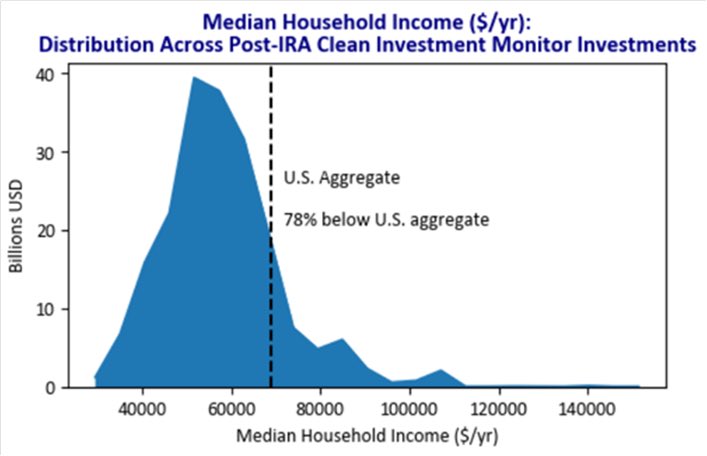
And importantly, these investment dollars are flowing to some of the most disadvantaged areas of the country: 78% of clean investment dollars since the IRA passed are in counties with below-average median household incomes.
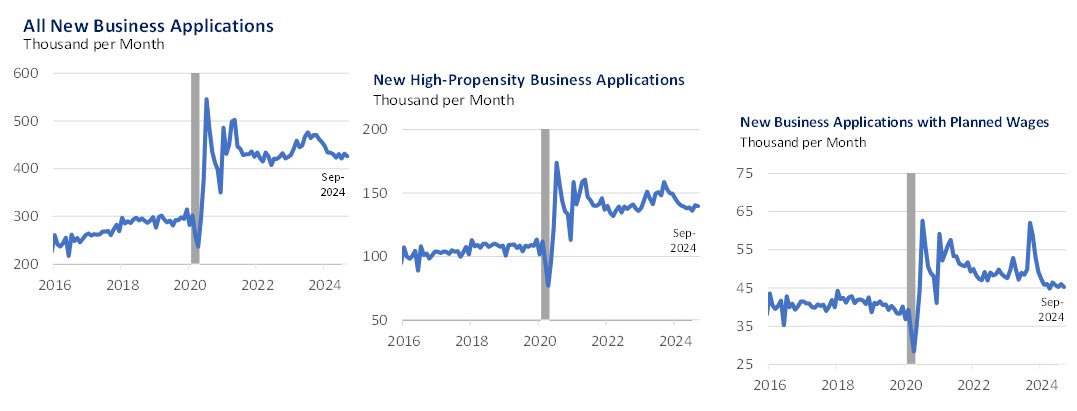
Second, firms are observing high returns to capital even outside those strategic sectors. That’s part of the reason we have seen a 50% speed-up in the pace of new business applications since the pandemic.
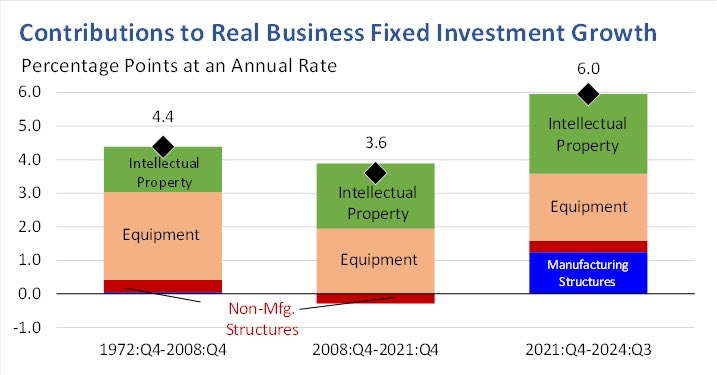
Why have we outperformed? First, factory building, esp. for high-tech products like chips and EV batteries, has boosted investment growth since CHIPS/IRA passed, unlike in prior cycles. At the same time, typical biz investment in equipment and IP (like R&D software) has kept up.
Joined @PIIE to talk business investment. We’ve seen $625B more than under the usual pattern, as CHIPS/IRA brought private capital to the table in climate & semis. Attempts by the next Admin to weaken those investments would undermine our progress. Thread: https://t.co/h9FF5ZVzUM
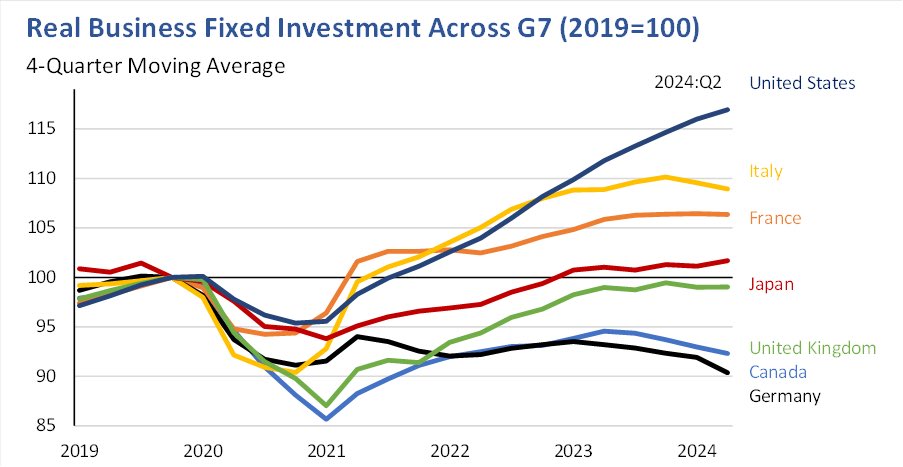
Real business investment has grown much faster in the U.S. than in other advanced economies: almost 17% since 2019, nearly twice as fast as the next fastest G7 country.
TOMORROW: @USTreasury@AsstSecEcon Eric Van Nostrand joins us to discuss American business investment & what it means in the global context. Register: https://t.co/WgILkbgVwB
Compelling piece from @econjared46 on the right way to think about separating signal and noise in the monthly labor market data. Anyone who thinks the storm- and strike-driven October datapoint accurately represents an economy with 4.1% unemployment isn’t paying attention.
Upside or downside, we're always going on about not over-torquing on any one month's data. Well, that's especially true for Oct payrolls, heavily impacted by strikes and weather events. @WhiteHouseCEA tweets and blog explain:
https://t.co/zvHDFPgRN0
https://t.co/JERMvUYQlI
A frank and productive exchange of views with my counterpart on key issues like expanding the global supply of candy and toys and tightening sanctions against chores.
It’s a great time to start a business in America. Small businesses have created 70% of net job gains in this expansion, more than usual. And Americans are submitting new business applications at 150% of the pre-pandemic rate. More: https://t.co/ilyjvVHnT4
Indeed, the boom in business investment is an under-appreciated feature of this recovery. We’ve seen more than $400 billion more business investment than if it followed historical patterns. More here: https://t.co/G59p40a97d
Overall the US economy continues to be surprisingly strong with growth well above what anyone would have expected six months or a year ago, inflation coming down, consumers very strong and businesses investing at a high rate.