Check out Vinnie Aggarwal of @UCBerkeley and @JanaGrittersova of @UCRiverside, as they discuss sanctions and the economic effects of the Russian invasion of #Ukraine in the latest from Talking Policy. https://t.co/291p2Mzc2G
I typically keep opinions to myself, but when academic research strongly supports my prior on an issue that affects my daily life as a teacher, I can’t help but share. We need the SATs back badly. Thank you @dartmouth for this highly illuminating study. https://t.co/YcgLFkaahM
@Aster_DEX@Livepeer Voting for the Distribution Schedule has officially begun.
Participate before Aug 2, 2026 • 11:59 PM UTC to become eligible for a bonus allocation at launch.
Vote now ⤵️
https://t.co/1DCQg1mo8K
Highly relevant!
"Chinese Sputnik Moments?" by Josh Lerner, Namrata Narain, Dimitris Papanikolaou, Amit Seru, and Zunda Winston Xu.
"China's technological progress in recent decades has been viewed with admiration, alarm, and (in some cases) doubt. To better understand the Chinese innovation ecosystem, we compile a dataset of almost 14 million domestic Chinese patent publications. We focus on the subset of critical technologies identified by the U.S. Department of Defense. Several surprising patterns emerge from the data: Chinese patenting is strongly associated with other measures of innovative progress; patents are not concentrated in corporate giants such as Huawei; universities have played a key role in innovation, much greater than state-owned enterprises or government-owned facilities; and fewer than one in ten Chinese critical technology patents involves an inventor with U.S. experience or training. Finally, using four text-based measures of patent quality, we show that the rise of Chinese patenting in critical technologies has not been associated with a decline in quality relative to the U.S. awards."
https://t.co/YYTKjow7VZ
A new geospatial foundation model can now estimate how poor your neighbourhood is, track how fast that's changing, and do it without anyone filling out a single survey form.
A team of Stanford researchers recently published Tempov, a foundation model trained on three million pairs of Landsat images spanning two decades. It takes raw satellite imagery and predicts asset wealth at the village level, across entire continents, updated in near real-time.
The benchmark numbers are worth sitting with. In Malawi and Mozambique, the model explains 87% and 74% of the variation in household wealth from satellite imagery alone. That's from six spectral bands. No census forms. No field enumerators. No mobile phone metadata.
The harder problem is tracking change, not just level. Most existing models are trained to predict a static snapshot. When you ask them to predict how wealth shifted between 2008 and 2018 in the same locations, performance collapses to near-random. Tempov holds at R² = 0.69 for Malawi and 0.46 for Mozambique on that same change-tracking task.
What makes the difference is how the model was pretrained. The researchers constructed bitemporal image pairs that maximise seasonal variance, then forced the model to learn representations that are stable across seasons but sensitive to genuine long-run economic shifts. The learned embeddings spontaneously delineate road networks, urban structure, and agricultural patterns from natural background, without ever being told to.
The scarcity problem is where it gets interesting for development economics. The standard tools for measuring poverty rely on the Demographic and Health Surveys. DHS data is spatially sparse and resurveyed infrequently. The correlation between asset wealth in Malawi's earlier and later censuses is only 0.42. In Mozambique it's actually negative: -0.71.
Tempov gets around this with a two-stage adaptation. Train on historical census data, then fine-tune to the target year using only 5% of contemporary survey points. With that 5% adjustment, it outperforms geospatial foundation models that were given 100% of available survey data. Combining a strong historical prior with minimal contemporary calibration can substitute for the full survey investment.
The researchers then deployed it continent-wide. Five models trained under cross-validation on all 34 African countries with recent DHS surveys, averaged into a single ensemble, producing 6 km × 6 km wealth maps for the entire African continent in 2015 and 2025. Roughly 80% of measured wealth inequality across the continent is within countries, not between them.
The decadal change map shows wealth gains concentrated in West and East Africa and substantial declines across parts of Southern and Central Africa. Country-level factors explain only about a third of the variation in wealth change. Local temperature trends and nearby conflict events predict the changes better than institutional-quality proxies do.
For the applied economics side: the model achieves competitive performance with 10% of available survey samples where baseline foundation models need 100%. That's not a modest efficiency gain. That's a different cost structure for poverty measurement entirely.
DHS survey rounds are already under funding pressure. The World Bank's Living Standards Measurement Surveys have become increasingly irregular. The status quo is a slow degradation in the quality and frequency of ground-truth data on living standards in the places that most need monitoring.
What Tempov suggests is that the role of household surveys may be shifting from the primary measurement instrument to the calibration anchor. You don't stop running surveys. You run fewer, target them better, and use them to tune a model that fills in the rest from orbit.
The code and weights are open-source. The continent-wide wealth maps are public. The methodology is reproducible by a national statistics office with a laptop and a moderate AWS bill.
The hard part was always getting data out of places that couldn't afford to collect it. That constraint just got significantly looser.
Link to paper: https://t.co/lNbIJp3mn6
🚨 BREAKING: Claude can now build you a landing page that turns $1 in ads into $5 in sales. For free.
Here are 7 prompts to build a page that actually converts: 👇
You don't need a $500 Claude course.
52 free resources, sorted into 4 modules:
CLAUDE CODE
1. https://t.co/bpsTHHsEB6 4-hour build + sell course
2. https://t.co/u7f16bfyCy full Code tutorial
3. https://t.co/9G9Oh1zfSZ Code for beginners
4. https://t.co/TgyZU12W7K full 2026 walkthrough
5. https://t.co/yKwY5a7rBY 32 tricks in 16 mins
6. https://t.co/Gp4dDpcGFC complete Claude guide
7. https://t.co/7ncqT5Fjio beginner to advanced
8. https://t.co/boIb9jROEp Claude features ranked
9. https://t.co/cL9WFC5p5l the official course
10. https://t.co/wClIttmx0L official documentation
CLAUDE COWORK
11. https://t.co/pW1d2XS1I6 Anthropic's official intro
12. https://t.co/MMKH5kpujH Cowork in 20 mins
13. https://t.co/ghPm5nc6GV better than 99% of users
14. https://t.co/YhlPel7RUM full beginner walkthrough
15. https://t.co/17isqsVb11 100M views with Cowork
16. https://t.co/B0qaBrOkcO Cowork on your desktop
17. https://t.co/0nLn0j7a55 Code + Cowork combined
18. https://t.co/cL9WFC5p5l official course
CLAUDE DESIGN
19. https://t.co/WfO9QwopfU Anthropic's official intro
20. https://t.co/yMBKyQpC2A Design got unstoppable
21. https://t.co/FWxaquQNn5 master 95% in 17 mins
22. https://t.co/QVaqjwn18q master 95% in 10 mins
23. https://t.co/AL0VwbmmO1 launch reaction video
24. https://t.co/c0HbdGiiMK why I replaced Canva
25. https://t.co/lNQ1OBAScR Design launch breakdown
26. https://t.co/pYp4d07eG4 design in Code, not Canva
Save this for the next time you want to learn Claude.
Join AI Community : https://t.co/mpAItZc5tp…
Repost ♻️ to help someone in your network.
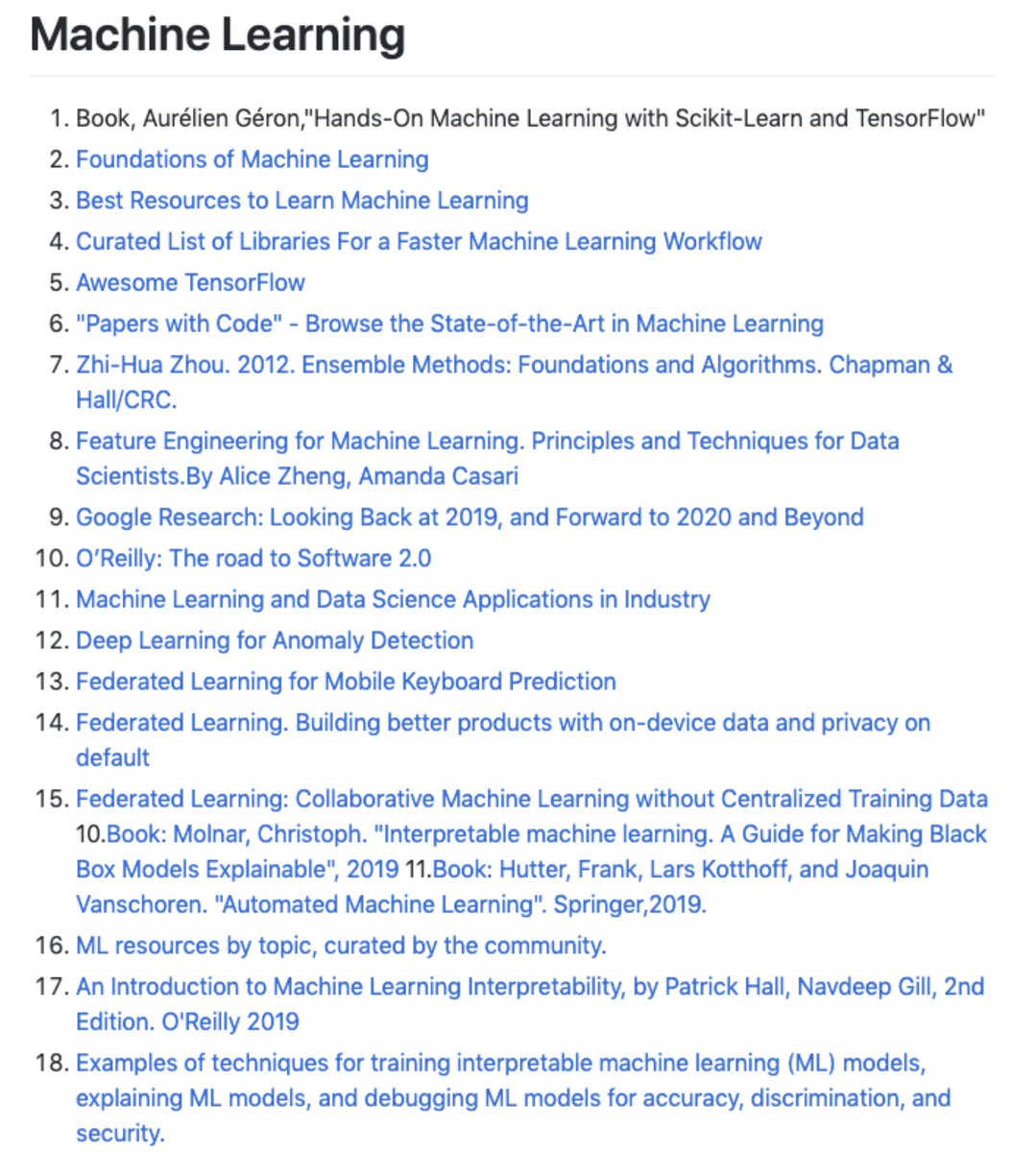
🚨Anthropic just showed a 24-minute workshop on
how to actually do prompts for Claude.
Taught by the people who built it. Free.
No registration. No paywall.
I've seen $300 courses that don't cover what they teach in the first 8 minutes.
Watch it and bookmark it now!
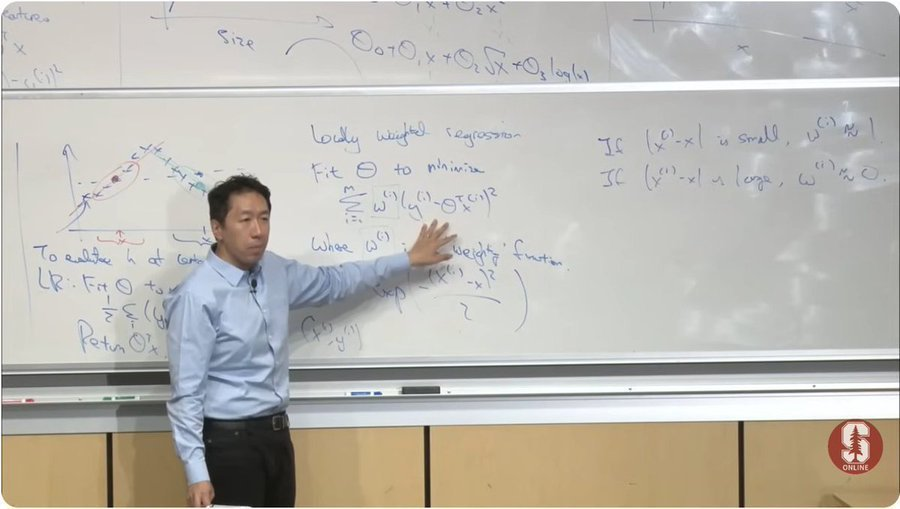
Anthropic engineer:
"You're not supposed to prompt Claude. You're supposed to build a system that prompts itself."
In 45 minutes, she shows exactly how Anthropic builds agents that remember, fix their own mistakes, and get smarter with every run.
This beats any paid course on agents I've seen.
Watch it.
https://t.co/HJedoop6Ke
Bible Studies on a variety of the more difficult and controversial Bible subjects Trinity, Once saved always saved, Sabbath, Grace and the Law death, hell, rapture and the 8th Day
Great Books for Summer or Winter Reading!
"Against the Gods: The Remarkable Story of Risk" by Peter L. Bernstein.
"In this unique exploration of the role of risk in our society, Peter Bernstein argues that the notion of bringing risk under control is one of the central ideas that distinguishes modern times from the distant past. Against the Gods chronicles the remarkable intellectual adventure that liberated humanity from oracles and soothsayers by means of the powerful tools of risk management that are available to us today."
https://t.co/gFfUai8jLy
@KarmaWallet How to Maximize your Earnings and Reward Potential for Launch Points Season 1?
All users who register for the Karma Launchpad will receive an additional Points allocation of up to 1.75x!
Join Now:
https://t.co/N15k0sENXw
@KarmaWallet How to Maximize your Earnings and Reward Potential for Launch Points Season 1?
All users who register for the Karma Launchpad will receive an additional Points allocation of up to 1.75x!
Join Now:
https://t.co/N15k0sENXw
@KarmaWallet How to Maximize your Earnings and Reward Potential for Launch Points Season 1?
All users who register for the Karma Launchpad will receive an additional Points allocation of up to 1.75x!
Join Now:
https://t.co/N15k0sENXw