We are one of the biggest consumers of AI tokens in the world, consuming +3 TRILLION tokens per month.
We are model and company agnostic which is extremly important for us as if we would spend all those tokens on a model like $ANT’s Fable 5.2. or total yearly cost would be over $400M.
Having multiple models and multiple AI model providers is one of the key things for the AI application layer.
@Astra__AI just passed 20M users.
When Duolingo had 20M users in February 2014, it had raised about $38M in VC to get there.
We got here in 3 years with $0 in VC.
AI changed how many students a small team can serve. We now run 3T+ tokens a month across 190+ countries. Reach got cheap. Making sure 20M students actually learn, and don't just collect answers, is the part that is still hard, and it is what we work on every day.
Next stop 50M.
AI is great for open-minded, driven people with an entrepreneurial soul.
3.23 million new business applications were filed in the US in the first half of 2026. That’s a record.
At the same time, more than 1 in 3 new startups now has a single founder, up from under 1 in 4 in 2019.
I don’t think that’s a coincidence. AI gives one person the reach of a team: a developer, a designer, a marketer and an analyst on call. This is why we need more AI-open people. The tools are here. The opportunity goes to whoever is willing to pick them up.
This weekend, we will surpass 20M users. We went from 10M users to 20M users in 5 months. The crazy part is that even though we have been building Astra AI for 3 years now, it feels more than ever like we are just getting started.
Looking back at some iconic consumer apps of the century and their growth curves after hitting 10M users, we are growing faster than Robinhood did during the pandemic surge, when everyone wanted to invest, and a bit slower than Instagram at the same stage.
Thank you to our users, and thank you to the exceptional team at @Astra__AI for relentlessly shipping and building every day.
50M is in sight!
The competition on the AI model front is really impressive and is getting more and more intense.
We are finding that across many of our core use cases, users simply can’t tell the difference between a frontier model and a model that is 50x cheaper. This trend started already a few months ago and is continuing to gain momentum.
Our data sample on this trend is not small, as we already have over 18M users in 190+ countries.
In future posts, I’ll share more interesting trends we are seeing while building and running an AI-native company at scale.
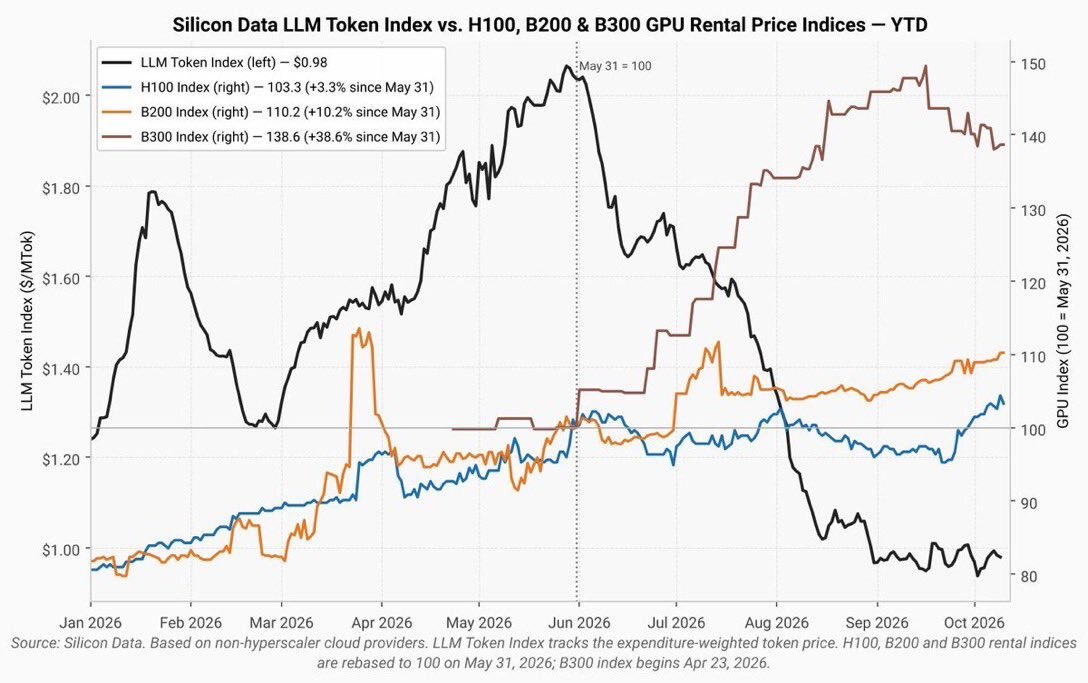
Token prices continue to fall, which the AI industry should embrace, as we need AI to permeate the economy across all layers of companies and consumers if we truly want broad adoption of AI and, more importantly, fair access to AI for all.
This is a win for all layers of the AI stack: the semis, infrastructure, model providers, and the application layer.
We are adding almost 2M new users every 7 days, even though we're already at 17M users.
@Astra__AI 's growth continues to accelerate at an unprecedented clip, even as we get bigger. We now have almost 17M registered users, up from 15M just 7 days ago.
For those wondering, demand for AI application solutions is real, and it is accelerating.
I predict that in a year from now, consumers won't care which model is used under certain AI applications for most use cases.
We are already seeing strong signs of that behavior today, and I believe it will continue as we reach certain thresholds in model capabilities, so incremental improvements from model performance alone aren't that big anymore for most use cases.
Where we still have a lot of value to extract for the users is in the harness (the workflows, UX, context, etc.), and where the real gains in the AI application layer are right now.
Personal AI agents are great, but there is a BUT…
I'm a big fan of personal AI agents. They can save us hours, take care of tedious tasks, and let us focus on what actually matters. But when it comes to young people, we need to be much more careful about how we use them.
If you're an adult, you've already gone through years of developing your thinking, your reasoning, your ability to work through hard problems on your own. You've built the foundation. Delegating tasks to an agent at that point is a tool that multiplies what you can already do.
But if you're still in school, that foundation is exactly what you're building. And it gets built through the work itself: struggling with a math problem, figuring out how to structure an essay, getting something wrong and understanding why.
An agent that does your homework for you doesn't just skip the boring part. It skips the learning. The finished assignment was never the point. The thinking you did to get there was.
That's why, for young people, the role of AI should be completely different. It shouldn't be an agent that does things instead of you. It should be a tutor that helps YOU learn. One that asks you questions, guides you when you're stuck, and makes sure you actually understand, not one that hands you the answer.
This is exactly why we built @Astra__AI, and it's the core goal behind everything we do.
Astra helps students learn through a clear, structured learning process. It's designed so that students do the thinking themselves, with AI supporting them along the way, so they come out the other side with real knowledge and the ability to reason on their own.
I genuinely believe this is one of the most important things we need to get right as a society. If an entire generation grows up outsourcing their thinking before they ever learn how to think, we lose something that's very hard to get back.
AI can be the best tutor any student has ever had. Or it can be the thing that quietly stops them from learning. The difference is in how we build it.
Let's not mess this up.
I encourage all entrepreneurs by heart: GO BUILD. There are two great places to stand in this economy as a business:
- You're a giant. You own the data centers, the GPUs, the energy contracts. Compute is your edge.
- You're a small, fast team. A small team of people with AI can now ship what used to take a 100-person org.
Design, code, marketing, support, research, all with leverage that pre-AI founders could only dream of.
The danger zone is the middle: companies too big to move fast, too small to own the infrastructure.
If you're small, this is your moment. Speed was always your edge.
For those worried about margins in the AI application layer, take a closer look at this chart and how AI inference costs are falling. Like any other big technology breakthrough, AI is a new PLATFORM.
As the famous quote goes: "A platform is when the economic value of everybody that uses it exceeds the value of the company that creates it"
Voice is quickly becoming a growing way people interact with AI.
The CEO of Instinct (@noahrshinn) recently shared that 90% of interactions with their personal AI agent happen by voice. At @Astra__AI, serving more than 15M users, we are also seeing the growing importance of voice interactions
Voice does bring some unique standpoints that one should take into consideration:
1. Engagement is higher. Talking is faster and easier than typing. Lower friction means more interactions per day, and frequency is what builds retention.
2. Bigger addressable market. Voice opens AI to people who don't type comfortably or don't sit at a screen all day. That includes older users, people on the move, and mobile-first markets.
3. New hardware surfaces. Earbuds, smart glasses, cars, and wearables have little or no screen. Voice is the natural interface for all of them, and AI agents will make them more usable.
4. Getting voice right in AI is hard. Low latency, natural turn-taking, handling interruptions, and keeping costs per minute down. Teams that solve these will build a strong advantage in my view (at Astra AI we are already working hard on this).
5. Richer context. Spoken conversations carry more nuance than short typed prompts, which lets agents become more personal and more useful over time.
At @Astra__AI we now have more than 15M registered users.
$0 in VC funding; bootstrapped from the ground up.
Our growth curve keeps getting steeper and steeper, and we are now not only one of the fastest-growing startups in Europe but in the World.
Thank you to our users and to our team, who continue to ship and focus relentlessly on bringing the best version of a personal tutor accessible to everyone.
One of the strangest things about working in AI right now is the gap between how fast the technology moves and how slowly opinions about it change.
Every few weeks there's a new model that's meaningfully better at reasoning, writing, coding, or explaining. But when I talk to teachers, parents, and even business leaders, I often hear the same thing: "We tried it, it wasn't good enough." When I ask when, the answer is usually "a couple of months ago."
First impressions stick, especially disappointing ones. But in AI, a month-old experience is basically a historical document.
For those of us building AI products, this is part of the job. Shipping great technology and products isn't enough. We also have to help people update their mental picture of what's possible. Sometimes the most valuable thing you can do is get someone to try again.
At @Astra__AI we are now adding +150.000 new users each DAY!
Our growth curve continues to look steep, and we've done it bootstrapped from the start, with zero VC investment so far.
To put that in perspective, in the first 2.5 years, Instagram grew by +110k users per day.
Vercel's CEO: "When a team adopts AI, they always adopt multiple models. The average enterprise adopts over 5 AI models."
This goes against the arguments that we'll end up with a monopoly or duopoly in the AI model layer.
Executor v2 is so good.
Makes connecting cloud agents to our tools and setting up automations really smooth.
Been moving parts of our software factory @Astra__AI over to it.
Really liking what @RhysSullivan is cooking 🧑🍳
In our conversation, Vercel CEO @rauchg explains his recent statement that open models now account for 80% of Vercel’s token traffic.
He says models from OpenAI, Google, and Anthropic have steadily been losing ground to open models, with openness and speed emerging as key trends.