Hi all! If you are looking for a conference in exoplanet interiors in 2026, check out "Layers of Understanding: Model Intercomparisons of Exoplanet Interiors": https://t.co/wQ95RFo5wp
It will take place in MPIA's campus in April 13-17th. Registration deadline: 15 January 2026
The topics of the review talks and sessions include interior and evolution models, intercomparisons (like GCM-CUISINES) and experimental data such as equations of state.
Hi all! If you are looking for a conference in exoplanet interiors in 2026, check out "Layers of Understanding: Model Intercomparisons of Exoplanet Interiors": https://t.co/wQ95RFo5wp
It will take place in MPIA's campus in April 13-17th. Registration deadline: 15 January 2026
This is not the typical conference: its aim is to assemble the exoplanet interior community to initiate systematic intercomparisons of interior models and foster discussions on best practices and protocols.
I finally found the time to take the leap to the alternative to Twitter/X. Follow me at @astrolore.bsky.social for future posts about astronomy and exoplanets in the blue butterfly place🦋
If you are around in Heidelberg, and want to hear about the latest on interiors of Solar System giants and exoplanets, come join tomorrow's HJAC seminar by Yamila Miguel! 🪐🛰️🔭
Tomorrow at the Heidelberg Joint Astronomical Colloquium: @AstroYamila will show us how measurements from Jupiter and Saturn and JWST data improve interior models of giant exoplanets - hybrid in the Großer Hörsaal at Philosophenweg 12 and online via Zoom
https://t.co/3QODrPNtpm
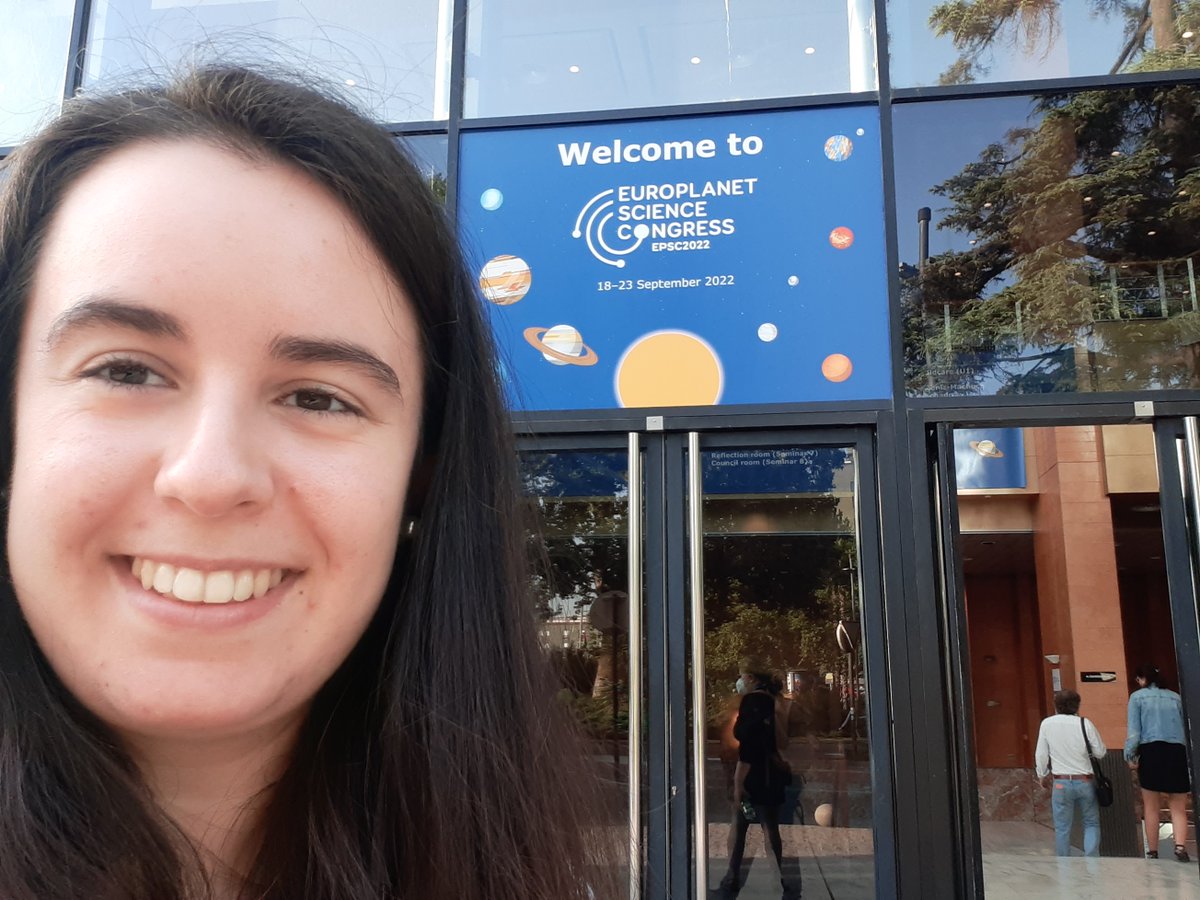
Ready for #EPSC2022! If you want to hear about how coupled interior and atmosphere models can be used to assess observability of rocky planets with JWST, come to my talk tomorrow afternoon in session EXOA4
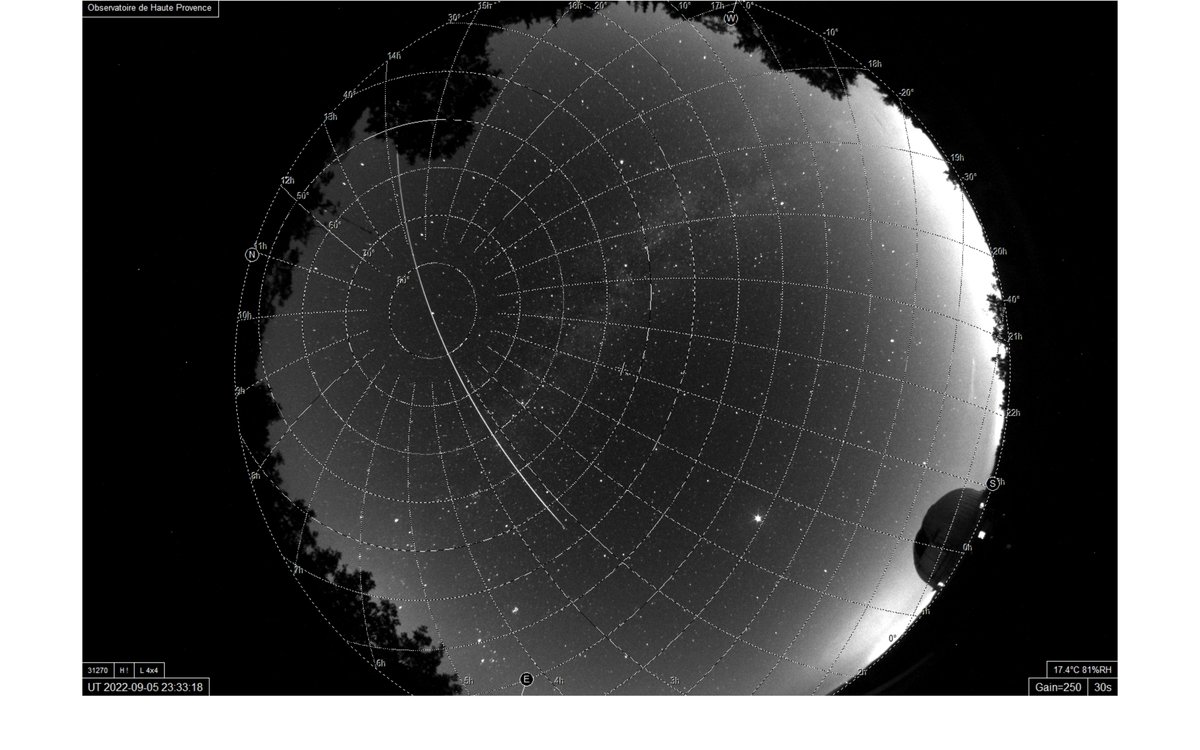
The big line crossing the zenit is a laser that other domes in OHP use to study the Earth's atmosphere . The lights you see coming from the south (behind the dome) is Marseille's light pollution.
First time in 3 years at Observatoire de Haute Provence (@LAM_Marseille) that I don't have the moon or a single cloud in the sky while I'm observing 😍. The dome of 1.93 m telescope can be seen in the south (S).
Finally, my first in-person conference since I started my PhD! Today I'll be presenting a short talk in session 16 of @SF2A_astro on how interior modelling can be used to assess observability of rocky planets with JWST. #SF2A2022
@aussiastronomer @exohugh Indeed, he's not in academia anymore. If you are interested in using the model he developed during his PhD, we continued working on it in LAM, so just let me know
For the core mass fraction, we see that the innermost planets of K-102 and K-80 have very high CMFs (80-90%). This could be explained with collisions that strip away the mantle after formation, mantle evaporation or accretion of pebbles in the vicinity of rock lines. 13/n
My second first-author paper is on arxiv! 🚨Water content trends in K2-138 and other low-mass multiplanetary systems. A thread 🧵
https://t.co/oEJFJ8feTZ
We discuss that this trend can be the result of XUV escape for the inner planets, and formation in areas of the protoplanetary disk with volatile-rich pebbles (such as the vicinity of the water ice line) with later inward migration for the outer planets. 12/n