Announcing Octofitter (🐙), an ambitious tool for all kinds of exoplanet orbit modeling workflows: fit planet orbits to relative astrometry, proper motion anomaly, radial velocity, images, and more! [1/7]
https://t.co/vG2fO6LGtK
Announcing Octofitter (🐙), an ambitious tool for all kinds of exoplanet orbit modeling workflows: fit planet orbits to relative astrometry, proper motion anomaly, radial velocity, images, and more! [1/7]
https://t.co/vG2fO6LGtK
This photo of Earth is EXTRA spectacular for a good reason... let me explain. Most images you see of Earth from space are the daylight side of the Earth, and it's obviously very bright (see my last image), this means stars are too dim to be seen with that bright exposure setting (low ISO, high shutter and / or stopped down aperture).
BUT this image taken by the Orion crew looks so incredible because you can see the sun is BEHIND the earth, meaning it's night time on the side of the earth facing the crew in this image.
So how do you expose a night time earth from space? Same way you do on Earth! A mixture of opening up the aperture (F4 in this case), cranking the ISO (51,200 here), and using a relatively long exposure (1/4 of a second). We can see the settings used by looking at the exif data from the camera. What this means is our camera is also sensitive enough to see stars in the background of Earth, leading to an extraordinary image!!! GREAT WORK!!! These are the kind of images I've been so excited to see!
New paper! In work led by Sabina Sagynbayeva we quantify mission and ancillary data (RV, astrometry) requirements that enable "full system" (terrestrial AND giant planets) characterization with the Habitable Worlds Observatory.
https://t.co/55dRwuQ4S0
New paper! In work led by Sabina Sagynbayeva we quantify mission and ancillary data (RV, astrometry) requirements that enable "full system" (terrestrial AND giant planets) characterization with the Habitable Worlds Observatory.
https://t.co/55dRwuQ4S0
@wsmoses@MilesCranmer Great to hear! I’ll make sure to test out the latest versions. I will say that those issues aside, the performance from Enzyme seems totally unmatched by any other package, so I do use it personally even when I haven’t yet recommended it to users directly.
@MilesCranmer This has been my experience with Enzyme too! I can get it working well for myself but I’m not sure I trust it enough to roll out to others.
A surprising & little-known results in classical statistics:
Mean (μ) and median (m) are within one std deviation:
|μ−m| ≤ σ
For unimodal densities, bound is even tighter
|μ−m| ≤ 0.7746 σ
This beautiful results first appeared in a 1932 paper by Hotelling & Solomons
1/3
Our paper on a differentiable spectral model, ExoJAX2, has been accepted by ApJ. In this paper, we use HMC-NUTS to analyze JWST’s native-resolution transmission, high-dispersion spectra of a brown dwarf from Subaru, and Jupiter’s reflected light. https://t.co/WqwMNXMtO5 1/N
Just learned that am being awarded the J. S. Plaskett medal for most outstanding doctoral thesis in astronomy in Canada. Thank you @AstroCanada, and my committee & @PHASTatUVIC for the nomination!


![AstroWrt's tweet photo. Announcing Octofitter (🐙), an ambitious tool for all kinds of exoplanet orbit modeling workflows: fit planet orbits to relative astrometry, proper motion anomaly, radial velocity, images, and more! [1/7]
https://t.co/vG2fO6LGtK https://t.co/3Z0UR8XkeW](https://pbs.twimg.com/media/GFq1_jQbAAANhTE.jpg)


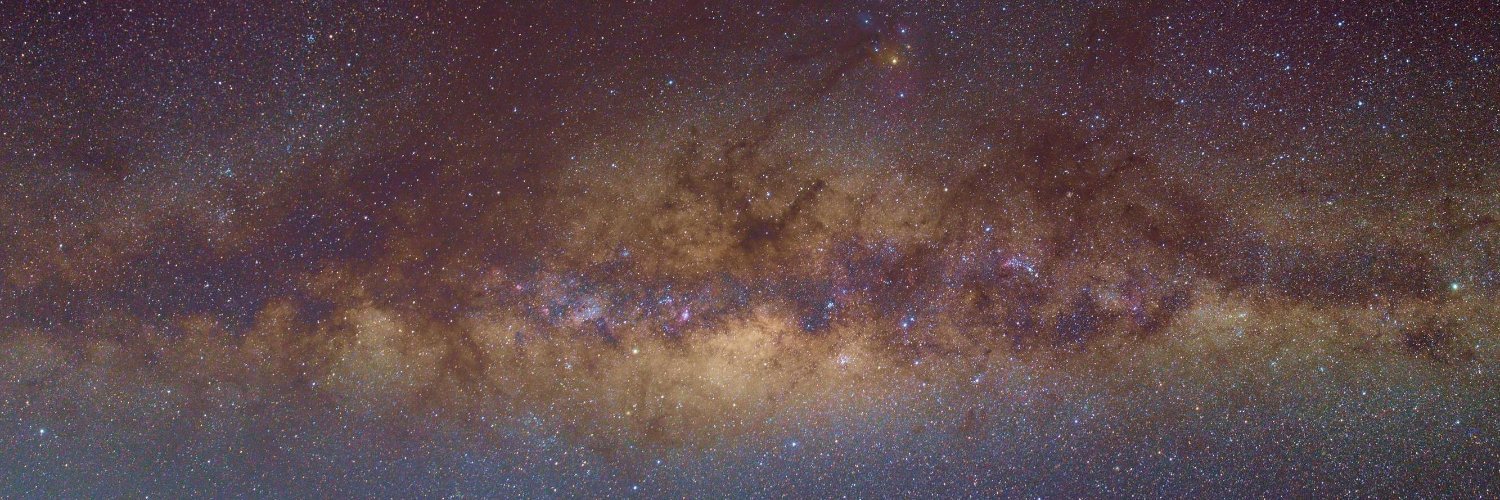

![AstroWrt's tweet photo. Announcing Octofitter (🐙), an ambitious tool for all kinds of exoplanet orbit modeling workflows: fit planet orbits to relative astrometry, proper motion anomaly, radial velocity, images, and more! [1/7]
https://t.co/vG2fO6LGtK https://t.co/3Z0UR8XkeW](https://pbs.twimg.com/media/GFq1_jQbAAMzH3U.jpg)


