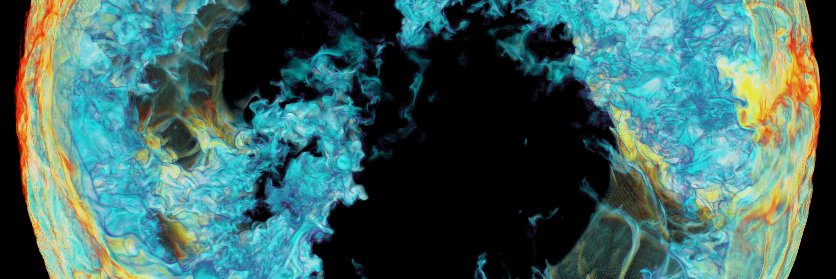
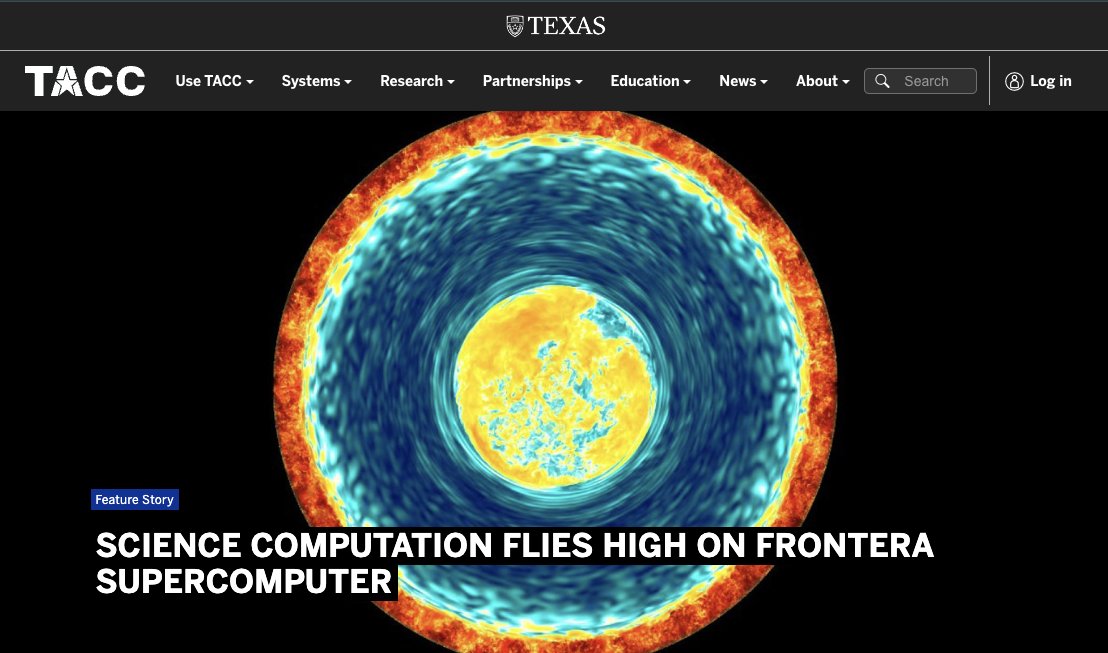
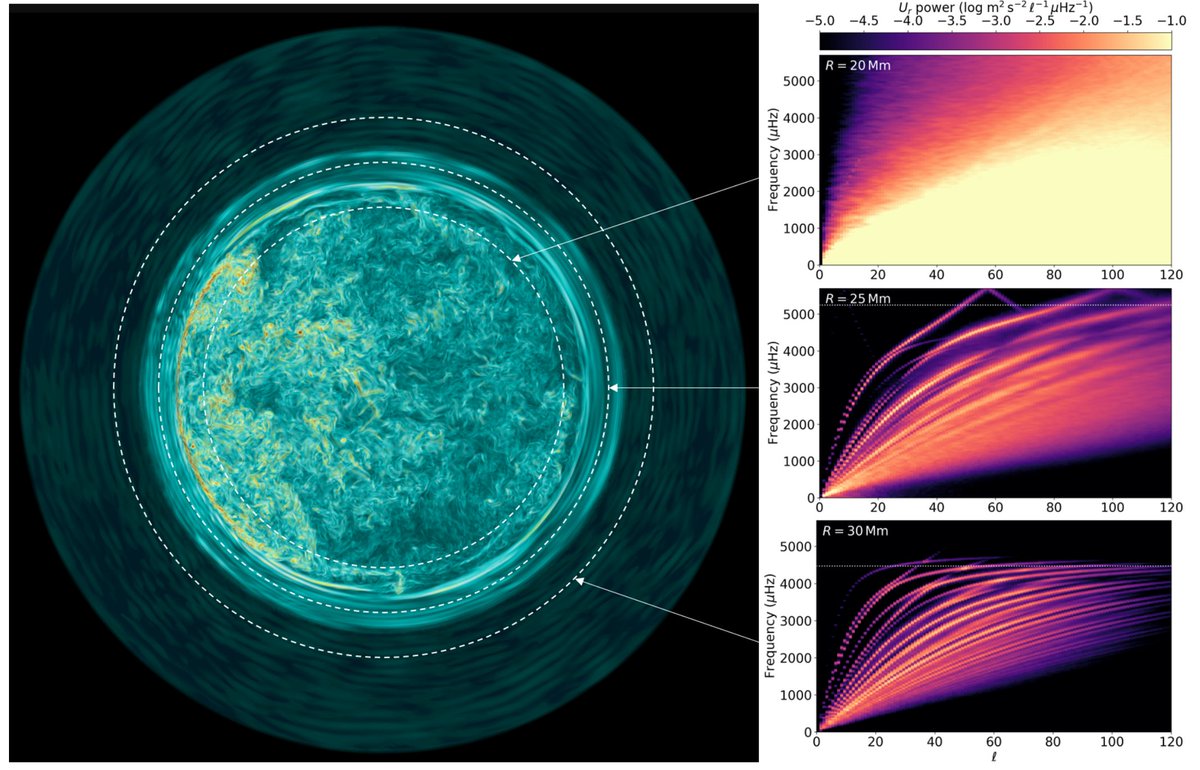
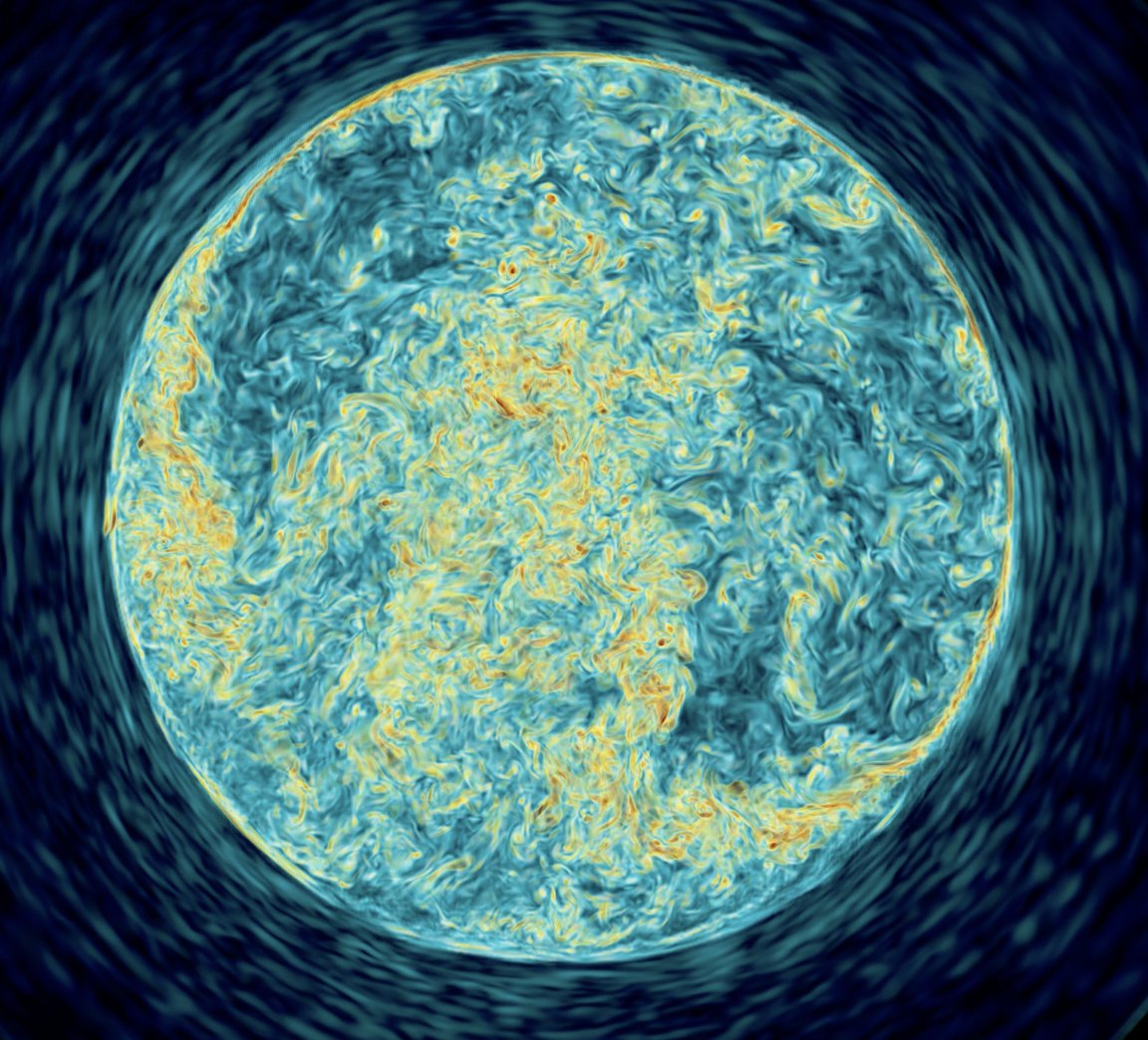
With these new 3D simulations featured by TACC https://t.co/qjpwokByf6 and performed on the most recent TexaScale event in February we are hoping to find out what the nature of the asteroseismic low-frequency excess is, observed by space telescopes such as https://t.co/IkeEDEug8q
A new article in Quanta Magazine https://t.co/2BtrvxzmLP tells the story of how heavy elements form in dynamic stellar nucleosynthesis to a broader audience, and https://t.co/dlFPvAA2g9 collaborating with @ArtemisSpyrou@FRIBLab made key contributions.
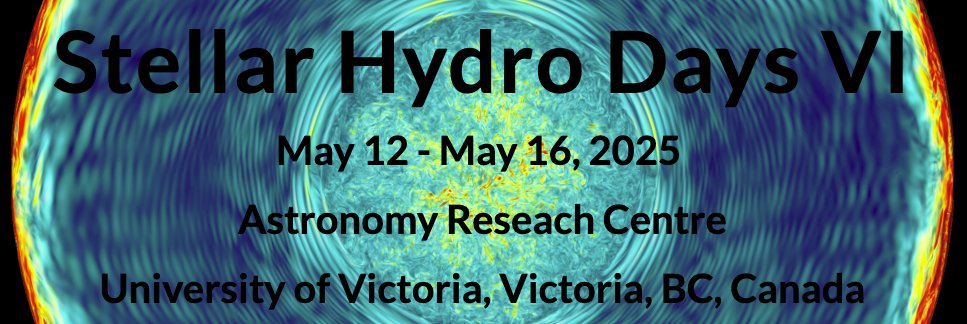
We are looking forward to hosting Stellar Hydro Days VI in Victoria next week https://t.co/xHMIYZIMyw week dedicated to a deep dive into 3D simulations of stars, transport phenomena, internal gravity waves, asteroseismology predictions, wave turbulence and more ....
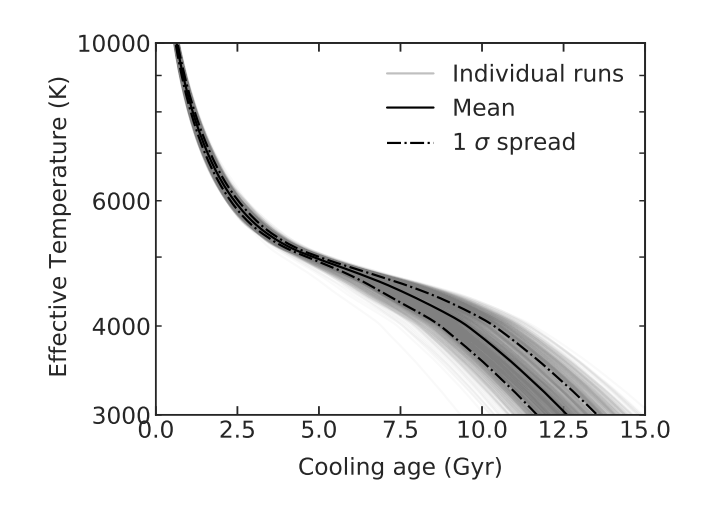
First paper by our MSc student Praneet Pathak: model uncertainties in white dwarf cooling ages typically can reach 0.8 Gyr at 4000K – comparable to measurement errors! This is key when white dwarfs are used as cosmic clocks. https://t.co/2zXBNyw2Ab
Researchers from UVic’s Astronomy Research Centre used the James Webb Space Telescope to captured a rare glimpse of how young planets are forming. This groundbreaking discovery reveals how planets compete with their host star for material https://t.co/iA7rgozflJ @ArcUvic#JWST
I think I am following where Nature leads me https://t.co/KWQ2dQZFMv maybe the grass is not greener there but molecules in Earth’s atmosphere scatter sunlight intensity with 1/lambda^4 which makes the sky ... @fherwig
Obviously, there is still some room for improvement in traffic education for our animal city residents. But ... that's ok, we accommodate. #victoriabc#canada
The state of core convection hydrodynamic simulations in 2023 from the very nice review by Daniel Lecoanet and Philip Edelmann. 3D stellar macro physics. We are getting there! https://t.co/BTEFF69Xat
If you are using white dwarf cooling ages now you can know what the systematic model uncertainties are, from our MSc student Praneet Pathak's (w/ Simon Blouin) very first paper https://t.co/2zXBNyvuKD
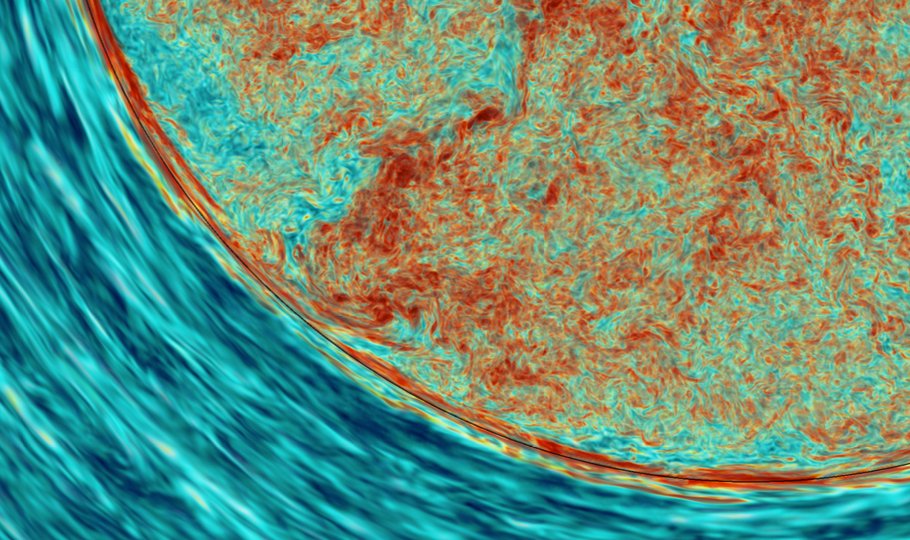
... at intermediate radii in blueish colors. We hope to learn if and how these waves may reach the stellar surface, what the role of the near-surface convective shell is, and how the spectra relate to observations, see recent work by our colleauges https://t.co/FIEBBK4bC3
With these new 3D simulations featured by TACC https://t.co/qjpwokByf6 and performed on the most recent TexaScale event in February we are hoping to find out what the nature of the asteroseismic low-frequency excess is, observed by space telescopes such as https://t.co/IkeEDEug8q
The simulations include in one grid a convective core as well as a relatively thin convective envelope in a massive main-sequence star. Internal gravity waves that are excited by core convection are visible in this image of the horizontal velocity component ...
Announcing octofitterpy, a python wrapper for Octofitter. You can now fit orbits in seconds, all from the comfort of python. Just `pip install octofitterpy`!
Demo here: https://t.co/7VbDDDkNBV
[1/3]
Really exciting #astrophysics research from our own @ArcUvic@PHASTatUVIC@CITA_ICAT Fellow Simon Blouin shows how floating crystals shake up the internal gravitational energy content of #WhiteDwarfs and delays their ultimate death by billions of years https://t.co/latyV6KZUK
🌟 In a paper published today in @Nature, scholars from @the_IAS, @UVicScience, @uniofwarwick, and @CITA_ICAT have proposed a new theory that explains why a puzzling population of white dwarf stars seems to have cheated death for ten billion years: https://t.co/F1ATaIVew6
Really exciting #astrophysics research from our own @ArcUvic@PHASTatUVIC@CITA_ICAT Fellow Simon Blouin shows how floating crystals shake up the internal gravitational energy content of #WhiteDwarfs and delays their ultimate death by billions of years https://t.co/latyV6KZUK
Thanks to new research from UVic's Simon Blouin (a @CITA_ICAT fellow), @uniofwarwick, and @the_IAS, we now know why a population of white dwarf stars have stopped cooling for billions of years. https://t.co/dXLQ0IW1li
Our first-ever full-sphere 3D hydro simulations of core-helium burning star interiors reveal internal gravity waves in assumed semi-convection zones at the core boundary, and that such semi-convection zones will most likely disappear on short time scales https://t.co/aBkraJVxWS
@MIAPbP Stellar Astrophysics program: 10,000 solar mass stars origin of abundance correlations globular clusters?! Our 3D hydro sims of such super-massive stars offer support for the use of mixing-length theory in 1D sims https://t.co/kbhS0LcNbP https://t.co/FnEBxfJ6rm @SciNetHP
Verification through code comparison is super important in astrophysics simulations. Andrassy+ 22 https://t.co/IPjxZ3gquR compared 5 codes convective boundary sims - very encouraging - community data analysis access to reproduce all plots at https://t.co/FnEBxfJ6rm - Hubs - CoCo
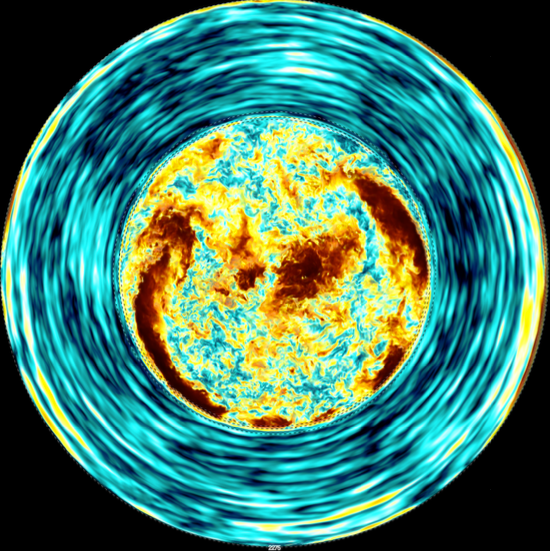
Centre plane tangential velocity rendering: the convective core is dominated by a giant dipole seen from N to S with boundary layer separation in the E and W of the horizontal return flow (cf Fig 4 for radial velocity). IGWs in the stable envelope have a broad range of scales.
Finally paper I of our series on 3D hydrodynamic simulations of massive main-sequence stars is published https://t.co/IX0ZjeQMK1 based on very high grid resolution runs done @SciNetHPC and @TACC research supported by @NSF@NSERC_CRSNG@jina_cee
The convective core and the internal gravity wave dominated envelope have characteristically different radial velocity PDFs which can be used to map the flow transition at the convective boundary.