Il Circolo Astrofili di Milano è un'associazione culturale senza fini di lucro che sin dal 1932 opera per la divulgazione dell'astronomia e della scienza.
21 Giugno, 4:42
Solstizio d’Estate ☀️
Questa mattina il Sole ha raggiunto il punto di altezza massima sull’orizzonte, nell’emisfero Nord della Terra. Dopo il solstizio d’Estate le giornate tornano progressivamente ad accorciarsi.
Buona Estate! #solstiziodestate
🚀 Mercoledì prossimo, 28 Maggio, il Circolo Astrofili di Milano ospita una conferenza imperdibile tenuta da Giovanni Caprara, editorialista scientifico del Corriere della Sera dedicata al programma San Marco. ⭐️
Non mancate!
https://t.co/OXPVRNrp3c
Dai un'occhiata al video di astronomicamente27! #TikTok https://t.co/U7rxsrP5kR
Venere e Saturno all’alba del 16 Maggio. Con un piccolo telescopio si potrà osservare Titano vicino agli anelli del gigante gassoso. 🪐
#saturno#titano
Là nel cuore della galassia Ngc 6505 c'è un anello. Un anello perfetto. Un anello di Einstein. Il primo scoperto dal telescopio spaziale @ESA_Euclid dell’@Esa. https://t.co/3IfSRrEnES
Where is Comet ATLAS going? In the featured time-lapse video, the comet is not itself moving very much, but the Earth's rotation makes it appear to be setting over a hill. The Comet C/2024 G3 (ATLAS) sequence was captured with an ordinary camera on January 22 from the Araucanía Region in central Chile. Comet ATLAS has been an impressive site in the evening skies of Earth's Southern Hemisphere over the past few weeks, so bright and awe-inspiring that it may eventually become known as the Great Comet of 2025. Unfortunately, Comet G3 ATLAS is not going anywhere anymore because its central nucleus broke up during its close pass to the Sun last month. Some of the comet's scattered remains of rocks and ice will continue to orbit the Sun, some in nearly the same outward section of the orbit that the comet's nucleus would have taken.
Video Credit & Copyright: Gabriel Muñoz
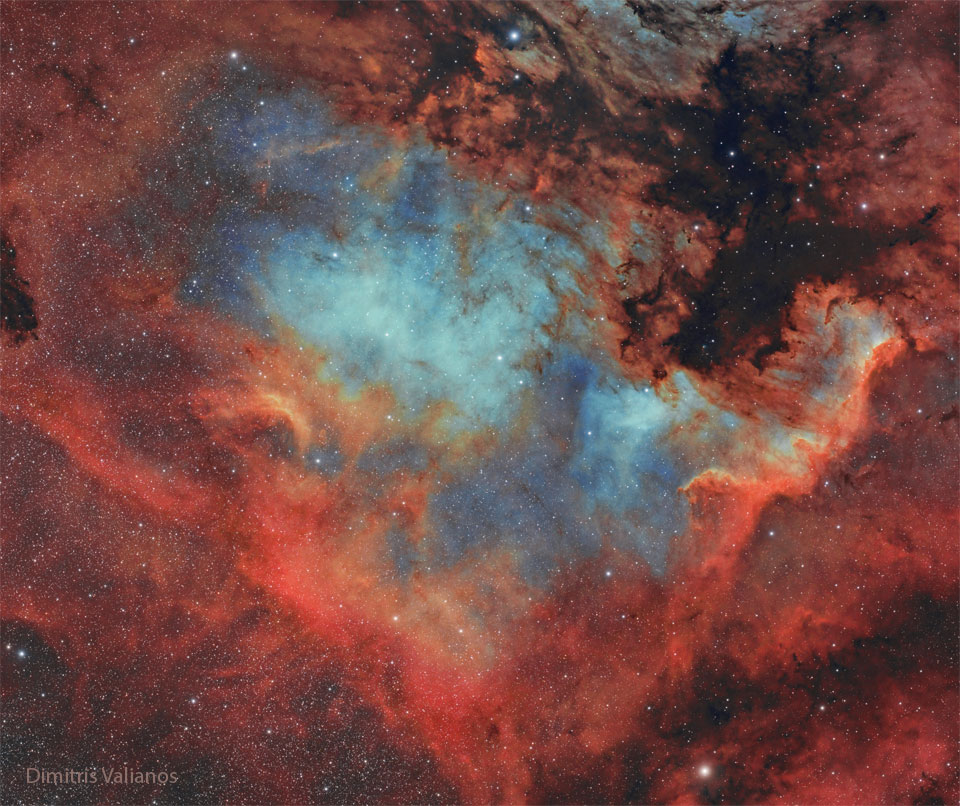
The North America nebula on the sky can do what the North America continent on Earth cannot -- form stars. Specifically, in analogy to the Earth-confined continent, the bright part that appears as the east coast is actually a hot bed of gas, dust, and newly formed stars known as the Cygnus Wall. The featured image shows the star forming wall lit and eroded by bright young stars and partly hidden by the dark dust they have created. The part of the North America nebula (NGC 7000) shown spans about 50 light years and lies about 1,500 light years away toward the constellation of the Swan (Cygnus).
Image Credit & Copyright: Dimitris Valianos
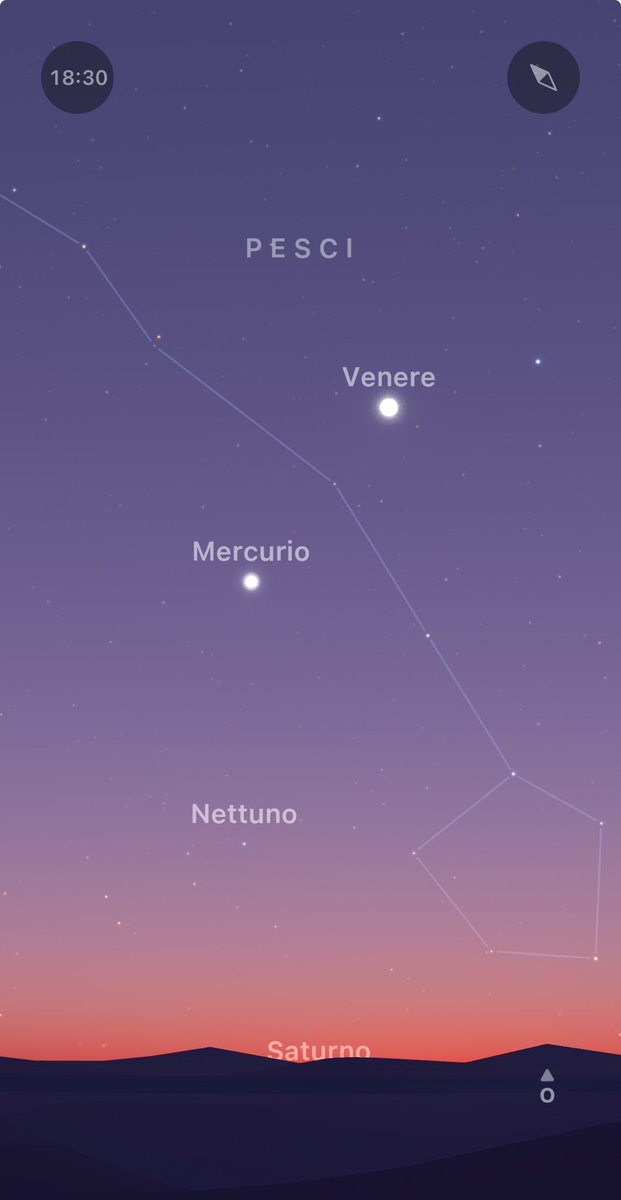
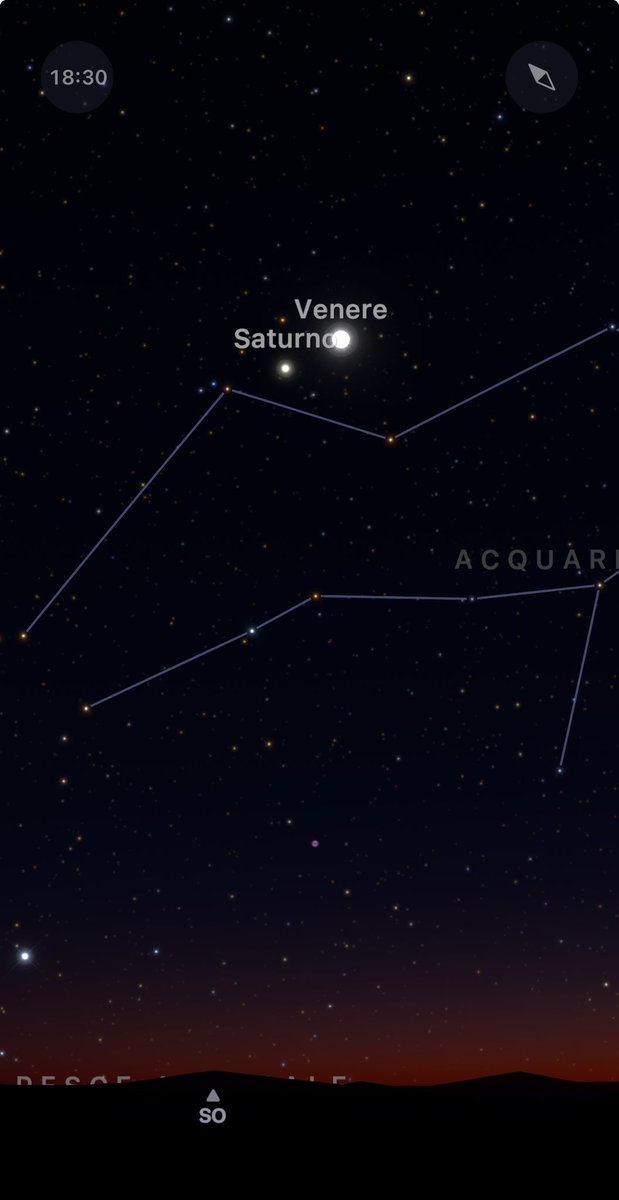
18 Gennaio, ore 18:30
Ultima congiunzione del mese
Venere ⭐️ e Saturno 🪐 si incontrano in cielo nella costellazione dell’Acquario. Buona visione! #congiunzioneVenereSaturno
Massive stars in our Milky Way Galaxy live spectacular lives. Collapsing from vast cosmic clouds, their nuclear furnaces ignite and create heavy elements in their cores. After only a few million years for the most massive stars, the enriched material is blasted back into interstellar space where star formation can begin anew. The expanding debris cloud known as Cassiopeia A is an example of this final phase of the stellar life cycle. Light from the supernova explosion that created this remnant would have been first seen in planet Earth's sky about 350 years ago, although it took that light 11,000 years to reach us. This sharp NIRCam image from the James Webb Space Telescope shows the still hot filaments and knots in the supernova remnant. The whitish, smoke-like outer shell of the expanding blast wave is about 20 light-years across. A series of light echoes from the massive star's cataclysmic explosion are also identified in Webb's detailed images of the surrounding interstellar medium.
Image Credit: NASA, ESA, CSA, STScI; D. Milisavljevic (Purdue University), T. Temim (Princeton University), I. De Looze (University of Gent)
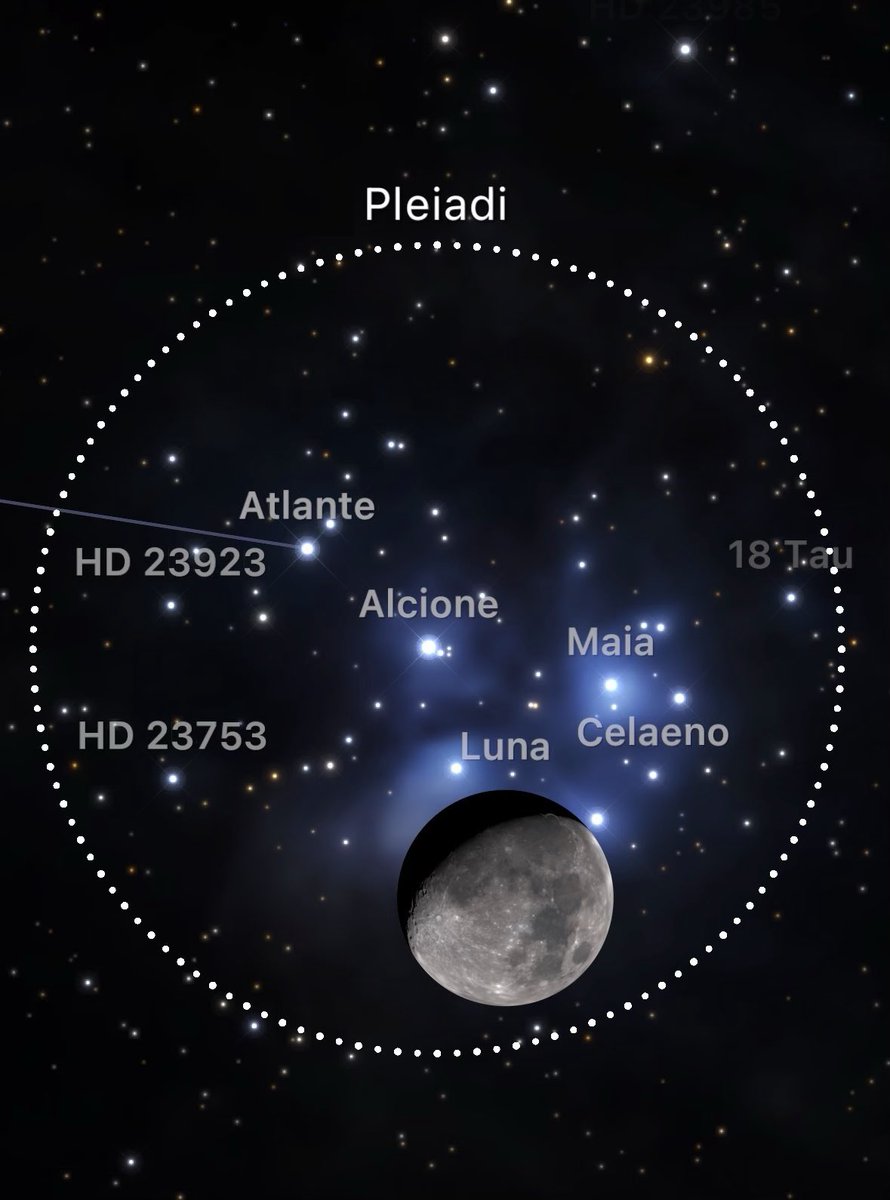
10 Gennaio, ore 03
La Luna 🌔 occulta le Pleiadi ⭐️ ⭐️
Prima dell’alba di domani si verificherà una congiunzione stretta tra la Luna e le Pleiadi nella costellazione del Toro. A Milano il nostro satellite passerà davanti ad alcune delle stelle più luminose dell’ ammasso.
8 Gennaio 2025
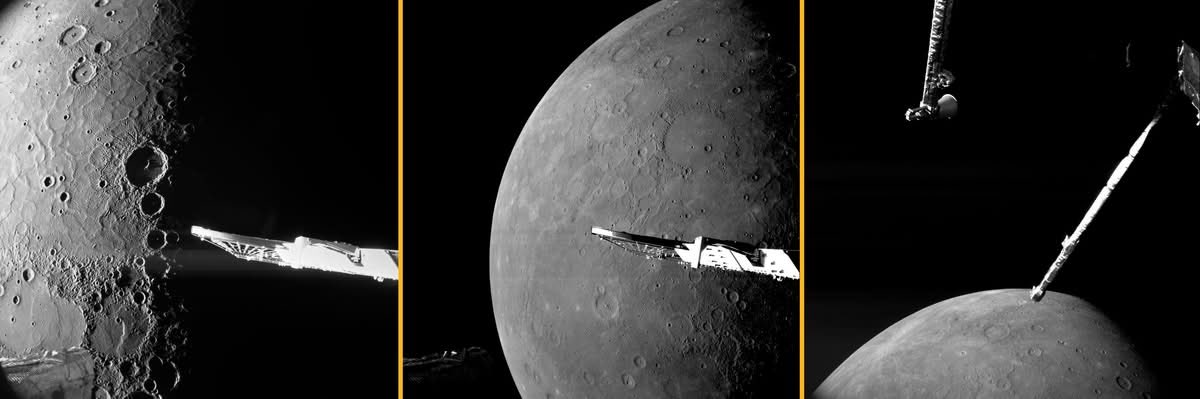
🚀 Sesto flyby di Mercurio per BepiColombo 🌑
Ieri, 8 gennaio, la missione ESA/JAXA BepiColombo ha sorvolato Mercurio per la sesta volta, completando con successo l'ultima manovra di "gravity assist”. @esa@JAXA_en
https://t.co/c4f8kt3Pdd