Today is Yuna's first live, check on aniplex youtube channel😉
Meanwhile, it is also River community's favourite voting event❣️!
📅First week: 27/4-4/5
📅Second week: 4/5-11/5
Your voting power✅ will based on your amount and length of $River staked! @RiverdotInc@River4fun
The privacy model crypto actually needs:
Anonymous to third parties. Transparent between the two people transacting.
Right now you get one or the other. Full transparency exposes everything to everyone.
Privacy pools hide everything from everyone, including the recipient who needs to know who paid them.
The answer is an identity layer that sits between those extremes.
Outsiders see nothing. The two parties see each other.
Private where it should be. Verifiable where it matter
The next era of crypto isn't user education.
It's interface design.
Intent-aware signing.
Readable identities.
Confidential routing.
Humans and AI agents both deserve better infrastructure.
Quantum cybersecurity is no longer a side conversation, at @SALTConference it shared the main stage with digital banking.
Our CEO @MehowHacks joined @CaitlinLong_ of @custodiabank, @jeffwallis of @N3XTinc, and @nic_carter of @CastleIslandVC, moderated by @josh_blockchain, to talk about what it actually takes to future-proof finance.
Mehow's argument: every serious quantum plan assumes millions of holders will migrate their funds on command. Ours doesn't. Same address, quantum-resistant proof, users don't have to do anything.
Quantum isn't a crypto problem or a banking problem. It's a deadline and we build like it.
AI agents are moving on-chain with Amadeus.
🔒 Confidential L1 for agentic finance
🤖AMA Hub: built on Amadeus
🕵️ Autonomous agents. Monetize your edge.
⚡️ Native compute via uPoW
🌐Traders, builders, DeFi & institutions
Open beta. 0 fees 👇
https://t.co/YWE9Lstq8T
The industry is debating whether to freeze Satoshi's wallets before quantum computers can crack them.
That's the wrong question. What we should be asking is, why aren't wallets quantum-resistant by default?
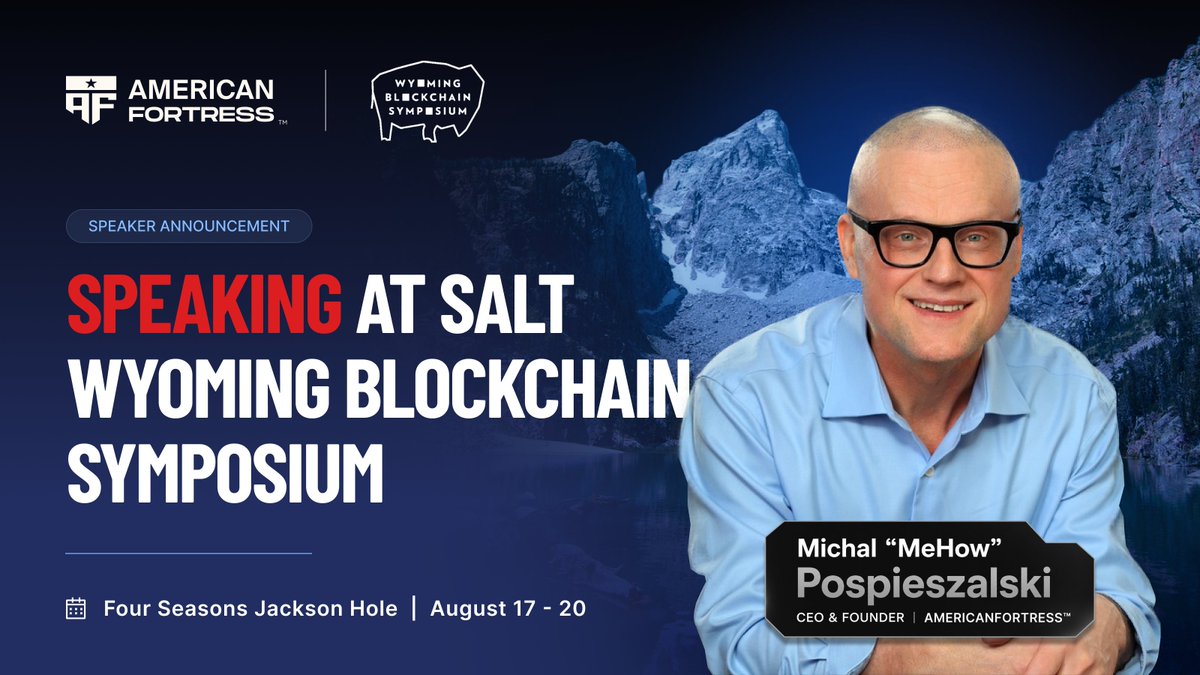
@MehowHacks will be talking about exactly that at the @SALTConference in Wyoming.
See you there.
The largest social engineering attack in crypto history didn't exploit a single line of smart contract code.
Months of relationship building.
One moment of misplaced trust. $285M drained from Drift Protocol.
76% of all 2026 crypto losses trace back to North Korea, and almost none of them involve a code exploit.
What this means for everyone else: the next major attack on your protocol, fund, or team won't come through your audit reports.
It'll come through a LinkedIn message, a recruiter call, or a coffee meeting that lasts six months.
Treat unsolicited contact the way you treat unsolicited code.