1/People keep asking if the Fed will “hike once and pause.” It’s a strange question historically. A single isolated hike has essentially never happened. Every tightening cycle since the early 1960s has been a multi-meeting sequence, not a one-off adjustment.
🚨 $HIMS STAKE UPDATE
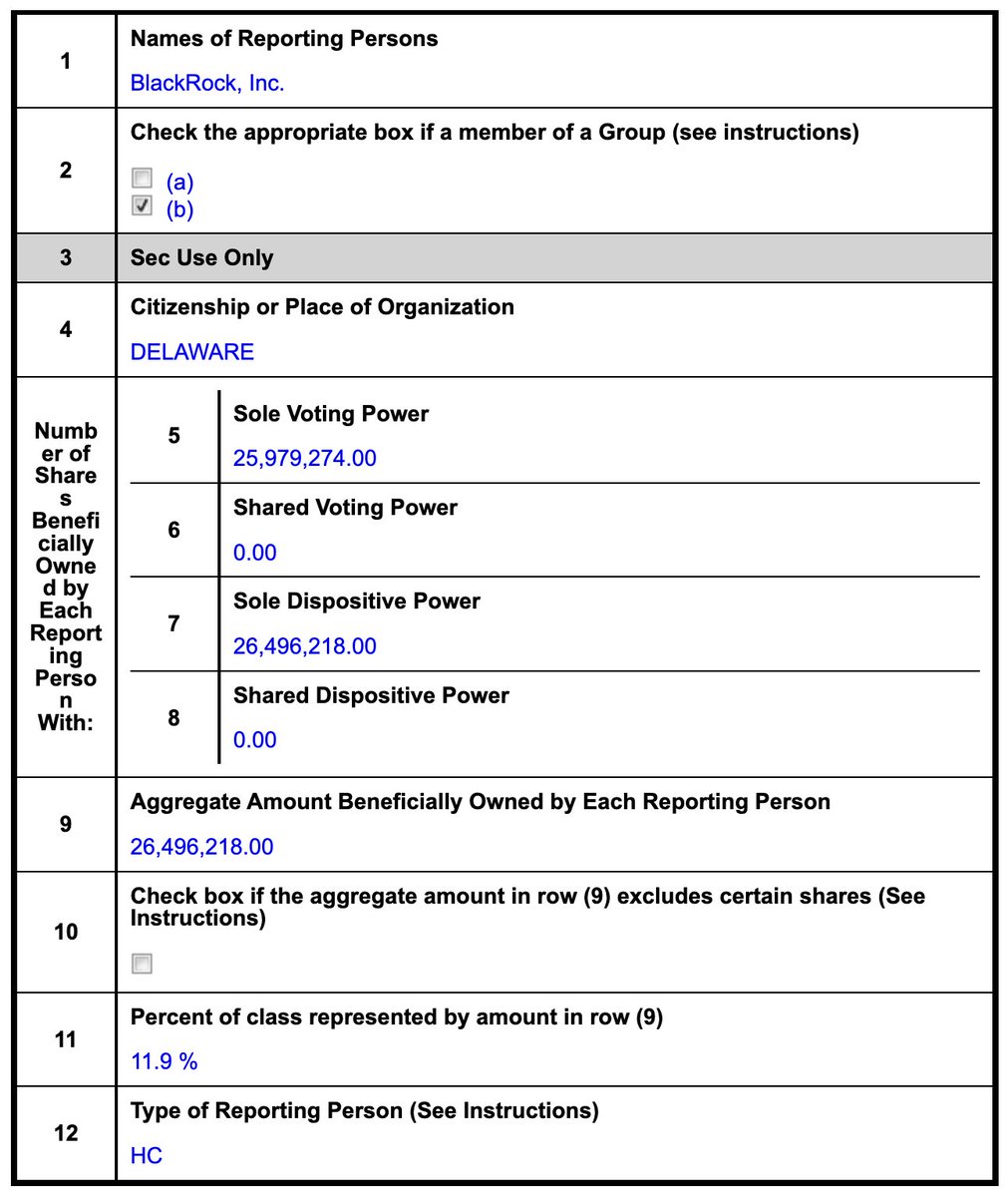
BlackRock now owns 11.9% (26.5 million shares)
Previously, BlackRock owned 23M shares
BlackRock is the largest institutional shareholder and now holds more shares than CEO Andrew Dudum
IF $SOFI USD SCALED TO $15B IN CIRCULATING SUPPLY?
At the current ~3.63% Fed funds rate, that’s ~$544M/year in float income alone, roughly two-thirds of SoFi’s entire FY26 guided net income ($825M), from a single product. Current supply is ~$304M, so this is a ~50x-scale hypothetical, not a near-term case. It’s also high-margin income, since holding cash reserves at the Fed costs almost nothing to run.
$SOFI Financial Services contribution margin fell from 51% (Q4) to 46% (Q1), even as segment revenue grew 41% YoY. Likely driver: rising direct-attributable costs, possibly tied to deposit-acquisition promos or expanded SoFi Plus rewards, though management hasn’t spelled out the cause explicitly. Worth watching tomorrow, whether this settles into a new lower margin floor or reverses as those campaigns roll off. I am guessing a rebound to 51%.
GLOBAL CHIP SELLOFF INTENSIFIES
Chip stocks in Asia continued to decline following a significant selloff in the U.S., driven by worries about AI expenditures and China’s advancements in technology. South Korea’s Kospi dropped by 10%, leading to two suspensions in trading, while Japan’s Nikkei decreased by 4%. In the U.S., chip stocks were still under pressure before the market opened, with $MU , $NBIS , $INTC , and $NVDA all experiencing lower prices.
3/There’s also a credibility mechanism. A single hike signals “we’re testing something.” A sequence signals “we’re serious about getting inflation back to target.” Markets price forward expectations off the path, not the individual move, so the Fed needs a visible pattern to actually shift financial conditions, not just the fed funds rate itself.
1/People keep asking if the Fed will “hike once and pause.” It’s a strange question historically. A single isolated hike has essentially never happened. Every tightening cycle since the early 1960s has been a multi-meeting sequence, not a one-off adjustment.
2/The reason is structural, not stylistic. Monetary policy works with a lag, usually 12-18 months before a rate change fully shows up in the real economy. If the Fed moved once and waited to see the full effect before moving again, cycles would take years longer than they do. So they move in steps and read incoming data between them, rather than waiting for the full lagged effect of each hike.