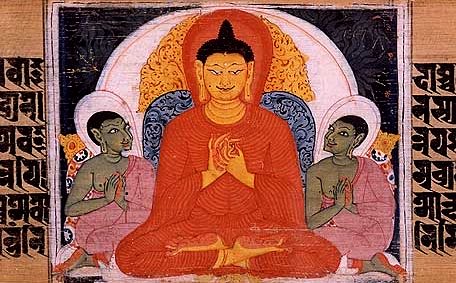
In Buddhism, Anattā challenges the idea that there’s a permanent “you” behind your changing thoughts, feelings and memories. Everything you call “yourself” changes, yet you experience your identity as something continuous. The Buddha questioned whether that feeling points to an unchanging self at all.
In the Anattalakkhaṇa Sutta, he examines five aspects of experience: the body, feelings, perceptions, mental formations and consciousness. None, he argues, should be regarded as a permanent, independent self.
Think about the last time someone insulted you. The conversation ended, but hours later you were still replaying it. Their words hurt, but part of you was also trying to defend your identity, to prove that their judgment wasn’t who you are.
Anattā invites you to examine that identification. The hurt is real, but the conclusion you draw about yourself is another mental process. You can fail at something without becoming a failure. You can feel anger without making it your identity.
The teaching goes further than simply saying that thoughts and emotions change. Even consciousness, the very thing we often imagine as the observer behind our experiences, is understood in early Buddhist teachings as dependent on conditions rather than an eternal, independent witness.
This doesn’t mean you don’t exist. You still make choices and remain responsible for your actions. The question is whether you need to believe in a fixed, unchanging self to do any of those things.
Perhaps the hardest part is noticing how often you suffer not just because something happened, but because it challenged the person you believe yourself to be.
Image source:
“Painting of the Buddha’s First Discourse (Dharmacakra Discourse)” (c. 700–1100 CE), anonymous artist; digital file by Asia Society. Source: Wikimedia Commons (original artwork: Asia Society Museum). Version checked: 6 October 2010. License checked: 22 October 2026 - Public Domain (PD-Art; Public Domain Mark 1.0).
They were associated with eating food sacrificed to idols and sexual immorality. The author compares them with the followers of Balaam, whose story links idolatry with leading others astray.
Meister Eckhart taught that even your desire for God can become an obstacle to finding Him.
The 13th-century German mystic questioned a faith built on personal gain. If you pray for protection, forgiveness or a place in heaven, you may care more about what God gives you than about God himself.
Eckhart called inner detachment „Abgeschiedenheit“. It meant letting go of the need to make everything serve your own interests, including religion.
This reaches beyond faith. You can practise humility to earn admiration, read philosophy to feel smarter than others or meditate because you dislike the person you are.
You can even turn the fight against your ego into a reason to feel superior. Eckhart’s point was that the problem runs deeper than individual desires. It lies in the urge to make everything about you, even your search for truth.
As long as you need every experience to prove something about yourself, you remain caught in that urge.
Image source: “Nicholas of Cusa” (c. 1480), Master of the Life of Mary. Source: Wikimedia Commons. Version checked: 18 October 2015. License checked: 14 October 2026 - Public Domain (PD-Art).
You can be right and still be ruled by your ego.
In Sufism, the struggle with the nafs is the struggle against the part of yourself that craves approval, resents criticism and needs the last word.
Imagine someone insulting you in public. You know exactly how to expose their mistakes. Before responding, ask yourself why you want to. Are you correcting a lie, defending someone or trying to humiliate the person who embarrassed you? Even the truth can become a weapon when pride dictates how you use it.
Sufi teachings place great importance on intention. This does not mean staying silent in the face of injustice. Sometimes, speaking up is necessary. The challenge is knowing when your words serve a purpose and when you simply cannot bear to lose an argument.
We often explain ourselves repeatedly because we want to control how others see us. But you can be honest about your intentions and still be misunderstood. You cannot force someone to see you fairly.
Silence alone does not mean you have overcome your ego. You can say nothing while mentally rehearsing the argument you could have won. The conversation ends, but your need to prove yourself remains.
The real work is letting go of that need. If nobody knew you were right, would you still need to prove it?
Image source:
“The Vain Dervish and the Sufi” (1595), Basawan. Source: Wikimedia Commons. Version checked: 9 March 2012. License checked: 14 October 2026 - Public Domain (PD-Art).
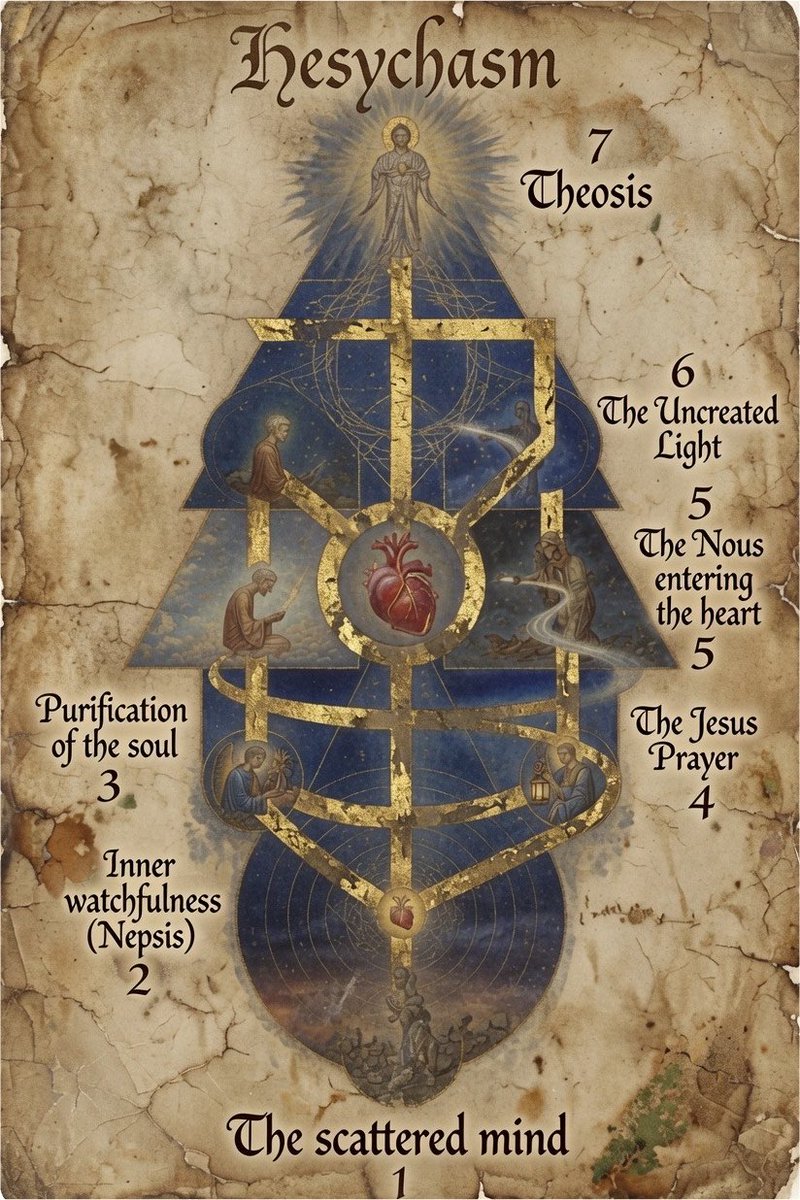
A forgotten branch of Christianity believed your thoughts could decide your destiny long before your actions ever did. It built an entire system for watching the mind, resisting inner deception and experiencing God directly. It's called Hesychasm.
🧵👇
Some Ancient-Aliens theories claim the Inca may have remembered extraterrestrial visitors as gods.
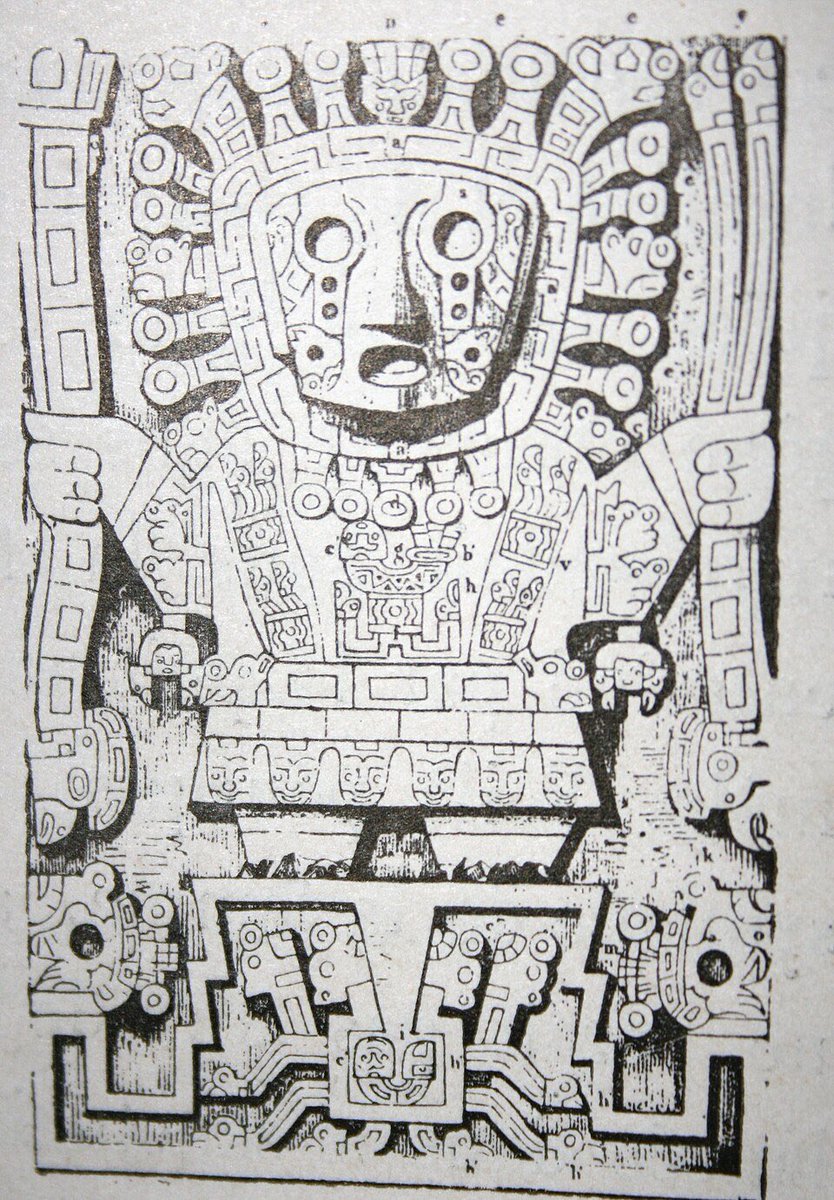
The figure at the center is Viracocha. In Juan de Betanzos’s 1550s account, Viracocha appears when the world is in darkness, creates people, travels with other beings and eventually disappears across the sea.
That combination is what fuels the alien interpretation. Viracocha is described as a creator with extraordinary powers, accompanied by other beings and capable of changing the world around him. Ancient-Aliens writers reinterpret creation as genetic or technological intervention, his companions as an advanced expedition, his supernatural abilities as technology and his disappearance as a departure.
His role as a bringer of order and knowledge adds another layer. A technologically advanced visitor could have appeared divine to people who had no concept of extraterrestrial civilization.
The story became even more controversial because later traditions portrayed Viracocha as a fair-skinned, bearded figure. This fed the claim that the Inca could have interpreted the arrival of the Spanish as the return of a god. The evidence is debated, since the surviving accounts were written after the conquest and differ from one another.
Another piece of the puzzle comes from Tiwanaku. Its monumental stonework and mysterious figures are often used in Ancient-Aliens arguments, yet Tiwanaku flourished centuries before the Inca Empire. The “Inca alien” story often combines evidence from cultures separated by hundreds of years.
Image source:
“Sun god, central relief of the Gate of the Sun” (1880), Charles Wiener.
Source: Wikimedia Commons.
Version checked: 27 February 2012.
License checked: 15 September 2026 - Public Domain
What if the person you are on Earth is only one part of who you really are?
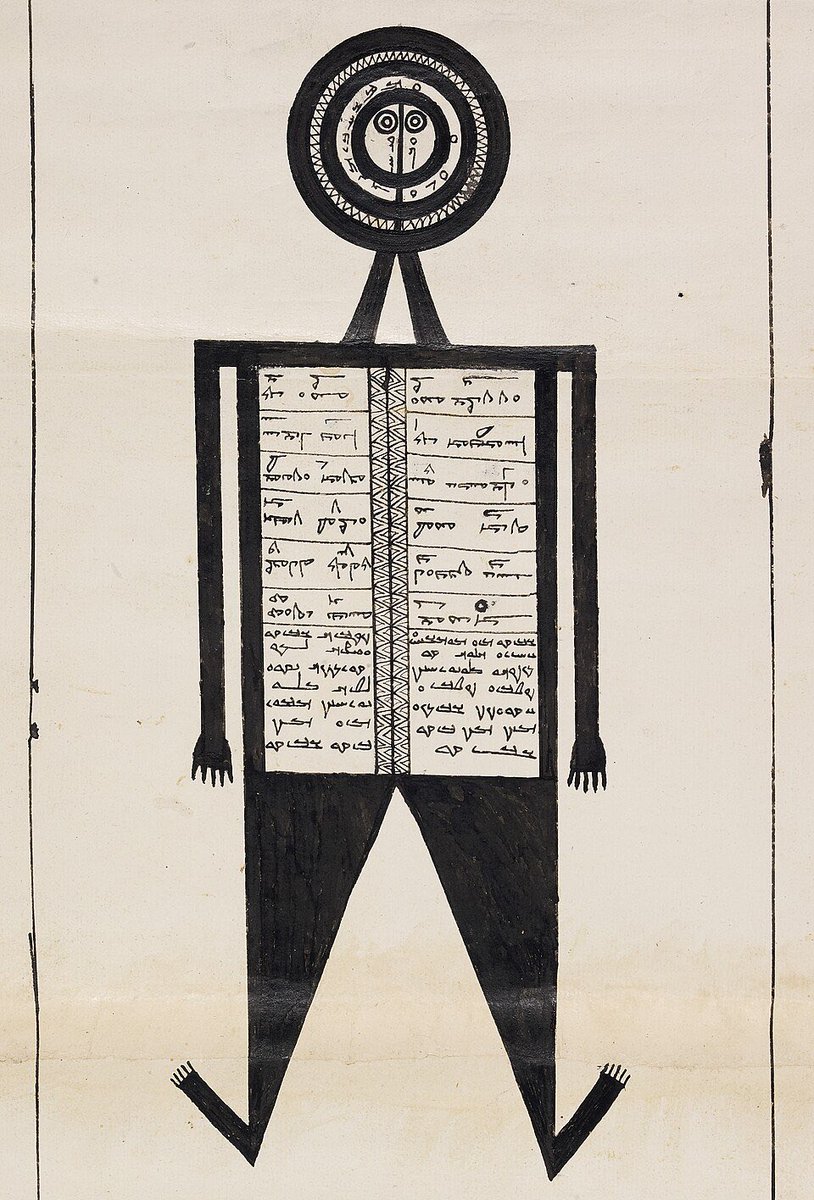
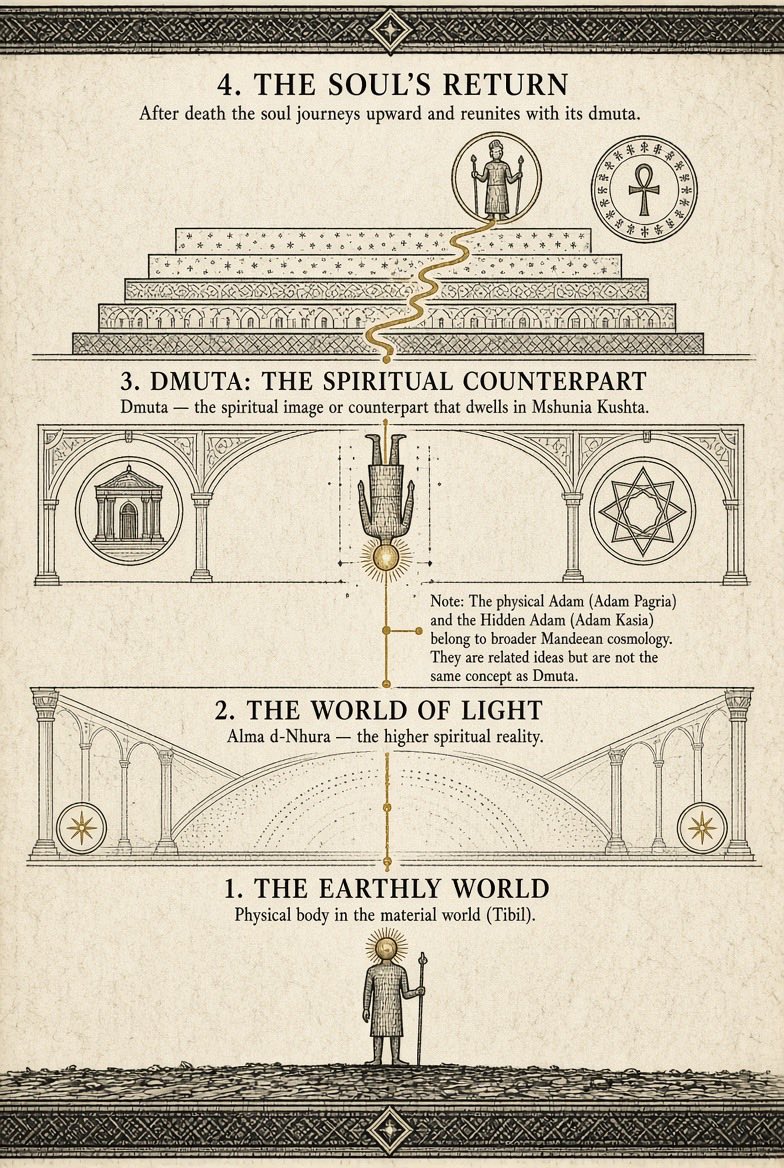
In Mandaeism, there is a concept called Dmuta, meaning “likeness” or “image.” It describes a spiritual counterpart connected to the World of Light, the divine reality beyond the material world.
To understand this idea, you have to understand how Mandaeism views existence: The physical world is not the highest level of reality. The World of Light is the realm of divine beings and the soul’s spiritual origin. Earthly existence and heavenly existence are connected, but they are not the same.
Mandaean tradition also speaks of a physical Adam and a “Hidden Adam,” associated with humanity’s heavenly dimension. This reflects the distinction between the human being as a physical creature and humanity’s place within the divine order. The Hidden Adam and Dmuta are related to this wider worldview, but they are not the same concept.
The connection becomes especially important in Mandaean beliefs about death. The soul must return to the World of Light, passing through a spiritual journey described in religious texts. The Masiqta, a ritual performed for the dead, helps facilitate this journey. In accounts involving Dmuta, the soul’s spiritual unity is reunited with its heavenly counterpart.
So Dmuta is not simply a supernatural double. It belongs to a worldview in which earthly existence has a corresponding place within a greater spiritual reality, and salvation means returning to the World of Light from which the soul originates.
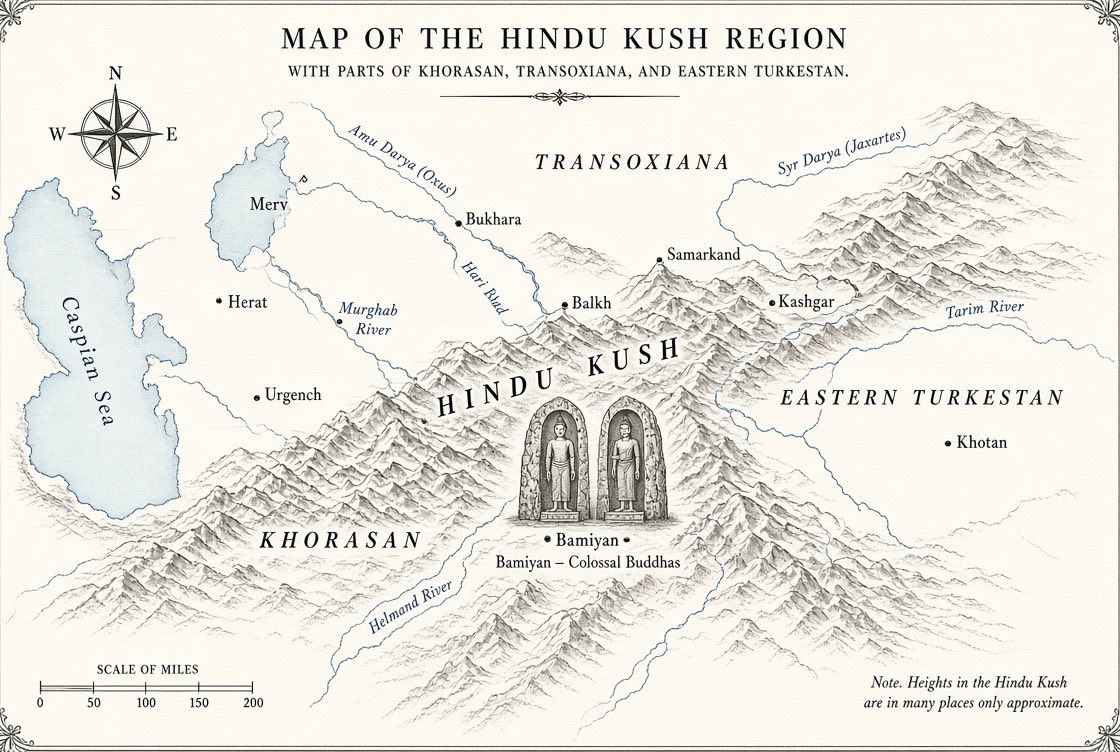
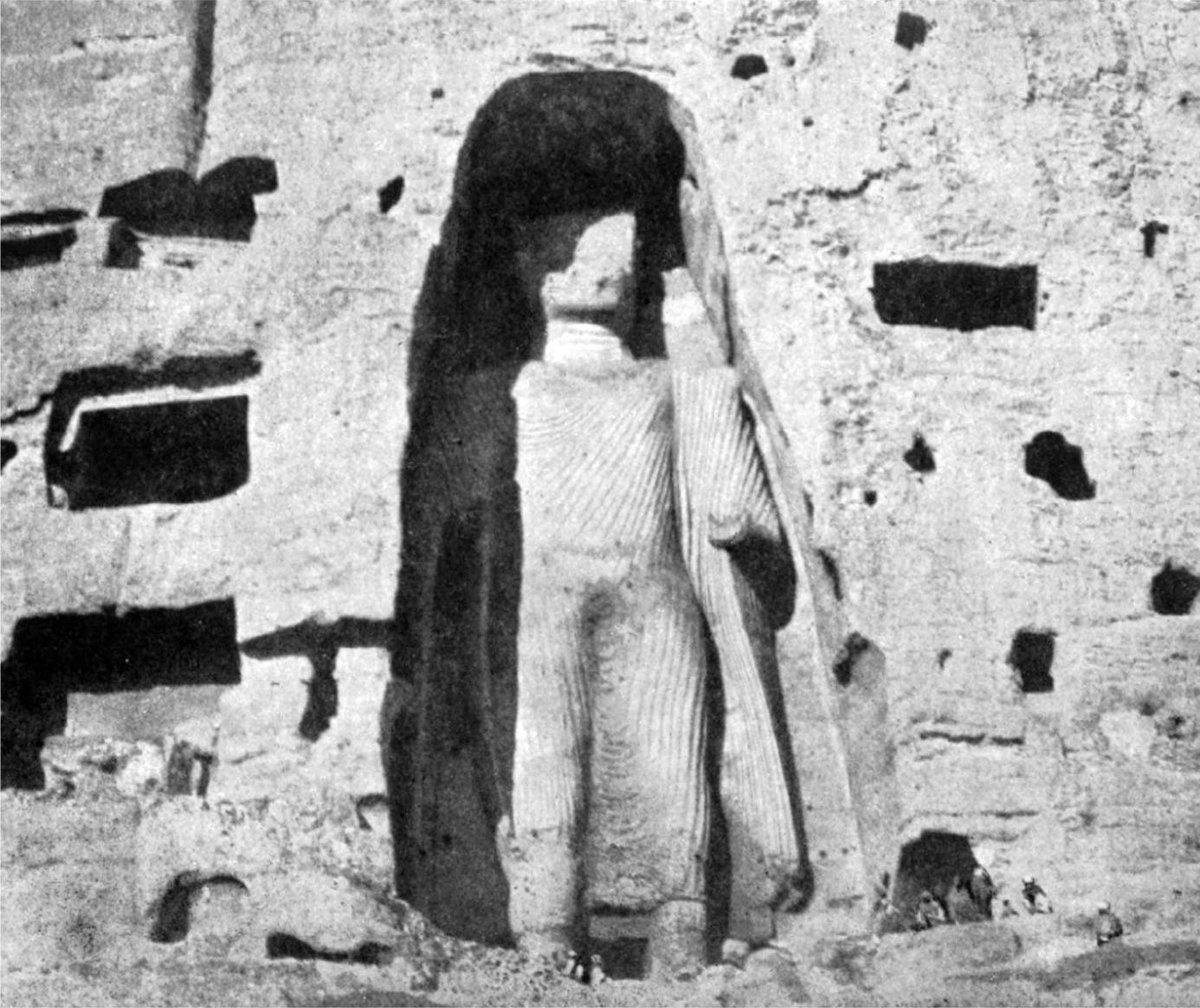
Afghanistan was once a major centre of Buddhism. In Bamiyan, monks lived in mountain caves, studied sacred texts and gathered in monasteries beneath two enormous Buddha statues.
The monks followed a Buddhist tradition known as Lokottaravada, which held that the Buddha transcended the ordinary human world. The colossal statues reflected the extraordinary status given to the Buddha in this tradition.
Carved into a sandstone cliff in the 6th and 7th centuries, the Buddhas stood 38 and 55 metres tall. Hundreds of nearby caves housed shrines, monasteries and Buddhist wall paintings.
When Chinese monk Xuanzang visited around 630 CE, he recorded ten monasteries and about 1,000 monks. Bamiyan was part of a Buddhist world connecting India, Central Asia and China.
In March 2001, the Taliban destroyed both statues. Their empty niches remain in the cliffs where one of Afghanistan’s great Buddhist centres once flourished.
Image source:
“Smaller Buddha” (1895), John Alfred Gray. Source: Wikimedia Commons, scanned from At the Court of the Amir (1895). Version checked: 25 August 2019. License checked: 11 October 2026 - Public Domain (Wikimedia Commons).
One of the oldest surviving Buddhist manuscripts describes a cycle in which Buddhas appear, share their teachings and eventually fade from the world, leaving future generations to await the next Buddha.
The Bahubuddha Sutra tells of multiple Buddhas appearing across vast stretches of cosmic time. It records their lifespans, disciples and how long their teachings lasted. Some Buddhas are said to have lived for extraordinary lengths of time, while Gautama Buddha’s lifespan is given as 80 years.
Gautama was not the first Buddha, nor will he be the last. According to the text, Maitreya, the future Buddha, will appear when the teachings of the present Buddha have vanished and reveal the path to enlightenment anew.
The manuscript dates to around the 1st century BCE–1st century CE. It was written on birch bark in Gandhara, a region of present-day Pakistan and Afghanistan. #Buddhism
Image source:
“Hossō Mandala” (16th century), unknown artist. Source: Wikimedia Commons / The Metropolitan Museum of Art. Version checked: 25 March 2017. License checked: 11 October 2026 - CC0 1.0 (Public Domain Dedication).
“Dhammapada Manuscript (BnF Pali 715-A)” (late 1st–late 3rd century CE), unknown scribe.
Source: Wikimedia Commons / Bibliothèque nationale de France (BnF). Version checked: 8 March 2023. License checked: 11 October 2026 - Public Domain (Creative Commons Public Domain Mark 1.0).
“Fragmentary Buddhist Text – Gandhara Birchbark Scrolls, Part 31” (1st century CE), unknown scribe/photographer. Source: Wikimedia Commons / British Library. Version checked: 13 October 2020. License checked: 11 October 2026 - CC0 1.0 (Public Domain Dedication).
Moses, Buddha, Jesus and Muhammad are all recognized as messengers of God in the Bahá’í Faith. Its central belief is that God has guided humanity through different messengers over time, each bringing teachings suited to their era. Bahá’ís call this progressive revelation.
Founded by Bahá’u’lláh in 19th-century Persia, now Iran, the faith teaches that religions share a divine source, even when their beliefs and laws differ.
Bahá’ís believe the soul survives death. Prayer, fasting and self-reflection help develop qualities such as honesty, justice and compassion. Serving others is part of that spiritual responsibility.
Bahá’u’lláh also called for equality between women and men, universal education, the elimination of racial prejudice and greater economic justice. He taught that science and religion should be compatible and that people should investigate truth for themselves rather than blindly follow inherited beliefs.
His claim to be a messenger of God came after Jesus and Muhammad. That is where the faith parts ways with traditional Christian and Islamic beliefs about the finality of their respective revelations.
Bahá’ís believe revelation will continue in the future, but that no new messenger will appear for at least a thousand years after Bahá’u’lláh. Their view of religion is unusual in one important respect. Earlier revelations remain significant, but none marks the end of humanity’s spiritual history.
Image source:
“Bahá’u’lláh (Mírzá Ḥusayn-‘Alí Núrí) in 1868” (1868), photographer unknown.
Source: Wikimedia Commons.
Version checked: 9 April 2016. License checked: 10 October 2026 - Public Domain (Public Domain Mark 1.0).
A Christian cross could also serve as a magical sign. This was not unique to Iceland. Across medieval Europe, religious symbols, sacred names and ritual magic often overlapped.
The Icelandic Róðukross, recorded in a manuscript dated 1928, combines a cross-shaped structure with intricate branches, circles and angular patterns. It belongs to a tradition in which Christian symbolism could be incorporated into magical practices, including rituals associated with protection.
A much older comparison appears in Harley MS 5596, a Greek manuscript from around 1450. It contains seals from the Hygromanteia, a tradition of ritual magic associated with King Solomon. These signs formed part of practices involving sacred names, astrology and spiritual beings.
Some of the designs resemble Icelandic magical staves. Scholars have explored whether continental European ritual magic influenced Icelandic traditions, although no direct link between these particular seals and the Róðukross has been demonstrated.
One important detail often gets overlooked. The date of a manuscript tells us when a symbol was recorded, not necessarily when it originated. The Róðukross appears in a manuscript dated 1928, but that alone cannot establish a Viking Age origin. Icelandic magical traditions developed over time, shaped by Christian beliefs and wider European influences.
Image source: “Harley manuscript MS 5596, fol. 31r – Magic Seals” (c. 1450), unknown author. Source: Wikimedia Commons. Version checked: 6 August 2025. License checked: 9 October 2026 - Public Domain (Creative Commons Public Domain Mark 1.0).
“Róðukross – Old Icelandic Magical Stave” (1928), unknown author.
Source: Wikimedia Commons.
Version checked: 6 August 2025.
License checked: 9 October 2026 - Public Domain (Creative Commons Public Domain Mark 1.0).
Some Buddhist monks deliberately meditate on their own death.
The practice is called maraṇasati, or mindfulness of death. In early Buddhist texts, practitioners are told to remember that death is certain, while the time of death is unknown.
Some cemetery meditations were remarkably direct. Monks observed corpses as they changed after death, from swollen and discolored bodies to exposed bones and bones scattered across the ground. They then reflected that their own bodies would undergo the same process.
Fear, disgust, attachment and the urge to look away were not treated as failures. They became part of what was being observed.
The practice was closely connected to anicca, the Buddhist teaching of impermanence. The body changes throughout life and eventually stops functioning.
It also challenged a deeply rooted assumption > that this body is something permanent that belongs to us. You can know that you will die and still behave as if you have unlimited time. #Buddhism
Image source:
“Asubha Body Contemplation” (c. 1920s), Samut Khoi. Source: Wikimedia Commons Version checked: 25 July 2015. License checked: 9 October 2026 - Public Domain.
Some Sufi traditions believed that an unknown saint stood at the centre of the world’s unseen spiritual order.
He was called the Qutb, Arabic for “pole” or “axis”. The Qutb was regarded as the highest-ranking walī, a person believed to have an exceptional closeness to God. He was not a prophet, king or official religious leader.
Later Sufi writings placed other hidden saints around him. The Awtād were known as “pillars” and the Abdāl as “substitutes”. One famous scheme gives 4 Awtād and 40 Abdāl, although the numbers and hierarchy vary between sources.
In some Sufi cosmologies, these saints were not simply people who happened to be more pious. Their presence was connected to the preservation of the world’s spiritual order and the flow of divine grace. The Qutb stood at its centre, while all power ultimately remained with God.
The Qutb did not need followers or public recognition. He could live as an ordinary, unknown person while holding the highest spiritual rank. This distinction between visible authority and hidden sainthood is central to the idea.
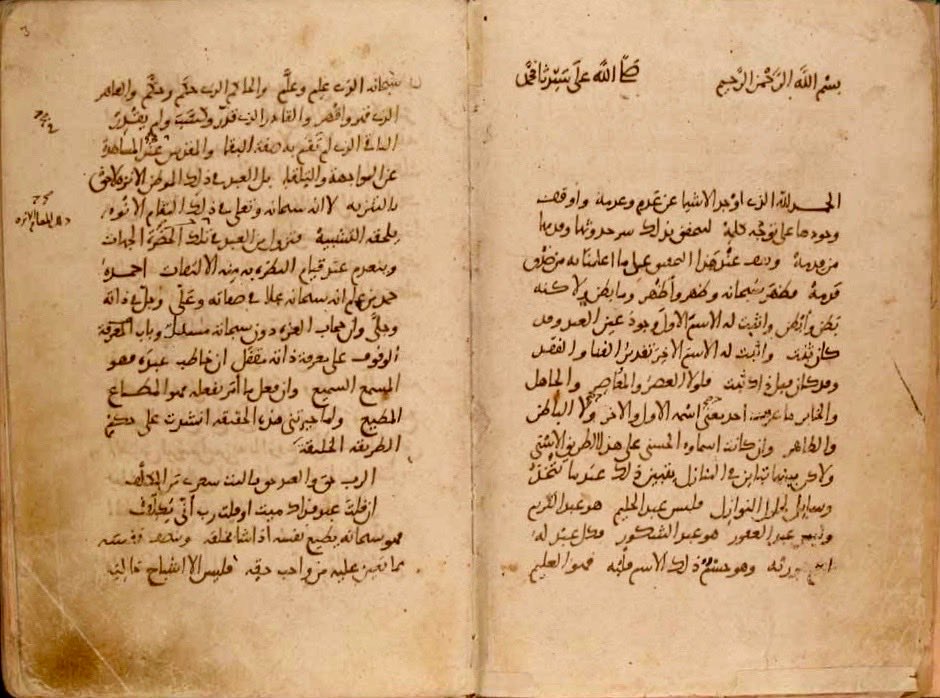
Ibn ʿArabī (1165–1240) developed the concept within his broader writings on sainthood. He also described afrād, “solitaries”, whose spiritual status could place them outside the ordinary hierarchy.
The Qutb was therefore not a single, universally accepted Islamic doctrine. It was a developing Sufi concept of an unseen hierarchy of saints, with one human being understood as its spiritual centre. #Sufism
Image source:
“Opening pages of the Konya manuscript of the Meccan Revelations” (1203–1240), Ibn ʿArabī. Source: Wikimedia Commons. Version checked: 19 March 2020. License checked: 8 October 2026 - Public Domain / CC Public Domain Mark.
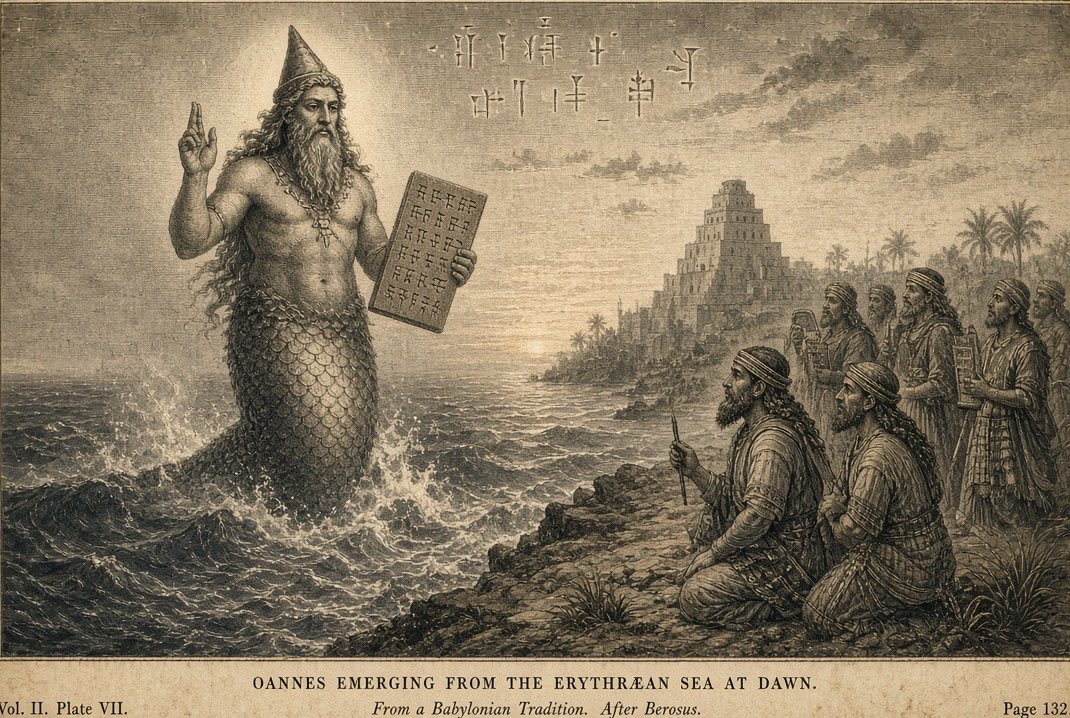
Oannes was said to come out of the sea and teach humans how to build a civilized world. Thousands of years later, his story became part of modern ancient-alien theories.
In Mesopotamian tradition, Oannes had a human body covered by fish-like skin. He came ashore during the day, taught people, and returned to the water at night. His teachings included writing, farming, law, crafts and the organization of cities. The story was recorded by the Babylonian priest Berossus in the 3rd century BCE, preserving an older tradition.
Oannes was one of the seven Apkallu, ancient sages associated with wisdom and the freshwater deep beneath the earth. The Apkallu also had a practical ritual role. Assyrians placed their figures inside and beneath buildings as protective guardians against supernatural forces.
They belonged to the world before the great Flood. After the Flood, the preservation of learned knowledge was increasingly associated with human scholars.
Modern ancient-astronaut literature interprets Oannes as an extraterrestrial visitor who brought knowledge to early humanity.
Image source:
“Brockhaus and Efron Jewish Encyclopedia e6 915-0” (before 1906), unknown.
Source: Wikimedia Commons.
Version checked: 25 April 2011.
License checked: 18 September 2026 - Public Domain.
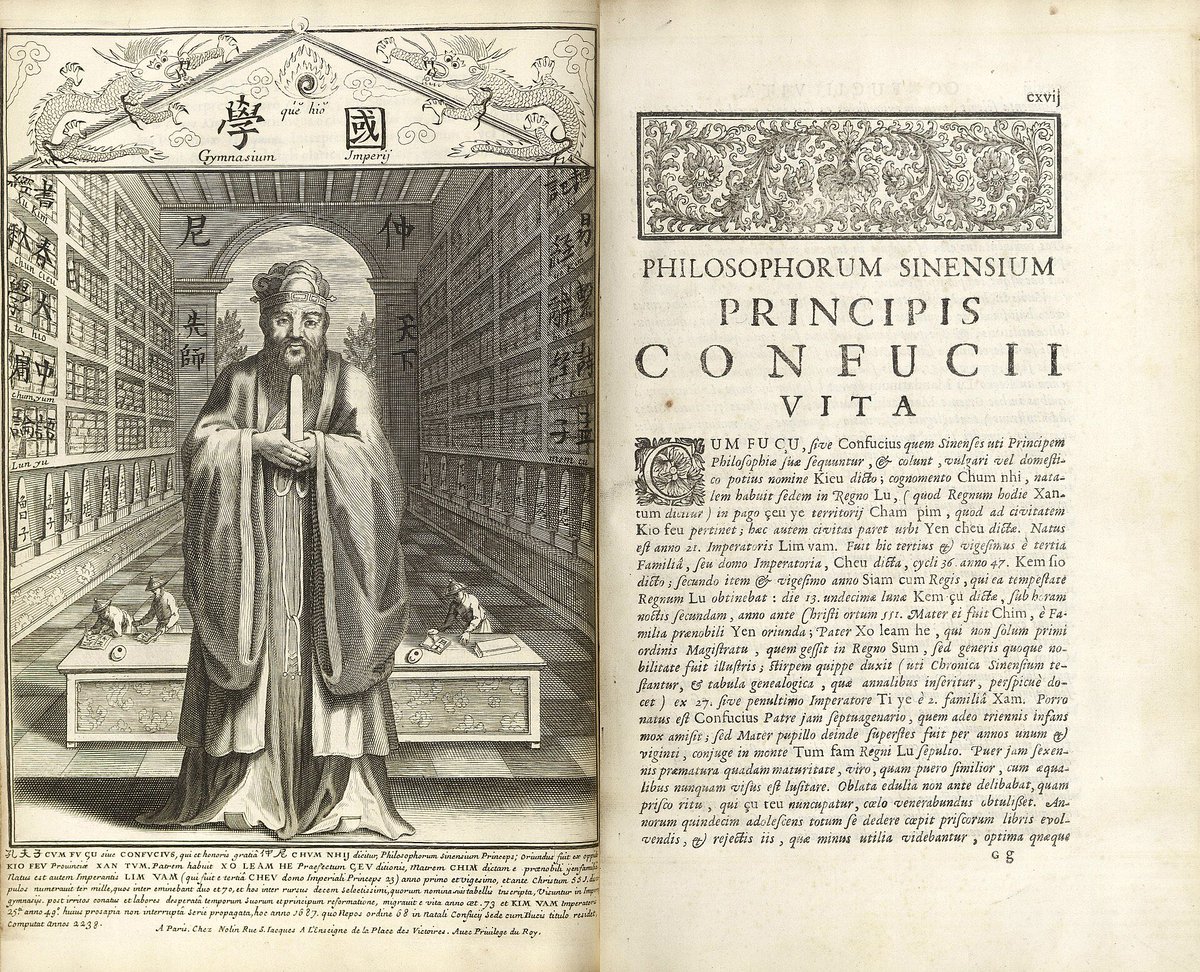
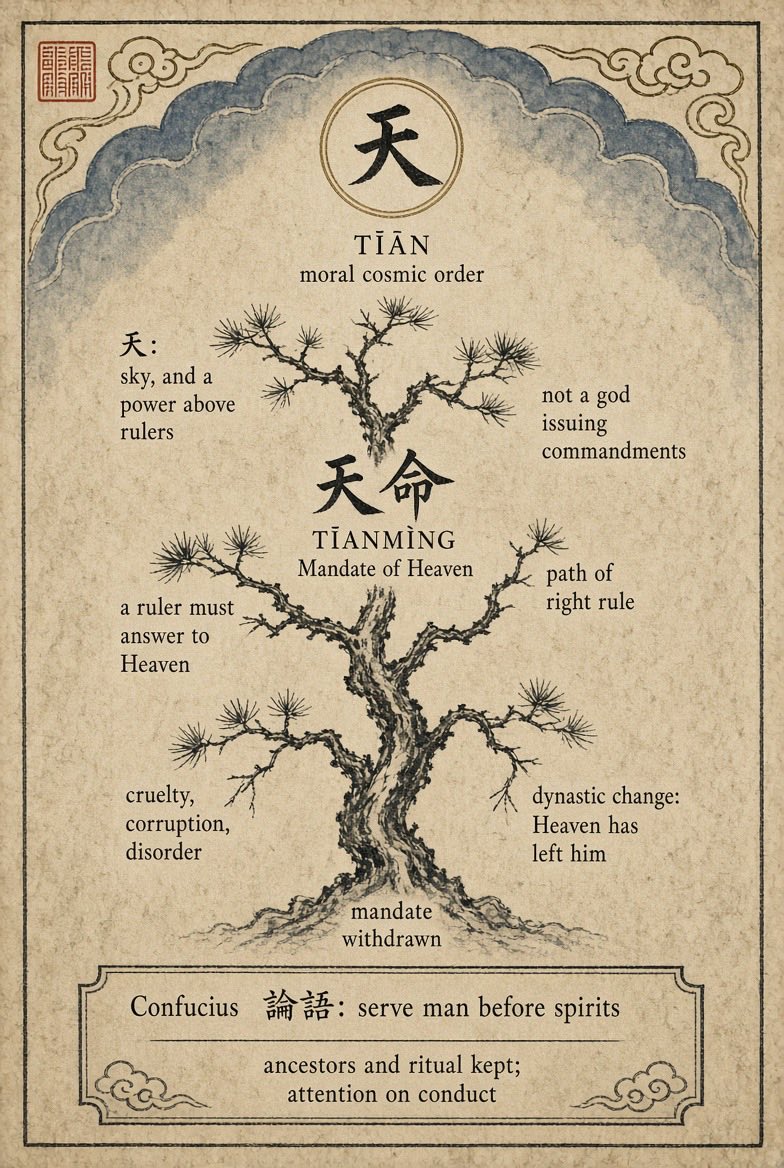
For Confucius, Heaven was not a god sitting above the world and handing down commandments. Tiān (天) was a higher moral and cosmic order that even rulers were expected to answer to.
The idea was older than Confucius. Tiān could mean the sky, but it could also refer to a power above human beings, tied to morality and the right to rule.
From this came Tiānmìng (天命), the “Mandate of Heaven”. A ruler did not have an unquestionable right to the throne. His conduct mattered. Cruel rule, corruption and disorder could be taken as signs that Heaven had withdrawn its mandate.
That gave later Chinese political thought a way to explain dynastic change. If a ruler lost power, the new regime could claim that Heaven had already abandoned him.
Confucius was much less interested in explaining the nature of spirits or the afterlife. In the Analects, when asked about serving spirits, he is recorded as replying, “We are not yet able to serve man, how can we serve spirits?”
He did not deny the religious world around him. Ancestors, sacrifices, rituals and Heaven were taken seriously. He simply kept his attention on what people could actually do with their lives, especially how they behaved toward others and how rulers used power. #ChineseHistory
Image source:
“Life and Works of Confucius” (1687), Prospero Intorcetta, Philippe Couplet, et al.
Source: Wikimedia Commons.
Version checked: 31 December 2017. License checked: 5 October 2026 - Public Domain / Creative Commons Public Domain Mark.
To become whole, you had to bring opposites together rather than choose between them.
For Heinrich Khunrath, male and female were paired forces, like Sun and Moon, or Sulfur and Mercury. Their union was called coniunctio, a key idea in alchemy.
The result was the Rebis, literally a “double thing”. Two opposing principles were joined in one form. It was more than a mixture. The alchemists believed their union could produce something new that neither could produce alone.
Khunrath used this idea in his Amphitheatrum sapientiae aeternae, published in 1595. His symbolism also follows the sequence 4, 3, 2, 1. The four are the classical elements, Earth, Water, Air and Fire. The three refer to Sulfur, Mercury and Salt. Then come two opposing forces, such as male and female or Sun and Moon. Finally there is one, the unity that contains the opposing sides rather than simply choosing between them.
The sequence moves from the many forms of nature toward a single underlying unity. That is the same structure expressed through the coniunctio and the Rebis.
Khunrath placed this way of thinking within a Christian worldview and also drew on Kabbalah and magical traditions. For him, these traditions offered different ways to understand the hidden relationships within nature.
#Alchemy
Image source:
“The Hermaphrodite” (1595), Hans Vredman de Vries?
Source: Wikimedia Commons
Version checked: 22 December 2006. License checked: 4 October 2026 - Public Domain, Public Domain Mark 1.0.
“The Four, the Three, the Two, and the One” (1595), Hans Vredman de Vries? Source: Wikimedia Commons Version checked: 22 December 2006. License checked: 4 October 2026 - Public Domain, Public Domain Mark 1.0.
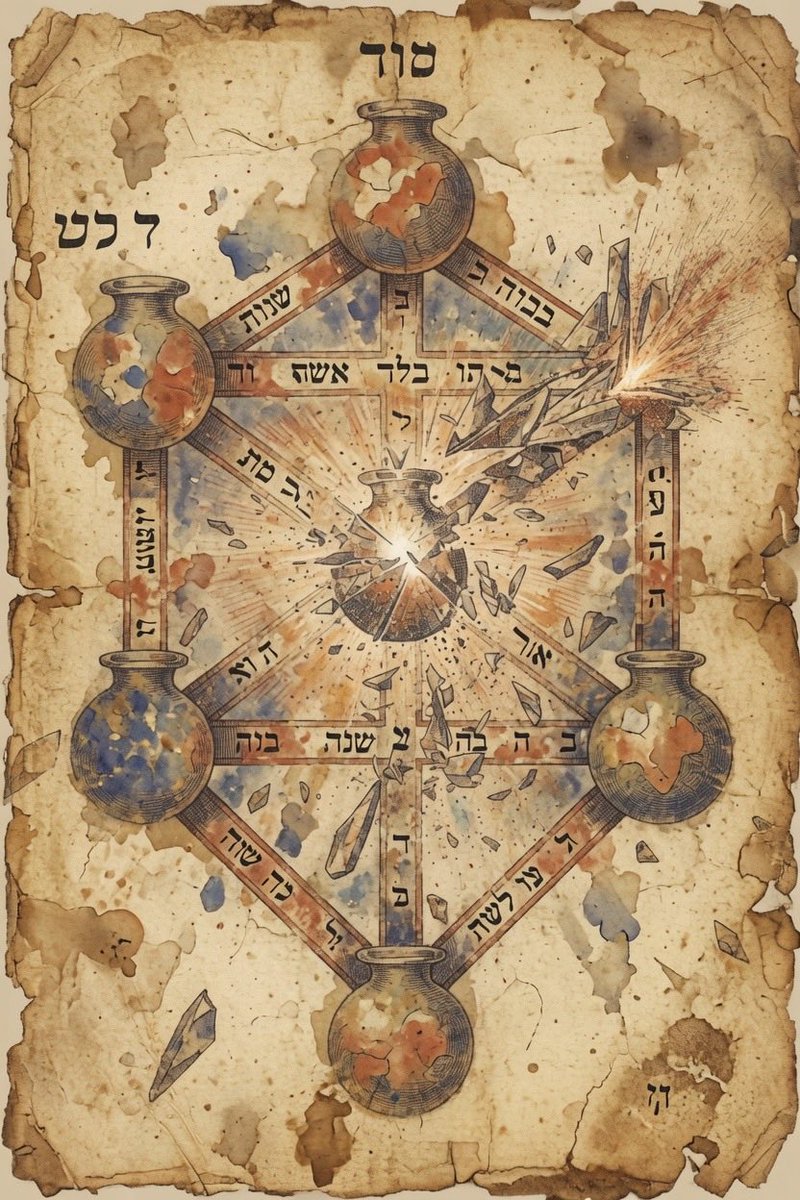
One of the deepest ideas in Jewish mysticism is called the Breaking of the Vessels. It asks a profound question: If creation comes from perfection, why is the world filled with suffering, chaos and imperfection? Kabbalah offers a unique answer. 🧵👇
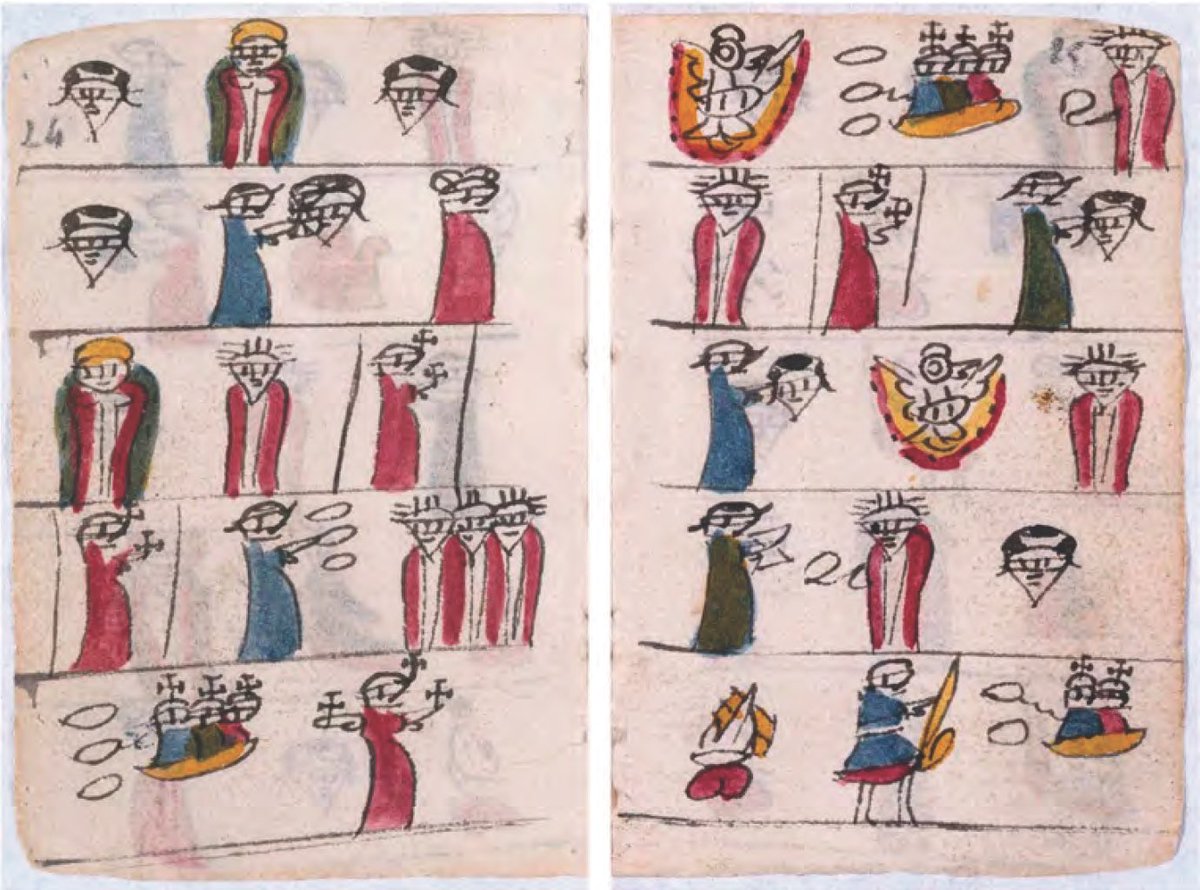
How do you teach Christianity when nobody speaks your language?
Around 1525–1528, Franciscan missionary Pedro de Gante used images to teach Christian doctrine in Mexico, shortly after the Spanish conquest.