We’ve recently added two new datasets to expand what clinical questions you can answer with the Atropos Evidence™ Network.
🔹 Midas: Closed claims & linked payments for 72M+ patients (2016–2026)
🔹 Pegasus: EHR, labs & open claims for 300M+ patients (2015–present)
Life science teams can run budget-impact and treatment-switching analyses on complete cost data and size underdiagnosed populations.
Health systems can benchmark cost and utilization nationally, and study rare conditions.
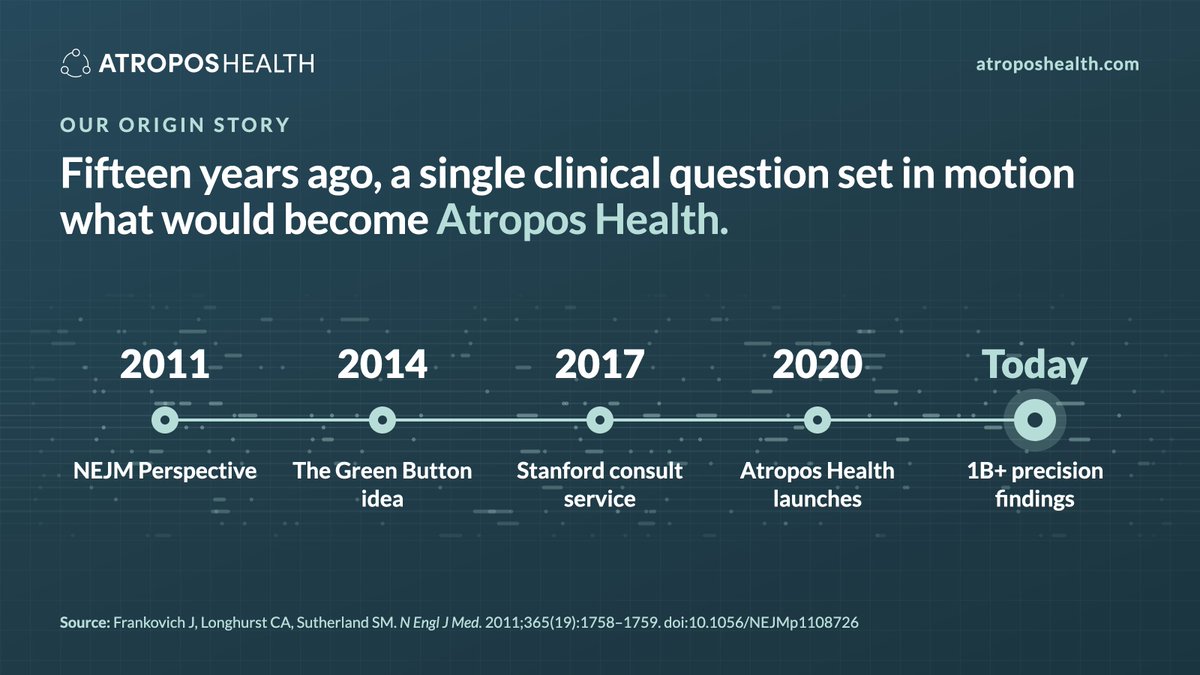
15 years ago this month, @NEJM published a perspective from three @StanfordMed physicians about a clinical question existing research couldn’t answer. It became the origin of 'Green Button', and ultimately Atropos Health: https://t.co/I6KzDAO9ny
#RealWorldEvidence
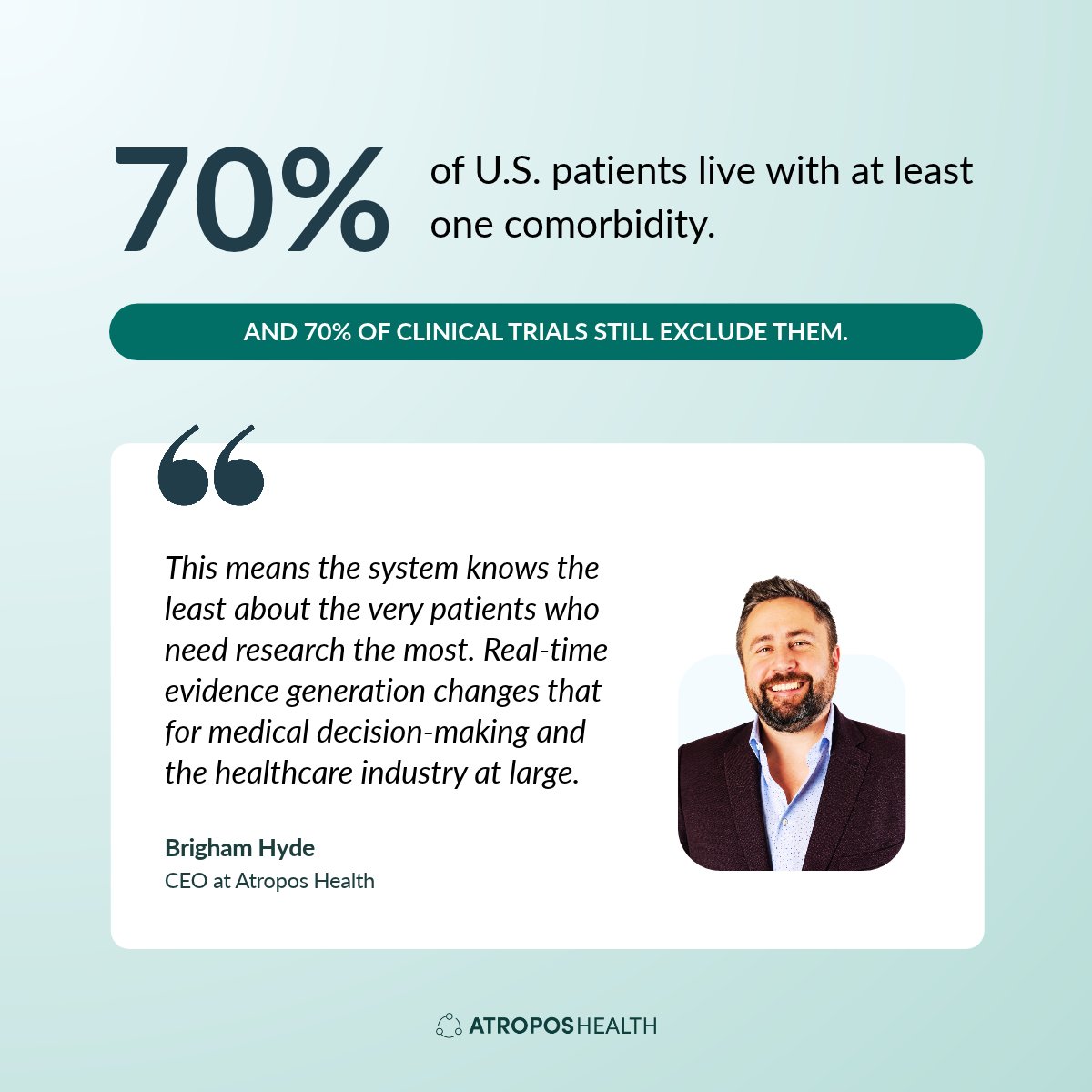
70% of clinical trials exclude patients with comorbidities, even though 70% of real-world patients have multiple conditions. Our CEO @BrighamHyde explores how AI-driven real-world evidence helps P&T committees build a precision formulary: https://t.co/sLm6loeozk #healthcareAI
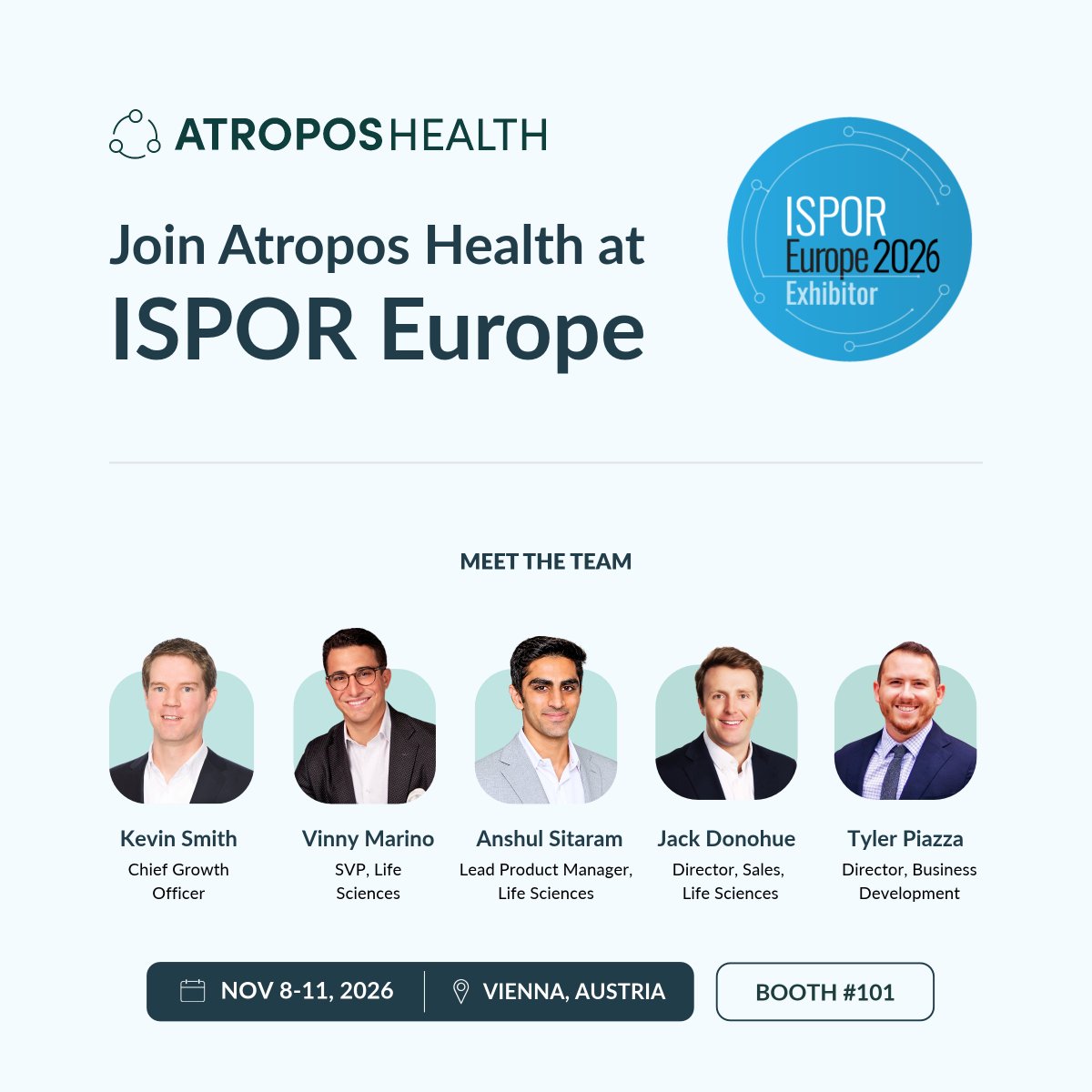
We’re at Booth 101 at #ISPOREurope, steps from the coffee station. Grab a cup and bring us a complex clinical question. We’ll show you how to run an auditable, publication-grade observational study, live. #HEOR#RWE@ISPORorg
Next week, we’re at @BeckersHR Fall Chief Pharmacy Officer Summit in Chicago. Stop by booth #200 to see how formulary and P&T teams run comparative effectiveness studies on their own patient data in minutes. #Pharmacy#RealWorldEvidence#HealthcareAI
70% of U.S. patients live with at least one comorbidity. And still, 70% of clinical trials exclude them.
In a recent interview with Business Insight Journal, @BrighamHyde breaks down why this gap persists, and how #RealWorldEvidence closes it: https://t.co/gStbHPErKT
We then replicated the analysis in 224,771 patients through the Atropos Evidence™ Network, and found the same result in a second, independent population.
Read the full paper: https://t.co/nvFCupegsM
A "normal" blood test can still predict disease a decade out.
That's one finding from a new @NatImmunol paper on neutrophils, the most common immune cell in your blood: https://t.co/nvFCupegsM 🧵
Our on-demand EHR consultation service took the research team's question and turned it into a propensity-matched cohort study: 205,817 @StanfordHealth patients with normal neutrophil counts and no prior chronic disease, followed for up to ten years.
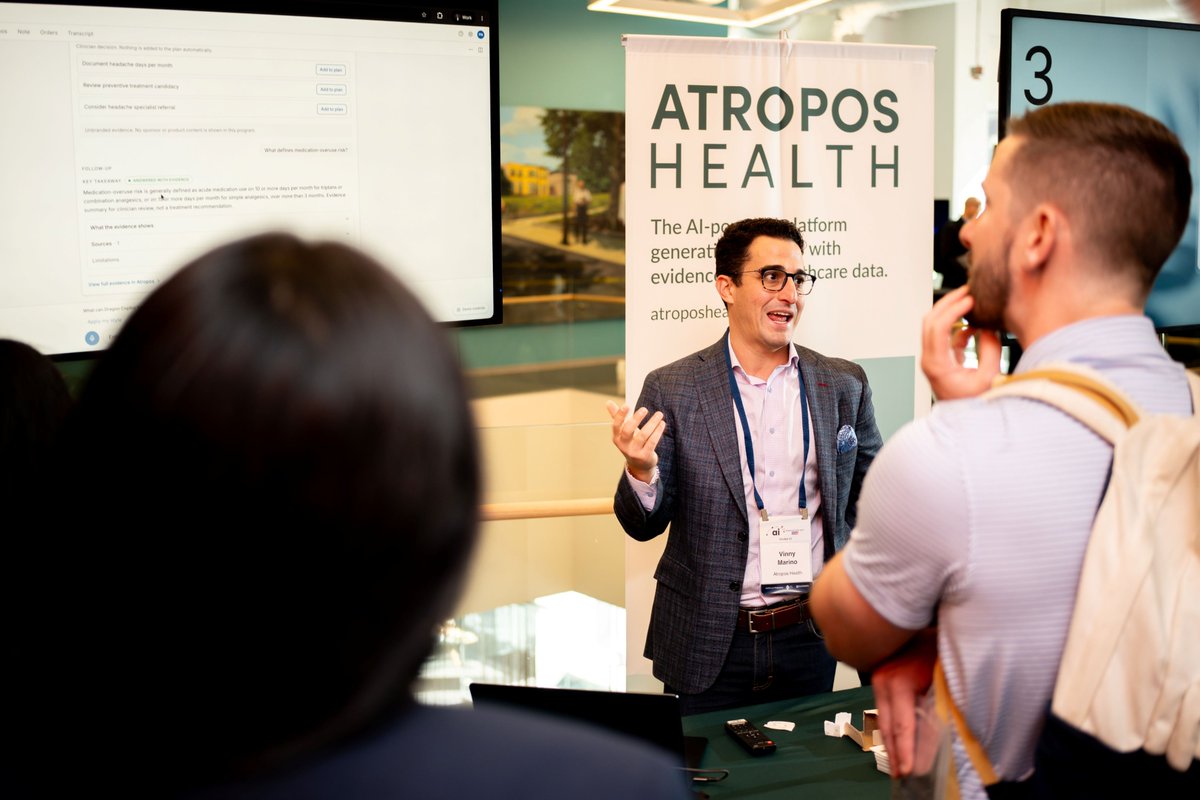
Thank you to @ZSAssociates, @McKesson, and @SilversmithCap for hosting this year's AI Innovation Day! It was a privilege to showcase our rapid evidence generation tools and discuss how cross-industry collaboration is driving the future of #HealthcareAI.
We are proud to announce that @_Becaris is leading a 12-month independent peer review to evaluate the clinical quality and methodological rigor of Alexandria, the Atropos Evidence Library: https://t.co/Hq7nTfEtaI #RealWorldEvidence#HealthcareAI
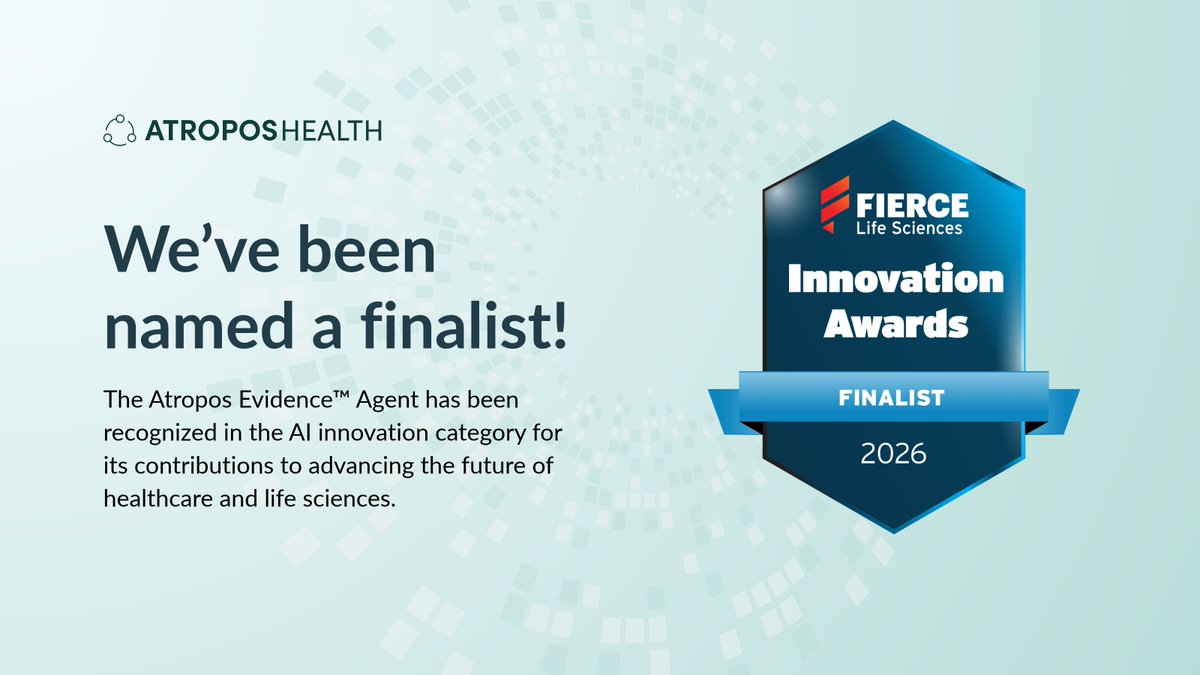
We've been named a 2026 Fierce Life Sciences Innovation Awards in AI Innovation by @FierceHealth for the Atropos Evidence™ Agent's contribution toward advancing the future of healthcare and life sciences! https://t.co/bEpCXXu3LB
#RealWorldEvidence#PrecisionMed#HealthcareAI
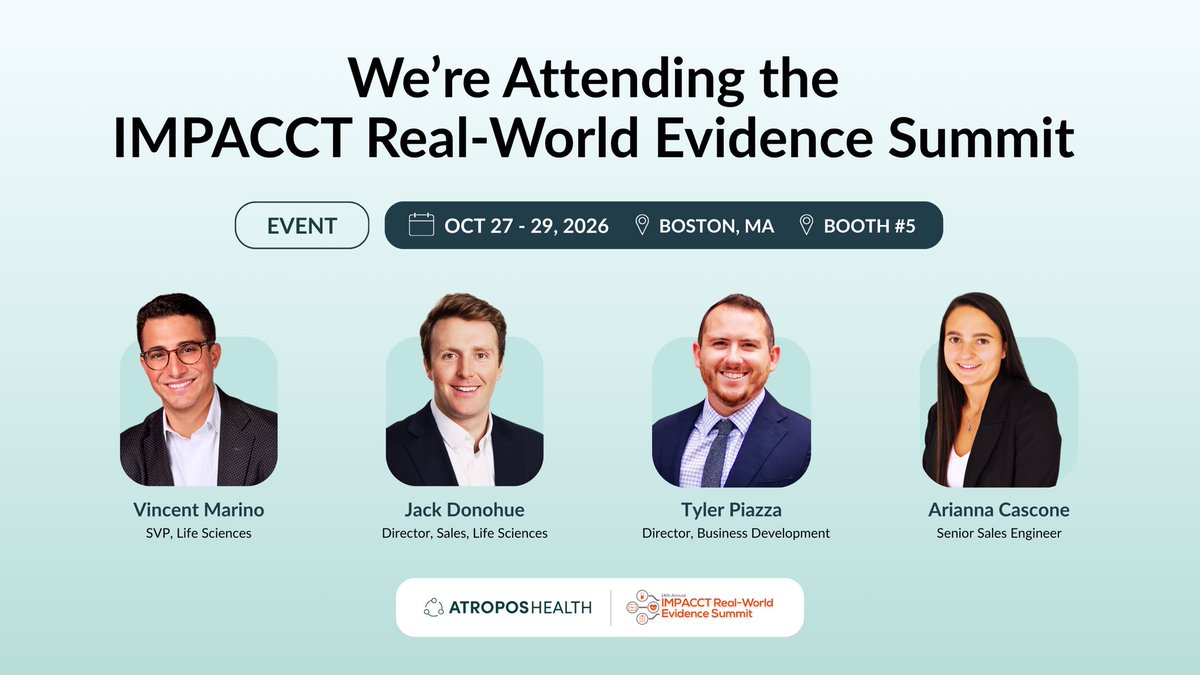
Our team is headed to Boston for the 14th Annual IMPACCT Real-World Evidence Summit! We’ll be there to talk about all things novel RWE generation, data fitness, and delivery at the point of care.
📅 Oct 27 - 29, 2026
📍 Boston, MA
5️⃣ Booth #5
#RWE#HEOR#IMPACCTRWE
The questions and grading rubric are open under CC BY-SA 4.0. We invite other groups to run the benchmark on their own systems and share what they find. Dataset on @huggingface: https://t.co/lbBvVaRIVW
For three of the four models, 63–76% of answers using web search alone cited their sources accurately, yet those sources described a different patient group, comparison, or outcome. Others found no matching evidence.
The result: with web search alone, 13–18% of answers were precision matches. With Alexandria, that rose to 40–56% – a 2.8x to 3.6x increase for every model tested.
We posed 209 patient-specific questions like this to four frontier LLMs. Each model answered every question twice: once with web search alone, and once with added access to Alexandria®, our library of real-world evidence.
We graded each answer on two points. Does one cited source match the patient, treatment, comparison, and outcome in the question? Does the answer report that source accurately? Answers that did both earned a "precision match."
Why it matters: clinicians often need evidence for one specific patient. For example, for someone with type 2 diabetes and reduced kidney function, which of two common drugs carries more risk of acute kidney injury? Trials often leave comparisons like this unreported.