@ericweinstein We are at the early stage of software becoming so effective at coordinating people, capital, information, and incentives that it outperforms government as a way of organizing society.
@AmericanALCHMY you would absolutely love the novel "Recursion" by @blakecrouch1
It reads like a sci-fi thriller built around many of the same questions you explored with @donalddhoffman : What if consciousness and memory are more fundamental than the physical world we perceive? What if our experience of reality is less like objective truth and more like a user interface constructed by the mind?
The story turns memory into a force that can literally rewrite reality, creating a fascinating intersection of neuroscience, consciousness, identity, and the nature of time. It felt like Hoffman’s ideas filtered through a blockbuster sci-fi lens.
It isn’t about GPUs, data centers, or even AI. It’s that an entire generation sees trillions of dollars of value being created in real time by a small group of companies while simultaneously hearing that many of the careers they were told to pursue may be automated away. People are remarkably supportive of creative destruction when they can share in the upside. They’re much less supportive when they feel excluded from it.
Your instinct is right. A lot of the reaction from younger people on the right isn’t really about data centers themselves. It’s the feeling that they’re watching a once-in-a-generation concentration of wealth, power, and influence accrue to a handful of AI companies while being told the jobs they’ve spent years studying, training, and planning for may disappear. The issue isn’t technology—it’s that many feel they have no meaningful way to participate in the upside, only the disruption.
Listening to the recent conversation between @AlchemyAmerican and @donalddhoffman, I couldn’t stop thinking about @blakecrouch1 novel Recursion.
Hoffman’s idea that spacetime is not objective reality—feels like a philosophical underpinning beneath Crouch’s story. In Recursion, memory rewrites reality itself. In Hoffman’s model, perhaps reality was never the thing being rewritten in the first place—only the interface through which consciousness experiences it.
The most interesting science fiction increasingly feels less like fiction and more like tomorrow’s metaphysics.
@JoeLoTruglio@KenMarino - your storyline/scenes from Wet Hot American Summer was my inspiration for this song. The Whole Summer | Clayto https://t.co/apCvYiWjC6 via @YouTube
I initially thought @donalddhoffman’s theory of reality was a little bleak. This conversation with @AlchemyAmerican completely changed my perspective—it helped me see the beauty, elegance, and profound symmetry at its core. https://t.co/kw6E4dcfAc
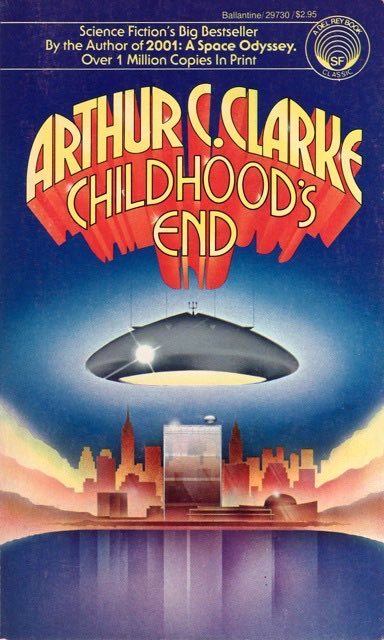
@brian_armstrong@blknoiz06 I was 16 when I read Atlas Shrugged - it totally changed my perspective by wrapping her philospphy in such an entertaining story. Another great one for this day and age - Childhood's End by Arthur C Clarke.
@chamath This is foundational if firms want to deploy agentic AI effectively at scale. Agentic AI only works if the underlying system is built for it—otherwise you’re just layering automation on top of chaos. Appreciate the focus on meaningful, high-impact problems, Chamath.
@emeriticus Agreed - also there's Vanilla Sky, which is one that is more of an existential/psychological sci-fi not as overt as the others. Not related to Tom Cruise but two slept on existential sci-fi series that I think are masterpieces is Devs (available on Hulu) and The Leftovers (HBO)
The anticipated future for @ohalo: Providing the caloric needs for settlers and travelers aboard humanity’s first voyage outside our solar system on a @SpaceX interstellar ark. Hopefully a drinkable cheeseburger is already in development @friedberg@Jason. https://t.co/wI1uCXxCWF