Writing book on mil intervention & delegating security tasks to mil partner forces.
Chair @IrregWarfare | PhD @PrincetonSPIA | Senior Fellow @AtlanticCouncil
Love to see when my day-job at the U.S. Department of Energy (DOE) and content out of the Irregular Warfare Initiative overlap.
https://t.co/XGCUh5Nrhp
How much influence can a small number of foreign fighters have on an insurgency?
In Episode 154 of the Irregular Warfare Podcast, “The Counterinsurgency Dilemma: Foreign Fighter Influence on Insurgencies in Afghanistan and Somalia,” Benjamin Jebb and Alexandra Chinchilla discuss Tricia Bacon’s research on how foreign fighters can exert disproportionate influence within insurgent movements.
While foreign fighters may provide resources, experience, and ideological commitment, local insurgents remain the decisive actors because they control strategy, legitimacy, and relationships with the population.
Watch the full episode here: https://t.co/z2WW5CKQIq
#IrregularWarfare #Counterinsurgency #NationalSecurity #SecurityStudies
Over the past 75 years, the most significant national security failing of the United States has been its unwillingness to generate the needed capacity to win irregular wars
1st sentence in this book, by LTG Cleveland
IWI Pod interview tomorrow
https://t.co/AiU7MRZuyW
Big ups to the @irregwarfare editorial team. They revamped the IW Insider podcast - the new format is REALLY ENGAGING and FUN to listen to. Strong recommend you check it out and subscribe if you are in the weeds of irregular warfare.
https://t.co/ac57mAkalN
The link between civil war/conflict and natural resources is well established. Critical minerals access for the US requires engaging in these conflicts, one way or another.
https://t.co/TDvvYhOvSX
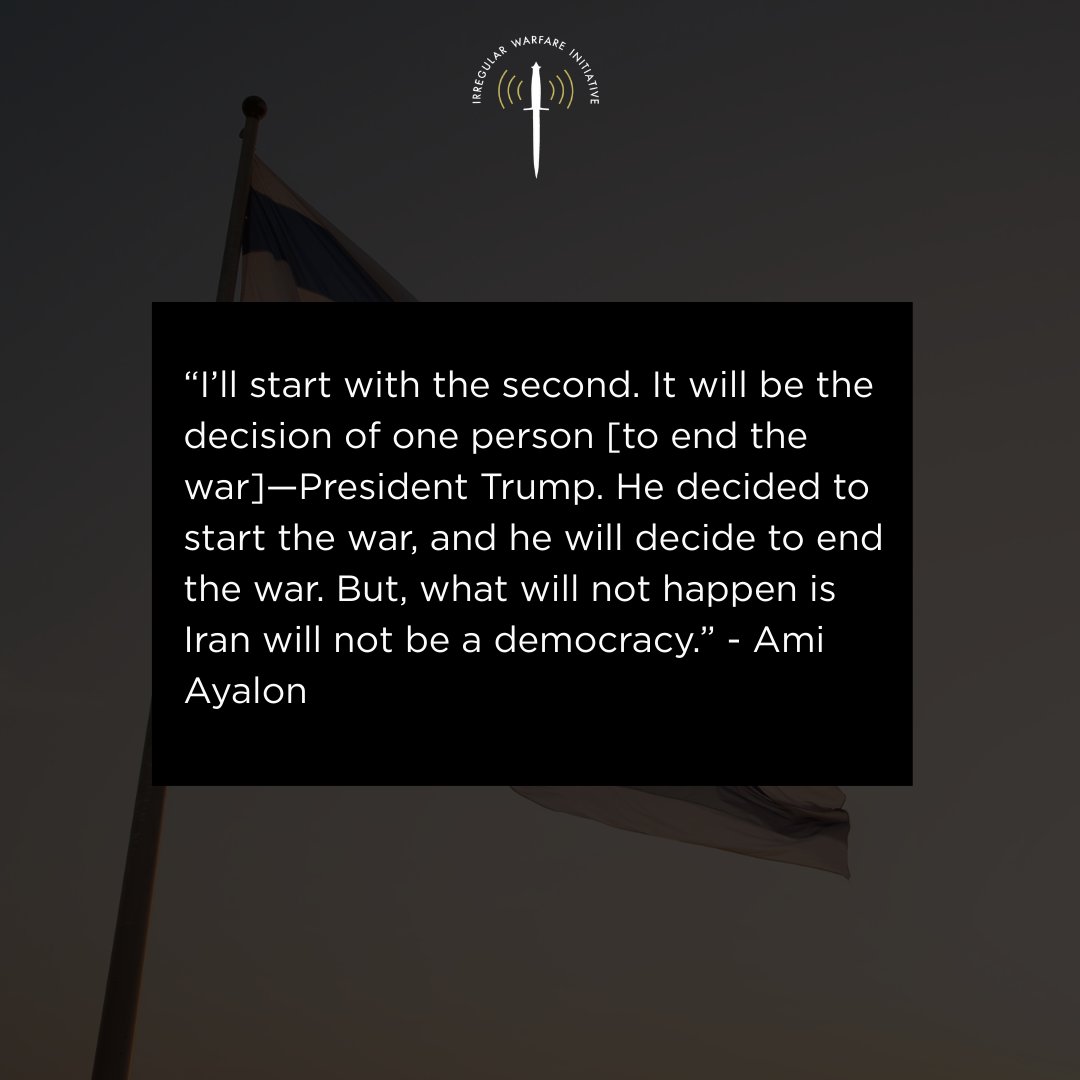
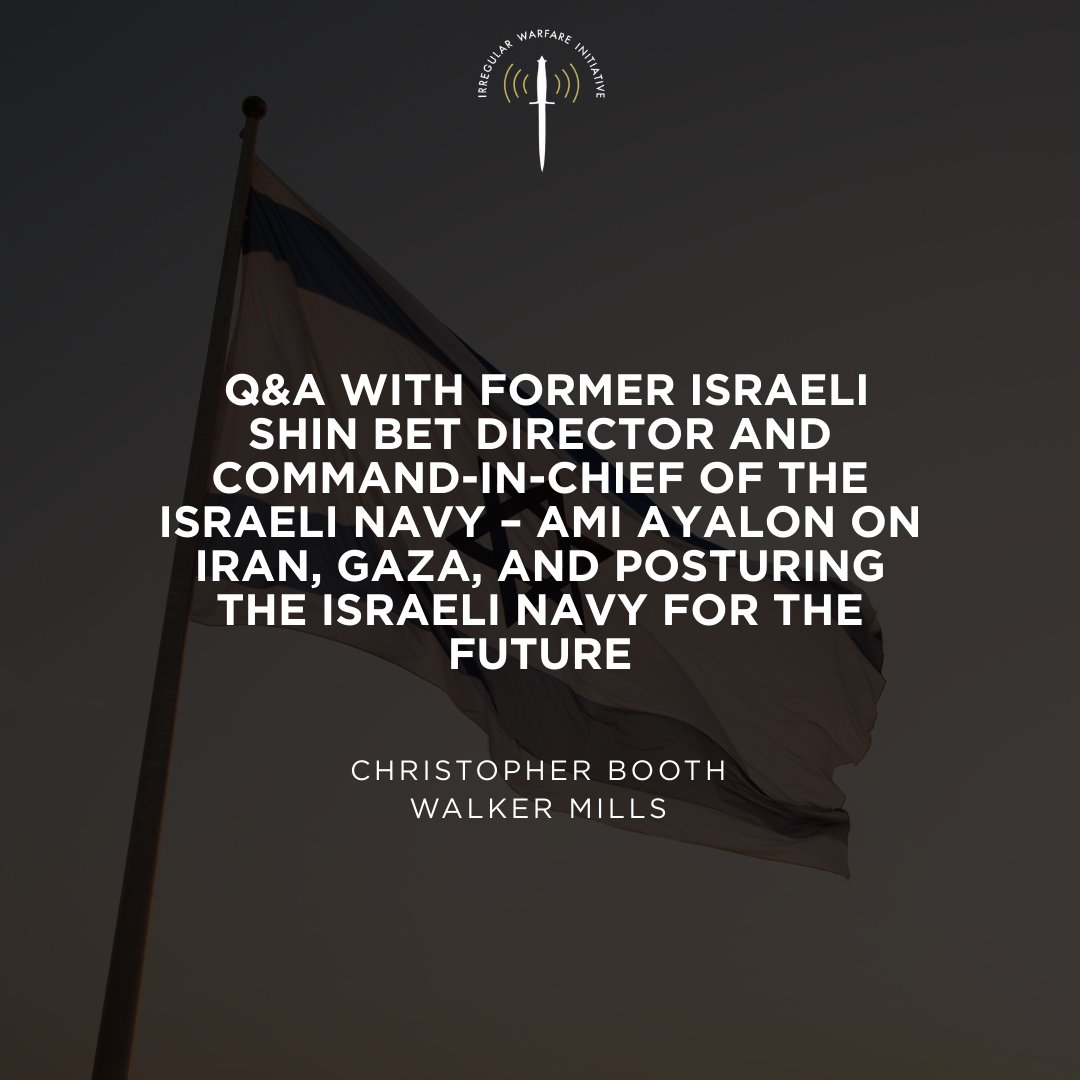
New from the Irregular Warfare community: A conversation with former Israeli Shin Bet Director and Commander-in-Chief of the Israeli Navy, Ami Ayalon.
In this Q&A with the Irregular Warfare Initiative’s Maritime Program, Ami Ayalon reflects on the evolving conflicts involving Iran and Gaza, the strategic role of naval power, and what modern warfare reveals about deterrence, intelligence, and political strategy.
He also outlines three strategic roles for the Israeli Navy: maintaining a credible second-strike capability, defending sea lines of communication vital to Israel’s economy, and conducting maritime special operations to disrupt weapons flows and hostile networks.
Read the full interview here: https://t.co/hcRRRgmlrK
#IrregularWarfare #MaritimeStrategy #NavalPower #MiddleEast #NationalSecurity #StrategicStudies #SecurityStudies
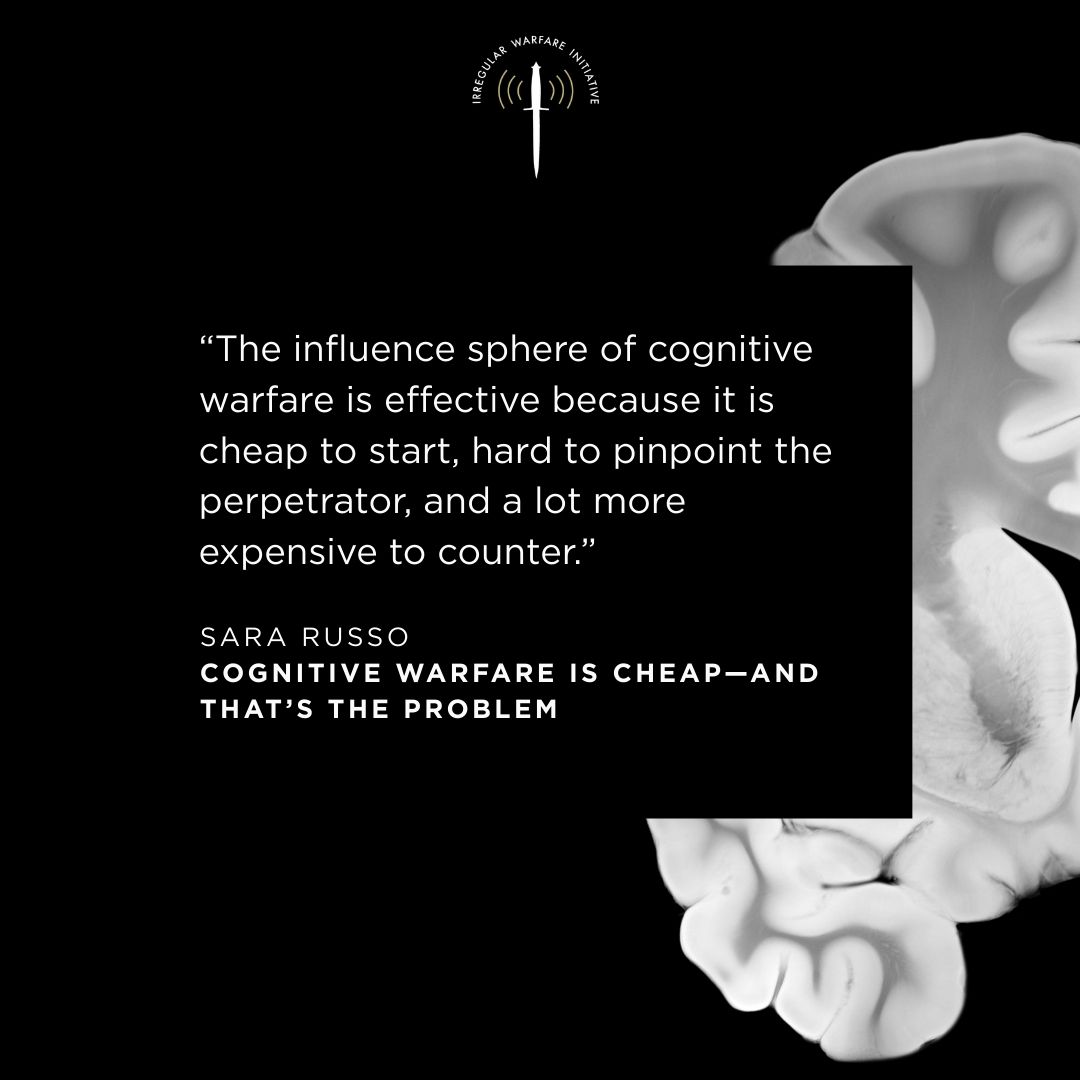
Cognitive warfare doesn’t depend on technological superiority or even persuasive narratives—it works because it’s cheap to launch and costly to resist.
In “Cognitive Warfare Is Cheap—and That’s the Problem,” republished by the Irregular Warfare Initiative from Small Wars Journal, Sara Russo argues how small, ambiguous actions can lock governments, militaries, and institutions into resource-intensive cycles of analysis, coordination, and reassurance.
These low-cost provocations demand high-cost defenses diverting attention, slowing decision-making, and exhausting resources over time. The real challenge, Russo argues, lies in rethinking cost as a strategic variable: resilience isn’t just about better messaging or attribution, but about designing organizations that can absorb ambiguity without paralysis.
Read the full article here: https://t.co/0d37ZnIiAq
#IrregularWarfare #CognitiveWarfare #InformationOperations #InfluenceOperations
In Episode 147 of the Irregular Warfare Podcast, hosts Ben Jebb and Kyle Atwell sit down with Dr. Alexander Miller and Dr. Seth G. Jones to unpack a core question for the next era of great power competition: can the United States rebuild the defense industrial base that underpins military advantage?
They discuss how consolidation, regulation, and acquisition culture have narrowed the industrial base, why China’s production capacity is changing the strategic math, and what reforms might actually shorten timelines from concept to fielding while preserving the ability to surge in a crisis.
Jones’s book, The American Edge: The Military Tech Nexus and the Sources of Great Power Dominance, anchors the conversation.
Find Episode 147, Preserving the American Edge: Revitalizing the Defense Industrial Base, wherever you get your podcasts by searching “Irregular Warfare Podcast.”
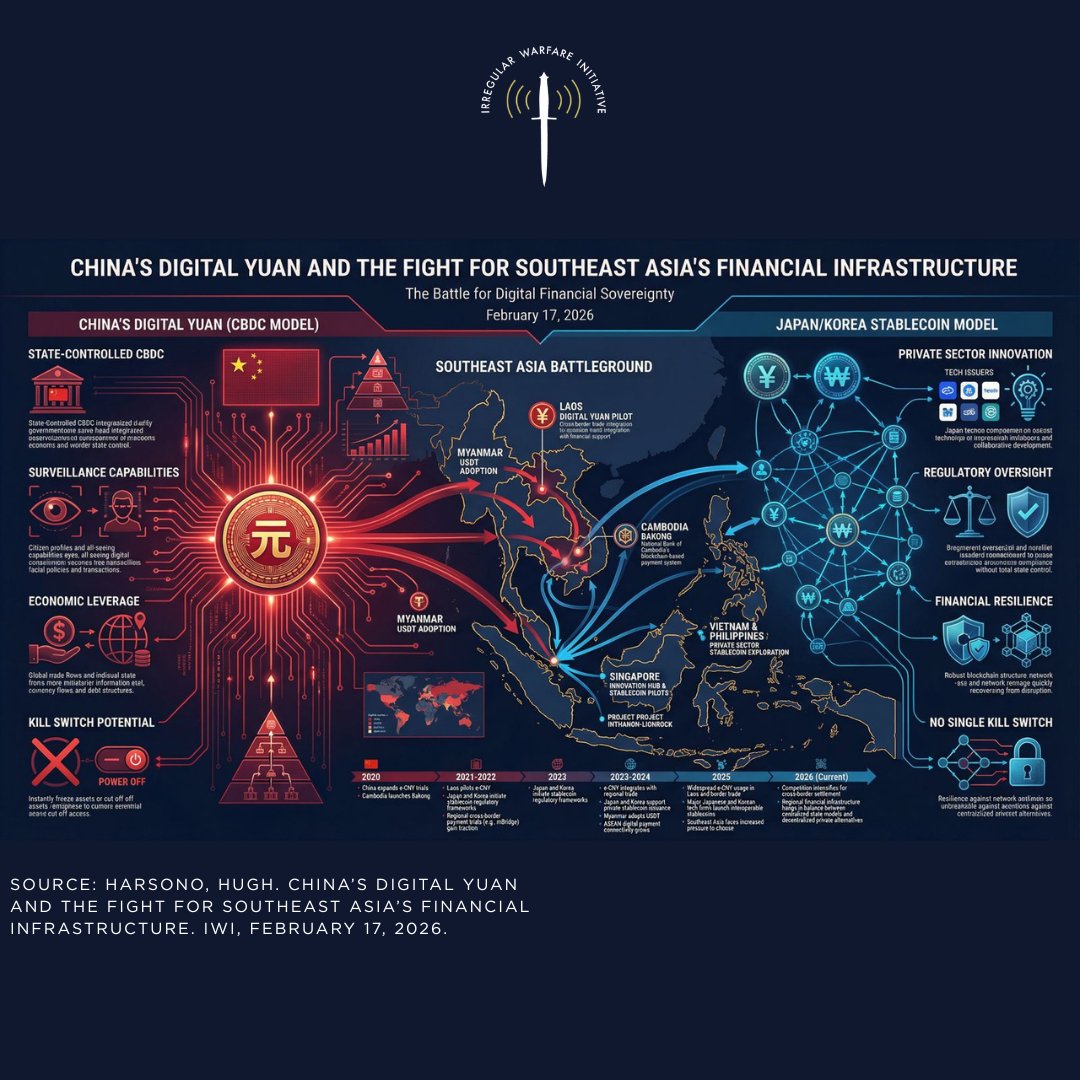
China’s digital yuan is not just a payments innovation — it represents a new model of state-controlled financial architecture that could reshape sovereignty, data governance, and economic influence across Southeast Asia. At the same time, regional partners and U.S. allies are exploring alternative approaches built on private-sector innovation, regulatory oversight, and financial resilience.
In China’s Digital Yuan and the Fight for Southeast Asia’s Financial Infrastructure, Hugh Harsono examines how digital currency systems are emerging as tools of influence in the gray zone between economics, technology, and national security.
Read the article here:
https://t.co/xmN3yxd0fl
#IrregularWarfare #EconomicStatecraft #DigitalCurrency #GreatPowerCompetition #SoutheastAsia #NationalSecurity #FinancialInfrastructure
The Private Capital Investor Cohort (PCIC) Assessment Event (AE) is now live! This event is for U.S. Citizens only.
SOFWERX, in collaboration with @USSOCOM, will host an Assessment Event to identify private capital organizations with novel technology companies that align with the Special Operations Forces Acquisition Technology and Logistics (SOF AT&L) portfolio.
Background/Synopsis
USSOCOM requires a private capital cohort to help accelerate capability development across all USSOCOM Program Executive Offices. Private capital organizations must understand markets and technologies aligned with SOF interests and have expertise in academic and accelerator services. Understanding that awardee maturity can happen through commercial revenue, Prime partnerships, Phase III contracts, private investment, and other government opportunities, a solution provider must have expertise on all means to actualize the capability.
Objective
The objective is to provide a purpose-driven community around accelerating SOF capability to solve operational problems. This program will host in-person and virtual events focused on best practices to deliver new capabilities at speed and scale to the SOF warfighter.
Submit NLT 27 February 2026 11:59 PM ET here: https://t.co/ZrbWsxLIX9…
For more information, visit the event webpage: https://t.co/KvexKoOIYp
Want to stay up to date on upcoming events? Join our ecosystem: https://t.co/Qz6gW8H4RC
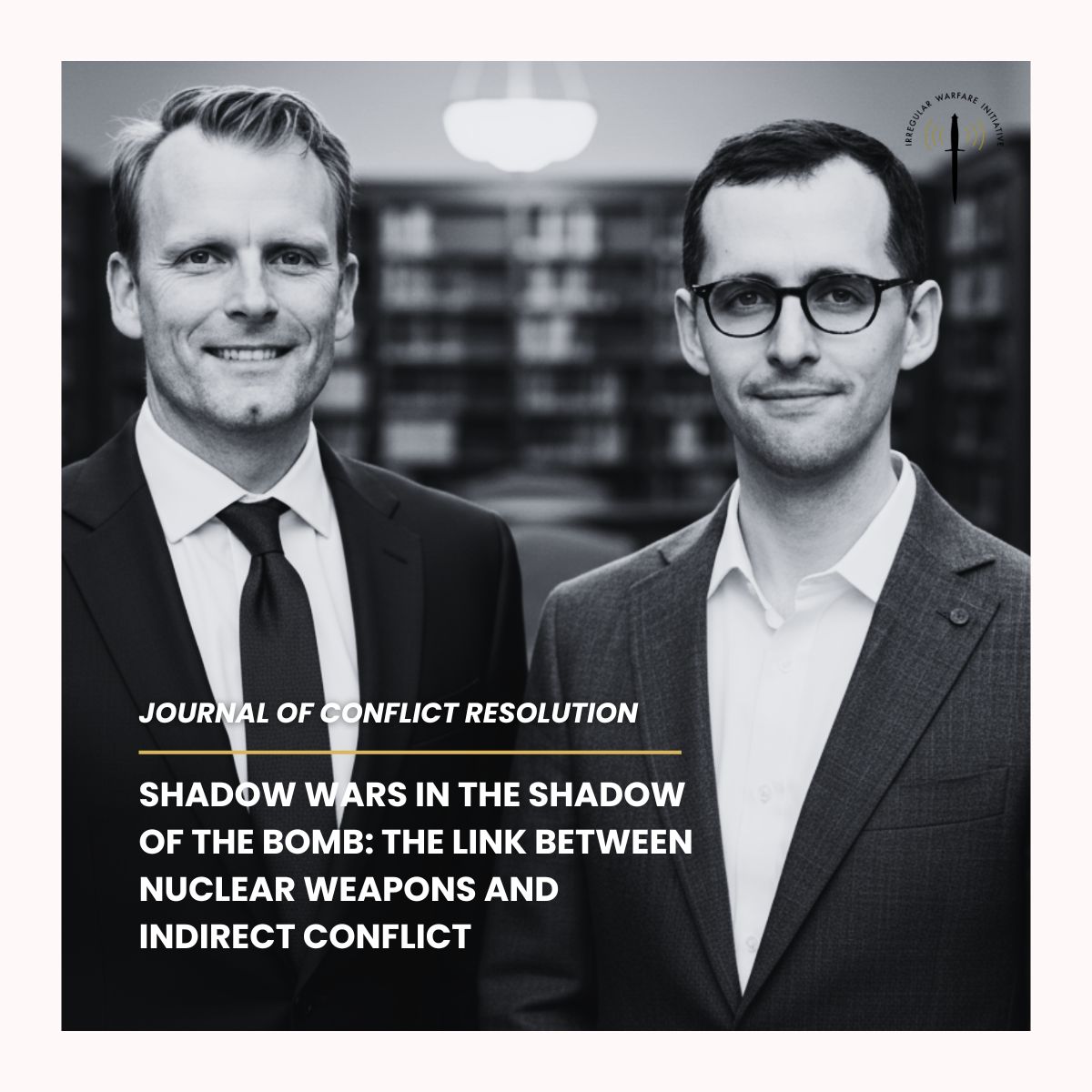
Our Co-Founder and current Chair of the Board, Kyle Atwell, has a new article out: “Shadow Wars in the Shadow of the Bomb,” co-authored with David C. Logan.
The article examines how nuclear weapons shape interstate competition, with a focus on indirect conflict and what it means for major powers.
Read it here: https://t.co/gzw18ScLJE
#InternationalSecurity #NuclearDeterrence #StrategicCompetition #SecurityStudies #IrregularWarfare