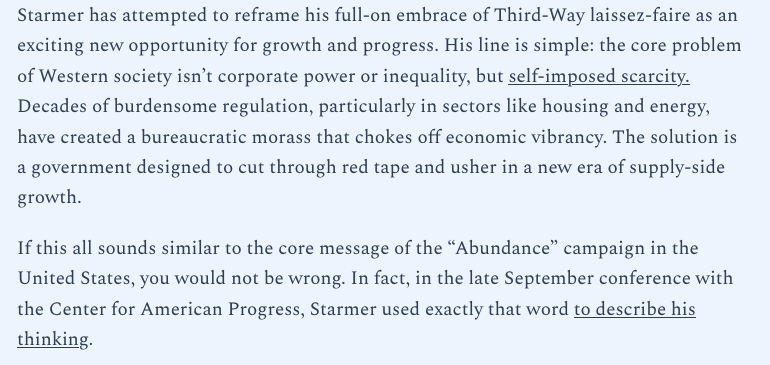
Starmer's resignation should come as no surprise
@openmarkets was raising the alarm about Labour's Abundance-inspired strategy last year
👉 https://t.co/rbWORDquLL
Let today be another reminder to Democrats that caving to the far-right on civil and human rights while reverting to a red-tape-cutting, neoliberal, broligarch-backed economic agenda is both unpopular and incapable of pushing back the neo-fascist tide
2025 Trade & Competition Policy Forum – Dec 11, D.C.
Panel 3: CBAM, Supply Chains & Corporate Sustainability in the EU, moderated by Beth Baltzan. Experts discuss EU climate rules, human rights risks, and corporate accountability.
👉 Complimentary registration: https://t.co/bkcuu96PAj
Big tech frames regulation as a trade barrier, but the danger isn’t regulation, it’s letting tech giants set the agenda.
Governments need the freedom to regulate digital markets.
Read more in this piece by @AudreyStienon:
https://t.co/NiRew6CdaI
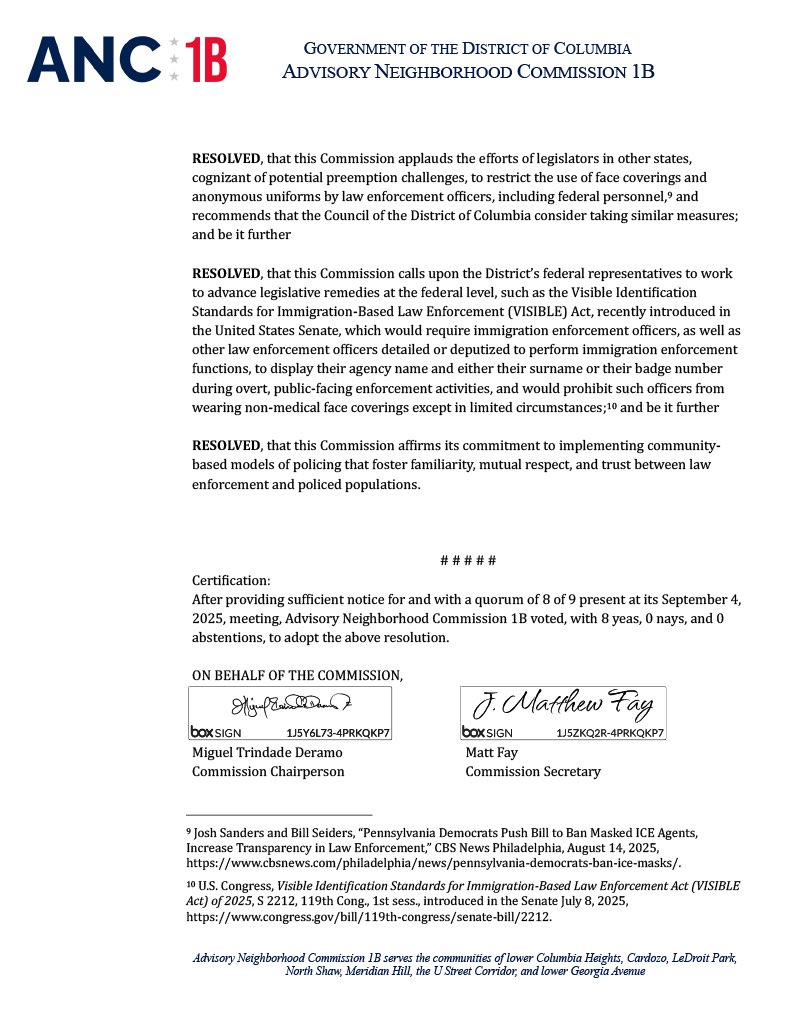
Faceless federal agents who refuse to identify which agency they’re with? This practice is un-American.
It hinders accountability, terrifies our communities, and harms the relationships of trust necessary for responsible policing. It does not make any of us safer.
I sponsored a resolution calling for an end to this practice, which my commission and at least 10 others around the District have passed.
My resolution also calls for support for the VISIBLE Act, introduced by @SenAlexPadilla and @SenBooker, which would regulate federal agents’ use of masks and set identification standards for civil immigration enforcement actions.
I’m grateful for the leadership that Sen. Padilla and Sen. Booker have shown on this critical issue affecting DC and cities across America. We call on @MayorBowser, @SafeDC, @councilofdc, @EleanorNorton, and @DCAttorneyGen to continue pressing the administration on this issue.
Excited to share the unembargoed copy of @AudreyStienon's and my paper, which explores the intertwined relationship between competition and industrial policy, and why the former is essential for a fair, innovative, and democratic economy.
https://t.co/8VbpC9d6sT
Not captured in this clip is the sound of the entire audience, asked if they'd had seen any tariff inflation, responded with an enthusiastic 'dear god, yes!' Only after that gaffe did he backtrack with a: oh, well that must have been the China tariffs. But they're gone now!
.@howardlutnick: "The Chinese tariffs were brutal...[they] caused pain last month, I agree and I feel horrible about it. The president felt horrible about it. But we had to fight the fight." #AxiosEvents
In other words, competition policy is integral to industrial policy—and vice versa.
We need these two communities to be in open conversation if we are to confront the many challenges ahead, from climate change to our adoption of advanced tech like AI.
Very excited at the release of a new piece I’ve written with @danielahanley in @CompPolicyInt's Antitrust Chronicle looking at the use of industrial policy to advance democratic economic governance—and the importance of competition policy to achieving this goal. 🧵
Competition policy offers the tools needed to ensure that the markets targeted by industrial policies remain fair, open, and resilient, and that these policies do not inadvertently create or exacerbate dangerous concentrations of power that undermine our democracy.
In @CompPolicyInt's Antitrust Chronicle, @AudreyStienon & I argue that competition policy must be a foundational element of industrial policy to ensure fairness, socially beneficial innovation, & broadly shared prosperity, ultimately safeguarding democratic governance. Link 👇
Raising hens in cages on massive farms is cruel to animals and pollutes local waterways, but the justification has always been that it produces cheap eggs. That is, until recently. Why did conventional egg prices rise so much higher than cage-free eggs? https://t.co/shw8aXXBNK
NEW: I had the chance to join @AudieCornish alongside @niamalikah@StCollinson on @CNN this morning to talk about the potentially massive cuts to the department of Veterans Affairs
Laws—including the Hart-Scott-Rodino Act—are not suggestions. Great to see @JusticeATR hold KKR accountable for allegedly evading antitrust scrutiny SIXTEEN times through a systemic pattern of noncompliance with the HSR Act.
As Acting AAG Mekki notes, these "rinse-and-repeat failures" through "document omissions, alterations, and failures to report deals" threaten the integrity of merger enforcement.
According to the Department's complaint, internal employees at KKR who omitted and altered documents in their HSR filings said “I’ve always been told less is more 😊.” Another employee responded “I believe in less is more too….”
Read more here:
https://t.co/jYEvxXMInn