This AuScope Geochemistry Network (@AuScopeGeochem) account lets you know about new developments with and data uploads to the AusGeochem data platform.
What's this AusGeochem open data repository thingy all about you may be asking? Wonder no more - all the answers can be found here in this recent open access publication: https://t.co/1804cFknot
The layers tool on AusGeochem allows you to view your data against a variety of backdrops, including topography/hillshade, satellite imagery, and even local geological maps that increase in resolution as you zoom in!
Simply click the layers button on the toolbar to explore 🔬🌏
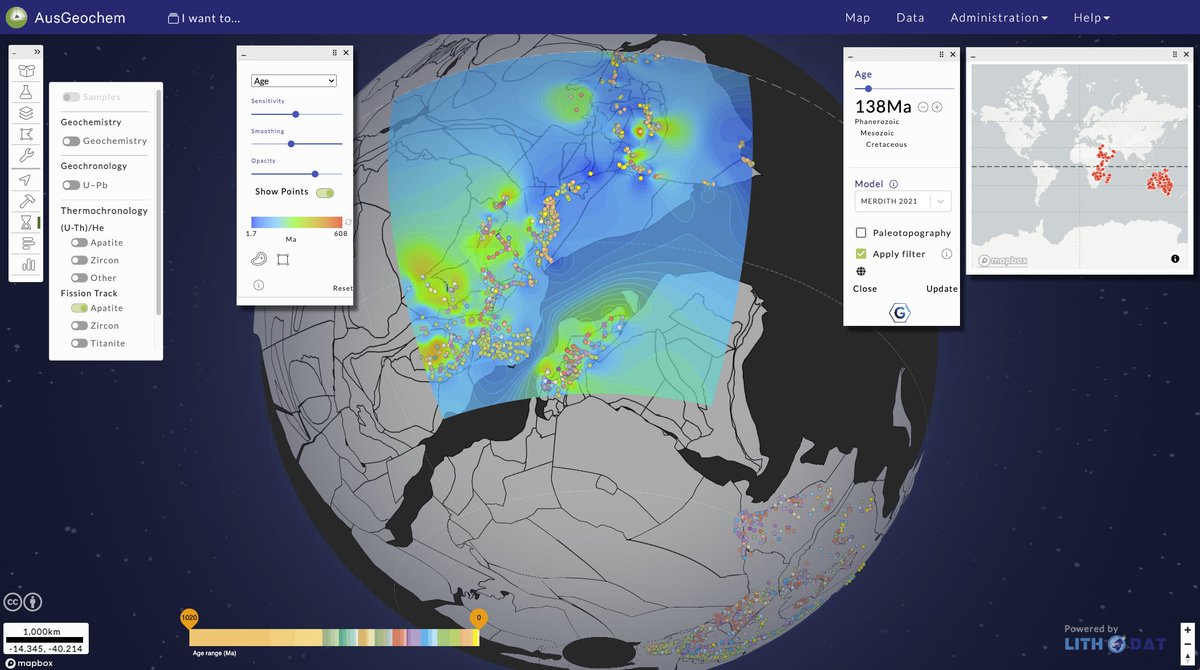
In a new publication out in @SciReports, @AuscopeGeochem's @DrSamuelCBoone and co. present a new set of AusGeochem tools for interpreting thermochronology data in their 4D (3D through time) geological, topographic and paleo-tectonic contexts.
https://t.co/N2MMYmzCCS
#NCRISimpact
"The key point of difference is AusGeochem is designed as a tool for 4D (3D through time) data interrogation, in addition to being a repository of data."
@AuscopeGeochem #NCRISImpact@AuScope
David Upton of Precompetitive Review on the #NCRIS enabled @AusGeochem:
'...different to anything you have seen and quietly breathtaking in its capabilities.'
Discover the full review (free access for academia and government by request):
https://t.co/xLYYhsSOK9
At the helm of the new #NCRIS enabled iron microprobe. Professor Axel Schmitt joins the John de Laeter Centre at Curtin University to help analyse meteorites to mineral deposits and more:
https://t.co/DrLhHt9ZCl
@JDLCentre@CurtinUni#NCRISimpact
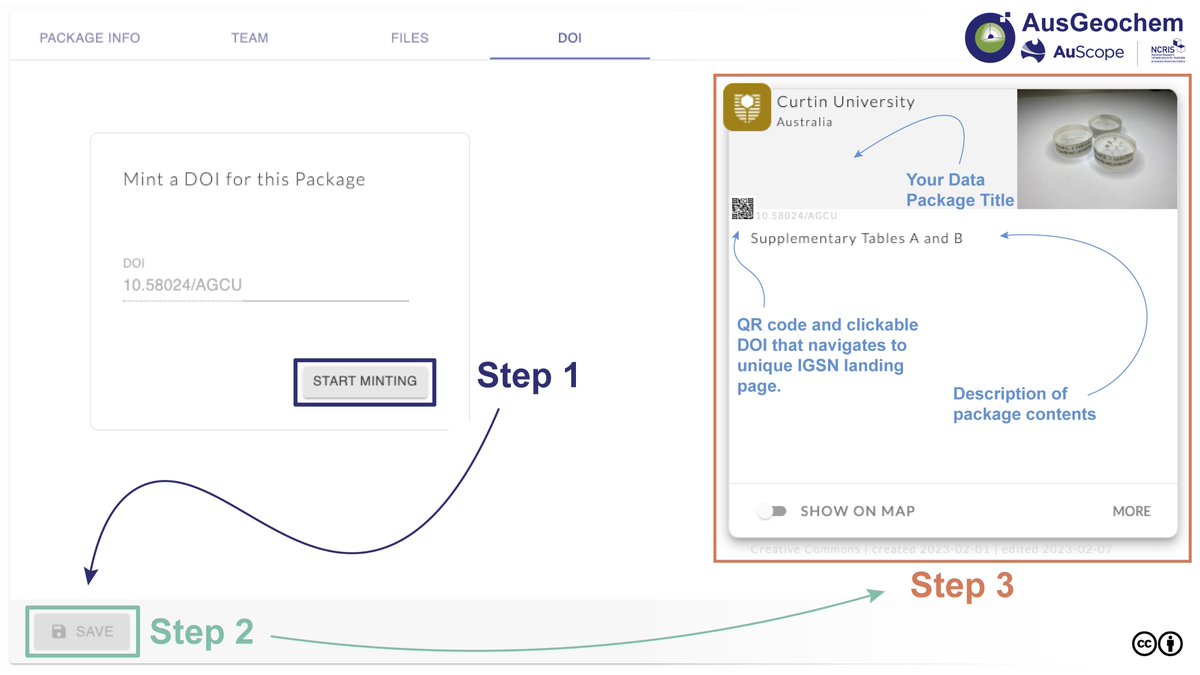
Submitting a paper with that sweet, sweet geochem data (to @GCA_Journal for instance!), mint an International Generic Sample Number ID Digital Object Identifier (IGSN ID DOI) in 3 easy steps to your data before submission!
@DataCite@igsn_info @AuscopeGeochem @lithodat@AuScope
AuScope recently contributed to a position paper on the importance of powering up Australia’s science expertise by finding new ways to support and reward Australia’s research Infrastructure specialists. Take a look:
https://t.co/UxzcXjxr51
#NCRIS @modeltheearth @_BecFarrington_
It's an exciting time for our AGN (@AuscopeGeochem) team who celebrate new partnerships, meeting IRL & #AusGeochem turning one. Congrats, everyone!
AGN Expands Story: https://t.co/jHOwxLbckT
AusGeochem Webinar 7/12: https://t.co/repnaAZ7ah
#NCRIS#AuScopeEnabled
Join us next Tues at the @EarthCube annual meeting for a working session for community members who acquire, use, or curate geoanalytical data! #fairdata#openscience https://t.co/cKTEgbZr2m
Nature article featuring the need to rescue and preserve data. Great to see the work of Kerstin Lehnart and the #GeoRoc data platform mentioned. Here is the article: https://t.co/HD4jpLZvPd
Here’s a link to legacy collection preservation work we do: https://t.co/R72O4spiBt
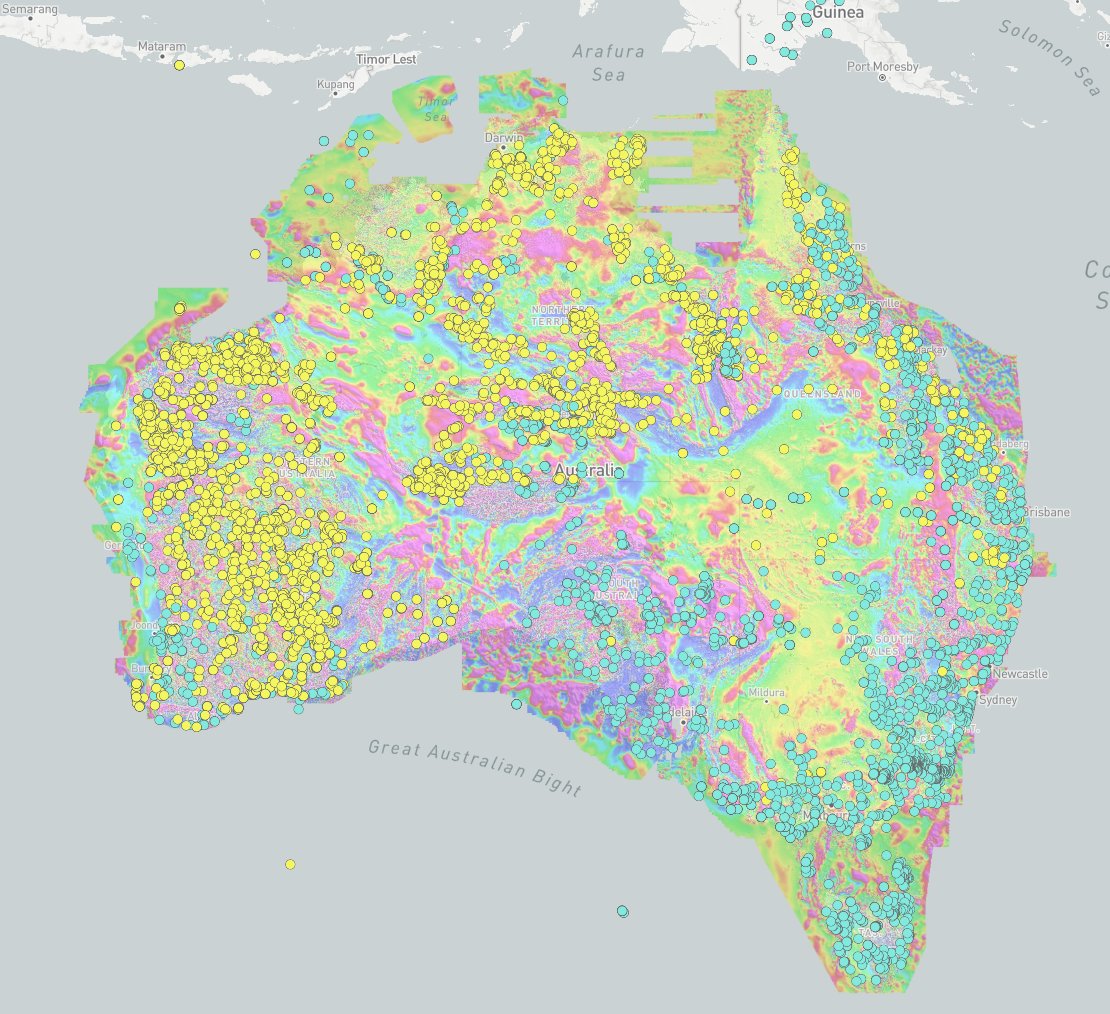
Here’s a sneek peak on what’s progressing through the platform development pipeline!
Our brilliant collaborators @lithodat are providing contributors and content users with the ability to understand sample data in the context of regional magnetics. @AuscopeGeochem @AuScope
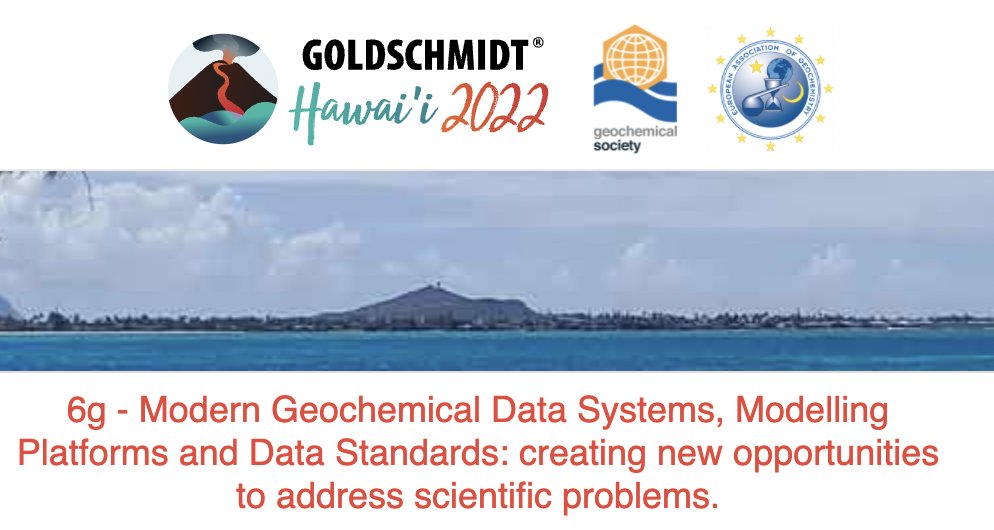
Good morning, everyone! Today we'd like to share an opportunity for the #geochemists and #geochemistry buffs amongst us: our @AuscopeGeochem team are convening a session at @goldschmidt2022 in July 2022 and invite your contributions: https://t.co/1v1KdvmZ7X
Pleased to have assisted ASX-listed Desert Metals to download public domain geochronology data around their mineral prospects on the edge of the Yilgarn craton. @AuscopeGeochem @AuScope
https://t.co/w3ZLGsr0rn