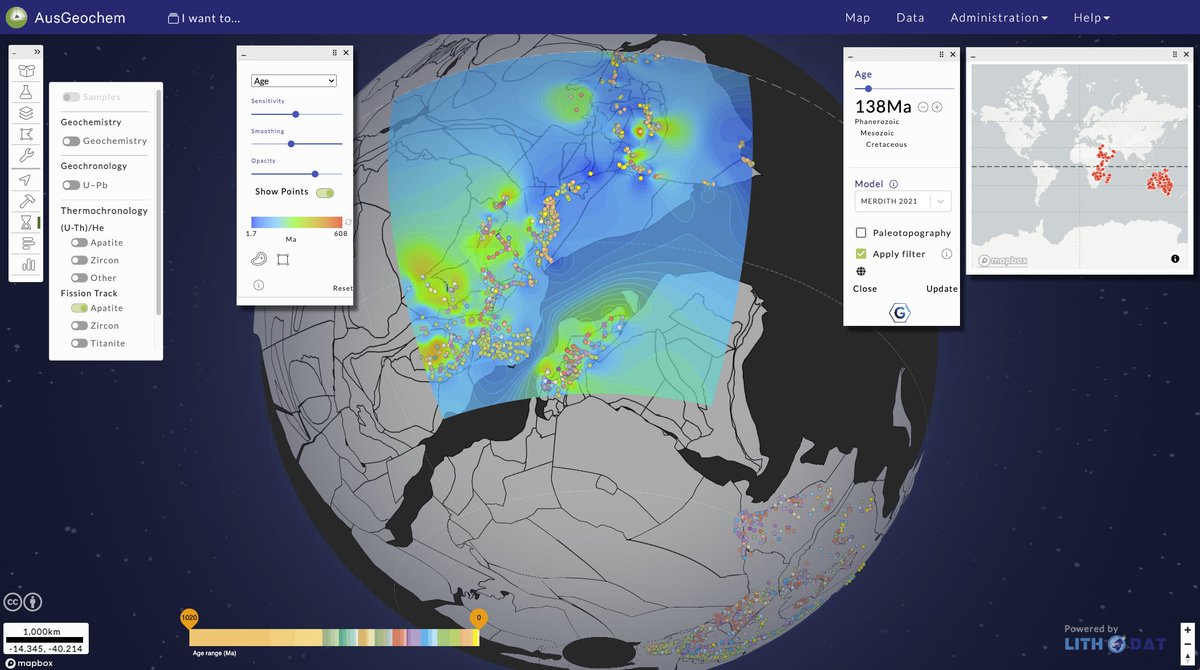
In a new publication out in @SciReports, @AuscopeGeochem's @DrSamuelCBoone and co. present a new set of AusGeochem tools for interpreting thermochronology data in their 4D (3D through time) geological, topographic and paleo-tectonic contexts.
https://t.co/N2MMYmzCCS
#NCRISimpact
David Upton of Precompetitive Review on the #NCRIS enabled @AusGeochem:
'...different to anything you have seen and quietly breathtaking in its capabilities.'
Discover the full review (free access for academia and government by request):
https://t.co/xLYYhsSOK9
"The key point of difference is AusGeochem is designed as a tool for 4D (3D through time) data interrogation, in addition to being a repository of data."
@AuscopeGeochem #NCRISImpact@AuScope
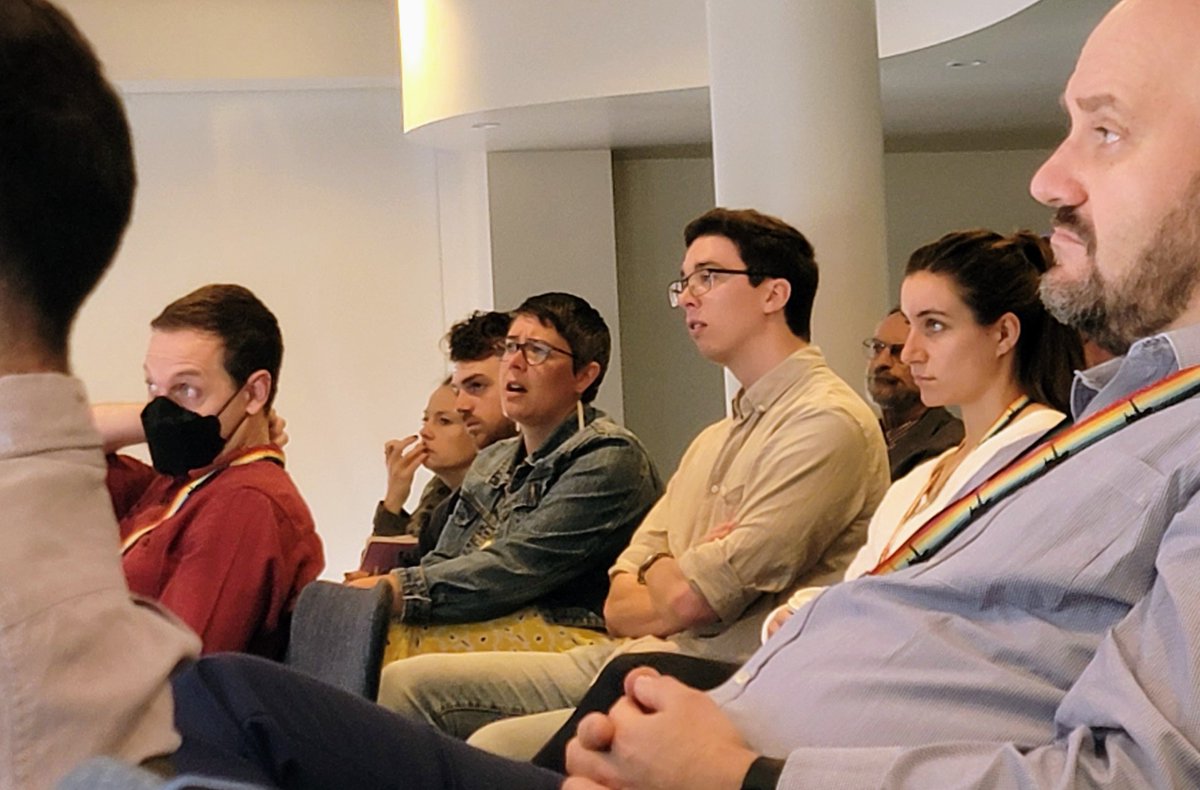
❗️So many WOWs in 1 presentation
The power of data-driven insights from the @ausgeochem database is truly jaw-dropping. Can't wait to see what new discoveries come from this powerful resource & see if we can integrate #IODP data in the future
https://t.co/CEyEy1rijn @AuScope
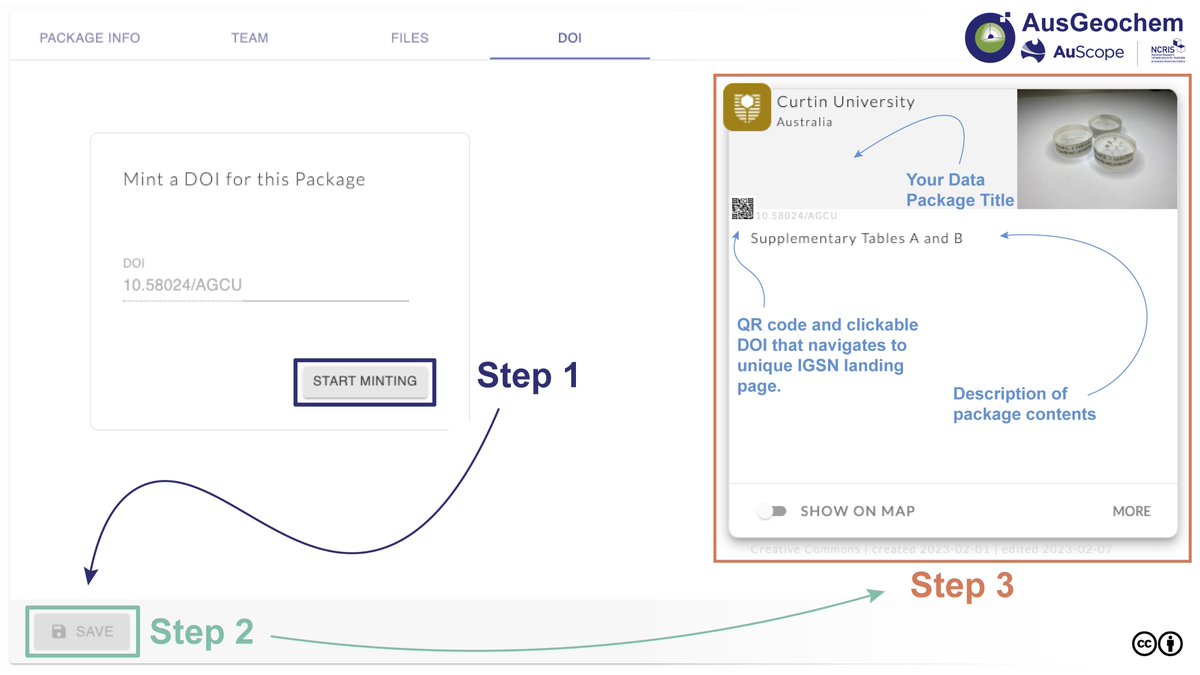
Submitting a paper with that sweet, sweet geochem data (to @GCA_Journal for instance!), mint an International Generic Sample Number ID Digital Object Identifier (IGSN ID DOI) in 3 easy steps to your data before submission!
@DataCite@igsn_info @AuscopeGeochem @lithodat@AuScope
Recently, @AuscopeGeochem & @museumsvictoria provided researchers with access to an important MV held rock & mineral collection via #AusGeochem. Learn more & share to help attract more partners across society to display data in AusGeochem:
https://t.co/hBlmEOzLw2
#NCRISimpact
Here at Lithodat we were excited to see 4Corners last night. Our LithoSurfer platform was designed with the future in mind and provides the perfect way for geoscientists to store, view, and analyse data essential to finding critical minerals!
https://t.co/g8I6pN6Y9s
Here’s a sneek peak on what’s progressing through the platform development pipeline!
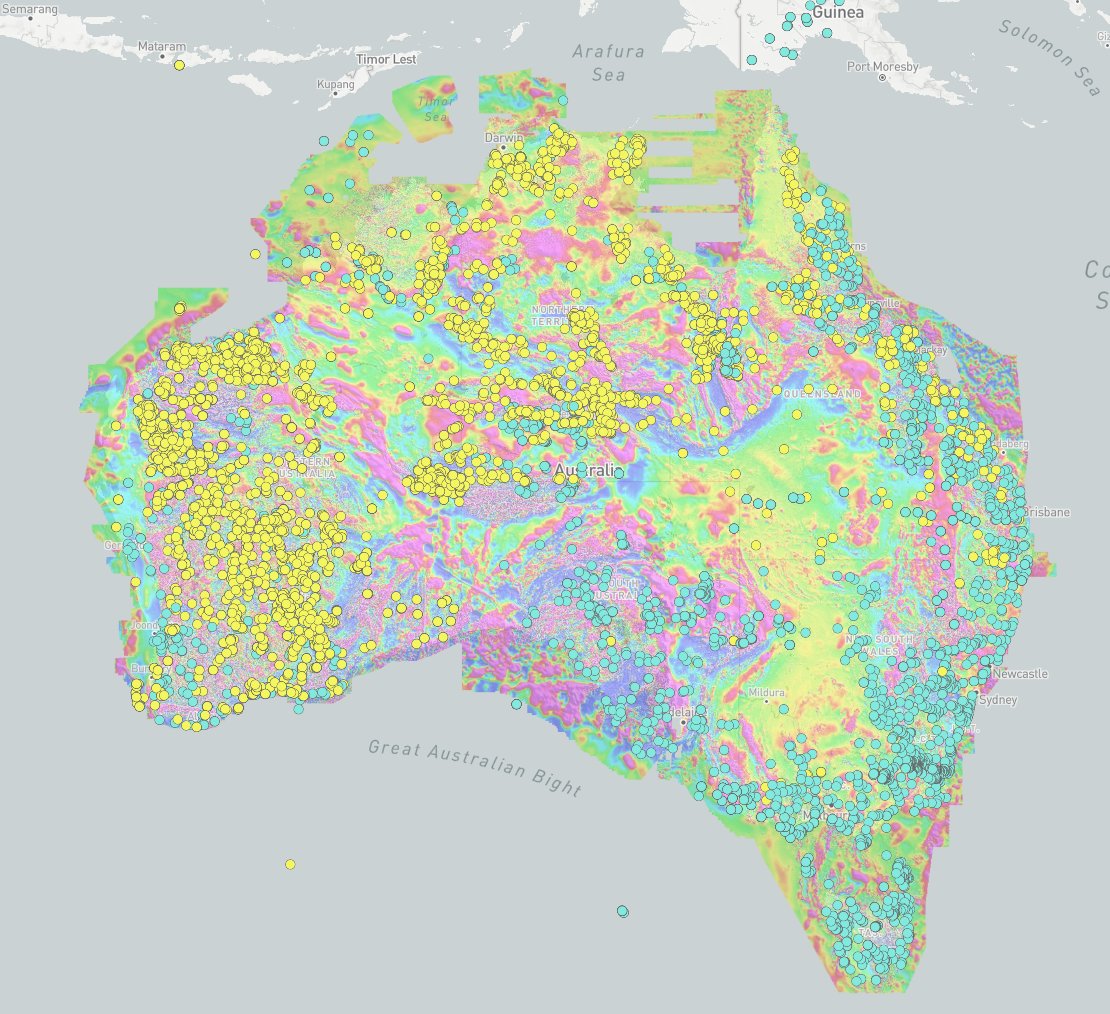
Our brilliant collaborators @lithodat are providing contributors and content users with the ability to understand sample data in the context of regional magnetics. @AuscopeGeochem @AuScope
Lithodat joins @DataCite to offer #DOIs for all our datasets
Lithodat is proud to announce that we have just been approved as an official member of #DataCite. This enables now our users to publish and reference #FAIR datasets using a unique Digital Object Identifier (DOI).
The whole Lithodat team wishes all our clients, users, supporters and well-wishers a Merry Christmas and a Happy New Year! We are all very proud of what we achieved this year and hope that our exponential growth continues!
Looking at all those faults around the very shallow (~10km deep) epicenter of today's #earthquake you can see why a reactivation here makes sense... #earthquakes#Melbourne
To transition to renewable energy, we're going to need a lot of copper. An AI-based model of the evolution of Earth's tectonic plates could help find new deposits, reported in @TheConversation https://t.co/1yRNe46GCF based on our Ore Geology Reviews paper https://t.co/p7zLbyUyu7
Lithodat becomes the first commercial member and allocating agent of IGSN and can now allocate globally unique persistent identifiers. LithoSurfer user can now mint IGSN’s helping make their samples easier to discover, analyse and publish. #ISGN
A vast collection of @SciMelb thermochronology data is about to be transformed via the #AusGeochem Platform. Join @DrSamuelCBoone1, @lithodat and the #Unimelb team this Wednesday — free registration via the link below:
#geochronology@UnimelbESPG @AuscopeGeochem