China just made Silicon Valley's entire AI industry look like a scam.
The US government spent 3 years trying to stop China from building competitive AI.
But this backfired HORRIBLY.
Here's what happened:
Yesterday, a Chinese startup called DeepSeek released a new AI model called V4.
It matches the performance of OpenAI and Anthropic's best models.
At 1/7th the price.
And for the first time ever, it was built on Chinese chips. NOT American ones.
That last part is the one that terrifies the west.
For context:
Since 2022, the US has banned the export of advanced AI chips to China. The entire strategy was built on the assumption that if China can't access Nvidia's best hardware, they can't build frontier AI.
But DeepSeek just proved that assumption wrong.
Their V4 model was trained and runs on Huawei's Ascend chips. Huawei spent months working directly with DeepSeek to make sure V4 runs across their entire line of AI processors.
Jensen Huang even predicted this on a recent podcast: "The day that DeepSeek comes out on Huawei first, that is a horrible outcome for our nation."
That day was yesterday.
And the numbers are crazy:
DeepSeek V4 costs $3.48 per million output tokens. OpenAI's latest model GPT-5.5 costs $30. Anthropic's Claude charges $25. Same ballpark performance. 7x cheaper.
Uber's CTO just admitted they burned through their ENTIRE 2026 AI budget in 4 months using Anthropic's tools.
If Uber had used DeepSeek instead, that same budget would have lasted 7 YEARS.
4 months vs 7 years. Same work getting done.
But the pricing isn't even the big thing here.
The real story is what DeepSeek did with their technical report:
They published the benchmarks where they LOSE.
Every AI company cherry-picks the tests where their model wins. DeepSeek ran the full comparison against GPT-5.4 and Google's Gemini, found they trail frontier models by 3 to 6 months, and printed it anyway.
They literally don't care because the price gap makes the performance gap irrelevant for 90% of use cases.
So the US export controls didn't slow China down. They ACCELERATED China's independence.
Because Chinese developers were FORCED to train models with limited resources, they had to figure out how to make AI radically more efficient. That constraint became their competitive advantage.
Every generation of DeepSeek has gotten dramatically cheaper to train. V4 continues the trend.
Meanwhile US companies are going the OPPOSITE direction:
OpenAI's GPT-5.5 Pro costs $180 per million output tokens. That's 51x more expensive than DeepSeek V4 for comparable work.
The Commerce Secretary confirmed this week that ZERO Nvidia advanced chip shipments have actually gone through to China despite being approved in January.
So China built frontier AI anyway. Without American chips. At a fraction of the cost.
And the market response tells you everything:
Chinese chipmaker SMIC surged 10%. Huahong Semiconductor jumped 15%. DeepSeek's Chinese AI competitors Zhipu AI and MiniMax dropped 9% because V4 is destroying them too.
DeepSeek is making Silicon Valley's pricing model look like a scam.
US tech companies spent $650 billion on AI infrastructure this year. DeepSeek just showed the world you can match their output for pennies.
The export controls were supposed to be America's ace card. Instead they taught China how to win without American chips, at American prices nobody can compete with.
Jensen Huang was right. This is a horrible outcome.
But it's the outcome America built for itself.
🚨 A REMARKABLE STORY ABOUT ELON MUSK’S SECRET GENERALS IN CHINA: THE TWO MEN WHO BUILT THE SHANGHAI MIRACLE 🏆
🌑 In 2018, Tesla had entered its darkest hour. In the United States, severe production crises and low yield rates had put Elon Musk on the hot seat. Wall Street magnates circled the company, eyeing it for short-selling, waiting for the inevitable collapse.
🌏 Across the Pacific, the situation was equally dire. In the massive Chinese market—which accounted for nearly half of global new energy vehicle sales—Tesla was struggling to gain traction. Faced with dismal sales of only 120 cars a month, an enraged Musk even considered disbanding the entire Chinese team.
🧱 The market was notoriously difficult to crack. Because all Teslas were imported, the starting price of 499,000 yuan for the Model 3 deterred most consumers. To lower prices, domestic production was essential. However, the premise for foreign companies to produce cars in China was to establish a joint venture—a compromise the maverick Musk was unwilling to make.
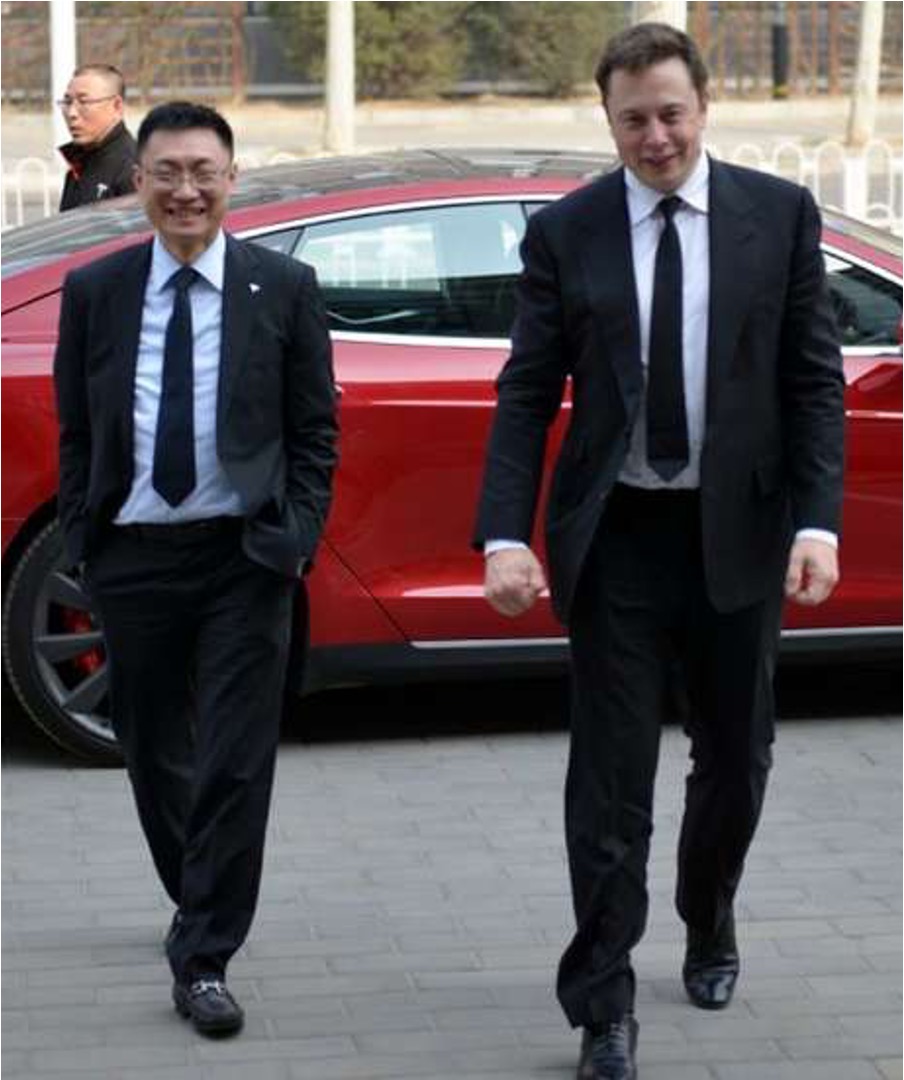
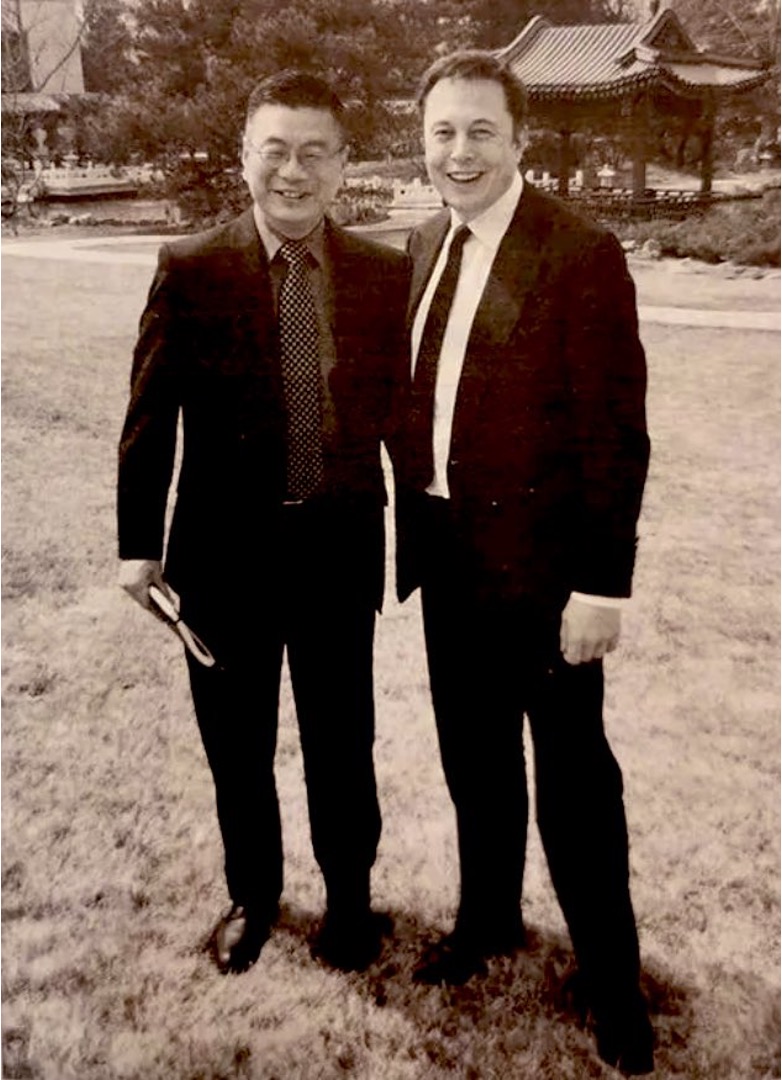
🔮 Tesla needed a miracle in China. That miracle would require two distinct phases spearheaded by two very different men: Robin Ren, the diplomat who would unlock the forbidden door, and Tom Zhu, the commander who would build an empire behind it.
PHASE ONE: THE DIPLOMAT AND THE BREAKTHROUGH
🕵️♂️ Secretly, Musk began looking for a "China hand" to navigate the complex political landscape. Robin Ren (Ren Yuxiang), a fellow alumnus of the University of Pennsylvania, had long been on Musk's radar. Since 2012, Musk had repeatedly invited Ren to join Tesla, convinced he was the missing link.
🎓 Initially, Ren was surprised by the olive branch. He admitted he "knew almost nothing about the automotive industry" and found it hard to imagine that, 20 years after graduation, Musk would suddenly ask to have lunch. But Musk was persistent. As the 22nd International Physics Olympiad champion and Musk's former laboratory partner at UPenn, Ren was held in high regard by the CEO, who once noted that Ren was the only classmate whose physics was better than his own.
🤝 Ren finally joined in May 2015 as Vice President of Tesla Asia Pacific. Musk was set on him not just for his intellect, but for his unique leverage: his identity as a native Shanghainese with deep government relations.
🏛️ He became the unsung hero of the Shanghai project. Under Ren's mediation, Musk began frequently meeting with high-ranking Chinese officials. In April 2017, Ren first articulated the crucial argument that a wholly-owned factory "benefits the upgrading of China's automotive industry," persuading officials that Tesla's technology could drive the local supply chain. With theories of technological independence and industrial chain driving effects, Ren slowly loosened the customary domestic joint venture model.
✈️ By February 2018, the plan was ready. Ren flew to the US to report to Musk with a detailed blueprint for the Shanghai factory, including location maps, financing commitments, and transaction terms. Unfortunately, Musk was deep in the "production hell" phase of the Nevada battery factory. When they finally met, Musk didn't even look at Ren’s slides. He just stared at him and asked, "Are we doing this right?"
🚦 Ren was taken aback. He thought the heavy lifting was done, but realized Musk needed reassurance, not data. Giving a firm affirmative answer, Ren secured the green light.
🔓 In April 2018, the breakthrough arrived. The Chinese government lifted foreign ownership restrictions on new energy vehicles, and Ren seized the opportunity. By July, the Shanghai Municipal Government and Tesla signed a memorandum of cooperation. While Shanghai Mayor Ying Yong and Musk unveiled the project publicly, it was Ren who signed the agreement, quietly cementing his pivotal role.
✍️ Ren secured three extremely favorable terms that forcefully broke the established joint venture model. First, he negotiated land concessions, obtaining 860,000 square meters of land in Lingang at a 90% discount from the market price.
⚡ Second, he secured low-interest loans, obtaining credit support totaling over 16 billion yuan with an interest rate of just 3.9%. Third, he ensured rapid approval, taking only half a year from signing the contract to commencing construction. Robin Ren had successfully delivered Tesla's first taste of "China speed."
PHASE TWO: THE COMMANDER AND THE WAR FOR SPEED
🏗️ With the door successfully opened, someone had to walk through it and build. While Ren moved in high-level diplomatic circles, the on-the-ground reality for Tesla China was chaotic.
🔌 In early 2014, the company was struggling with a "charging anxiety" crisis that was killing sales before they could start. Consumers refused to buy electric cars without a reliable network. Into this breach stepped Tom Zhu. Unlike the diplomatic Ren, Zhu was a man of the earth.
🌍 Born in China but educated in New Zealand with an MBA from Duke University, Zhu had cut his teeth managing tough infrastructure projects in Africa. He was used to dust, delays, and difficult environments. He joined Tesla in April 2014 to build the Supercharger network, but his pragmatic, military-style execution caught Musk’s eye immediately. Despite having zero automotive experience, he was put in charge of Tesla’s entire China operation by the end of the year.
⚔️ If securing the land was Robin Ren's victory, building the factory was Tom Zhu's war. The timeline Musk demanded was widely considered impossible: transform a muddy field in Lingang into a world-class vehicle factory in under a year.
🏠 Zhu moved to the front lines. Known for his no-fuss style and often seen wearing a standard-issue Tesla fleece jacket and a buzz cut, Zhu rented a small, government-subsidized apartment just 10 minutes from the construction site. He paid less than 2,000 yuan ($300) a month for rent, purely so he could be the first one in and the last one out.
🚀 Under his watch, "China Speed" became a reality. He orchestrated a 24/7 construction schedule that stunned the industry. In January 2019, the site was dirt. By October 2019—just 10 months later—the factory was complete and starting trial production. It was a miracle of manufacturing engineering that saved Tesla’s cash flow at a critical time.
💰 The results were undeniable. Two years later, the Shanghai factory contributed half of Tesla's global production capacity, and costs were sharply reduced by 65%. Through the Gigafactory, Tesla solved its production and profitability issues in one fell swoop, eventually surpassing a market value of $1 trillion in October 2021.
UNSTOPPABLE: THE MIRACLE OF SHANGHAI
🌟 While Robin Ren left the company in 2020, Zhu’s star continued to rise. His defining moment came in 2022 during the severe Shanghai COVID-19 lockdown. The city was paralyzed, and factories everywhere were shutting down. For Tesla, a halt in Shanghai meant cutting off half its global cash cow.
🛌 Zhu made a decision that mirrored Musk’s own famous "sleeping on the factory floor" days. He implemented a "closed-loop" system, moving into the factory and sleeping on the floor alongside thousands of his workers.
🥣 For over two months, they lived, ate, and worked inside the facility, cut off from the outside world to keep the assembly lines humming. While other automakers flatlined, Zhu’s army kept delivering cars. By 2022, Giga Shanghai was Tesla's primary export hub, producing over 710,000 vehicles that year—more than half of Tesla's global output.
🤠 Musk, who values "hardcore" commitment above all else, saw in Zhu a mirror image of his own relentless drive. In late 2022, when Tesla's Texas and Berlin factories were struggling to ramp up, Musk didn't hire a local expert. He flew Tom Zhu to Austin.
🦺 Zhu arrived with a team of his most loyal lieutenants from Shanghai, famously appearing at the US factories in their signature Tesla visibility vests, ready to instill "China efficiency" into American operations.
🏆 In April 2023, the former project manager who built charging stations was named Senior Vice President of Automotive. Today, Tom Zhu sits at the very pinnacle of Tesla's hierarchy, effectively serving as the global No. 2, overseeing all global production and sales.
☯️ Ultimately, the miracle of Shanghai wasn't just about steel and software; it was about the collision of two distinct forces. Robin Ren was the velvet glove who rewrote the rules of the game, while Tom Zhu was the iron fist who built the arena. One conquered with handshakes, the other with grit. Musk may have provided the vision, but without his Diplomat to open the gate and his Commander to hold the line, the future would have remained just a dream.
@Kanthan2030 You have to wonder where these transactions come from given that (at least to our knowledge) normal companies and individuals in China and Russia have no access to CIPS. Maybe they are government arranged transactions?
@MikeMacMike01@DanCollins2011 Indeed, at least thus far none of these of the BRICS dreams have materialized on the ground. Where they are getting these numbers from remains a mystery, since neither normal companies in China nor in Russia can use the so-called CIPS system.
@BrankoMilan@sinica (4/4) experienced over the past 5 years has been an unmitigated disaster, and any analysis which overlooks this is overlooking reality in favor of a fantasy.
@BrankoMilan@sinica (3/4) on the same factors that made other countries wealthy in the past: respect for private property, low levels of taxation, limited government interference, hardworking intelligent people and high savings rates. The renewed dabbling in central planning which China has
🇨🇳 In China, delivery drivers just leave food or packages outside of campuses and other places closed to traffic.
Then people come and get their delivery. Zero concern things might get stolen. I have pictures of this outside my gym and other places.
@krannyman @RealJermWarfare Speaking of propagandists, do you also get paid to make strawman arguments? As we reported extensively at the time, for many the lockdowns were indeed awful. But that doesn’t make never ending @songpinganq inspired fantasies about vaccine passports any truer.
@krannyman @RealJermWarfare BTW the claims your acquaintances shared with you have the distinct flavor of projection, since what you describe DID happen in some other countries. You might even find the real story to be far more interesting. It was a true theater of the absurd.
@krannyman @RealJermWarfare Then you were lied to. If you want to find out what actually happened, you can read the extensive “live” reports we published at the time, starting with this one: https://t.co/HY9IoNY537
@krannyman @RealJermWarfare It certainly would be if true but neither of those things ever happened in China. You are inverting reality. On the contrary, China was the only major industrialized country where it was ILLEGAL to coerce anyone into taking a vaccination.
@RealJermWarfare @DetroitShowtyme@CarlZha (2 of 2) in the West about "China killing house pets." To our knowledge, there was exactly ONE such case, which was reported on by the Shanghai Daily and condemned in no uncertain terms. But this one case somehow morphed into a blanket statement implying some astronomical number.
@RealJermWarfare @DetroitShowtyme@CarlZha (1 of 2) On a more general note reg. Western reporting about China, though there is also lots of outright lying (for example by people like Serpentza on YT or songpinganq on X), the other problem is generalizations. For example, during the SH lockdown there were lots of reports..
@RealJermWarfare @DetroitShowtyme@CarlZha (4 of 4) Long story short the attempt to run Shanghai as a command economy for two months was a monumental failure and without the free market reasserting itself a lot of people would have starved. The upside is that it was a unforgettable lesson for everyone involved.
@RealJermWarfare @DetroitShowtyme@CarlZha (3 of 4) Others had basic kitchen facilities but were dependent on deliveries of cooking gas which none of the bureaucrats gave any thought to. Those with access to cellphones and money (or generous neighbors) usually found pricey workarounds but for ex. some elderly didn’t.
@RealJermWarfare @DetroitShowtyme@CarlZha (2 of 3-4) For example, no food deliveries were allocated to maintenance staff stuck in housing subdivisions to which they typically commuted daily. Also some people were stuck at their workplace without any kitchen facilities. Bags of rice and flour were useless to them.