I’ve alway’s thought it’s a shame that WebAssembly has the word “web” in it. Gives it a connotation that it’s “only for browsers” or something.
Meanwhile, NASA’s over here with a flight-compliant derivative (SpaceWASM) intended for spacecraft!
The intent is writing mission software to a standardized bytecode, where the end platform / ISA is otherwise arbitrary. In other words, run the same mission package on ARM, Rad-hard PowerPC, RISC-V, whatever.
Thus, after-flight you could (safely) upload new payloads with “approved” APIs.
Weird to think about, but just like buggy WASM code shouldn’t crash your browser…the same logic applies to not crashing your critical flight hardware.
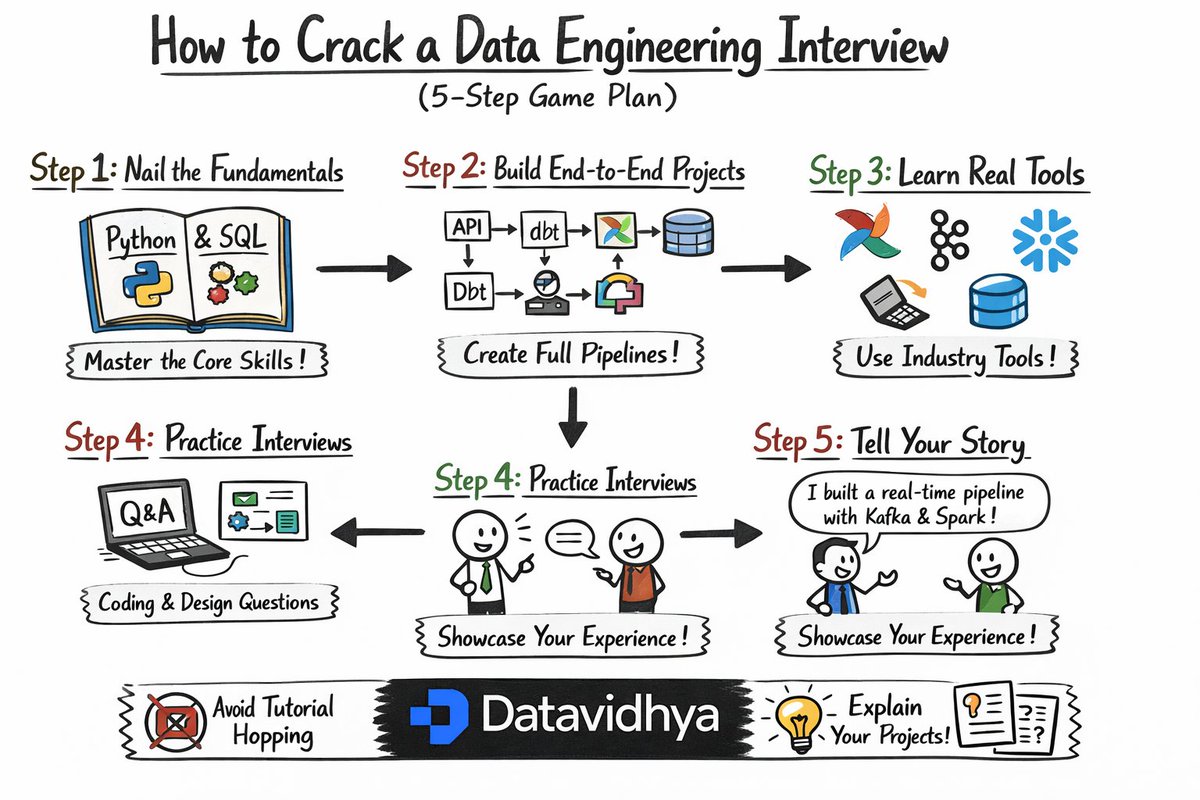
🧠 How to Crack a Data Engineering Interview (The 5-Step Game Plan that Actually Works)
Let’s be honest.
Cracking a Data Engineering interview in 2026 isn’t just about knowing Python or writing a SQL query.
It’s about handling real data, debugging production issues, and telling your story like an engineer who’s solved problems, not just followed tutorials.
So here’s the 5-step process I wish someone gave me earlier 👇
✅ Step 1: Nail the Fundamentals
You can’t build a strong pipeline on a weak foundation.
Master:
- Python (with focus on data manipulation)
- SQL (window functions, CTEs, performance)
- Fundamentals of Data Engineering
⚙️ Step 2: Build End-to-End Projects
Hiring managers don’t want hobby scripts.
They want to see:
- Data ingestion from APIs/files
- Transformation using dbt or Spark
- Scheduling via Airflow
- Data Warehouse loading (Snowflake/BigQuery)
📦 Step 3: Learn Real-World Tools
You’re not just coding, you’re solving problems at scale.
Add these to your toolkit:
- PySpark / Spark + Databricks
- Kafka for streaming data
- Airflow for orchestration
- Snowflake for analytics
🧠 Step 4: Practice Interview Questions (The Right Way)
Don’t just memorize.
Simulate:
- Coding rounds (PySpark, SQL, Scala)
- System design: “How would you design Uber's trip pipeline?”
- Data modeling: SCDs, Fact/Dim tables
- Scenario-based questions: “A DAG failed yesterday. What will you check?”
🎯 Step 5: Tell Your Story
Resume = Your trailer. Interview = The movie.
Frame your experience like this:
“Built real-time data pipeline using Kafka + Spark streaming 1M events/hour to enable real-time fraud detection in payments pipeline.”
Not:
“Worked on data pipelines.”
Most people fail not because they’re under-skilled, but because they’re under-prepared.
→ They jump between YouTube videos
→ Spend weeks on LeetCode, not realising DE interviews are different
→ Build projects but can’t explain “why” they did something
💡 Fix that with structure.
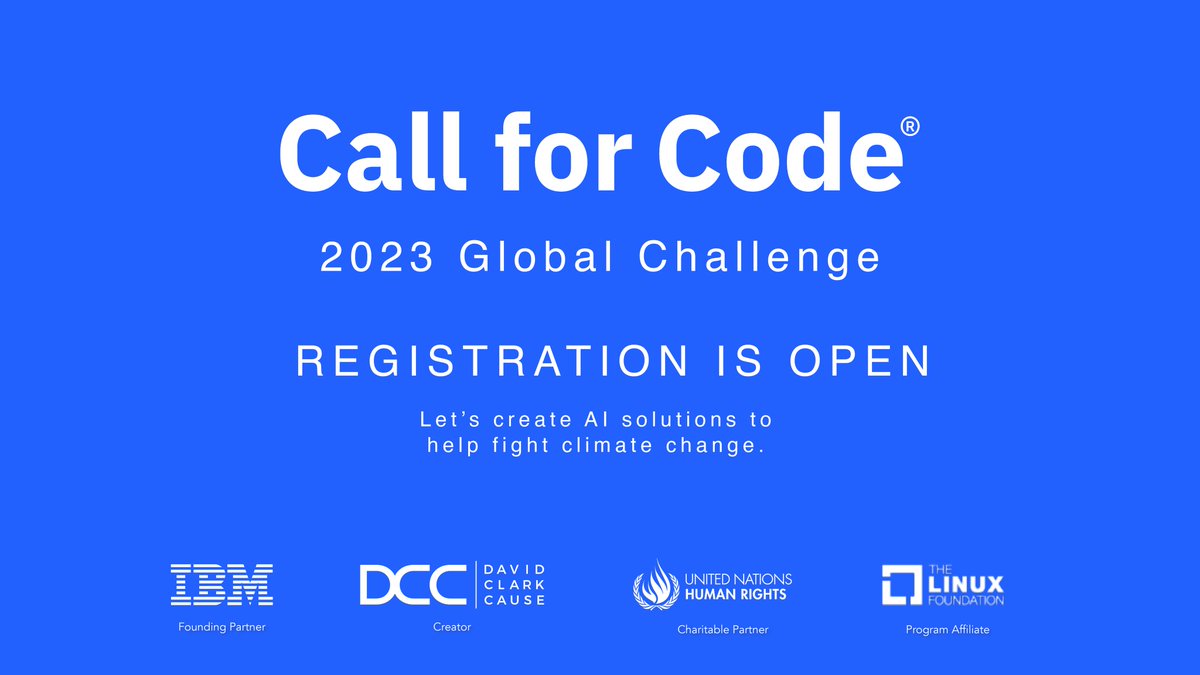
2023 #callforcode Global Challenge registration is officially open!
Let’s create AI solutions to help fight climate change. Answer the call and register today: https://t.co/kQrVKyuEue
El lado del mal - ChatGPT hace código con SQL Injection, CoPilot mete Security Bugs y los programadores que usan Asistentes AI hacen más "Buggy Code" https://t.co/QKyt0dEcji #Copilot#ChatGPT#AI#IA#SQLInjection#Bug