Brain donation is a voluntary process and is not included in organ donation registries. However, brain donors can also be organ and tissue donors. Learn the facts of brain donation with Autism BrainNet: https://t.co/7ot8s2uncz
"No experimental model can fully substitute for studying the human brain. This is what makes brain donation so irreplaceable, and why Autism BrainNet has become central to our work." - Tomasz J. Nowakowski, PhD
Read more about Dr. Nowakowski's work: https://t.co/4I3x09pU2h
If you and your family are interested in postmortem brain donation for research, Autism BrainNet has resources to help you plan and communicate your intent for donation in the future. Click the link to learn more: https://t.co/exoizWjNUr
Visit our online library of science article to learn how postmortem tissue-based research is helping to improve the understanding of the causes of #autism and related neurodevelopmental conditions: https://t.co/puEAKwFBQ4
In a recent article published in Autism Spectrum News, Nicole Coman, Ed.S., discusses her role as clinical coordinator for Autism BrainNet and how brain donation can further autism research. Read the article: https://t.co/TEbNDqZ7lU
How does brain tissue become data? Through a massive collaborative effort supported by the Brain Initiative Cell Atlas Network (BICAN), learn how scientists are creating a comprehensive map of the human brain.
New omics data from the labs of Tomasz Nowakowski and Stephan Sanders is available from @AutismBrainNet. Interested researchers can access it through SFARI Base: https://t.co/jFKeGedEjo
#science#autismresearch
On this National #BrainDonationAwarenessDay, we join @braindonorproj in raising awareness of how the gift of brain donation helps to advance research. Learn more about brain donation with Autism BrainNet: https://t.co/7ot8s2uncz
Join us on Wed. April 29 from 12-2pm ET for an "Ask Me Anything" session on Reddit. Dr. David Amaral from Autism BrainNet & Dr. Alycia Halladay from the Autism Science Foundation will answer questions about brain donation for autism research. Learn more: https://t.co/C0tEZIMkWL
Join our first "Ask Me Anything" session on Reddit on April 29 from 12pm-2pm ET. Dr. David Amaral from Autism BrainNet & Dr. Alycia Halladay from the Autism Science Foundation will answer questions about brain donation for autism research. Learn more: https://t.co/C0tEZIMkWL
✨ We’re celebrating Autism Acceptance and Awareness Month by sharing how brain donations are facilitating autism research. Read the latest newsletter to learn more: https://t.co/BwPuObW1ku And, don't miss our first “Ask Me Anything” session on Reddit on April 29th. 🧠 🔬
Enormous thanks to our supervisors Stephan Sanders and @LabNowakowski, our co-authors, the @SimonsFdn for supporting this work and the @AutismBrainNet resource. Most importantly, thank you to the donors and their families, without whom this work would not have been possible.
A brain donation to Autism BrainNet creates a legacy that helps advance research on autism & related neurodevelopmental conditions. Read the practices below that families can follow to optimize the value of a donation for research. https://t.co/3MtdbB3QMA
In a recent article published in @DrugTargetRev, Dr. Karl Murray, Director of the UC Davis/NIH NeuroMab and Tissue Coordinator for Autism BrainNet discusses how brain donation is driving autism research. Read the article: https://t.co/1XJFQBARqg
Kathy Stein shared in episode 222 of the Happy Healthy Caregiver podcast that she'd like to invent a 'compassion pill' and encourages #familycaregivers to consider brain donation to advance #autism research. Listen or watch https://t.co/SjAgRYsgGh
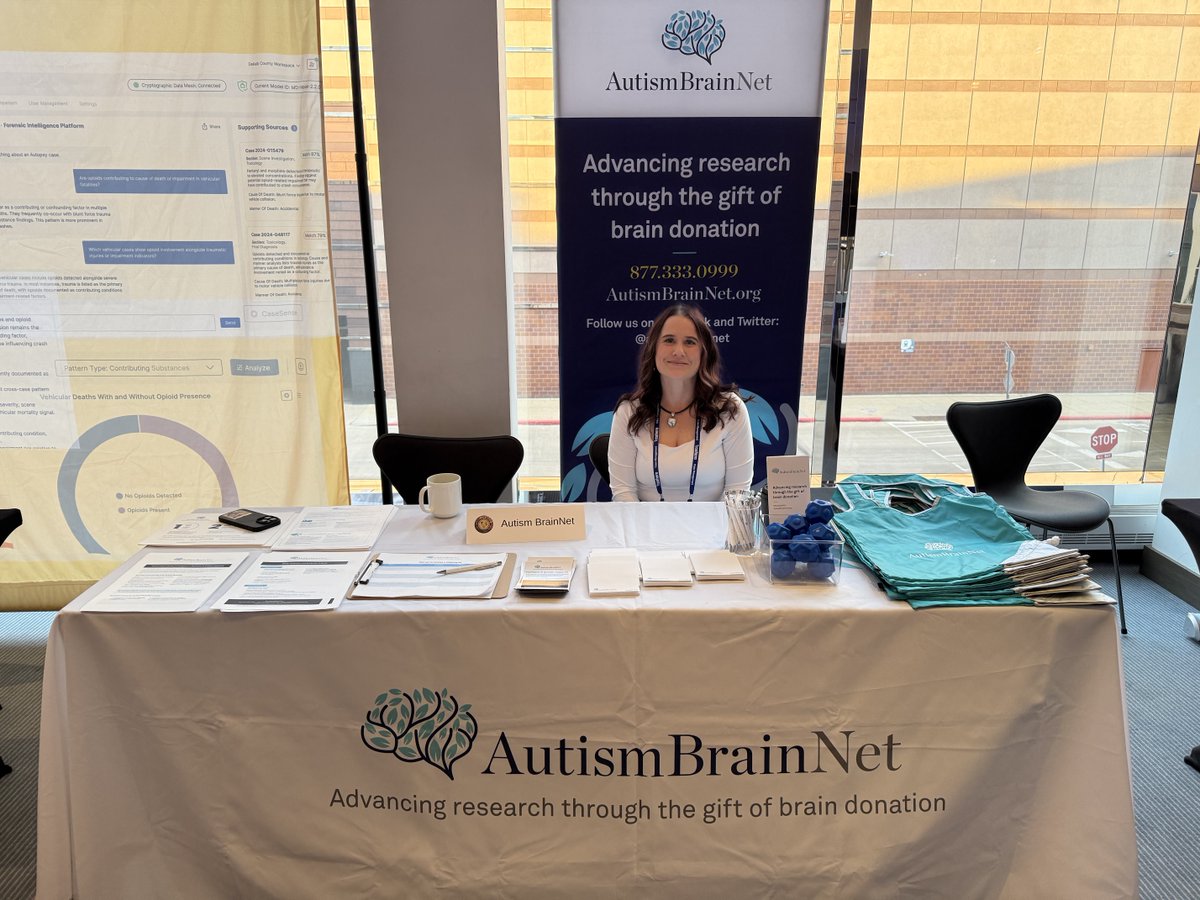
We are excited to be part of the 2026 @theIACME Inaugural Spring Conference in Bloomington, Minnesota. Stop by the Autism BrainNet booth to learn how you can help advance #autism#research.
March is #SUDC Awareness Month. Healthcare professionals can help advance research, education & awareness. Join us to #ShineALightOnSUDC 💙💛 https://t.co/Kg1GAXWG1Q