I empower my fellow autistic humans with communities, advocacy methods & self-care tools for navigating an NT world based on productivism | rising rabbi
If you're a late identified autistic adult looking to connect with others, develop tools, and share your experience with people who get it - consider joining my upcoming group.
It's open to all autistics and offered on a pay-as-you-can basis.
https://t.co/DTP9jkIA6R
“But you're still working.”
Yes.
And maybe work is getting everything while meals, washing, friendships and opening the post become impossible.
Before deciding an autistic person is "coping", ask what has disappeared from their life to keep that one thing going.
the only support and discussion space for autistic jewish folx
we meet on sundays and get into a new topic each week
if you haven't been before - come check it out
if you haven't been in a while - hope to see you again soon
https://t.co/FuSos1ZtdY
A lot more of you are actually disabled but would rather work yourself into the ground because we’re all conditioned to believe that our worth is attached to how much we push through things that actively harm ourselves than actually admitting we need help or rest.
Autistic spirituality nerd?
Come join my free monthly discussion circle where we get together from different traditions to talk about what we're passionate about.
https://t.co/FuSos1ZtdY
the only support and discussion space for autistic jewish folx
we meet on sundays and get into a new topic each week
if you haven't been before - come check it out
if you haven't been in a while - hope to see you again soon
https://t.co/FuSos1ZtdY
we need to stop coddling ableist parents of disabled children
we need to stop legitimatising their eugenist way of looking at the world
we need to stop accepting their voices being pushed to the front of the conversation
I’m no fan of witch hunts but If I was the metwopolitan police I think I would need to take a good looky loo at certain older, flamboyant chat show hosts who seem to constantly and v unfortunately be vewy socially involved and constantly in the pewiphewy of all these sex cases.
The brain fog with POTS can be genuinely scary. The longer I’m upright, the more disconnected and out of it I feel. And the weirdest part is that I’m completely aware of how disconnected and out of it I am.
It’s such an unsettling feeling.
something that abled people will never get is just how hard it is to fight for the label of "disabled" for an overwhelming number of disabled people.
even when it's "obvious" or "visible"
No disabled person deserves to live in poverty. No disabled person deserves to barely get by and not have any luxuries in life whatsoever. Many of us can't work and that's not our fault. Just because some aren't able to sacrifice our life to labor doesn't mean we should suffer.
Millennials really made burned CDs for people as an act of love. Handwritten track list, sharpie decorations, songs illegally downloaded from somewhere questionable. That was INTIMACY.
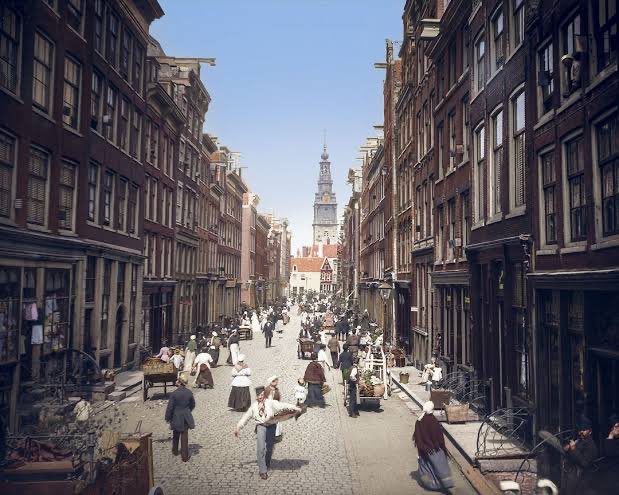
In 1663,Rembrandt painted Bust of a Young Jew, now housed at Fort Worth’s Kimbell Art Museum. A character study painted from a live model,it reflects his artistic engagement with Amsterdam’s Jewish community. Rembrandt lived in the city’s historic Jewish Quarter on Jodenbreestraat.
The real hell of autism is being hyper aware when you’re socially off putting but being biologically psychologically and spiritually unable to do anything about it
Neurotypicals: A good night's sleep fixes everything.
ADHDers: I slept 8 hours and woke up tired, foggy, and somehow already behind on a day that has not started.
The History of Reform Judaism
Reform Judaism is the story of Jews confronting modernity after the walls of the European ghettos began to fall. In the late eighteenth and early nineteenth centuries, emancipation promised legal equality and social acceptance. Many German Jews wanted to remain Jewish while fully joining the surrounding culture. They looked to the Enlightenment and the Haskalah for tools that would let them keep ethical monotheism and prophetic ideals without practices that set them apart from their neighbors.
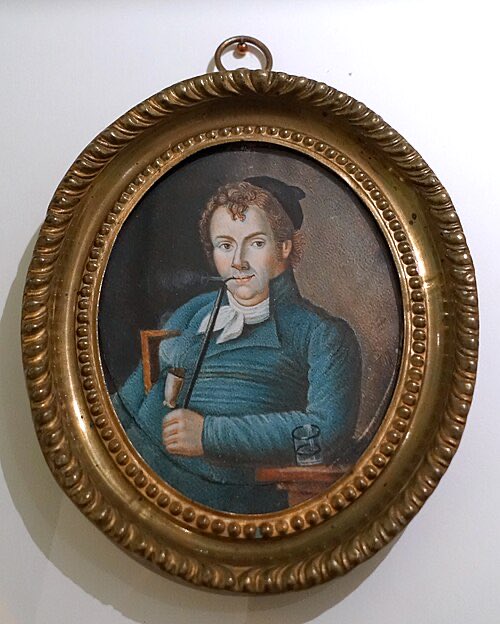
The first concrete steps came from Israel Jacobson, a lay leader in Westphalia. In 1810 he held what is widely regarded as the first Reform service in a school chapel in Seesen. The liturgy was in German rather than Hebrew. An organ and choir accompanied the prayers. Confirmation ceremonies were introduced for both boys and girls. These changes spread. In 1818 the Hamburg Temple opened as the first permanent Reform congregation. Its founders deliberately called the building a temple rather than a synagogue. They omitted prayers for the restoration of sacrifices and for a return to Zion, signaling that they no longer awaited a messianic restoration of the ancient Temple in Jerusalem.
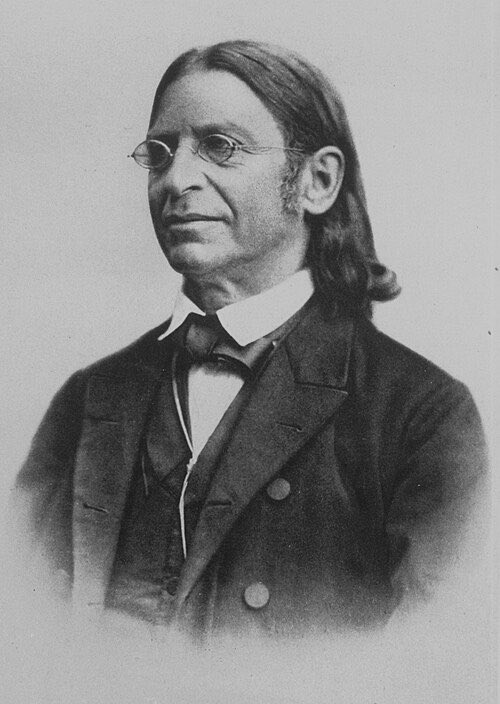
Intellectual leadership soon followed. Abraham Geiger argued that Judaism had always evolved and that historical study, not unchanging law, should guide its future. He saw the essence of the faith in monotheism and ethics. Samuel Holdheim pushed further, treating many traditional legal rules, including parts of marriage and divorce law, as obsolete once Jews lived under modern civil codes. Rabbinical conferences in Brunswick in 1844, Frankfurt in 1845, and Breslau in 1846 gave these ideas a more organized form and showed that Reform was becoming a distinct movement.
The movement found its strongest institutional home in the United States. Early American experiments appeared in Charleston, South Carolina, in the 1820s. Large numbers of German speaking Jews arrived in the mid nineteenth century. Isaac Mayer Wise, who reached America in 1846, became the central organizer. He published the prayer book Minhag America, helped create the Union of American Hebrew Congregations in 1873, founded Hebrew Union College in Cincinnati in 1875 to train rabbis for the American setting, and later established the Central Conference of American Rabbis.
Classical Reform received its clearest statement in the Pittsburgh Platform of 1885. The platform declared that Jews form a religious community rather than a nation. It rejected any expectation of a return to Palestine. It accepted as binding only the moral laws of the Mosaic legislation and discarded rituals, including dietary laws, that reformers judged incompatible with modern civilization. It stressed ethical monotheism, social justice, and harmony with science.
The twentieth century brought revision. The rise of antisemitism in Europe and the mass arrival of Eastern European Jews changed American Jewish life. In 1937 the Columbus Platform reaffirmed progressive principles while recognizing Jewish peoplehood and supporting the building of a Jewish homeland in Palestine. Later platforms continued to balance universal ethics with renewed attention to Hebrew, traditional practices, and particular Jewish identity.
Today Reform Judaism is the largest denomination among affiliated American Jews. Its institutions support hundreds of congregations, rabbinic training, youth education, and social action. The movement’s history remains one of continuous adaptation: an effort to keep Judaism intellectually coherent and practically viable for Jews who live fully inside modern societies.
Israel Jacobson left, Abraham Geiger right. Temple Emmanuel NYC, a Reform Siddur. (prayer book).
Curious about Jewish history. Follow today.