Women & girls face rising risks from online harassment, fake media, and impersonation.
In the @UNESCOCourier's exclusive interview, data scientist Rumman Chowdhury warns about gender-based violence in the age of #AI.
More: https://t.co/Fe0VGb6h5c #NoExcuse#16Days
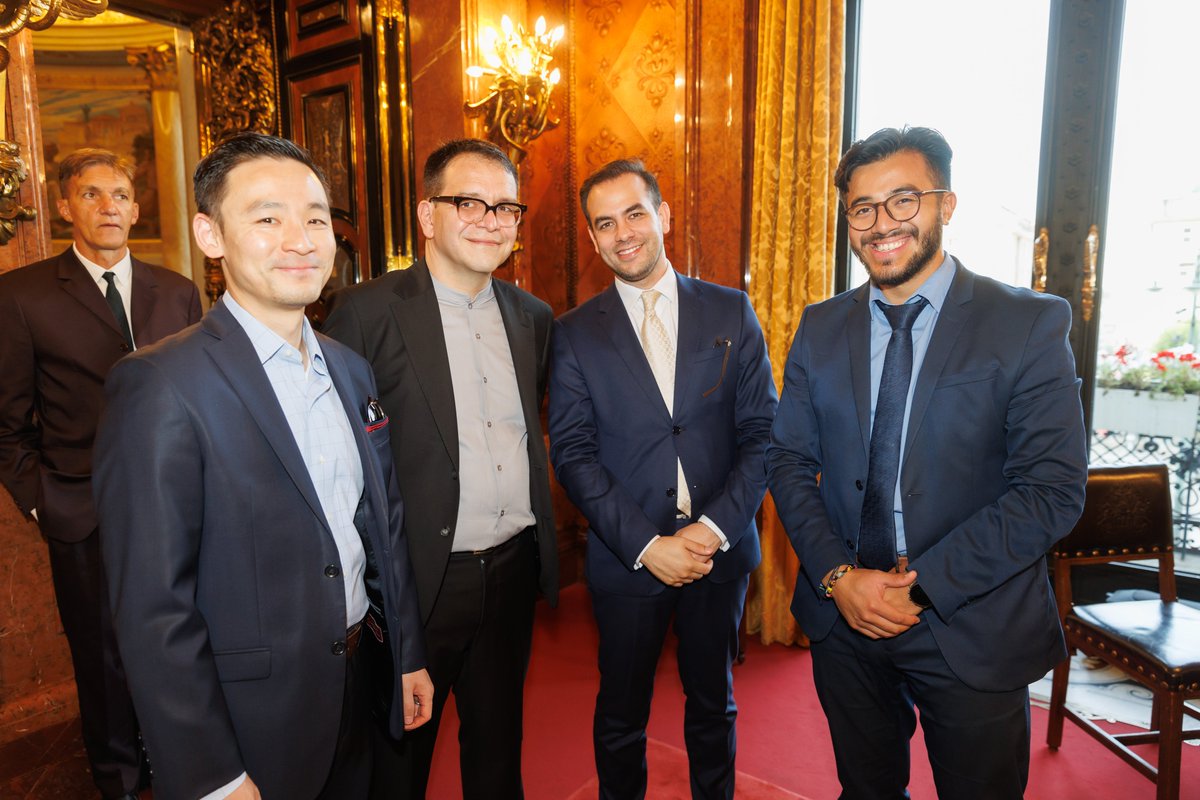
Das @lacherbst in @hamburg_de feiert sein elfjähriges Jubiläum als Treffpunkt für die deutsche, lateinamerikanische & karibische Gemeinschaft, dank der Unterstützung des @Senat_Hamburg, der @eulacfoundation, @InstCervantes & der Vertreter*innen der Länder: https://t.co/RIrApn37bG
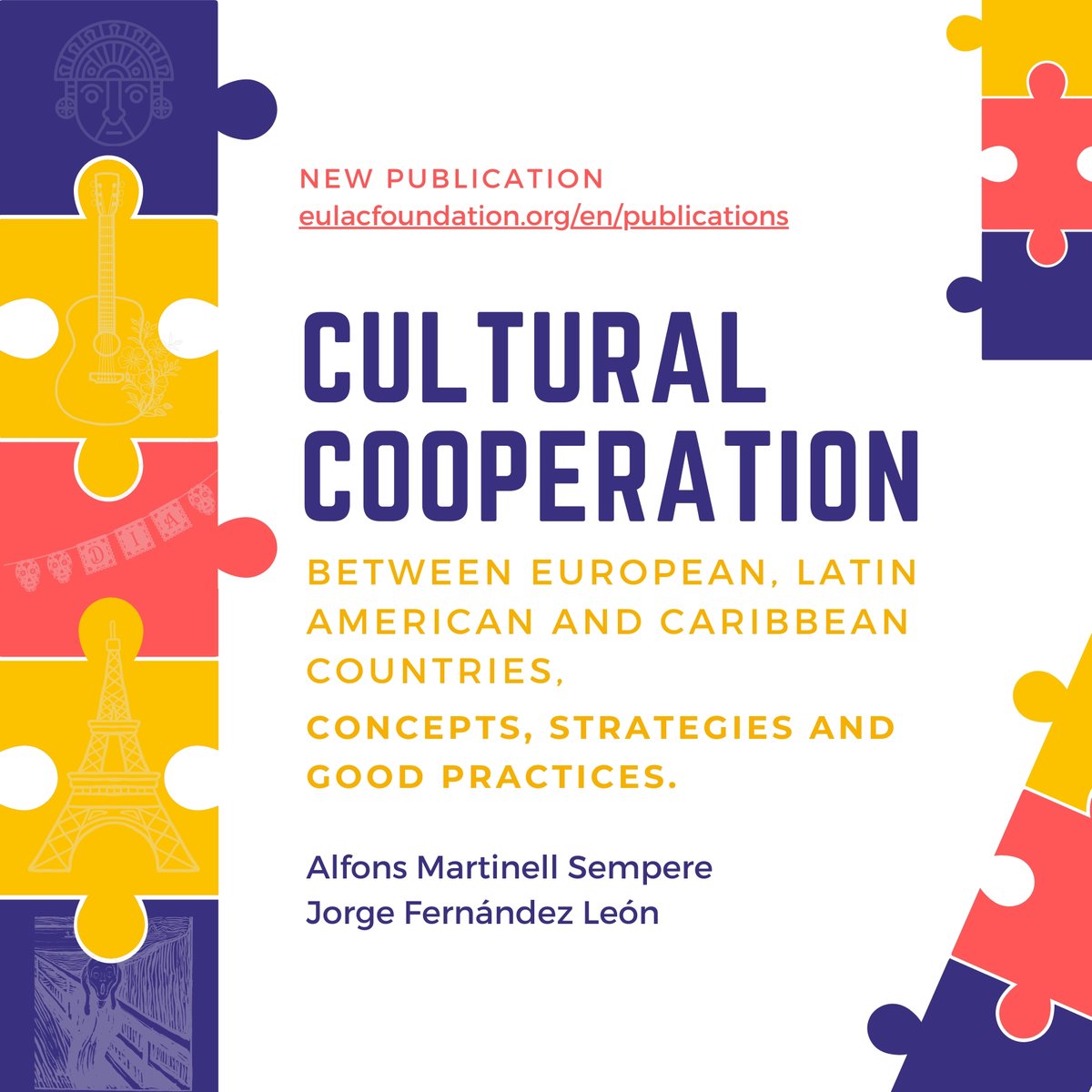
#NewPublication
📚"Cultural Cooperation between European, Latin American and Caribbean countries…" explores enhancing cultural ties in the wake of the #EU-#CELAC#Summit.
A must-read for anyone in cultural sectors
https://t.co/PfZYwTGXDM
By @alfonsmartinell and @FJorgefleon
Tribunal Supremo de Brasil reconoce derecho de pueblos indígenas a sus tierras.
Fuerte revés para la derecha brasileña y la teoría del "marco temporal".
#México ¿Están listos para celebrar a lo grande ? 🎉🎊🥳 La asociación Hamburg-México e.V. nos invita a celebrar el Día de la Independencia mexicano este próximo 16 de septiembre en Hamburg-Haus Eimsbüttel a partir de las 18 hrs. 🤩 💃 ¡No te lo puedes perder! #fiestamexicana
#España#México ¡El cineclub español del @InstCervantes Hamburg regresa a la sala 3001 este próximo 5 de septiembre a partir de las 19 hrs con el laureado documental "La Mami" (Laura Herrero, 2019)! 🎥 🎬 ¡Una verdadera joya que no se pueden perder! 🤩 @Kultur_Mexiko#Dokufilm
‼️ HEUTE!
Vernissage von "Neue Mythen", des Künstlers Raúl Cerrillo. Der Synkretismus, der in seinen Werken zum Ausdruck kommt, schlägt neue Mythen und Archetypen vor, die uns helfen sollen, unseren eigenen Weg zu finden. RSVP: [email protected]@EmbaMexAle@DiplomaciacMX
As many of you already know, this year we made the difficult decision not to run for the coordination of the @lacherbst 🥀. Nevertheless, we invite you to take a look at this year's programme and hope to be able to greet everyone at an event 🤞😊.
#LACHerbst#hamburg
In the upcoming days we will be promoting a series of initiatives aiming to enhance the visibility of #LatinAmerica and the #caribbean in #Hamburg 🇩🇪. We begin our series with #latindays, an excellent project that aims to provide a fresh perspective on the richness of our region.
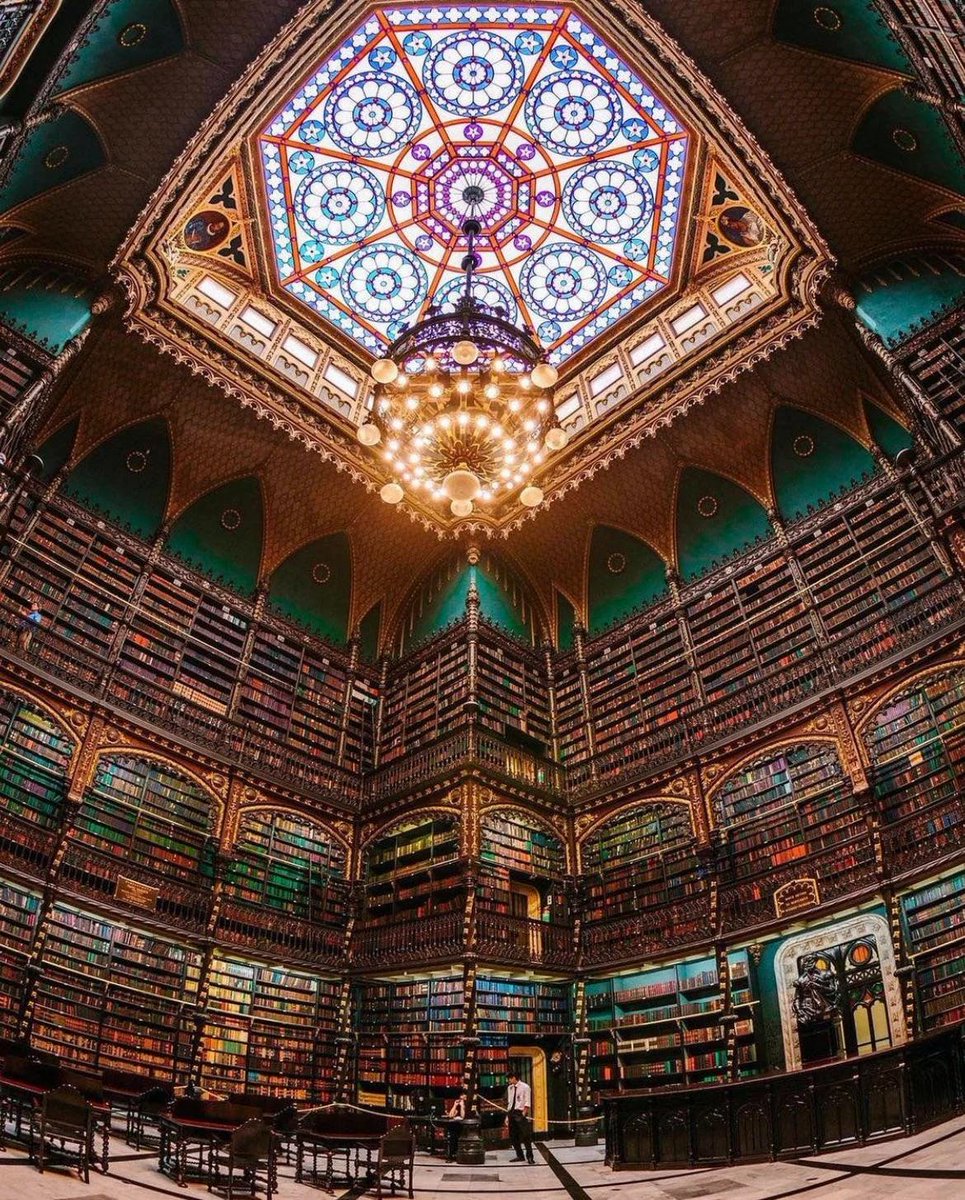
This is the Royal Portuguese Cabinet of Reading in Rio de Janeiro, built in the late 19th century.
The world's most beautiful (and best-named) library?
A History of the World in 13 Short Poems:
1. Sappho, sometimes called the Tenth Muse, was an Ancient Greek poet who lived in the 6th century BC. All we have left of her work are incomplete, tantalising fragments.
Fragment 147
I tell you
someone will remember us
in the future.
2. Quintus Horatius Flaccus, known as Horace, was a Roman poet and satirist of the Augustan Age, during the 1st century BC. His Odes are often considered the finest of all Latin lyric poetry.
Book 1, Ode 11
Leucon, no one’s allowed to know his fate,
Not you, not me: don’t hunt for answers
In tea leaves or palms. Be patient with whatever comes.
This could be our last winter, it could be many
More, pounding the Tuscan Sea on these rocks:
Do what you must, be wise, cut your vines
And forget about hope. Time goes running, even
As we talk. Take the present; the future’s nobody’s business.
3. Kālidāsa, who lived in the 5th century AD, is regarded as the greatest of all Ancient Indian poets.
Look to this Day
Look to this Day:
For it is life – the very Life of Life.
In its brief course lie all the verities
And realities of your existence:
The Bliss of Growth,
The Glory of Action,
The Splendour of Beauty,
Are but experiences of time.
For yesterday is already a dream
And tomorrow is only a vision;
But today well-lived, makes
Yesterday a dream of happiness
And every tomorrow a vision of hope.
Look well, therefore, to this Day;
Such is the salutation to the ever-new Dawn!
4. Li Bai was (alongside his friend Du Fu) the greatest poet of the Tang Dynasty, a Golden Age in Medieval China, during the 8th century.
Thoughts on the Silent Night
Moonlight falls at the foot of my bed,
Seeming like frost on the frozen ground.
I look up and see the bright moon,
And look down, reminded of my hometown.
5. Rumi was a 13th century Persian poet, scholar, and mystic, whose coequal influence and popularity have endured for centuries.
Out Beyond
Out beyond all ideas of right and wrong,
there is a field. I’ll meet you there.
When the soul lies down in that grass,
the world is too full to talk about.
Ideas, language, even the phrase ‘each other’
don’t make any sense.
6. You probably know Michelangelo better as a painter and sculptor, perhaps even the greatest artist of the Italian Renaissance. But he was also a poet...
Every conception that a man can find
Every conception that a man can find
is in the stone itself, already there
concealed in excess, but will still require
a hand to free it that obeys the mind.
And you, like marble, lady without peer,
hold possibilities of every kind;
you hold the good I want and pain I fear,
though I effect the opposite of my design.
I won't claim Love's to blame for this, or Chance,
or fault your beauty or demanding will,
or blame unequal birth and circumstance;
I'll say that mercy and annihilation both
were waiting in your heart, and there my skill
cannot discover anything but death.
7. Ah Bam is the name attributed to the author of The Songs of Dzitbalché, a collection of Mayan poetry compiled in the 15th century.
The Song of the Minstrel
This day there is a feast in the villages.
Dawn streams over the horizon,
South, North, East, West.
Light comes to the earth, darkness is gone.
Roaches, crickets, fleas, and moths hurry home.
Magpies, white doves, swallows,
Partridges, mockingbirds, thrushes, quail,
Red and white birds rush about,
All the forest birds begin their song because
Morning dew brings happiness.
The Beautiful Star shines over the woods,
Smoking as it sinks and vanishes;
The moon too dies over the forest green.
Happiness of feast day has arrived in the villages;
A new sun brings light to all who live together here.
8. John Donne was an English poet who converted from Catholicism to Anglicanism and served as the Dean of Saint Paul's Cathedral in the early 17th century. This is one of his Holy Sonnets, written during his difficult conversion, ill-health, and financial troubles.
Death, be not proud
Death, be not proud, though some have called thee
Mighty and dreadful, for thou art not so;
For those whom thou think'st thou dost overthrow
Die not, poor Death, nor yet canst thou kill me.
From rest and sleep, which but thy pictures be,
Much pleasure; then from thee much more must flow,
And soonest our best men with thee do go,
Rest of their bones, and soul's delivery.
Thou art slave to fate, chance, kings, and desperate men,
And dost with poison, war, and sickness dwell,
And poppy or charms can make us sleep as well
And better than thy stroke; why swell'st thou then?
One short sleep past, we wake eternally
And death shall be no more; Death, thou shalt die.
9. Matsuo Bashō travelled throughout Edo period Japan in the 17th century, writing poetry and essays about what he saw. He was and still is regarded as the master of the haiku.
now then, let's go out / to enjoy the snow ... until / I slip and fall!
10. Sayyid Abdallah was a poet and scholar who lived in the Lamu Archipelago and composed Swahili poetry in Arabic script during the 18th and 19th centuries.
From The Inkishafi
Every wretchedness and shortcoming,
The faltering that has you in its clutch,
These make up the world that you revere
In all of its abasement.
A corpse, this world. Do not go near it.
It bears a greater love for dogs than men.
Tell me, clever one, what good has come
Of squabbling with jackals?
11. William Wordsworth essentially founded the Romantic Movement in English poetry during the 1790s, when he was still in his twenties, as he reflected on how people were becoming ever more distanced from nature.
The World is Too Much With Us
The world is too much with us; late and soon,
Getting and spending, we lay waste our powers;—
Little we see in Nature that is ours;
We have given our hearts away, a sordid boon!
This Sea that bares her bosom to the moon;
The winds that will be howling at all hours,
And are up-gathered now like sleeping flowers;
For this, for everything, we are out of tune;
It moves us not. Great God! I’d rather be
A Pagan suckled in a creed outworn;
So might I, standing on this pleasant lea,
Have glimpses that would make me less forlorn;
Have sight of Proteus rising from the sea;
Or hear old Triton blow his wreathèd horn.
12. Emily Dickinson wrote nearly 2,000 poems during her lifetime and only ever published 10 of them. Private, unconventional, inspired; nobody else in the 19th century wrote poetry like Dickinson.
690
Victory comes late -
And is held low to freezing lips -
Too rapt with frost
To take it -
How sweet it would have tasted -
Just a Drop -
Was God so economical?
His Table's spread too high for Us -
Unless We dine on tiptoe -
Crumbs - fit such little mouths -
Cherries - suit Robins -
The Eagle's Golden Breakfast strangles - Them -
God keep His Oath to Sparrows -
Who of little Love - know how to starve -
13. W.B. Yeats was an Irish poet and playwright who also served as a Senator in the Irish Free State. He won the Nobel Prize for Literature in 1923; this poem was written just after the First World War...
The Second Coming
Turning and turning in the widening gyre
The falcon cannot hear the falconer;
Things fall apart; the centre cannot hold;
Mere anarchy is loosed upon the world,
The blood-dimmed tide is loosed, and everywhere
The ceremony of innocence is drowned;
The best lack all conviction, while the worst
Are full of passionate intensity.
Surely some revelation is at hand;
Surely the Second Coming is at hand.
The Second Coming! Hardly are those words out
When a vast image out of Spiritus Mundi
Troubles my sight: somewhere in sands of the desert
A shape with lion body and the head of a man,
A gaze blank and pitiless as the sun,
Is moving its slow thighs, while all about it
Reel shadows of the indignant desert birds.
The darkness drops again; but now I know
That twenty centuries of stony sleep
Were vexed to nightmare by a rocking cradle,
And what rough beast, its hour come round at last,
Slouches towards Bethlehem to be born?
La estudiante mexicana María Fernanda sigue desaparecida en Berlín. Les compartimos el comunicado oficial de la policía local. Si tienen alguna información al respecto, pedimos comunicarse al número +49-30-4664912444.
EU-CELAC is back! After 8 years, the EU and the Community of Latin America & the Caribbean States meet in Brussels today.
6⃣0⃣ countries
1⃣ billion people
Together we can make the difference!
#EULAC#WeAre1billion empowering change
🔴 Opening LIVE: https://t.co/Q3gBAikpCd
Latin America and the Caribbean are partners of choice.
Today and tomorrow, the #EULAC Summit takes place in Brussels for the first time in eight years.
We need to seize the full potential of our relationship with deeper cooperation and join forces on global challenges ↓
"Die #Krise der Gesellschaft ist auch eine Krise ihrer #Kulturpolitik", so Davide Brocchi in "By Disaster or by Design". Welche Zusammenhänge er dabei insbesondere für #Kultur & #Nachhaltigkeit ausmacht, beleuchtet die zugehörige Rezension bei uns: https://t.co/XXGuQxlYAC