Trent 6.4 means adults must desire baptism, because without their will the sacrament isn't valid. Yet infants can't will. If the council meant either one alone will suffice, it would falsely define an adult baptism is valid without desire.
The BOD Trent objection is "desire" in 6.4. But here it quotes John 3.5, as it is written water and the spirit are absolute with no desire mentioned as a substitute for water. This entire section is governed by this order. 6.4 isn't desire or water "as it is written in John 3.5."
A new life/creation/being born again/ is only in baptism. Trent 6.6: "by that penitence which must be performed before baptism: lastly, when they purpose to receive baptism, to begin a new life..be baptized all of you in the name of Jesus Christ for the remission of your sins."
Trent 6.6: Cum + ablative gerundive (baptismo suscipiendo) denotes strict manner/concurrence. The 'new life' is grammatically locked to the literal act of receiving the water. Intent (proponunt) is concurrent with the font, not a standalone substitute."
The Prepositional Trap (Cum + Ablative Gerundive) The argument rests on separating the mental intention (proponunt vitam novam) from the physical sacrament. The Clause: ...cum baptismo suscipiendo proponunt...
Trent 6.6 baptism is absolute: Ante/Repentance is before baptism. Denique/finally closes the preparation (BOD) phase. Baptism is the final step. CUM..SUSCIPIENDO/Prepositional tie. New life is instituted only by receiving water. Desire is "before" justification not instead of.
@CathsAgainstJws @TLM_Catholic @CarloMVigano Snapped this from my copy of La Civilta Cattolica’s 3-part article on the Jewish Question in Europe. People think they can divert attention away from the Jews by overstating Free Masonry, but, unbeknownst to them, they’re just distracting you from one Jew with another Jew.
@CarloMVigano Hard to believe you still blame the Freemasons while ignoring the role of the Jews. Makes one wonder what kind of pressure is being used to keep you on script.
27 février 1794, La Verrie. Les soldats de la république découpent en morceaux femmes et enfants catholiques. « Ils entendirent des plaintes en approchant des toiteries. Ils hâtèrent le pas et se trouvèrent en présence d'un horrible spectacle. Les femmes et les enfants, laissés seuls à la maison, étaient étendus par terre, massacrés et hachés en morceaux! Deux des petits enfants étaient cloués à la porte de la grange et les ruages étaient inondés de sang. (...) Une bande de bleus étaient passés par là. (...) À l'aspect de ces cadavres de femmes massacrées et violées et de petits enfants coupés en morceaux et crucifiés, les hommes de la Terrière jurèrent de se venger. » Père Sorin
« Le carnet sur lequel Louis XVI inscrivit au regard du 14 juillet: « rien » a également servi d'argument tantôt pour étayer la thèse de son ignorance des événements le jour même, tantôt pour souligner, dans le cas contraire, son incompréhension de la gravité de la situation - mais on sait aujourd'hui que ce n'était que son carnet de chasse, et qu'il ne s'agissait que de dire que, le 14, l'enragé chasseur qu'était Louis XVI n'avait rien tué. » Claude Quétel
This thread: the instrumental cause of justification is the sacrament of baptism, stacked in Latin combined: the instrumental cause/sacrament of baptism/faith-no justification/causation outside the sacrament. qua refers to faith in a single place, but same causation/ontology.
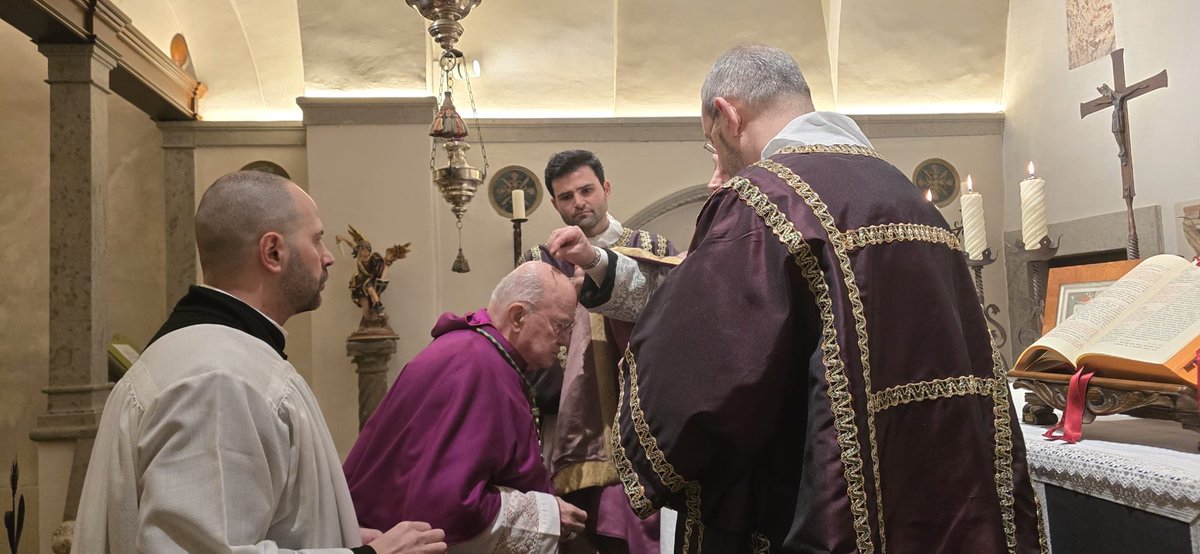
In the contemporary world—particularly since Vatican II—those who once would have been considered public sinners are now welcomed and encouraged in their deviations, even by popes, by prelates and members of the clergy who are most unworthy, whose sins are equally public and scandalous to the faithful, who in turn are led into sin. But it is precisely this that constitutes the ultimate offense to the Divine Majesty: not so much and not only the evil committed, but rather its denial, indeed its legitimization, and at the same time the condemnation of the good that opposes it.
This thread: the instrumental cause of justification is the sacrament of baptism, stacked in Latin combined: the instrumental cause/sacrament of baptism/faith-no justification/causation outside the sacrament. qua refers to faith in a single place, but same causation/ontology.