Don't know which EBS Volume type is suitable for you?
🔥 io1 - High throughput SSD, low latency, best for DBs
🚛 st1 - HDD; big data, warehouses, logs storage, streaming
🥶 sc1 - cheapest, slowest, data accessed infrequently
🚗 gp2 - most workloads, boot volumes, everything else
Even though I'm not a big fan of Offline @dynamodb, I know that it's immensely helpful, especially in the dev & testing phase.
I've tried all the setup and usage methods, run through most common problems so you don't have to. Now go ship.
https://t.co/PW8ZQXF8XD
Prerelease of @dynobase 1.3.0 is now available!
🚀 Massive perf improvements thanks to Electron 11 , V8 compilation cache, and HTTP(s) connections reuse
✍️ Added "Query Patterns" and "Clear Filters" btn
🐛 Numerous bugfixes
Download it from Github - https://t.co/mzWoXdOESa
For the last few months, I've been working on a tool that simplifies monitoring and troubleshooting serverless apps. It's called Cloudash. Think of it as a desktop app for AWS, tailored for the serverless use case. Today I've released the 0.1 version: https://t.co/GCZShCQGA5
🧵
Lack of SQL support was holding you back from trying @dynamodb? Good news! Now you PartiQL, an SQL-like language to query and manipulate DynamoDB data!
🚀 Dynobase supports this too! Download our latest alpha release and tell us what do you think.
https://t.co/iosGm0XQje
🚀 Dynobase 1.1.0 is out!
🌍 Added support for Cape Town (af-south-1), Milan (eu-south-1), Bahrain (me-south-1), and Hong Kong (ap-east-1) regions
🚛 Added support for native „Export to S3”
🧮 Fixed bug with importing floats to DDB
⏱️Lowered SSO session refresh interval
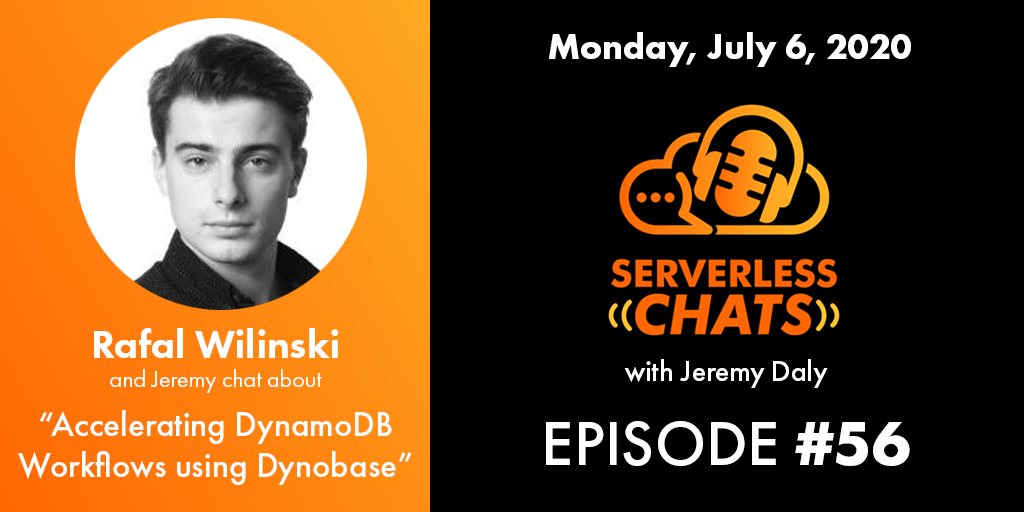
On the next episode, Jeremy chats with Rafal Wilinski (@rafalwilinski) about the challenges developers face when using @dynamodb, why it makes sense for apps big & small, why we need more tools like @dynobase to make working with your data easier, and much more. Don't miss it!
🤔 Struggling to use #DynamoDB with Node.js/Typescript/Javascript?
We might have something helpful for you. A compiled list of almost all use cases for modern JS, no callbacks, only good practices.
https://t.co/PQVOBwSgcx
🚀 We created a directory of tutorials, articles, courses, tools and code snippets to onboard you with #DynamoDB faster and easier.
Enjoy! https://t.co/9OlVgEHCpq
🚀 Just released a draft of new CDK Construct - GolangFunction! #golang
Haven't figured out the JSII part yet but works fine with TS stack.
https://t.co/3oq9egastU
[This Week in #DynamoDB] Issue #14 is here: https://t.co/sKlBSTHdJf
What is DAX? How to backfill DDB TTL attributes with EMR? Dynamo + Elasticsearch and a lot more.
Featuring @janithakoon @allocatedev @gcornwell @AwsSimplified
[This Week in #DynamoDB] Issue #13 is here: https://t.co/sKlBSTHdJf
DDB JSON Converter Tool, support for empty values is (finally) live, we've launched a new format for the newsletter + a lot more.
Featuring @anaida07@viralpatelnet@mavi888uy @richbuggy @benjamincrozat
🥳 Why CDK is awesome? What are the rough edges?
🚀 How I deployed my GraphQL Server with multi-master DDB to +100 locations with less than 100 lines of code?
💸 How much I paid for that? (Hint: zero, thanks to #serverless)
Answers + code below 👇
https://t.co/oEUQW59sT4
Lambda@Edge limits are different depending on the event type.
For origin req/res is pretty much the same as regular #Lambda.
For Viewer req/res it's much more restrictive:
- Memory: 128MB
- Timeout: 5s
- Size of resp: 40KB
- Compr. size of code: 1MB
#serverless
🚀 Finally managed to deploy Lambda@Edge-based #serverless GraphQL "server" with globally replicated DynamoDB table. Infra under 100 lines of code thanks to CDK!
Edge Lambdas are routing to the closest available DDB replica with fallback to us-east-1.
https://t.co/odKFrdFk0s
🔑If you need simple yet secure configuration management, use #AWS SSM Parameter Store
If you need some data inside Parameters Store to be even more secure, use `SecureString` datatype
If that's not enough, use Secrets Manager. Includes Cross-Account access and Secrets rotation
If you know your workload won't change you can save up to 80% just by reserving EC2 machines in advance.
Purchase one-year or three-year term #AWS Reserved EC2 Instances directly in the AWS console. You can pay all upfront, partially or just on a monthly basis.





![dynobase's tweet photo. [This Week in #DynamoDB] Issue #19 is here: https://t.co/sKlBSTHdJf
DynamoDB powering US 2020 Census, streaming data from Amazon QLDB, story behind @dynobase and a whole lot more.
Featuring @alexbdebrie @moshe_simantov @jeremy_daly @m_lewis @rafalwilinski https://t.co/gSZJYiHXLl](https://pbs.twimg.com/media/EcvntvJXYAE4wnj.png)


![dynobase's tweet photo. [This Week in #DynamoDB] Issue #14 is here: https://t.co/sKlBSTHdJf
What is DAX? How to backfill DDB TTL attributes with EMR? Dynamo + Elasticsearch and a lot more.
Featuring @janithakoon @allocatedev @gcornwell @AwsSimplified https://t.co/lWEDWKwmGm](https://pbs.twimg.com/media/EZc0eogXgAIEtxS.png)
![dynobase's tweet photo. [This Week in #DynamoDB] Issue #13 is here: https://t.co/sKlBSTHdJf
DDB JSON Converter Tool, support for empty values is (finally) live, we've launched a new format for the newsletter + a lot more.
Featuring @anaida07 @viralpatelnet @mavi888uy @richbuggy @benjamincrozat https://t.co/R5B1Od2xka](https://pbs.twimg.com/media/EYzNXEKWAAA5jKT.png)
![dynobase's tweet photo. [This Week in #DynamoDB] Issue #12 is here: https://t.co/sKlBSTHdJf
DDB (Book) goes viral on Hacker News, CQL v/s DDB API, Query v/s Scan + a whole lot more.
Featuring @ChloeMcAteer3 @alexbdebrie @dvassallo @jbesw @kpisharodi @rafalwilinski https://t.co/WgjAvbjJlw](https://pbs.twimg.com/media/EYT-D_NWsAAfh7c.png)


