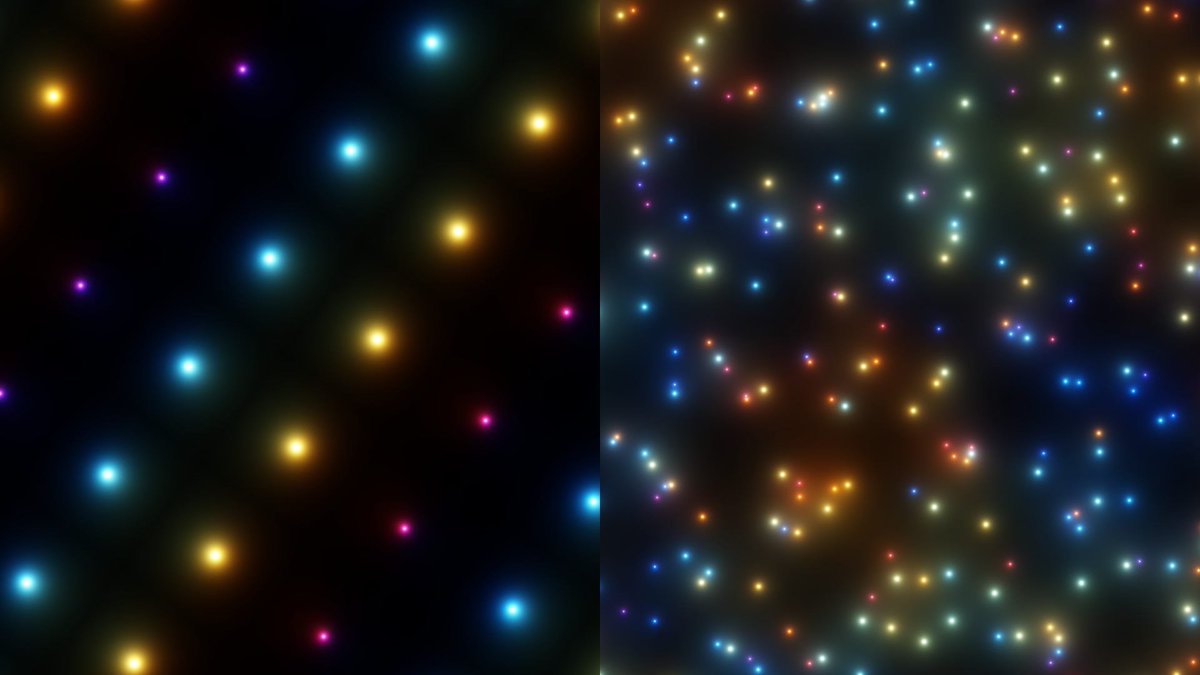
The second episode of our "Invasion" Making Of! Our team "Gammabeavers" made the the great deal of the first scene.
Full version:
Youtube: https://t.co/DA0ht5PVic
Vimeo: https://t.co/HmdSBdkgai
#mainroadpost#vfx#invasion
I also found this fast nifty way to project an ellipsoid given an arbitrary projection matrix onto a scren.
https://t.co/yS8XVVIlg5
Probably the fastest way for perspectively stable gaussian splatting
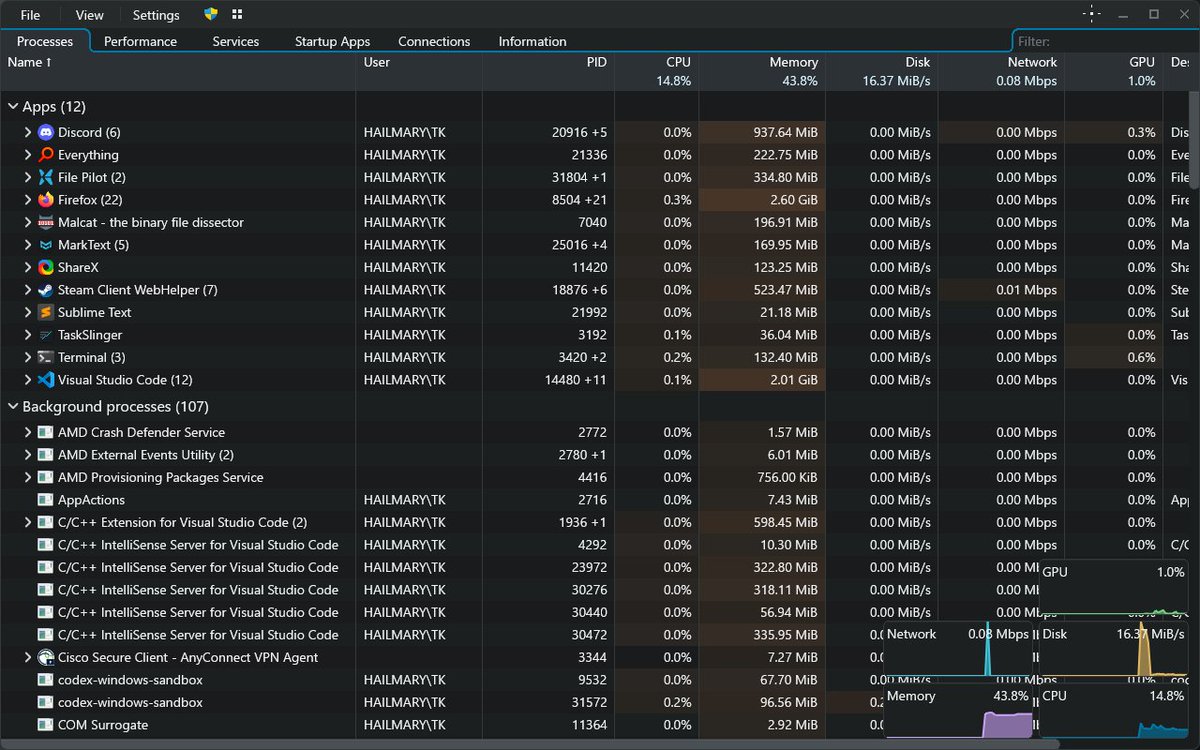
Exactly two weeks ago, TaskSlinger launched and the response has been incredible!
Today, I am releasing the first major update,with more metrics, customizable graphs, ARM64 support, a lot of polish, and much more.
Highlights below or try it now: https://t.co/pOVuGotjLc
↓↓
There's a new paper out in JCGT that proposes a super simple modification of existing microfacet models to implement a retroreflection model. What's interesting is that despite being insanely simple, the model fits measured data better than you'd think!
https://t.co/rIRAw9Xess
Thank you for paying attention to our physics engine and for helping improve the solver by reporting bugs and suggesting fixes. Please consider sharing them at https://t.co/eDBoR6k1G8 and https://t.co/JYYAY6rFPS so the community can benefit from them as well.
Surprised by the enormously positive reactions to his task manager, @thomasklemenc decided to release TaskSlinger as a free beta! Go check it out now!
https://t.co/jHNHWSwGro
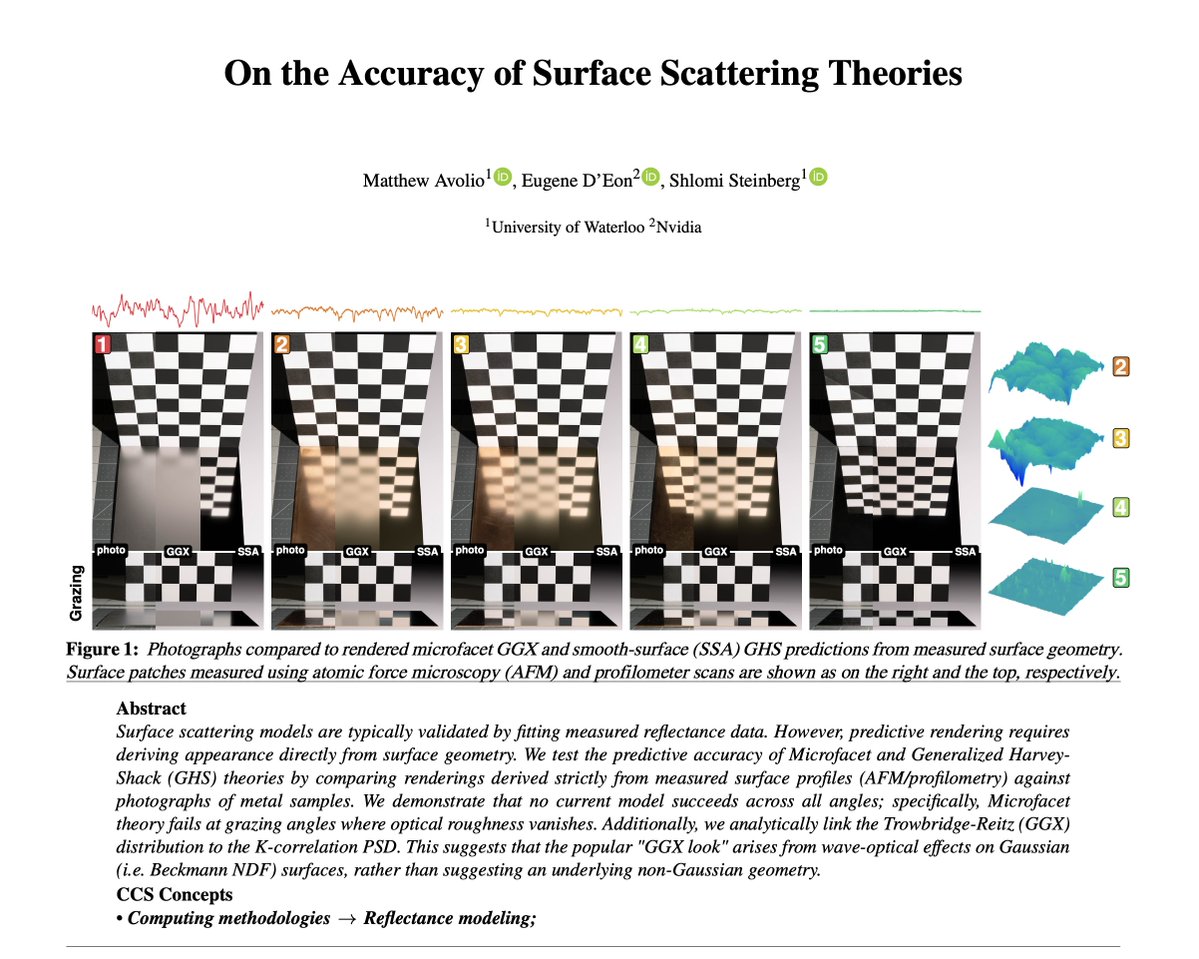
This might be the most important paper on surface shading to come out in years. TL;DR: microfacet models are wrong and proposed wave-based or hybrid alternatives are wrong too. This is an exciting opportunity for new research! https://t.co/ZTtvzicabz
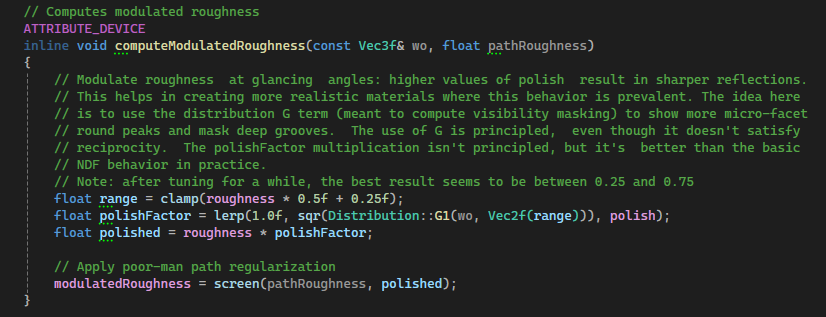
About 3.5 years ago I did some experiment to improve the behavior of microfacet normals at glancing angles. Many surfaces become highly reflective even though having high roughness. Check the discussion in the thread. Here is my implementation reusing equations you already have:
There's a neat short paper from Eurographics this year that evaluates how well microfacet shading models actually predict measured reflectance. The answer is: not nearly as well as one would hope!
(1/3)
https://t.co/GcM5ZxYFvZ
@maxliani Great to see you returning to this project. It's very inspiring to look how evolve it over time. Everything looks so nice, smooth and responsive 🤩
These are some of the more basic effects you can make, I think, but these are outline & glow effects made with the Jump Flood SDF buffer - link to the repo below! 👇
#threejs#webgl#gamedev
Microsoft @Windows: "We're preloading File Explorer so it launches faster."
File Pilot: Compiles in less than 3 seconds. Launches instantly. Eats whole drive for breakfast.
Speed isn't a background task, it's design.
https://t.co/v4OY47UD4h
3Dfy anything from a single image!
Very thrilled to announce SAM 3D. From an input image, select any object you want, 3Dfy it!
Blog: https://t.co/wtQLAqXTzW
Demo: https://t.co/tt3YqJlnRB
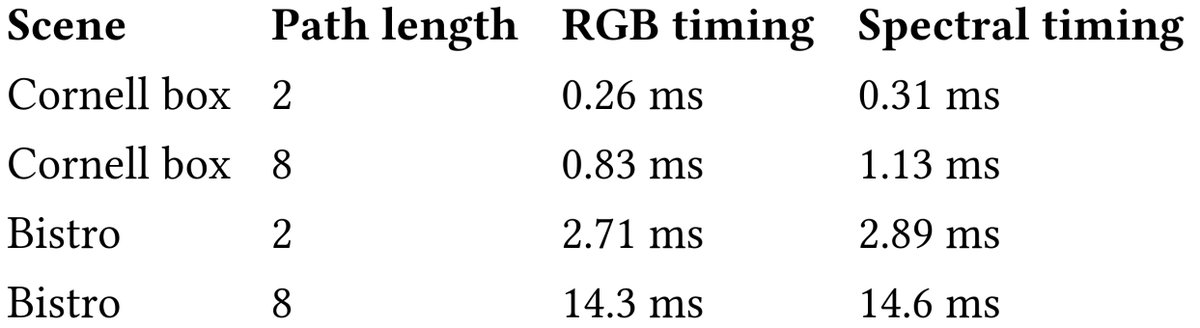
My second blog post on spectral rendering is out. This one explains how to use wavelength importance sampling to minimize color noise while limiting the overhead to 0.3 ms and how to make BRDFs spectral.
https://t.co/rgYGWdegwG
Been wanting to implement that fast GGX-based convolution for glossy reflection probes for quite a while and finally made some time for it:) https://t.co/mfa3XKhDFb
Ray marching is a common approach to GPU-accelerated volume rendering, but gives biased transmittance estimates. My new @SIGGRAPHAsia paper (+code) proposes an amazingly simple formula to eliminate this bias almost completely without using more samples.
https://t.co/12nr5SeM2y