Gaza was an experiment to see what would happen if you gave Palestinians near total control over a territory. That experiment has failed spectacularly.
I will take absolutely no lectures about "divisiveness" from the people who gave us two-tier policing, racial hiring quotas and endless race-baiting.
Unlike you, we do not kneel.
Help me compile a list of words that are now basically meaningless due to misuse. Such as
1) Neoliberal - any non-socialist economic policy
2) Austerity - not increasing spending as much as we want
3) Racist - has a different view to me on the Treaty
4) Far right - not left
“Free Palestine.”
I grew up on those words.
In Lebanon, most people around me wanted a free Palestine for a very practical reason — to send the Palestinian refugees back. The civil war that tore my country apart was ignited in no small part by the Palestinian armed factions who turned Lebanon into their launching pad. “Free Palestine” meant: free us from them.
In Damascus, where my father’s family lived, the sentiment was different but equally self-serving. Palestine must be returned to the Arabs, its righteous owners. No one asked follow-up questions. No one was expected to.
Palestine was central to Islam, most Arabs are Muslim, therefore supporting the Palestinian cause was reflexive. A non-brainer in the most literal sense — no brain engaged at all.
Nobody stopped to point out that Palestine is not an Arabic word. Nobody found it strange that Jerusalem, the supposedly third holiest city in Islam, is not mentioned once in the Quran. Not once. Nor is Palestine. The entire theological and political architecture of this cause rests on a foundation that their own scripture doesn’t bother to acknowledge.
What was actually happening was indoctrination. A systematic, generational rejection of Jewish sovereignty — and frankly, of any minority sovereignty. Jews, Christians, Druze, Kurds, Assyrians, Yazidis — the Arab world has been remarkably consistent in how it treats people who are different. We just don’t talk about that.
Instead, in the West, we talk about Palestine.
In the West, a civilization that has elevated human rights to its highest moral currency, the Palestinian cause has become the one exception to every rule. In the queue of human suffering, Palestinians cut the line every time. Homosexuals executed in Gaza and hanged from cranes in Iran? Palestine first. Women imprisoned in Saudi Arabia for campaigning for the right to drive — a right they were denied until 2018 — girls sold into marriage in Afghanistan, women erased from public life entirely under the Taliban? After Palestine. Political dissidents ground into dust in Syrian and Egyptian prisons, journalists disappeared in Libya, children starving in Yemen while their rulers wage proxy wars, entire populations hollowed out by hunger in Sudan? All of it waits. Christians ethnically cleansed from Iraq and Syria, the Arab world methodically emptied of every Jewish community it once held — a demographic erasure carried out across a century with surgical patience and near-total Western silence?
Palestine is still first.
So let’s end where we started. Free Palestine. Which Palestine, exactly? The Roman invention? The British administrative line? The British Mandate covered the entire territory of what is today Israel, the West Bank, Gaza and Jordan. In 1921, 78% of that mandate was handed to the Hashemite family — a dynasty imported from Hijaz in present-day Saudi Arabia — and became the Kingdom of Jordan, which it remains to this day. A foreign royal family, on the majority of historic Palestine, ruling it as a monarchy. Nobody protests that. No flags, no chants, no encampments. The remaining 22% was designated for the Jews, became Israel, and is the only part that any pro-Palestinian activist has ever had a problem with.
So when you say Free Palestine, you mean that 22%. You mean the Jews.
And free it from whom? From a people with a three-thousand-year-old documented presence in that land, to restore the glory of a name coined by Roman colonizers, a name lifted from the Torah, a name that has no roots in Arabic, no mention in the Quran, and no history as a sovereign state?
You are not chanting for liberation. You are chanting for colonialism — the Roman kind, repackaged for social media.
Free Palestine is not a cause. It is a colonial term, coined by invaders, recycled by the indoctrinated. The least you can do is have the intelligence to understand it and the decency to reflect on your position.
📍#Israel
“In a free society, people can believe whatever they want. If you want to believe men can be women or you’re a man who wants to call himself a woman, that is your business. What you cannot do in a free society is force anyone else to accept it. What is at stake here is the ability to lawfully acknowledge reality.
If you care so much about “trans rights” you can work out a way to get them without destroying the category of women in law, female spaces, sport, services, the entire reality of lesbianism, and punishing citizens for acknowledging reality. The fact that you haven’t even tried makes it appear that destroying the rights of women is the goal.
Any politician who will look an Australian citizen in the eye and tell them that a man can be a woman is admitting that they will lie about anything and everything because the most obvious lie has already been told.
If no one in this room can acknowledge reality and fix an obvious problem you are either malicious or incompetent. The days of dismissing this issue are over. This is not a culture war. It’s reality.”
- my words, read by Alison Penfold MP, in parliament today.
Contact politicians are tell them to BACK THE BILL - “Sex Discrimination Amendment- sex based rights bill 2026”
Western Civilization didn't flourish because "white males" stopped other groups from succeeding.
The West thrived because of rational thought, individual rights, and free enterprise.
"White males" that invented the steam engine, electric generation, the combustion engine, flight, and space exploration did not do so because they "stole" the ideas of minorities.
These inventions helped lift mankind out of ignorance and hardship, improving the quality of life for all of humanity.
"White males" didn't oppress the entire world, they helped make it a better place.
"White males" didn't oppress everyone's rights, they invented the idea of rights and paid in blood to liberate tens of millions of people.
"White males" didn't invent slavery, they ended it.
"White males" didn't invent tyranny, they devised a form of government to end it.
Destroying Western Civilization isn't about empowering groups that were "oppressed." It is about tearing down civilization itself so that globalist parasites can rule over all of us.
@aniobrien His pomposity and pretentious faux gravitas ensures I hit the mute/off switch the moment I glimpse his smug visage or hear his drone about to begin.
@aniobrien@nzlabour “Diversity” = ideological conformity.
“Inclusion” = exclusion of dissent.
“Equity” = engineered outcomes, not equal opportunity.
Did I miss the bit about actually educating the young ones?
Il y a 2 ans et demi, 108 « économistes » dont Piketty et Zucman prédisaient l’effondrement économique de l’Argentine en cas de victoire de Milei.
Cela devrait suffire à les disqualifier à jamais.
𝐓𝐇𝐄𝐘 𝐄𝐑𝐀𝐒𝐄𝐃 𝟒𝟔𝟑 𝐘𝐄𝐀𝐑𝐒 𝐅𝐑𝐎𝐌 𝐘𝐎𝐔𝐑 𝐇𝐈𝐒𝐓𝐎𝐑𝐘 𝐁𝐎𝐎𝐊𝐒. 𝐇𝐄𝐑𝐄 𝐀𝐑𝐄 𝐓𝐇𝐄 𝐑𝐄𝐂𝐄𝐈𝐏𝐓𝐒.
Every time someone trots out the Crusades to lecture Christians or the West, they leave out four centuries of history. I'm putting it back on the record.
𝐓𝐡𝐞 𝐂𝐨𝐧𝐪𝐮𝐞𝐬𝐭 𝐁𝐞𝐠𝐚𝐧 𝐈𝐦𝐦𝐞𝐝𝐢𝐚𝐭𝐞𝐥𝐲
Muhammad died in 632. Within three years, Muslim armies had taken Damascus (635). The next year, Antioch (636). The year after that, the entire Holy Land (637) — the spiritual center of Christendom, gone. Armenia became the first Christian nation fully conquered (639). Egypt, the Coptic Christian power, fell two years later (641). By 650, Muslim forces had reached southern Italy and Cyprus, taking thousands of captives as "𝘴𝘭𝘢𝘷𝘦𝘴" and "𝘤𝘰𝘯𝘤𝘶𝘣𝘪𝘯𝘦𝘴." Then came Spain — Muslim armies crossed from North Africa in 711 and overran most of Iberia by 715.
In roughly 80 years, Christianity lost the Middle East, North Africa, and most of the Iberian Peninsula.
𝐓𝐡𝐞𝐲 𝐈𝐧𝐯𝐚𝐝𝐞𝐝 𝐄𝐮𝐫𝐨𝐩𝐞 — 𝐑𝐞𝐩𝐞𝐚𝐭𝐞𝐝𝐥𝐲
This was not exploration. This was conquest. In 717, Muslim forces besieged Constantinople itself — the capital of Eastern Christendom. The siege lasted a year before they were repelled. Had it succeeded, the path into Europe would have been wide open.
In 730, they invaded France. Charles Martel stopped them at Tours. In 792, the ruler of Al-Andalus called for a second invasion of France. Repelled. In 848, a third invasion of France. Repelled again.
In 827, Muslims invaded Sicily and Italy, persecuting monks and pillaging Christian communities. Sicily would remain under Islamic rule for 250 years. In 846, they invaded Rome itself and forced the Pope to pay tribute. By 909, they had taken Sardinia.
This was relentless, coordinated, and existential.
𝐓𝐡𝐞𝐧 𝐓𝐡𝐞𝐲 𝐀𝐭𝐭𝐚𝐜𝐤𝐞𝐝 𝐖𝐡𝐚𝐭 𝐌𝐚𝐭𝐭𝐞𝐫𝐞𝐝 𝐌𝐨𝐬𝐭
In 937, the Church of the Holy Sepulcher — built over the site Christians believe is the tomb of Christ — was burned to the ground. More churches in Jerusalem were torched alongside it. In 1009, the Church of the Resurrection was destroyed. By 1012, Al-Hakim's oppressive decrees against Christians had begun in earnest.
Christian pilgrims could no longer safely visit the sites of Christ's ministry. The holiest city in Christendom was ruled by a hostile power systematically destroying the faith itself.
𝐓𝐡𝐞𝐧 𝐂𝐨𝐧𝐬𝐭𝐚𝐧𝐭𝐢𝐧𝐨𝐩𝐥𝐞 𝐂𝐚𝐥𝐥𝐞𝐝 𝐟𝐨𝐫 𝐇𝐞𝐥𝐩
In 1071, Muslim Turkish forces shattered the Byzantine army at Manzikert and occupied most of Anatolia. Constantinople was now directly threatened.
In 1094, Byzantine Emperor Alexios I Komnenos sent envoys to Rome begging Western Christendom for military aid.
In 1095, Pope Urban II declared the First Crusade.
𝟒𝟔𝟑 𝐲𝐞𝐚𝐫𝐬 𝐨𝐟 𝐜𝐨𝐧𝐪𝐮𝐞𝐬𝐭. 𝐓𝐡𝐞 𝐬𝐢𝐞𝐠𝐞 𝐨𝐟 𝐂𝐨𝐧𝐬𝐭𝐚𝐧𝐭𝐢𝐧𝐨𝐩𝐥𝐞. 𝐓𝐡𝐫𝐞𝐞 𝐢𝐧𝐯𝐚𝐬𝐢𝐨𝐧𝐬 𝐨𝐟 𝐅𝐫𝐚𝐧𝐜𝐞. 𝟐𝟓𝟎 𝐲𝐞𝐚𝐫𝐬 𝐨𝐟 𝐈𝐬𝐥𝐚𝐦𝐢𝐜 𝐫𝐮𝐥𝐞 𝐨𝐯𝐞𝐫 𝐒𝐢𝐜𝐢𝐥𝐲. 𝐓𝐡𝐞 𝐏𝐨𝐩𝐞 𝐟𝐨𝐫𝐜𝐞𝐝 𝐭𝐨 𝐩𝐚𝐲 𝐭𝐫𝐢𝐛𝐮𝐭𝐞. 𝐓𝐡𝐞 𝐇𝐨𝐥𝐲 𝐒𝐞𝐩𝐮𝐥𝐜𝐡𝐞𝐫 𝐛𝐮𝐫𝐧𝐞𝐝 𝐭𝐨 𝐭𝐡𝐞 𝐠𝐫𝐨𝐮𝐧𝐝.
𝐓𝐡𝐞 𝐂𝐫𝐮𝐬𝐚𝐝𝐞𝐬 𝐰𝐞𝐫𝐞𝐧'𝐭 𝐭𝐡𝐞 𝐬𝐭𝐚𝐫𝐭 𝐨𝐟 𝐭𝐡𝐞 𝐬𝐭𝐨𝐫𝐲. 𝐓𝐡𝐞𝐲 𝐰𝐞𝐫𝐞 𝐭𝐡𝐞 𝐫𝐞𝐩𝐥𝐲.
Pourquoi les intellectuels sont-ils si souvent socialistes ?
Les intellectuels pourraient avoir un faible pour les théories qui ouvrent la porte à une forme d’ingénierie sociale, qui impliquent que les changements positifs doivent être impulsés par le haut, de manière verticale. Pourquoi ? Parce que si le progrès naît de la mise en place de la recette de la bonne société, alors les intellectuels sont les garants du bonheur de leurs concitoyens, investis d’une mission : orienter la société vers un avenir meilleur. En revanche, si le progrès advient surtout par le bas, par l’initiative spontanée d’individus, par la société civile, par le marché, alors les intellectuels doivent se limiter à un travail descriptif, et ne peuvent avoir d’influence significative, en tout cas pas d’influence positive significative.
« L’idée de reconstruire entièrement la société, notait Hayek, séduit davantage l’intellectuel que les réflexions plus pragmatiques des tenants d’une amélioration graduelle de l’ordre établi. » Dans L’Opium des intellectuels, Raymond Aron raconte que si l’intelligentsia française, pendant la guerre froide, était plutôt hostile aux États-Unis, c’était justement parce que le pays avait enregistré d’immenses progrès grâce à l’entreprise individuelle de ses citoyens plutôt que par le biais d’une idée de génie (le communisme) appliquée à tous. [...]
Thomas Sowell, lui, constate que les intellectuels ont tendance à étudier, décrire et s’enthousiasmer pour les périodes de l’Histoire où ont eu lieu des changements législatifs (nouveaux droits, acquis sociaux, etc.) dont ils imaginent pouvoir s’attribuer partiellement le mérite, mais semblent indifférents aux améliorations de la condition humaine, parfois plus significatives, imputables à la vitalité de la société civile (même lorsque ce sont précisément ces progrès qui rendent possibles les acquis sociaux des décennies suivantes). [...]
Encore aujourd’hui, les sciences sociales ne se passionnent pas pour l’extraordinaire amélioration des conditions de vie en quelques décennies à Hong Kong, à Singapour, ou en Corée du Sud, permise par la réduction du poids de leurs gouvernements dans l’économie. Ce qui soulève une question : les intellectuels se disant attachés à la justice sociale ont-ils comme priorité l’amélioration du sort des plus malheureux, ou bien l’affirmation de leur propre importance dans l’amélioration du sort des plus malheureux ? « Ce qui préoccupe réellement les doctrinaires, écrivait Gustave Le Bon, ce n’est pas l’avènement du socialisme mais l’avènement des socialistes. »
Dans la même veine, l’essayiste Vera Nikolski a montré que les intellectuels sous-estiment l’influence du progrès technique dans la libération de la femme (électroménager, pilule, avortement, augmentation générale de la productivité ayant dévalué l’importance de la force physique) et surestiment celle des idées égalitaristes. Il est aussi amusant de noter qu’au XIXe siècle, pendant que John Stuart Mill appelait les universités à former « des esprits capables d’améliorer et de régénérer la société », décrivant l’élite intellectuelle comme des « têtes pensantes », « en avance sur le reste de la société », « sans qui la vie humaine serait stagnante » , la révolution industrielle transformait radicalement la condition humaine. Elle était menée entre autres par Thomas Edison et Henry Ford, qui n’étaient presque pas allés à l’école, et par les frères Wright (inventeurs du premier avion), qui n’avaient pas le bac. [...]
La discussion présente peut offrir une réponse à cette interrogation : comment expliquer la « tyranophilie » des intellectuels ? Pourquoi, tout au long du 20ème siècle, ont-ils affiché une telle complaisance pour les dictateurs de la pire espèce ? Réponse du philosophe Roger Scruton : « Les intellectuels sont naturellement séduits par l’idée d’une société planifiée, car ils pensent qu’ils en seront les responsables. » Selon l’anarchiste russe Bakounine, le but réel des intellectuels marxistes était l’instauration d’une « pédantocratie », c’est-à-dire un régime dans lequel les pédants (ici, les théoriciens marxistes) exerceraient les responsabilités. Le tort des démocraties libérales serait donc qu’étant libérales, elles « laissent une part à l’action spontanée de tous et de chacun, s’interdisent l’ambition de construire l’ordre social selon un plan et de soumettre l’avenir à leur volonté » (Aron). Si à l’inverse, le communisme a tant plu à l'intelligentsia, c’est peut-être car il s’agit, selon la formule de Jan Waclav Makhaïski, d’un « régime basé sur l’exploitation des ouvriers par les intellectuels ».
Orwell, dès 1946, livrait la même analyse. Au Royaume-Uni, les intellectuels les plus favorables à Staline, écrivait-il, sont « en général des individus sans éclat, frustrés par le système […], avides de plus de pouvoir et de reconnaissance. Ces individus se tournent vers l’URSS et y voient, ou croient y voir, un système qui élimine la classe supérieure, maintient la classe ouvrière à sa place et accorde un pouvoir absolu aux gens comme eux. […] Leur désir inavoué : remplacer le socialisme égalitaire par une société hiérarchisée où l’intellectuel pourrait enfin s’emparer du fouet ».
De retour d’un voyage à Cuba, Simone de Beauvoir, enthousiaste, a raconté la façon dont Sartre, elle-même et Fidel Castro ont arpenté l’île, notamment pour que ce dernier puisse « gronder » les paysans, leur « demander de faire mieux ». Un jour, ils sont passés devant des ouvriers qui construisaient un village. En un coup d’œil, Castro a discerné des défauts dans le projet architectural. Alors il « s’est jeté par terre de tout son long et il a dessiné sur le sable le plan d’un village ; on lui a apporté un bout de carton où il a recopié le plan. Les paysans l’ont acclamé : ils suivront ses indications. » Les ouvriers cubains, relate-t-elle avec ravissement, avaient « tout le temps la tête levée » pour voir si l’hélicoptère de Castro arrivait, avec l’espoir que celui-ci descende du ciel pour les éclairer de ses lumières. On ne peut donner plus belle métaphore de la verticalité.
En lisant l’entretien où de Beauvoir dit toute son admiration pour la dictature cubaine, il est difficile de ne pas y déceler une forme de paternalisme intellectuel, une fascination romantique pour un modèle de société où une élite éclairée guide le petit peuple dans le droit chemin. Cela semblait d’ailleurs être l’un des fils directeurs de sa pensée politique. Quelques années plus tôt, elle se réjouissait que le régime maoïste, par son appareil de propagande, tienne le peuple « au courant des événements », « lui en explique le sens et les raisons » et « le forme politiquement ». Comme le notait Orwell, certains intellectuels ne voient pas « la révolution comme un mouvement des masses auxquelles ils souhaitent s’associer ; ils l’envisagent comme un ensemble de réformes que eux, savants, vont imposer aux autres, membres de l’ordre inférieur ».
The Anabaptist Kingdom of Münster stands as history's most vivid demonstration that collectivism breeds tyranny and starvation centuries before Marx penned a single word about class struggle.
In 1534, radical Anabaptist preachers seized control of this German city and immediately declared their "New Jerusalem" built on complete communal ownership. Private property vanished overnight. The new regime confiscated all money and demanded citizens pool every resource for the collective good. Sound familiar?
The self-proclaimed "Tailor-King" Jan van Leiden ruled this proto-socialist paradise with absolute authority, enforcing his vision of equality through systematic terror. Dissenters faced immediate execution. The state mandated polygamy as official policy while abolishing individual economic choice entirely.
When you destroy price signals and property rights, you destroy the coordination mechanism that feeds cities. Münster's collectivist experiment delivered exactly what economic theory predicts: rapid collapse into famine and chaos. Within months, residents ate rats and boiled leather to survive. Reports of cannibalism emerged as the egalitarian dream transformed into a living nightmare.
The most predictable element? Elite hypocrisy. While ordinary citizens starved in their enforced equality, van Leiden and his inner circle lived in luxury, enjoying the finest food and accommodations the collective could provide. Centralized power inevitably corrupts those who wield it.
The economic logic remains bulletproof: without private property, individuals lose incentive to produce efficiently. Without market prices, planners cannot calculate resource allocation. Without voluntary exchange, coercion becomes the only tool for organizing complex society. Münster's rulers discovered these iron laws the hard way.
The starving city collapsed from within as its communist economy proved incapable of sustaining basic human life. When Catholic armies finally retook Münster in 1535, they found a wasteland of economic destruction and human misery.
The victors tortured the surviving Anabaptist leaders and displayed their bodies in iron cages hung from the city's main church. Those cages remained there for centuries as a warning about utopian schemes that promise equality but deliver only death.
Modern advocates of wealth redistribution and collective ownership prefer to ignore Münster's lessons. They insist their version of centralized control will somehow escape the economic laws that doomed every previous attempt. But human nature and market forces operate independently of ideological wishes.
The Anabaptist experiment reveals the fatal flaw in all collectivist thinking: the assumption that abolishing property rights creates abundance rather than scarcity. In reality, property rights exist because they solve the fundamental problem of resource allocation in a world of competing needs and limited goods.
Münster's collapse took just sixteen months to complete. The city's descent from Protestant reform to communist tyranny to economic wasteland offers a perfect case study in how quickly good intentions can destroy functioning societies when they ignore basic economic principles.
You can find those iron cages in Münster today, still hanging from St. Lambert's Church after nearly five centuries. They serve as permanent reminders that collectivism's promises always end the same way: in starvation, tyranny, and death.
There are more Muslims living in Israel as full-citizens than there are Jews living (as citizens or not) in the 49 Muslim majority countries put together.
This should be the only argument you need to debunk the false claim that Israel is an ethnostate.
The Plymouth Pilgrims accidentally ran the first documented socialist experiment in America three centuries before Marx scribbled his manifesto. Governor William Bradford's "common storehouse" system from 1620-1623 delivered textbook collectivist results: mass shirking, crop failures, and near-starvation.
Bradford recorded the disaster in detail. Young men "complained that they were oppressed" when forced to work for others without reward. Productive colonists watched lazy neighbors receive equal rations despite contributing nothing. The system "was found to breed much confusion and discontent" because it violated basic human incentives. People starved while fertile Massachusetts soil lay underworked.
The turnaround came swiftly in 1623 when Bradford abandoned the collective model and assigned private family plots. Production exploded overnight. Women and children voluntarily joined field work when their families directly benefited from extra effort. The same colonists who nearly died under socialism suddenly produced abundant harvests under private property.
Bradford explicitly credited private ownership for saving Plymouth Colony. He documented how individual responsibility transformed human behavior within a single growing season. Individual effort cannot be separated from individual reward without destroying both.
Every socialist experiment since Plymouth has repeated this identical pattern. Different century, different continent, same predictable collapse when planners ignore the reality of human nature.
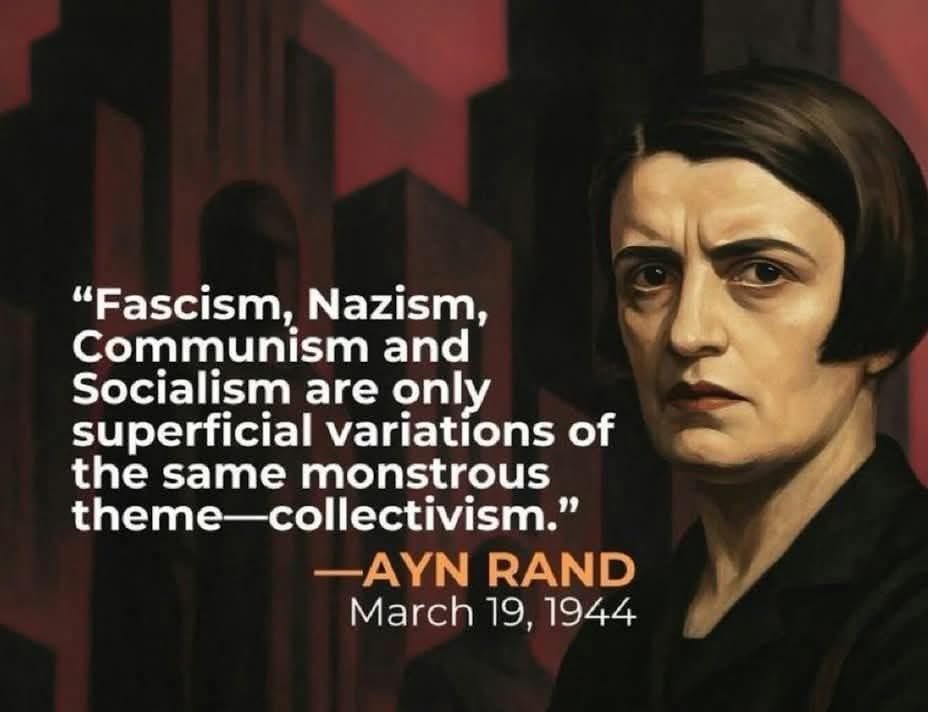
No matter what they call it, whenever and wherever collectivist ideas are put into practice, disaster soon follows.
The chart has a point to make. Yet the labeling is absurd. Note that it uses "liberal" and "left" interchangeably.
The thinkers on the left most driving its current ideology have been Rousseau, Marx, Marcuse, Foucault, and their followers.
Not a single one of them is liberal. They are all strongly and consistently anti-liberal.
Call them what they are -- authoritarian, socialist, maternalist, etc. -- rather than sloppy journalistic labels.