Top Crypto KOL▪️Market Insights & Alpha
Helping 100K+ investors navigate Web3▪️Daily analysis▪️ AI x Crypto▪️Macro Amb @OfficialSunio @Trondao @bnbchain▪️DM 📨
🚀 𝐇𝐨𝐰 𝐓𝐨 𝐔𝐧𝐥𝐨𝐜𝐤 𝐓𝐡𝐞 𝐁.𝐀𝐈 × 𝐁𝐍𝐁 𝐂𝐡𝐚𝐢𝐧 𝐀𝐠𝐞𝐧𝐭 𝐒𝐮𝐫𝐯𝐢𝐯𝐚𝐥 𝐏𝐚𝐜𝐤
The next generation of AI isn't just about chatting with models.
It's about building autonomous agents that can think, act, transact, and operate across digital ecosystems.
Through the Agent Survival Pack initiative, https://t.co/I33BKRcxMe and BNB Chain are making it easier than ever to access powerful AI infrastructure while unlocking exclusive rewards along the way. ⚡
🎁 𝐒𝐭𝐞𝐩 𝟏: 𝐂𝐥𝐚𝐢𝐦 𝐘𝐨𝐮𝐫 𝐅𝐫𝐞𝐞 𝟓𝟎𝟎,𝟎𝟎𝟎 𝐂𝐫𝐞𝐝𝐢𝐭𝐬
Start by visiting:
🔗 https://t.co/i91IhNHHej
Create an account or sign in.
New users automatically receive:
✅ 500,000 free Credits
These Credits can be used to explore advanced AI models, test workflows, generate content, conduct research, and experiment with AI Agent capabilities before spending anything.
💰 𝐒𝐭𝐞𝐩 𝟐: 𝐓𝐨𝐩 𝐔𝐩 𝐕𝐢𝐚 𝐁𝐍𝐁 𝐂𝐡𝐚𝐢𝐧
Make a qualifying deposit through BNB Chain.
Once completed, you unlock additional campaign benefits designed specifically for builders and power users.
Benefits include:
✅ 1:1 bonus Credits on eligible deposits
✅ expanded access to premium AI resources
✅ eligibility for campaign-exclusive rewards
This allows participants to significantly reduce AI usage costs while increasing available compute capacity.
🏆 𝐒𝐭𝐞𝐩 𝟑: 𝐂𝐥𝐚𝐢𝐦 𝐄𝐱𝐭𝐫𝐚 𝐂𝐚𝐦𝐩𝐚𝐢𝐠𝐧 𝐑𝐞𝐰𝐚𝐫𝐝𝐬
Qualified participants can access:
🎁 BNB Chain subsidy rewards
🎁 entry into the campaign reward pool
🎁 additional ecosystem incentives
Rewards are limited and distributed on a first-come, first-served basis, making early participation especially valuable.
🤖 𝐖𝐡𝐚𝐭 𝐌𝐚𝐤𝐞𝐬 𝐁.𝐀𝐈 𝐃𝐢𝐟𝐟𝐞𝐫𝐞𝐧𝐭?
https://t.co/I33BKRcxMe is building infrastructure for the emerging AI Agent economy.
The platform combines:
🔹 access to leading AI models through one unified gateway
🔹 intelligent model routing
🔹 multi-agent collaboration capabilities
🔹 AI-native financial infrastructure
🔹 autonomous execution and settlement systems
The goal is simple:
Enable AI Agents to operate as independent digital participants capable of coordinating tasks, accessing compute, and interacting with on-chain systems.
🌐 𝐖𝐡𝐲 𝐓𝐡𝐢𝐬 𝐌𝐚𝐭𝐭𝐞𝐫𝐬
The future of AI is moving beyond isolated conversations.
Tomorrow's AI systems will:
⚡ coordinate with other agents
⚡ manage workflows autonomously
⚡ access financial infrastructure directly
⚡ execute actions across digital environments
https://t.co/I33BKRcxMe is helping build the foundational layer that makes this possible.
🚀 𝐆𝐞𝐭 𝐒𝐭𝐚𝐫𝐭𝐞𝐝
Claim your free Credits.
Explore frontier AI models.
Unlock Agent Survival Pack rewards.
And experience firsthand what the next era of AI infrastructure looks like.
📷 Below shows hands on experience step-by-step guide to get started 👇
🔗 https://t.co/JcilzLe8Rr
@justinsuntron@BAI_AGI@BNBCHAIN@yzilabs #TRONEcoStar
📢 THE UPDATED JUST WHITEPAPER IS HERE! 💚
A new chapter for the JUST ecosystem begins with the release of its updated Whitepaper, offering the community a clearer look at the ecosystem’s architecture, its three core product lines, and the updated tokenomics of $JST.
This is more than just a new document. It’s an opportunity for users, developers, and community members to better understand how JUST is organizing its ecosystem and where its different components fit into the bigger picture.
🌐 1. A Clearer Ecosystem Architecture
Understanding how a blockchain ecosystem is structured is essential. The updated Whitepaper provides an overview of JUST’s ecosystem architecture, helping readers explore how its different components are positioned and how they relate to one another.
As an ecosystem evolves, having a clearer picture of its structure can help developers understand the available infrastructure and help community members follow its development.
⚙️ 2. Three Core Product Lines
The Whitepaper also outlines JUST’s three core product lines, bringing greater attention to the products that form the foundation of its upgraded ecosystem.
Each product line has its own role, and understanding their positioning and relationships helps explain how the broader ecosystem is organized.
The bigger picture is about looking beyond individual products and understanding how the different components contribute to the overall JUST experience.
📊 3. Updated JST Tokenomics
Tokenomics is another key focus of the new Whitepaper.
$JST plays an important role in ecosystem governance, while its updated tokenomics provide further details about the framework behind the token. For anyone following JUST’s development, understanding these mechanisms is important when evaluating how governance and the ecosystem’s economic structure are designed.
The best way to understand these changes is to explore the official document rather than rely on short summaries alone.
💡 Why should the community read it?
A Whitepaper gives users and developers a reference point for understanding a project’s structure, mechanisms, and direction. It helps bring important information together in one place and offers a foundation for more informed discussions about the ecosystem.
With the #JUSTBrandUpgrade, this updated document provides an opportunity to explore how JUST is positioning its product lines and token framework for its next stage of development.
Curious about the new structure, the three product lines, or the updated $JST tokenomics? Take some time to go through the official Whitepaper and explore the details yourself. 👇
📄 Read the updated JUST Whitepaper:
https://t.co/IvzTUDg9xa…
#Blockchain #Web3 #TRONEcoStar
@justinsuntron@DeFi_JUST
📢 JST BUYBACK & BURN IS ENTERING A NEW PHASE! 🔥
The $JST Buyback & Burn Program is evolving, with an upgraded mechanism designed to strengthen governance, improve treasury risk management, and establish a more sustainable approach to future buybacks.
This update introduces several important changes across the JUST ecosystem.
🏛️ 1. Unified Governance Under JUST DAO
The upgraded mechanism brings governance under JUST DAO, creating a unified framework for overseeing the program and its implementation. Clear governance is an important part of maintaining transparency and ensuring that major ecosystem decisions follow an established process.
🛡️ 2. A Minimum $50 Million Treasury Reserve
The mechanism introduces a minimum treasury reserve of $50 million to support risk mitigation, emergency redemptions, and liquidity needs.
Maintaining a reserve helps establish a financial buffer for unexpected situations and liquidity requirements. It also means the buyback process must account for the treasury’s reserve threshold rather than treating all available funds as immediately deployable.
📊 3. Buybacks Linked to Sustainable Revenue
Future buybacks will follow a model based on sustainable quarterly revenue generated across the JUST ecosystem.
This connects the program more closely to ecosystem performance and provides a framework for determining buyback funding based on revenue rather than relying solely on a fixed or arbitrary schedule.
🔄 4. Phased Use of Surplus Funds
Any remaining surplus above the minimum reserve threshold will be released in phases to supplement future buybacks. This approach creates a structured process for allocating eligible surplus funds while keeping the treasury reserve requirement in place.
💡 Why does this upgrade matter?
A buyback and burn mechanism is about more than removing tokens from circulation. Its design also involves governance, funding sources, treasury management, and the ability to support the program over time.
The updated framework brings these elements together, with a focus on coordinated decision-making, financial safeguards, and revenue-based buybacks.
As always, the long-term impact will depend on implementation, actual ecosystem revenue, governance decisions, and the execution of the updated mechanism. A token buyback or burn does not guarantee price appreciation, but a transparent and sustainable framework gives the community more to evaluate.
The next phase of $JST is about building a more structured approach to buybacks while maintaining a reserve for important treasury needs. 🚀
🔗 Read the full announcement:
https://t.co/QnwqxuPd9b…
#Web3 #TRONEcoStar
@justinsuntron@DeFi_JUST
🌐 TRON IS MORE THAN JUST STABLECOINS! 🚀
Stablecoins have become a major part of the TRON ecosystem, but there is much more to explore when looking at the network’s broader role in blockchain adoption.
In a conversation, @thesamreynolds, Research Lead of TRON DAO, and @stevenmcclurg, CEO of @CanaryFunds, discuss several important areas shaping the blockchain landscape, including real-world asset (RWA) tokenization, network activity, and the infrastructure needed to support a growing digital economy.
💡 Why does RWA tokenization matter?
Real-world asset tokenization involves representing assets such as financial instruments and other eligible assets on a blockchain. It can create new ways to manage, transfer, and interact with assets digitally, while also introducing important considerations around regulation, custody, transparency, and investor protection.
For blockchain networks, supporting these use cases requires more than simply processing transactions. Infrastructure must be able to support applications, connect participants, and provide a reliable foundation for developers building new products.
📊 Network activity also tells an important story.
Stablecoin usage is one measure of blockchain adoption, but it isn’t the only one. DeFi applications, tokenized assets, developer activity, and other on-chain interactions can all contribute to a broader understanding of how a network is being used.
TRON’s role in this evolving landscape is worth examining through the combination of its existing activity, developing infrastructure, and potential applications across different sectors.
The bigger question is how blockchain infrastructure can move beyond individual use cases and support a wider range of real-world applications.
If you’re interested in where blockchain technology is heading next, this conversation is worth checking out.
🎥 Catch the conversation below.
#Web3 #Crypto #TRONEcoStar
@trondao@justinsuntron
What makes TRON stand out beyond stablecoin activity?
@thesamreynolds, Research Lead of TRON DAO, and @stevenmcclurg, CEO of @CanaryFunds, discuss real world asset tokenization, network activity, and the role of TRON infrastructure in the broader blockchain ecosystem.
Catch their conversation below 👇
🌐 TRON SURPASSES $30 TRILLION IN CUMULATIVE TRANSACTION VOLUME! 🚀
Another major milestone for the TRON ecosystem!
During Q3 2026, TRON surpassed $30 trillion in cumulative transaction volume, highlighting the scale of activity that has taken place across the network.
But beyond this headline figure, there are other important indicators worth watching. The latest ecosystem report points to continued growth in stablecoin supply, total value locked (TVL), and active addresses, alongside steady transaction activity.
📊 Why do these metrics matter?
🔹 Transaction Volume: Cumulative transaction volume provides a view of the scale of value transferred across the network over time.
🔹 Stablecoin Supply: Stablecoins play an important role in digital payments, transfers, and decentralized finance. Changes in stablecoin supply can help illustrate how this part of the ecosystem is evolving.
🔹 Total Value Locked (TVL): TVL tracks the value of assets deposited in supported DeFi protocols, offering one perspective on participation in the ecosystem.
🔹 Active Addresses: Address activity provides another signal of network usage, although it doesn’t necessarily represent unique individuals.
Taken together, these indicators help provide a broader picture of TRON’s development. No single metric tells the whole story, but monitoring transaction activity, stablecoin usage, DeFi participation, and address activity can offer useful insight into how the network is being used.
As blockchain adoption continues to evolve, reliable infrastructure and practical use cases remain important. The key question is how TRON can continue supporting meaningful activity and building utility across its ecosystem.
The $30 trillion milestone is a headline worth noting. The next chapter will be about continued usage, development, and sustainable growth. 💚
🔗 Read more via @Cointelegraph:
https://t.co/u6oCaPGWH0…
#Crypto #TRONEcoStar
@DeFi_JUST@trondao@justinsuntron
TRON surpassed $30 trillion in cumulative transaction volume in Q3 2026. 🌐
The latest ecosystem report highlights continued growth in stablecoin supply, total value locked (TVL), and active addresses, alongside steady network transaction activity.
Read more via @Cointelegraph 👇
https://t.co/0ZDcm8SERs
🔥 JUSTLEND DAO COMPLETES JST BUYBACK & BURN PHASE 5!
Another milestone for the JST ecosystem! 💚
Following the proposal officially approved by the JustLend DAO community, the fifth phase of the $JST buyback and burn has been successfully completed on October 16, 2026 (SGT).
📊 The numbers speak for themselves:
✅ Total JST burned: 170,723,144 JST
✅ Burned tokens sent to the designated burn address
✅ Transactions verifiable on-chain
Token burns are an important part of discussions around token supply and ecosystem economics. By permanently removing tokens from circulation, a burn reduces the available supply. However, its broader impact depends on several factors, including token demand, utility, adoption, and the overall health of the ecosystem.
What makes this milestone particularly notable is the community-approved process behind it. Governance gives community members a role in shaping ecosystem decisions, while on-chain records provide a transparent way to verify the execution of transactions.
For the #JST community, this fifth phase represents another completed step in the buyback and burn plan. The next thing to watch is how JustLend DAO continues developing its protocol, strengthening utility, and supporting sustainable ecosystem growth over time.
Less speculation, more verifiable on-chain activity. That’s the kind of progress worth following. 👀🔥
🔗 Read the full announcement:
https://t.co/SVRUTqaBOW
#BuybackAndBurn #Blockchain #Web3 #TRONEcoStar
@justinsuntron@DeFi_JUST
📢Announcement: just:native Buyback & Burn Phase 5 Completed
Following the community-approved JST buyback & burn proposal, JustLend DAO has successfully completed the 5th just:native buyback & burn on October 16, 2026 (SGT).
✅Total just:native burned: 170,723,144 JST
All burned tokens have been sent to the burn address, with transactions verifiable on-chain.
⬇️Full details:
https://t.co/BZskgwHZdg
📢关于 just:native 完成第五次回购销毁的公告
根据 JustLend DAO 社区正式通过的 JST 回购销毁计划提案,JustLend DAO 已于 2026 年 10 月 16 日(SGT)顺利完成第五次 just:native 回购与销毁。
✅本次销毁 just:native 总量:170,723,144 JST
本次销毁的代币已全部转入黑洞地址,相关交易均可在链上查询。
⬇️详情内容:
https://t.co/BZskgwHZdg
📢 GasFree Mainnet Now Supports USDD! 💚
Another step forward for the #GasFree ecosystem!
GasFree has announced that USDD is now supported on Mainnet, with the relevant Mainnet API response data updated to reflect this new support. This gives developers the opportunity to integrate the feature and verify its functionality directly in the Mainnet environment.
Why does this matter? 👇
For developers building blockchain applications, reliable API responses and accurate Mainnet data are essential. They help teams integrate features, test their implementations against the live environment, and confirm that their applications interact with supported assets as expected.
With USDD now reflected in the relevant GasFree Mainnet API response data, developers can begin exploring the integration and verifying the feature within their own supported workflows.
Stablecoins play an important role in the blockchain ecosystem, supporting value transfers and a wide range of digital-asset use cases. Improving the infrastructure around stablecoin support can help developers build more practical and accessible experiences for users.
This update is also a reminder that ecosystem growth is about more than announcements. Developer tools, API compatibility, reliable integrations, and continued infrastructure improvements all contribute to making blockchain applications easier to build and maintain.
The next step is for developers to review the documentation, test the integration carefully, and confirm that their implementations behave as expected on Mainnet.
🔗 Read the full announcement:
https://t.co/vrm2ppWHnE…
More supported assets. More integration possibilities. Another step forward for GasFree and USDD. 🚀
#GasFree #USDD #TRON #TRONNetwork #Stablecoin #Blockchain #Web3 #DeFi #Crypto #TRONEcoStar
@DeFi_JUST@justinsuntron
📢Announcement: GasFree Mainnet now supports USDD
The relevant Mainnet API response data has been updated to support #USDD, enabling developers to integrate and verify the feature in the Mainnet environment.
🔗Read the full announcement: https://t.co/N50Deu9Z0n #GasFree
🔥 TRON Transfers Just Got Simpler!
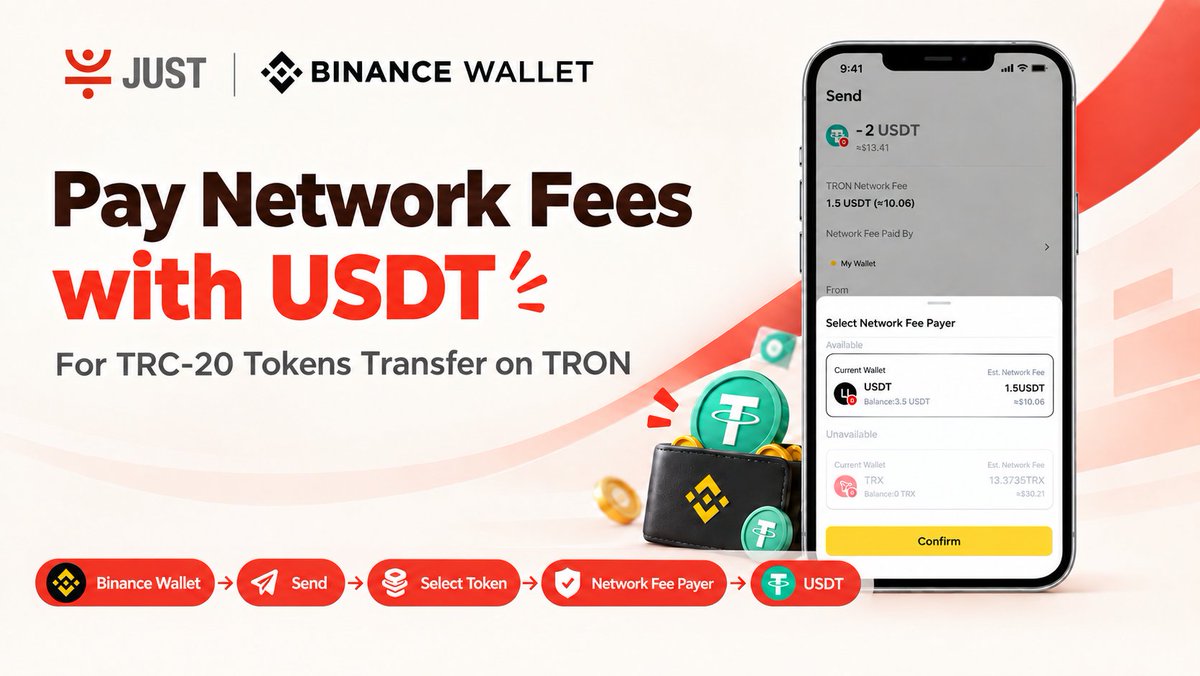
One of the little inconveniences when transferring crypto is having to keep a separate token just to pay network fees. But with stablecoin fee payment in @BinanceWallet, moving assets on TRON is becoming more convenient. 😎
You can now transfer USDT and other TRC-20 tokens without needing to keep TRX specifically for gas when using the supported fee-payment feature.
Want to send JST? No problem! Simply select USDT as your Network Fee Payer, and it can cover the network fee for your transaction.
🔍 How to use it:
Open Binance Wallet → Send → Select Token → Network Fee Payer → USDT
It’s a simple setup that can make everyday transfers easier, especially for users who prefer managing their transactions with stablecoins.
Small improvements like this can make a real difference in the user experience. Less hassle with separate gas balances, a smoother transfer process, and another step toward making blockchain interactions more accessible. 💚
#TRON #TRONNetwork #USDT #JST #BinanceWallet #TRC20 #Crypto #Web3 #TRONEcoStar
@DeFi_JUST@trondao@justinsuntron
Transferring assets on TRON just got easier. 😎
With stablecoin fee payment in @BinanceWallet, you can transfer USDT and other TRC-20 tokens without keeping TRX for gas.
Sending JST? Choose USDT as the Network Fee Payer and let it cover the network fee.
🔍How to use it:
Open Binance Wallet → [Send] → [Select Token] → [Network Fee Payer] → [USDT]
Simple setup. One less thing to keep in mind when moving assets on TRON.
💚 𝐔𝐒𝐃𝐃 𝐈𝐬 𝐌𝐚𝐤𝐢𝐧𝐠 𝐌𝐨𝐯𝐞𝐬 𝐢𝐧 𝐭𝐡𝐞 𝐒𝐭𝐚𝐛𝐥𝐞𝐜𝐨𝐢𝐧 𝐄𝐜𝐨𝐬𝐲𝐬𝐭𝐞𝐦! 🚀
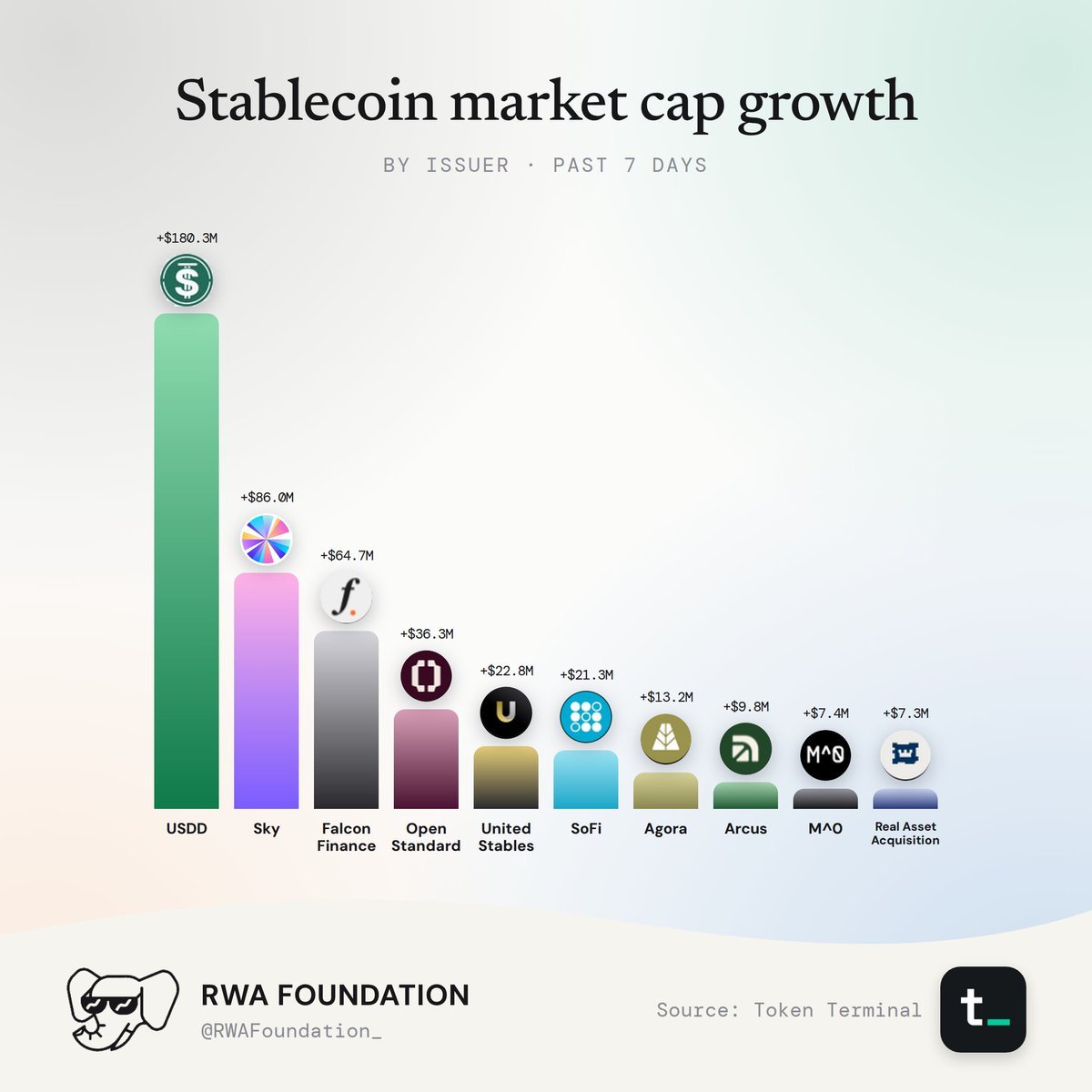
According to the latest report from @RWAFoundation_ and @tokenterminal, #USDD added $180.3M in market cap in just one week! 📊
That’s approximately 40% of the total market cap growth recorded among the top 10 stablecoins during that period. 🏆
This is a notable milestone for USDD and a development worth watching as the stablecoin ecosystem continues to evolve.
Beyond the numbers, the bigger question is how USDD can build on this momentum through broader adoption, deeper DeFi integration, and continued ecosystem development.
Growth is one thing. Sustaining it through real utility and consistent demand is where the long-term story gets interesting. 💚
The #USDD DeFi ecosystem is still developing, and there’s plenty more to watch as the space moves forward.
Let’s keep building, keep innovating, and keep our eyes on what’s next! 🌐🔥
#TRON #TRONEcoStar #DeFi #Stablecoin #Web3
@USDDecentralize@justinsuntron
💚 ethereum:0x4f8e5de400de08b164e7421b3ee387f461becd1a is leading the stablecoin growth race!
🥳According to the latest report jointly published by @RWAFoundation_ and @tokenterminal, ethereum:0x4f8e5de400de08b164e7421b3ee387f461becd1a added $180.3M in market cap in just one week, accounting for 40% of the total growth among the top 10 stablecoins — topping the charts! 🏆
The #USDD DeFi ecosystem is just getting started.
Let's keep building! 🚀
🌱 𝗧𝗛𝗘 𝗕𝗜𝗚𝗚𝗘𝗥 𝗣𝗜𝗖𝗧𝗨𝗥𝗘: 𝗦𝗨𝗣𝗣𝗟𝗬, 𝗨𝗧𝗜𝗟𝗜𝗧𝗬, 𝗔𝗡𝗗 𝗦𝗨𝗦𝗧𝗔𝗜𝗡𝗔𝗕𝗟𝗘 𝗚𝗥𝗢𝗪𝗧𝗛!
At the end of the day, token economics should be about understanding how the different parts of an ecosystem work together.
Supply matters because it helps define the number of tokens that exist or circulate under the relevant model.
Utility matters because it explains what a token is designed to do and why participants may need or choose to use it.
Adoption matters because it helps us understand whether people are actually interacting with the relevant products and services.
Transparency matters because the community needs reliable information to evaluate the mechanisms behind major announcements.
And sustainability matters because long-term development requires more than a series of short-lived headlines.
Token burns can contribute to a supply strategy, but they are not a replacement for useful applications, responsible economic design, technical development, or meaningful participation.
For JST, BTT, and WIN, the most useful approach is to examine each token on its own terms while keeping the wider ecosystem in view.
No single metric can tell the entire story. The real picture emerges when supply changes, utility, adoption, liquidity, and verifiable information are considered together.
That is why the conversation should move beyond hype and focus on understanding the mechanisms, tracking real developments, and asking better questions.
The goal is not just a smaller supply figure. It is a clearer understanding of what supports a sustainable ecosystem.
@OfficialSUNio@justinsuntron
#TRONEcoStar
✅ 𝗕𝗘𝗙𝗢𝗥𝗘 𝗝𝗨𝗗𝗚𝗜𝗡𝗚 𝗔 𝗧𝗢𝗞𝗘𝗡 𝗕𝗨𝗥𝗡, 𝗔𝗦𝗞 𝗧𝗛𝗘𝗦𝗘 𝗤𝗨𝗘𝗦𝗧𝗜𝗢𝗡𝗦!
A token burn can be an important economic event, but understanding its significance requires more than reading a headline.
Here is a practical checklist for evaluating the details:
🔹 What exactly was burned? Identify the token and confirm the relevant transaction or mechanism.
🔹 How significant was the reduction? Compare the amount with an appropriate, clearly defined supply baseline.
🔹 Can the event be verified? Look for reliable documentation and available on-chain evidence.
🔹 What is the wider supply picture? Consider any relevant issuance, unlocks, or other changes that may affect supply over time.
🔹 What is the token’s utility? Understand the actual purpose of the token and how users interact with it.
🔹 What does the burn not tell us? Remember that supply reduction alone cannot establish future price movements or guarantee adoption.
For JST, BTT, and WIN, these questions should be answered separately because each token may have different mechanics and economic characteristics.
The purpose of this checklist is not to predict a market outcome. It is to help people evaluate the available information more carefully.
Better research begins with better questions.
@OfficialSUNio | @justinsuntron
#TRONEcoStar
⏳ 𝗟𝗢𝗡𝗚-𝗧𝗘𝗥𝗠 𝗘𝗖𝗢𝗦𝗬𝗦𝗧𝗘𝗠 𝗗𝗘𝗩𝗘𝗟𝗢𝗣𝗠𝗘𝗡𝗧 𝗥𝗘𝗤𝗨𝗜𝗥𝗘𝗦 𝗠𝗢𝗥𝗘 𝗧𝗛𝗔𝗡 𝗦𝗛𝗢𝗥𝗧-𝗧𝗘𝗥𝗠 𝗘𝗫𝗖𝗜𝗧𝗘𝗠𝗘𝗡𝗧!
Crypto markets are known for rapid changes in attention. One week, the conversation may centre on a new feature; the next, it may focus on supply, market movements, or a different project entirely.
That makes it important to separate temporary attention from the factors that matter over longer periods.
Is the technology improving?
Are users finding meaningful reasons to participate?
Are the economic mechanisms understandable?
Is the project communicating developments transparently?
Does the ecosystem continue adapting to changing needs?
These questions offer a broader perspective than simply tracking the latest announcement.
Token burns can be part of a long-term economic strategy, but their significance depends on the actual mechanism and the wider environment in which they operate.
For JST, BTT, and WIN, it is worth examining supply developments alongside utility, adoption, liquidity, and the relevant project documentation.
Long-term thinking does not mean ignoring short-term information. It means putting each new development into context instead of allowing every headline to determine the entire narrative.
Sustainable progress is usually a combination of many decisions and improvements over time.
The strongest analysis looks beyond today’s attention and asks what the available evidence tells us about the bigger picture.
@OfficialSUNio@justinsuntron
#TRONEcoStar
📢 𝗧𝗛𝗘 𝗥𝗘𝗔𝗟 𝗧𝗘𝗦𝗧 𝗢𝗙 𝗔 𝗣𝗥𝗢𝗠𝗜𝗦𝗘 𝗜𝗦 𝗪𝗛𝗔𝗧 𝗛𝗔𝗣𝗣𝗘𝗡𝗦 𝗔𝗙𝗧𝗘𝗥 𝗧𝗛𝗘 𝗔𝗡𝗡𝗢𝗨𝗡𝗖𝗘𝗠𝗘𝗡𝗧!
Crypto moves quickly, and major announcements can dominate the conversation for a few hours or even days.
But a long-term evaluation requires following up.
Was the stated action completed?
Is there evidence that supports the announcement?
Were the relevant details communicated clearly?
Can people compare the outcome with the original claim?
These questions are useful for token burns, buybacks, product releases, and other ecosystem developments.
Accountability does not require assuming that every announcement is misleading. It simply means treating claims and completed actions as two things that should be distinguished and verified.
For JST, BTT, and WIN, it is especially important to identify the specific token and mechanism involved before drawing conclusions about a supply-related development.
Clear follow-up information helps the community understand what happened and what remains uncertain.
It also creates a better foundation for comparing developments over time rather than treating each announcement as an isolated event.
The objective is not to create unnecessary criticism. It is to encourage a culture where transparency and evidence are part of the normal conversation.
Announcements create awareness. Verification creates understanding.
Keep asking good questions, keep checking the details, and keep the focus on meaningful progress.
@OfficialSUNio | @justinsuntron
#TRONEcoStar
🌐 𝗧𝗛𝗘 𝗪𝗜𝗗𝗘𝗥 𝗕𝗟𝗢𝗖𝗞𝗖𝗛𝗔𝗜𝗡 𝗪𝗢𝗥𝗟𝗗 𝗠𝗔𝗞𝗘𝗦 𝗨𝗧𝗜𝗟𝗜𝗧𝗬 𝗘𝗩𝗘𝗡 𝗠𝗢𝗥𝗘 𝗜𝗠𝗣𝗢𝗥𝗧𝗔𝗡𝗧!
Blockchain ecosystems do not exist in complete isolation. Users may interact with multiple networks, applications, exchanges, and digital services depending on their needs.
This makes interoperability, accessibility, and clear user experiences important parts of the broader technology landscape.
However, moving assets or connecting applications across different environments also introduces technical and operational considerations. Users need to understand supported networks, contract details, fees, and the risks associated with the tools they use.
Token burns do not remove these considerations.
A supply change may be relevant to a token’s economic model, but the usefulness of an ecosystem also depends on whether people can access its products and complete meaningful tasks.
For JST, BTT, and WIN, the important approach is to examine their specific roles and the services connected to them rather than making broad assumptions based on the wider ecosystem alone.
Interoperability should be evaluated through actual capabilities, documented support, and user experience.
The long-term opportunity is not simply to make a token scarcer. It is to build systems that people can understand and use for clear purposes.
Better connectivity, useful applications, and transparent economics all deserve attention in the conversation about sustainable blockchain growth.
@OfficialSUNio@justinsuntron
#TRONEcoStar
👨💻 𝗗𝗘𝗩𝗘𝗟𝗢𝗣𝗘𝗥 𝗔𝗖𝗧𝗜𝗩𝗜𝗧𝗬 𝗜𝗦 𝗔𝗡𝗢𝗧𝗛𝗘𝗥 𝗣𝗔𝗥𝗧 𝗢𝗙 𝗧𝗛𝗘 𝗟𝗢𝗡𝗚-𝗧𝗘𝗥𝗠 𝗣𝗜𝗖𝗧𝗨𝗥𝗘!
A blockchain ecosystem needs more than token-related announcements to remain relevant.
Developers build applications, improve existing products, maintain infrastructure, and explore new ways to solve problems for users.
That work can take time, and not every development milestone immediately translates into measurable adoption. Still, the ability to build, maintain, and improve useful applications is an important part of the broader ecosystem conversation.
Developer tools, documentation, reliable infrastructure, and accessible support can all influence how effectively teams work within a network.
Token economics also plays a role, particularly when incentives are designed to encourage useful participation. However, incentives should be assessed alongside the quality of the tools, the needs of developers, and the sustainability of the overall model.
For JST, BTT, and WIN, it is worth examining how each token relates to its relevant applications and ecosystem activities instead of assuming a single development pattern applies to all three.
A burn can change supply, but it cannot independently create a thriving developer environment.
Long-term growth depends on multiple factors working together, including technology, utility, community, and responsible economic design.
Building useful products is a continuous process, not a single announcement.
@OfficialSUNio | @justinsuntron
#TRONEcoStar
🎭 𝗔 𝗕𝗨𝗥𝗡 𝗔𝗡𝗡𝗢𝗨𝗡𝗖𝗘𝗠𝗘𝗡𝗧 𝗦𝗛𝗢𝗨𝗟𝗗 𝗡𝗢𝗧 𝗕𝗘 𝗧𝗨𝗥𝗡𝗘𝗗 𝗜𝗡𝗧𝗢 𝗔 𝗣𝗥𝗜𝗖𝗘 𝗣𝗥𝗢𝗠𝗜𝗦𝗘!
One of the easiest mistakes in crypto is assuming that every positive-sounding development must lead to an immediate market reaction.
A token burn may reduce supply, but market prices reflect a much wider combination of factors, including expectations, demand, liquidity, economic conditions, and the actions of market participants.
Sometimes an announcement may already be anticipated. In other situations, the broader market may outweigh the impact of a single event. The outcome cannot be determined from the word “burn” alone.
That is why responsible communication matters.
When discussing JST, BTT, and WIN, it is important to explain the actual mechanism without promising price increases or presenting supply reduction as a guaranteed financial benefit.
A clear distinction between a confirmed event and a possible market interpretation helps people make more informed assessments.
The purpose of tokenomics analysis should be to improve understanding, not create unrealistic expectations.
It is possible to recognise the significance of a supply change while remaining honest about the uncertainty surrounding future outcomes.
Good research leaves room for complexity.
Less price prediction based on headlines. More attention to the facts, the mechanism, and the wider economic environment.
@OfficialSUNio@justinsuntron
#TRONEcoStar
🧠 𝗧𝗢𝗞𝗘𝗡 𝗕𝗨𝗥𝗡𝗦 𝗔𝗟𝗦𝗢 𝗥𝗔𝗜𝗦𝗘 𝗔𝗡 𝗜𝗠𝗣𝗢𝗥𝗧𝗔𝗡𝗧 𝗤𝗨𝗘𝗦𝗧𝗜𝗢𝗡: 𝗪𝗛𝗔𝗧 𝗘𝗟𝗦𝗘 𝗖𝗢𝗨𝗟𝗗 𝗧𝗛𝗘 𝗥𝗘𝗦𝗢𝗨𝗥𝗖𝗘𝗦 𝗦𝗨𝗣𝗣𝗢𝗥𝗧?
Every economic decision takes place within a broader set of priorities.
Depending on the project’s model, resources may be needed for development, security, infrastructure, user support, research, ecosystem incentives, or other operational responsibilities.
A burn strategy should therefore be evaluated within the context of the mechanism funding it and the project’s wider objectives.
This does not mean burns are automatically good or bad. It means their significance depends on how they fit into the economic design.
If a burn is funded through a documented mechanism, understanding that mechanism can help explain how the action relates to other ecosystem priorities.
For JST, BTT, and WIN, the right questions concern each token’s actual arrangements and the available evidence, not assumptions that all projects make the same trade-offs.
Supply reduction is measurable, but its broader value depends on the economic context.
A thoughtful evaluation should consider both the direct effect of a burn and the system in which it takes place.
The aim should be sustainable ecosystem development, supported by clear decisions and understandable trade-offs.
Good tokenomics is about more than changing a number. It is about understanding why the change is being made and how it fits the bigger picture.
@OfficialSUNio | @justinsuntron
#TRONEcoStar
🤝 𝗔 𝗦𝗧𝗥𝗢𝗡𝗚 𝗖𝗥𝗬𝗣𝗧𝗢 𝗖𝗢𝗠𝗠𝗨𝗡𝗜𝗧𝗬 𝗡𝗘𝗘𝗗𝗦 𝗠𝗢𝗥𝗘 𝗧𝗛𝗔𝗡 𝗣𝗥𝗜𝗖𝗘 𝗗𝗜𝗦𝗖𝗨𝗦𝗦𝗜𝗢𝗡𝗦!
Price movements can attract attention, but a healthy community has plenty of other things worth discussing.
People can learn how the technology works, explore applications, read project documentation, provide constructive feedback, report confusing experiences, and help newcomers understand important concepts.
These activities may not produce an immediate market headline, but they can contribute to a better-informed ecosystem.
The same principle applies to token burns. A burn can be an important economic event, yet the community conversation should also cover utility, adoption, transparency, and the long-term development of the relevant products.
For JST, BTT, and WIN, informed participation starts with understanding each token’s role and asking questions that can be answered through reliable information.
Communities also benefit when people can disagree respectfully and distinguish between verified facts, opinions, and speculation.
No community member can guarantee an ecosystem’s success, and enthusiasm should never replace independent thinking.
But thoughtful participation can help make discussions more useful for everyone.
The objective is to build an environment where people learn together, examine evidence, and focus on sustainable progress rather than short-term excitement alone.
Strong communities are not just watching the numbers. They are learning what the numbers mean.
@OfficialSUNio@justinsuntron
#TRONEcoStar
🔬 𝗝𝗦𝗧, 𝗕𝗧𝗧, 𝗔𝗡𝗗 𝗪𝗜𝗡 𝗦𝗛𝗢𝗨𝗟𝗗 𝗡𝗢𝗧 𝗕𝗘 𝗔𝗡𝗔𝗟𝗬𝗦𝗘𝗗 𝗔𝗦 𝗜𝗙 𝗧𝗛𝗘𝗬 𝗪𝗘𝗥𝗘 𝗜𝗗𝗘𝗡𝗧𝗜𝗖𝗔𝗟!
Tokens can exist within the same broader ecosystem while serving different purposes and operating under different economic arrangements.
That means their tokenomics should be examined individually.
Their utility may differ.
Their supply structures may differ.
Their market conditions may differ.
Their relationship with protocol activity may differ.
Treating them as interchangeable can lead to conclusions that overlook the details that actually matter.
When discussing token burns or other supply changes, the first step should be to identify the specific token and verify the relevant mechanism.
Next, examine the token’s documented purpose, supply information, and the available evidence of usage.
Only then does it make sense to compare how different economic developments may affect each token’s broader position.
This approach also helps avoid turning an ecosystem-wide announcement into an unsupported claim about every asset connected to it.
The TRON ecosystem contains different projects and token models, so precision matters.
For people following @OfficialSUNio and @justinsuntron, a more informed discussion begins with understanding the details rather than assuming one explanation fits everything.
Good research respects the differences between assets.
That is how we move beyond broad claims and toward meaningful analysis.
#TRONEcoStar
💧 𝗟𝗜𝗤𝗨𝗜𝗗𝗜𝗧𝗬 𝗜𝗦 𝗔𝗡 𝗜𝗠𝗣𝗢𝗥𝗧𝗔𝗡𝗧 𝗣𝗔𝗥𝗧 𝗢𝗙 𝗧𝗛𝗘 𝗧𝗢𝗞𝗘𝗡 𝗘𝗖𝗢𝗡𝗢𝗠𝗬!
Supply reduction is one way to describe a token burn, but liquidity tells us something different about how easily an asset can be traded without causing a substantial change in its market price.
A token may have a large supply, a smaller supply, or a recent burn event, yet its liquidity can still vary significantly across trading venues and market conditions.
This is why supply figures should not be used as a substitute for understanding market structure.
Liquidity can be influenced by trading activity, available market depth, exchange access, participant behaviour, and broader market sentiment.
For JST, BTT, and WIN, it is important to examine the relevant market data carefully and recognise that conditions may differ between tokens and trading venues.
A burn does not automatically improve liquidity, and limited liquidity does not by itself explain a token’s long-term prospects.
These are separate parts of a larger evaluation.
The better approach is to consider supply, liquidity, utility, and adoption together while avoiding conclusions based on a single chart.
Tokenomics becomes easier to understand when each metric is used to answer the question it was designed to address.
More context. Fewer assumptions. Better analysis.
@OfficialSUNio | @justinsuntron
#TRONEcoStar