https://t.co/tkXeGEYG2l "Tratamento da dignidade da pessoa humana" "Visão humanista que o #PSD tem"?! Pensionistas, desempregados, imigrantes..., e agora também crianças #autistas?! E #RicardoMexia?! Também é um #humanista defensor da dignidade da pessoa humana?! Bem, é #PSD...
The Spell Upon the Golden Mask of Tutankhamun, 1323 BC.....
Beneath the gleam of gold and lapis, the mask of Tutankhamun whispers an ancient spell; one far older than the Boy King himself. Its words were carved half a millennium before his birth, drawn from Chapter 151 of the Book of the Dead, a hymn of protection for those who cross the western horizon.
“Thy right eye is the night barque (of the Sun-God),
Thy left eye is the day barque;
Thy eyebrows are those of the Ennead of the Gods;
Thy forehead is that of Anubis;
The nape of thy neck is that of Horus;
Thy locks of hair are those of Ptah-Sokar.
Thou art before the Osiris, the King of Upper Egypt, Nebkheperure,
Deceased, given life by Re.
He sees thanks to thee,
Thou guidest him in the goodly ways,
Thou smitest for him the confederates of Seth,
That he may overthrow thine enemies before the Ennead of the Gods
In the Great Castle of the Prince which is in Heliopolis.”
Thus the young king becomes the Osiris, Seeing through divine eyes, guided through the goodly ways. His enemies struck down in the shadow of Heliopolis. And so the mask is created to be no mere likeness it is a vessel of eternity, a golden prayer that the Ancient Egyptians believed would breathe even now.
The Death Mask of Tutankhamun is now on display at the Grand Egyptian Museum.
#archaeohistories
🏺 China Unearthed a 3,000-Year-Old Mystery That Shouldn’t Exist
Deep beneath the soil in China, archaeologists uncovered something that left even experts stunned — giant bronze masks with haunting eyes, strange golden objects, towering statues, and ritual items unlike anything ever seen before. The discovery was made at the ancient Sanxingdui site in 2021, and the artifacts are believed to belong to a lost civilization that existed more than 3,000 years ago.
What makes this discovery so mysterious is that these objects do not match the style of ancient Chinese civilizations we know from history books. The masks have enormous eyes, sharp features, and almost supernatural expressions, making many people wonder who these people really were… and why their art looked so different from the rest of the ancient world.
Some researchers believe Sanxingdui may have been the center of a powerful kingdom that vanished without explanation. Others think the strange masks and statues were connected to rituals, forgotten gods, or beliefs that disappeared thousands of years ago. Even today, nobody fully understands why these incredible treasures were buried underground.
Imagine standing in front of a massive bronze face created by human hands over 3 millennia ago… staring back at you with wide, mysterious eyes as if guarding secrets from another age.
The deeper archaeologists dig, the more questions appear. Who were the people of Sanxingdui? Why was their culture so advanced and so different? And what caused this ancient civilization to suddenly fade into history?
Some discoveries rewrite history. This one may rewrite everything we thought we knew about the ancient world.
The Aslantaş Monument: Phrygia's "Lionstone" tomb
Carved into an 11-meter monolith in Türkiye's Phrygian Valley, this rock-cut tomb is flanked by two rearing lions facing each other, with faint, eroded lion cubs between their paws.
Likely built for nobility, the lions stood as eternal guardians against evil spirits.
Mohenjo-Daro, in the Indus Valley, still holds mysteries, but archaeologists got a bit of new illumination studying its massive walls. It was occupied earlier than previously thought, around 2700 B.C.—making it one of the world’s oldest metropolises.
https://t.co/nIo5spTqjg
This Ancient Hall Is Still Alive After 2,000 Years
Hidden inside the sacred halls of the Dendera Temple complex, something impossible still breathes.
Step into the Great Hypostyle Hall of the Temple of Hathor, and you’ll find towering columns that look less like stone… and more like frozen life. Built over 2,000 years ago during the Ptolemaic and Roman eras, these massive pillars still glow with shades of blue, red, and gold—as if time itself forgot to touch them.
How did these colors survive when entire civilizations vanished?
The tops of these columns bloom like giant bouquets, carved to resemble papyrus and lotus plants—symbols of life, rebirth, and the divine. Above them, ceilings whisper secrets of the cosmos, filled with ancient astronomical carvings and sacred symbols no one fully understands even today.
Stand beneath them, and something strange happens. The silence feels heavy… almost alive. It’s as if these walls are watching, remembering rituals, prayers, and voices that faded thousands of years ago.
Were these just decorations?
Or were they meant to preserve something far deeper… a message meant to outlive time itself?
Because in this stone forest, one thing becomes clear—
some colors don’t fade… and some mysteries were never meant to.
@ousiadasein@pedroml#PSD/#CDS/#GovernoArtístico, peça inspirada com uma profundidade artística laminar e sentido claramente caricatural com um pouco de sarcasmo à mistura: somos humanistas "muahaha" (risada maléfica 😈). Mas teria sido talvez mais à-propos o trecho seguinte: https://t.co/vndWVfatsi
@ousiadasein@pedroml#PSD/#CDS/#GovernoArtístico, peça inspirada com uma profundidade artística laminar e sentido claramente caricatural com um pouco de sarcasmo à mistura: somos humanistas "muahaha" (risada maléfica 😈). Mas teria sido talvez mais à-propos o trecho seguinte: https://t.co/vndWVfatsi
@pedroml Que representação mais parva, mas esta gente pensa que o zé povinho não sabe (cogno)processar o óbvio?! Humanistas?! Alguém acredita que este governo #PSD/#CDS/#LuísMontenegro visa procedimentos #humanistas?! Que grande "treta"!
The 900-Year-Old Stone Mystery Hidden Above Peru’s Ancient City
High above Cusco, an ancient stone fortress sits like a puzzle left behind by a forgotten world. Massive limestone blocks, some weighing many tons, are locked together with such incredible precision that even a thin blade cannot pass between them.
For centuries, Sacsayhuamán was believed to be entirely the work of the Inca Empire. But archaeology has revealed a deeper mystery: the earliest foundations were built around 1100 AD by the pre-Inca Killke culture, whose stoneworking skills remain astonishing even today.
How did these ancient builders move and shape such enormous stones without modern machines? How did they create walls that survived centuries of earthquakes while many newer structures collapsed?
But perhaps the most fascinating secret is hidden in the stone arrangement itself. Some researchers and visitors believe that certain boulders form the shape of a puma’s paw — a powerful symbol connected to the sacred animals of the Andes. The puma was not just a predator; it represented strength, protection, and the living spirit of the mountains.
Standing before Sacsayhuamán, you are not simply looking at a wall of stones. You are looking at a message carved into the earth by people whose knowledge has survived for nearly a thousand years.
And the biggest mystery remains: what other secrets are still hidden inside these ancient stones?
At the ruins of the ancient Quarries of Cusa also known as Cave di Cusa, in Italy, we see limestone cylindrical columns ranging from over 6 feet in diameter to 12 feet!
Modern eyes would instantly relate how they were cut to heavy machinery.
But they obviously didn’t have such equipment, so how did they do it!? 🤔
It should bother more people that we still don't know who built the Pyramid of the Sun in Mexico.
The Aztecs themselves were clear: they didn't build it.
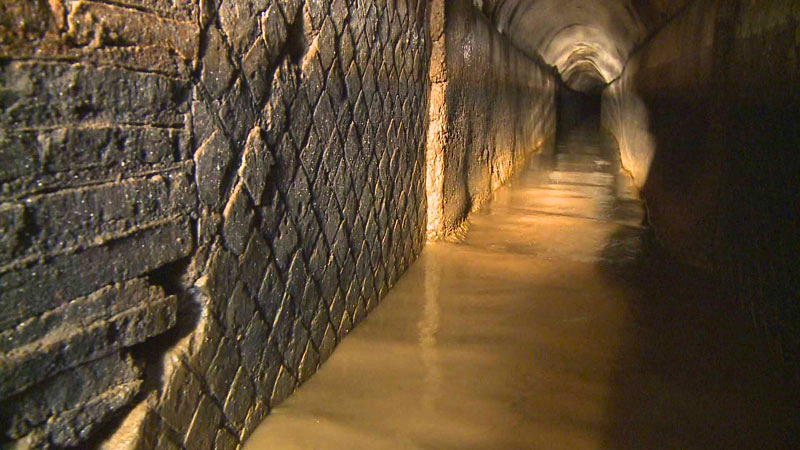
When it was completed in A.D. 109, the Aqua Traiana was one of Rome’s most impressive aqueducts, spanning more than 25 miles. It was a feat of engineering and grandeur, yet it slowly crumbled and its exact path long eluded scholars ...
https://t.co/skN91DeY0f
The Silent Echo of the Inca Masters
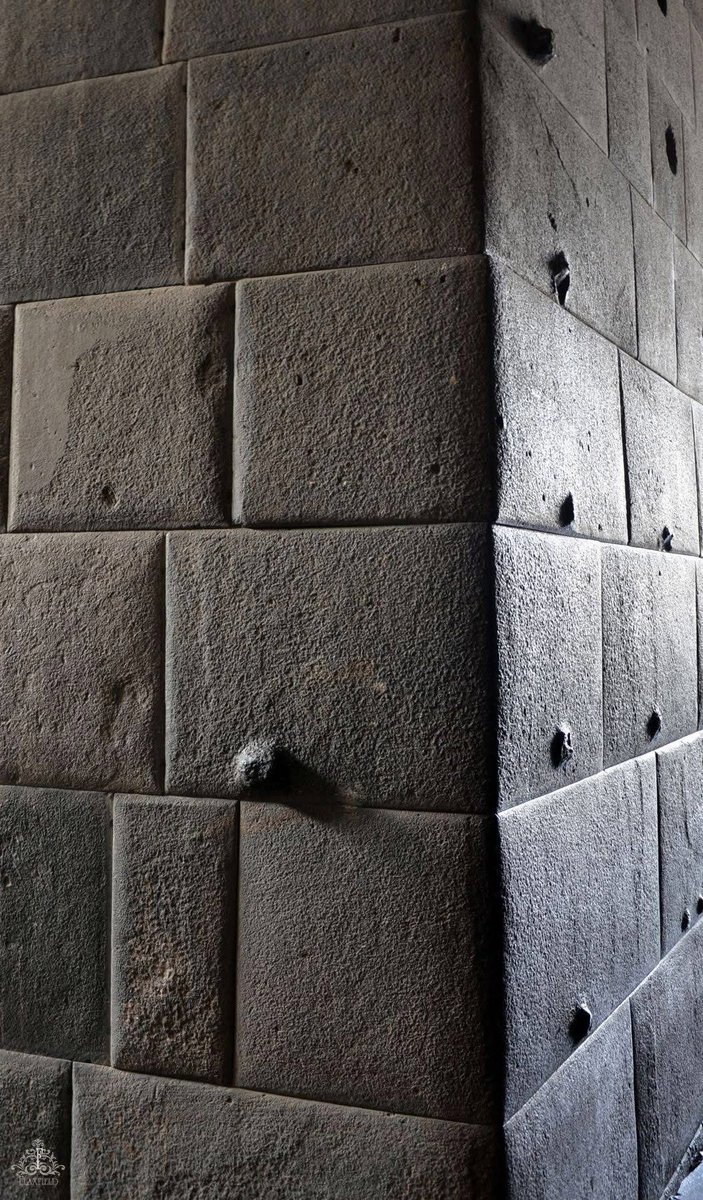
Standing before these monolithic stones, one is immediately struck by a profound sense of temporal vertigo. This is the Qorikancha in Cusco, the "Golden Enclosure," where the mastery of Inca masonry defies the limitations of the ancient world. Each basalt block is fitted with such impossible precision that not even a single coca leaf could slide between them, held together not by mortar, but by the sheer genius of ashlar joinery.
You can almost feel the rhythmic clink-clink of stone on stone echoing through the centuries. Imagine the thousands of laborers, driven by a sacred devotion to the Sun God, Inti, as they hauled these giants from distant quarries. The protruding knobs—remnants of the lifting process—serve as the "fingerprints" of the ancestors, a raw, human touch on an otherwise divine perfection. To touch this wall is to bridge the gap between the modern world and a civilization that saw stone not as cold matter, but as a living witness to their eternal legacy. It is a haunting, beautiful testament to human persistence against the erosion of time.
@ousiadasein@SICNoticias Nosferatu, nesuferit ("o insuportável", "o ofensivo"), nosophoros ("portador de doenças"). Os discursos ávidos de palco de #PassosCoelho exemplificam fontes infecciosas de uma latrina política moderna populista em que Passos se insere bem.
https://t.co/Gf5lGJKYPn