Akseer Research | Alpha Capital | Empowering retail investors with state of the art investment tools | Interested in Technology, Fintech, Economy, Equities
Big news! We've launched Ask Analyst
It’s designed to give you the insights you need to make smart investment decisions.
Check it out at https://t.co/WjMGCCXfCw and let us know what you think!
Your feedback means the world to
#Investing#Finance#AskAnalyst
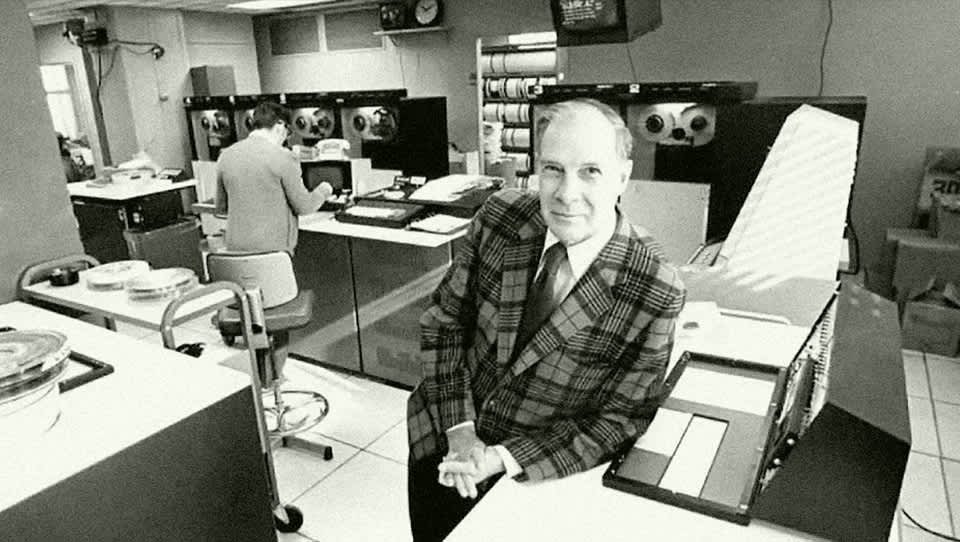
A mathematician who shared an office with Claude Shannon at Bell Labs gave one lecture in 1986 that explains why some people win Nobel Prizes and other equally smart people spend their whole lives doing forgettable work.
His name was Richard Hamming. He won the Turing Award. He invented error-correcting codes that made modern computing possible. And he spent 30 years at Bell Labs sitting in a cafeteria at lunch watching which scientists became legendary and which ones faded into nothing.
In March 1986, he walked into a Bellcore auditorium in front of 200 researchers and told them exactly what he had seen.
Here's the framework that has been quoted by every serious scientist for the last 40 years.
His opening line landed like a punch. He said most scientists he worked with at Bell Labs were just as smart as the Nobel Prize winners. Just as hardworking. Just as credentialed. And yet at the end of a 40-year career, one group had changed entire fields and the other group was forgotten by the time they retired.
He wanted to know what the difference actually was. And he said it wasn't luck. It wasn't IQ. It was a specific set of habits that almost nobody is willing to follow.
The first habit was the one that hurts the most to hear. He said most scientists deliberately avoid the most important problem in their field because the odds of failure are too high. They pick a safe adjacent problem, solve it cleanly, publish it, and move on. And because they never swing at the hard problem, they never hit it. He said if you do not work on an important problem, it is unlikely you will do important work. That is not a motivational line. That is a logical one.
The second habit was about doors. Literal doors. He noticed that the scientists at Bell Labs who kept their office doors closed got more done in the short term because they had no interruptions. But the scientists who kept their doors open got more done over a career. The open-door scientists were interrupted constantly. They also absorbed every new idea passing through the hallway. Ten years in, they were working on problems the closed-door scientists did not even know existed.
The third habit was inversion. When Bell Labs refused to give him the team of programmers he wanted, Hamming sat with the rejection for weeks. Then he flipped the question. Instead of asking for programmers to write the programs, he asked why machines could not write the programs themselves. That single inversion pushed him into the frontier of computer science. He said the pattern repeats everywhere. What looks like a defect, if you flip it correctly, becomes the exact thing that pushes you ahead of everyone else.
The fourth habit was the one that hit me the hardest. He said knowledge and productivity compound like interest. Someone who works 10 percent harder than you does not produce 10 percent more over a career. They produce twice as much. The gap doesn't add. It multiplies. And it compounds silently for years before anyone notices.
He finished the lecture with a line I have never been able to shake.
He said Pasteur's famous quote is right. Luck favors the prepared mind. But he meant it literally. You don't hope for luck. You engineer the conditions where luck can land on you. Open doors. Important problems. Inverted questions. Compounded hours. Those are not traits. Those are choices you make every single day.
The transcript has been sitting on the University of Virginia's computer science website for almost 30 years. The video is free on YouTube. Stripe Press reprinted the full lectures as a book in 2020 and Bret Victor wrote the foreword.
Hamming died in 1998. He gave his final lecture a few weeks before. He was 82.
The lecture that explains why some careers become legendary and others disappear is still free. Most people who could benefit from it will never open it.
🌊 As per Bloomberg, flash floods in Punjab have wiped out major crops: 60% of rice and 30% of sugarcane.
💸 Estimated export losses = $3.7bn (Rice $2.8bn, Sugarcane $920m).
Agriculture shock → trade shock.
https://t.co/G0PVaig3LE
#PakistanEconomy#Exports#Agriculture
Must watch podcast by @MubarizSiddiqui with @AsfiShaheen.
Really impressed by @MubarizSiddiqui work. I wish content like this gets watched more.
And @AsfiShaheen you should participate in a lot more podcasts
https://t.co/z3GpWaf61t
India started a war it couldn’t end, got humiliated in the air and on the ground, and begged the US to intervene because we pounded them so hard. This war was the most seismic South Asian event of the last 50 years whose repercussions will be felt from Thiruvananthapuram to Taipei. Let me explain:
1. We destroyed their airforce without even a single F-16 needing to fly. The Pakistan China military combination annihilated the Israeli French US Russian Indian military machine. The validation of Chinese tech as best in the world in a battle for skies that downed 4.5 Gen aircraft has stunned the West and the US’ entire military budget will now have to change to honour their security guarantee to Philippines in any islands dispute with China or if they decide to intervene on Taiwan’s behalf if China invades. The myth of French aviation supremacy and Israel as some drone savant also lies crushed. Pakistan should now look to double down on military exports as a large part of its exports.
2. India will go from being a regional bully into a sober rethink. Its doctrine of being able to fight on 2 fronts is unenforceable. That doctrine said we will establish air superiority and then send in ground troops and quickly incapacitate Pakistan while containing China with attrition. The reverse happened. India lost the air war to a country 1/8 its size. Pakistan’s system of systems approach to war won. India will now fix glaring deficiencies in platforms integration and air space communication/ AWOCS before it tries anything again, and will need to change Geopolitics to have any hope vs a Pakistan China combination. The smartest play is to integrate Pakistan into India economically with full peace and open trade and a mutual economic prosperity model. But the unleashing of hindutva by Modi and Muslim hate to win elections makes that impossible. You can’t put that genie back in the bottle.
3. India lost multiple rungs of international stature. It has a significantly lower international profile after this war. It attacked a sovereign nation without proof refusing to give it to nations who asked. Then after it got a bloody nose it went to the same nations to tell them to talk to Pakistan to stop. Realpolitik is all well and good but India’s leverage to manoeuvre complex international alliances and guarantees will go significantly down as the West now regards it as simply not that powerful to have a seat at the table. Investors will also think twice about investing in a country with a deranged leader who can’t win wars. Those factories that were to open in India will open in Vietnam.
4. India’s defeat will embolden the Marxist and Kashmiri rebels. Militant activity and violence in Kashmir etc will increase as minorities denied their rights rise up.
5. This was a perfect war for Pakistan. A longer war would have been unpredictable. We decisively won the shorter war losing only one pilot as a major military casualty. Pakistan military prowess, its battle planning, its incorporation of advanced platforms based on a system of systems approach is fully validated. We have gathered enormous amount of data to become even better. The morale of our troops is sky high. The nation is united. We can now focus on fixing the economy and mining the trillion dollar mineral and oil wealth we have.
URGENT: It is very important that the following is proclaimed immediately.
We the people of Pakistan stand together as a nation against this ugly, senseless, foolish Indian aggression. We are shoulder to shoulder with our fighting forces and will defend our homeland against this cowardly Indian attack.
Rather than submit to the Pakistan proposal for impartial investigation, India has resorted to its usual empty hubris attacking a peaceful Pakistan.
They have forgotten the 2019 Pulwama response wherein @ImranKhanPTI warned with a bold, crisp and clear admonition, that was followed by an appropriate reaction when India attacked. I promise you this time the tea will burn.
@Invest_Kardo@SECPakistan@ShahidAliHabib1 behind the CEO OF AHL is a regulated person and he is sharing a post based on a document by a regulated entity that is conducting an activity under the advisors and consultant to issue license
@Invest_Kardo@akifsaeed65@SECPakistan 2/2 issued a notice demanding explanation for including discussions about elections politics and it's impact on fertilizer sector subsidy, Dec quarter earnings and dividends in a research report. It was 2017 I guess
Was an interesting conversation.
@Invest_Kardo@akifsaeed65@SECPakistan The proviso lists items that will "Not" attract regulatory oversight. You may talk about it freely.
It doesn't prohibit analysts from talking about. It stops the regulator from regulating.
But I agree that it can be confusing. Some years ago a junior staff at SECP ...1/2
@Invest_Kardo@akifsaeed65@SECPakistan They subsequently reach out to TREC holders for directing accounts in exchange for a share of commissions.
I believe regulatory oversight should kick in as soon as monetization kicks in
@Invest_Kardo@akifsaeed65@SECPakistan The problem is that there are several instances where known and anonymous accounts post discuss stocks for free, build a following, launch an education course (monetization kicks in) create a paid what's app group for tips (regulated activity of advisory and research).
@Invest_Kardo@akifsaeed65 Done
@Invest_Kardo your wish has been granted😎
You can access corporate briefings at https://t.co/A7ZJa5WbRP
@akifsaeed65 I understand it's perfectly alright if TREC holders make recorded analyst briefings available for public
@Invest_Kardo@akifsaeed65 ... Are regulated activities, non regulated entities should be allowed to engage in whatever comes under the definition of those activities, as finfluencers educators etc
@Invest_Kardo@akifsaeed65 Well, the brokers have been complying with these regulations since 2015.
Easy to say brokers should do this and that, but when you take the compliance requirements into consideration, there are huge costs involved.
Hence my emphasis ... That since research and advisory....