Over the last few hours, many colleagues and friends have contacted me about the positive Phase III results announced for intismeran autogene (V940/mRNA-4157) — interestingly, not only from the scientific and clinical perspective, but also asking what these results could mean from an investment perspective.
I am certainly not a financial analyst, so I will stay where I feel much more comfortable: the science and the clinical implications.
And while the announcement is genuinely exciting, I think it is equally important to discuss what we still do not know.
The big story here goes far beyond melanoma. For the first time, we may be witnessing the Phase III validation of a completely new drug-development platform in oncology: individualized mRNA-based cancer vaccines.
The concept is remarkable. Instead of developing one drug for thousands of patients, tumor-specific mutations are identified and used to design an individualized therapy targeting neoantigens specific to that particular patient's cancer.
If this approach proves reproducible beyond melanoma — with pivotal studies also exploring other tumors — we could be looking at a major step forward for precision oncology.
But enthusiasm should not prevent us from asking difficult questions.
I see three important areas of uncertainty.
1️⃣ We know the trial is positive. We do not yet know HOW positive it is.
The press release tells us that INTerpath-001 met its primary endpoint of recurrence-free survival (RFS) and the key secondary endpoint of distant metastasis-free survival (DMFS), with statistically significant and clinically meaningful improvements.
That is excellent news.
But we have not yet seen the hazard ratios, confidence intervals, absolute differences, Kaplan-Meier curves or the complete dataset.
And the benchmark is exceptionally high because the randomized Phase II study produced impressive long-term results:
➡️ 5-year RFS: 72.4% vs 49.1% — HR 0.51
➡️ 5-year DMFS: 83.9% vs 65.4% — HR 0.41
I am including those data and the trial design in the accompanying figures.
Replicating effects of this magnitude in a much larger Phase III trial would be extraordinary. But it also creates very high expectations. A statistically significant Phase III result could still appear disappointing to the market if the magnitude of benefit is substantially smaller than what we saw in Phase II.
And there is another important endpoint: overall survival (OS).
The press release does not report an OS benefit. In the Phase II study, the OS curve shows an encouraging trend, but without a statistically significant difference.
Why does this matter?
Because in the adjuvant setting our ultimate objective is not simply to delay recurrence. We give additional treatment after potentially curative surgery because we ultimately want to prevent more cancers from returning and help more patients live longer.
RFS and DMFS are extremely important endpoints and can support regulatory decision-making, but mature OS will remain an important piece of the clinical story.
2️⃣ Personalized medicine at this level creates an unprecedented logistical challenge.
This is perhaps one of the most fascinating aspects of the technology.
We are moving from:
“the right drug for the right patient”
towards something even more ambitious:
“a drug specifically manufactured for one individual patient.”
Tumor tissue must be obtained and analyzed, relevant mutations and neoantigens identified, an individualized mRNA construct designed and manufactured, quality controlled, transported and finally administered — all within a clinically meaningful timeframe.
If successful, this would represent a giant leap for precision oncology.
But scientifically elegant does not necessarily mean operationally simple.
Manufacturing capacity, turnaround time, reproducibility, international distribution and the ability to deliver treatment outside highly specialized centers will ultimately determine how scalable this approach can become.
3️⃣ And inevitably: what will individualized cancer treatment cost?
This deserves a much broader discussion than a LinkedIn post, and this is certainly not intended to reopen the debate about the price of cancer medicines.
But economics matters when assessing the real-world impact of a technology.
A therapy manufactured individually for every patient will inevitably face different economic challenges from a conventional drug produced at scale.
The key question will therefore not only be:
Can we manufacture it?
but also:
Can healthcare systems afford to provide it broadly?
Pricing, reimbursement and health-technology assessment could ultimately influence access — and potentially delay it significantly in some healthcare systems, including countries such as Spain.
This is relevant clinically, but also when trying to extrapolate impressive scientific results into future commercial value.
None of these questions diminish what has just been achieved.
Quite the opposite.
A positive Phase III trial potentially validating individualized mRNA vaccination in cancer is a remarkable scientific milestone.
But there is an important distinction between:
a positive trial → a successful drug → a successful platform → a commercially successful platform.
We have potentially crossed the first major bridge.
Now we need to see the complete Phase III data, understand the magnitude and durability of benefit, follow overall survival, and ultimately determine whether these results can be reproduced in other malignancies.
If they can, melanoma may eventually be remembered not as the destination, but as the proof of concept that opened the door to an entirely new way of developing cancer treatments.
And that, scientifically, is what I find most exciting.
#Oncology #CancerResearch #mRNA #CancerVaccines #PrecisionOncology #PersonalizedMedicine #Immunotherapy #Melanoma #ClinicalTrials #DrugDevelopment #Biotechnology #TranslationalResearch #Innovation #Healthcare #Pharma
A wonderful experience in Berlin.
Behind every trial is the persistent work of researchers striving to change the future of patients with cancer.
Deep respect to all who continue to move breast cancer care forward.
This is my overview #ESMOBreast26@myESMO. @OncoAlert
@flynas I have to write on this forum to express my extreme disappointment on your customer service and communication skills. Our recent travel from Ist to DXB was a disaster as none of our baggage made to flight, I am constantly chasing your office with no luck. Not Good at all.
#SABCS25 ⏳️
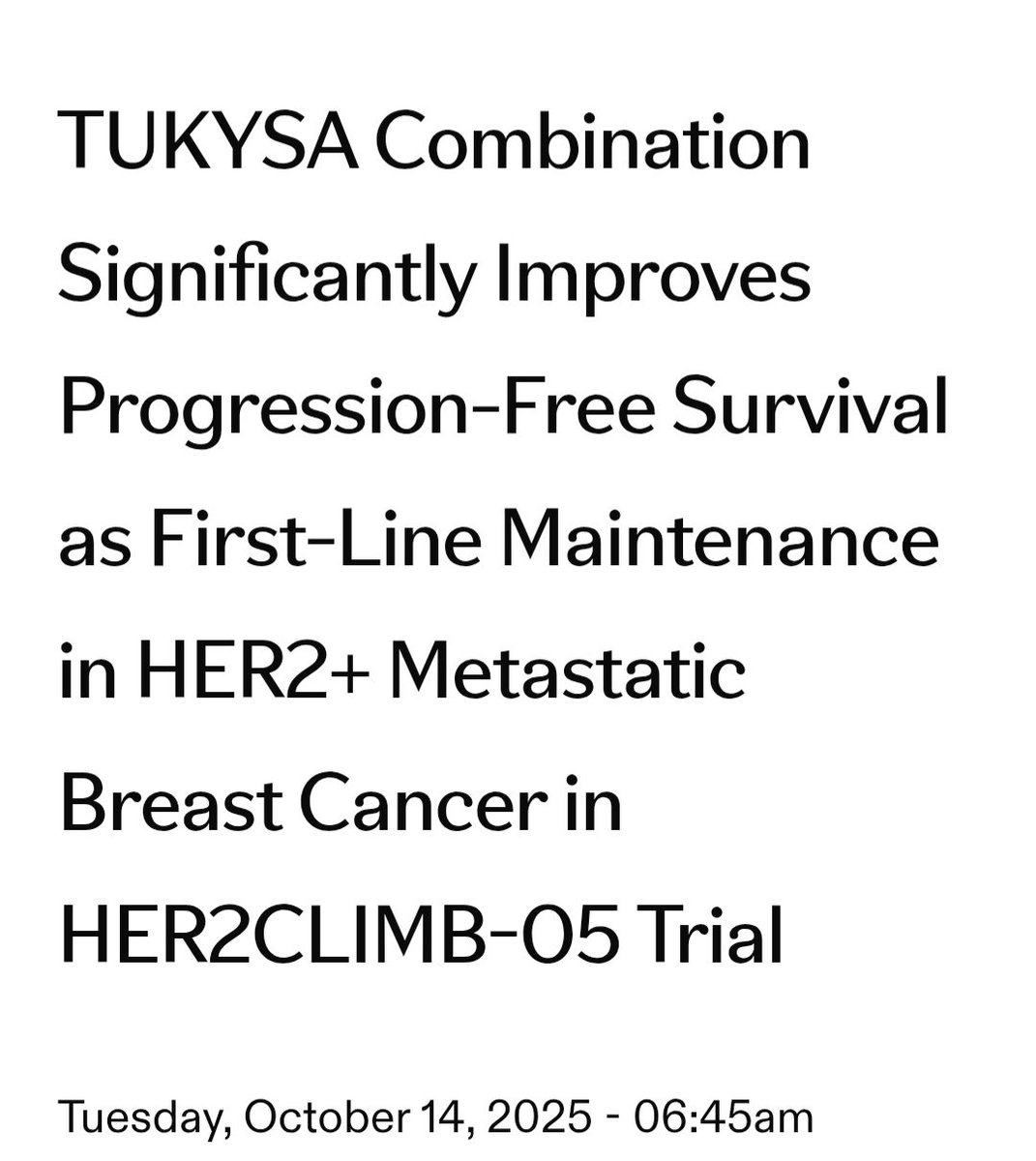
After nearly a decade of therapeutic stagnation in the first-line treatment of HER2-positive breast cancer since the publication of CLEOPATRA, we suddenly find ourselves facing a cascade of paradigm-shifting developments. The PATINA trial, DESTINY-Breast09, and now the eagerly awaited HER2CLIMB-05 study to be presented at SABCS25. We already know the study will be positive; what remains is the granular data. Still, three consecutive positive trials inevitably create clinical friction: who should receive which regimen, and for how long?
For HR+/HER2+ disease, the emerging landscape now presents multiple competing strategies:
6–8 cycles of THP followed by HP plus palbociclib and ET;
T-DXd plus pertuzumab and endocrine therapy;
or 4–8 cycles of THP followed by HP plus tucatinib and ET.
One could even consider an extrapolated approach: 6–12 cycles of T-DXd plus pertuzumab as induction, then discontinuing T-DXd and transitioning to HP plus palbociclib or tucatinib, reserving T-DXd for re-challenge at progression.
For HR–/HER2+ disease, the calculus is similarly shifting:
T-DXd plus pertuzumab upfront,
or THP for 6–8 cycles followed by HP plus tucatinib.
Again, an extrapolative strategy emerges—induction T-DXd followed by tucatinib maintenance.
And then the unresolved layers: patients with brain metastases, visceral disease region, menopausal status, HER2 expression status (3+ vs 2+/ISH+) or ER expression status (ER-low ...), and of course toxicity profiles, tolerability considerations, and cost—all of which will shape real-world treatment selection.
The questions are multiplying faster than the answers—a true avalanche arriving all at once.
The encouraging part is that we now have first-line regimens delivering PFS beyond 40 months—and, ultimately, our goal is CURE!!
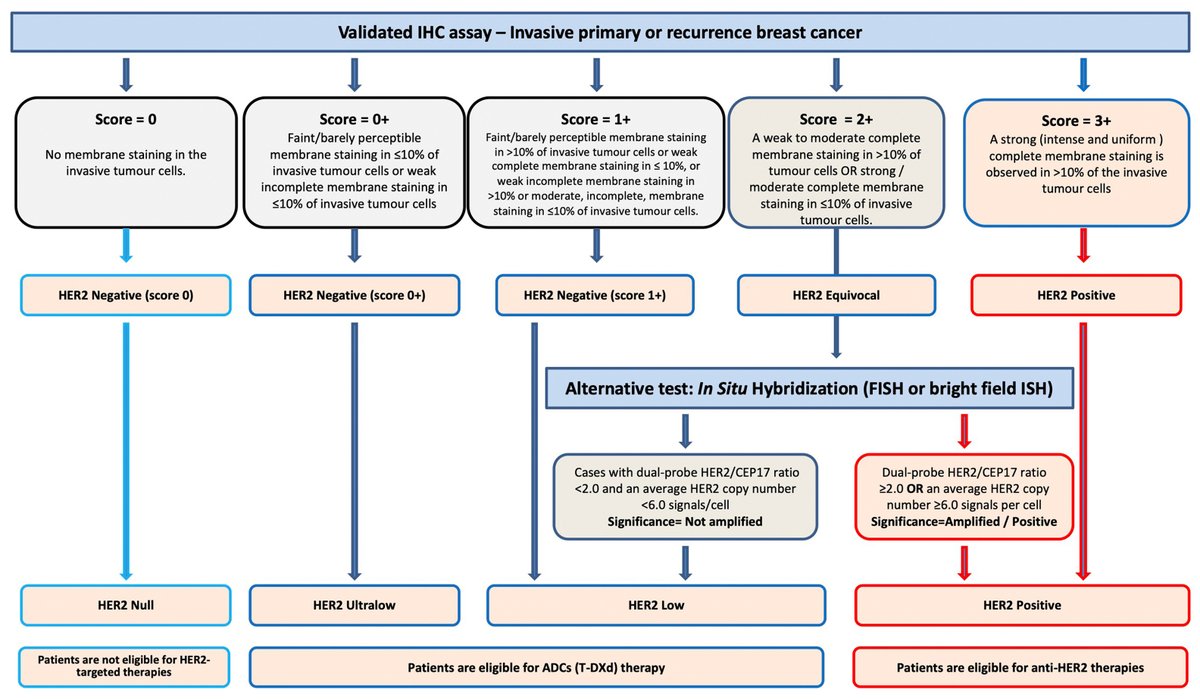
Evolution of HER2 Classification
The story of HER2 has moved beyond the binary of positive and negative; it’s now an evolving spectrum from low to ultralow to null—where the gray tones of biology are rewriting clinical decisions
Recommended HER2 Algorithm👇
https://t.co/vdBZMym44R
What happens to an ADC after its infusion? How does it interact with tumor & immune cells, what causes response & resistance? Take a deep dive in the molecular world of ADCs though our last review, led by @AlfredZippelius and published in @NatureRevCancer. https://t.co/oF1cqtOe4p
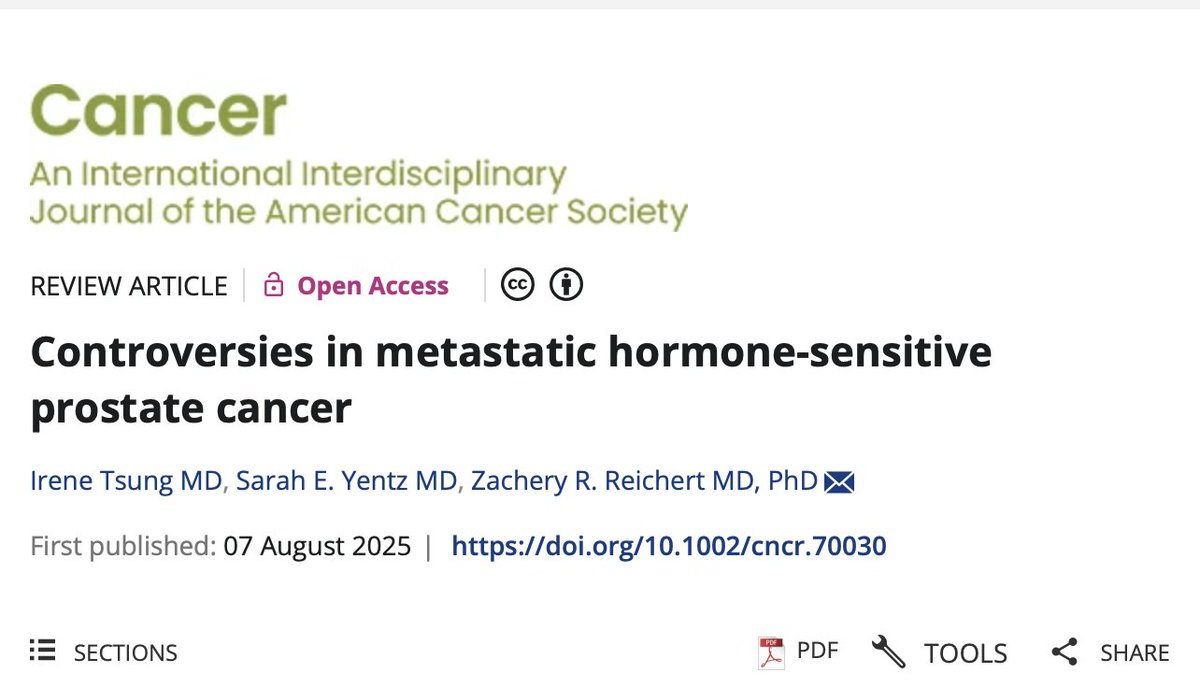
Controversies in metastatic hormone-sensitive prostate cancer
https://t.co/9YFihGZuBb
Metastatic hormone-sensitive #ProstateCancer (mHSPC) remains incurable, but advances in diagnostics and treatment are expanding management options. This review examines four key controversies: the role of prostate-specific membrane antigen PET imaging, the use of triplet therapy combining androgen deprivation therapy, an androgen receptor pathway inhibitor, and docetaxel, the benefit of prostate and/or oligometastatic radiation, and the use of bone-modifying agents. Evidence suggests that more treatment is not always better, underscoring the need to identify which patient subgroups truly benefit from each approach. By critically evaluating current data, the review aims to help clinicians tailor therapy to optimize both survival and quality of life in mHSPC.
Irene Tsung
Sarah E. Yentz . @UMRogelCancer@ReichertMedOnc
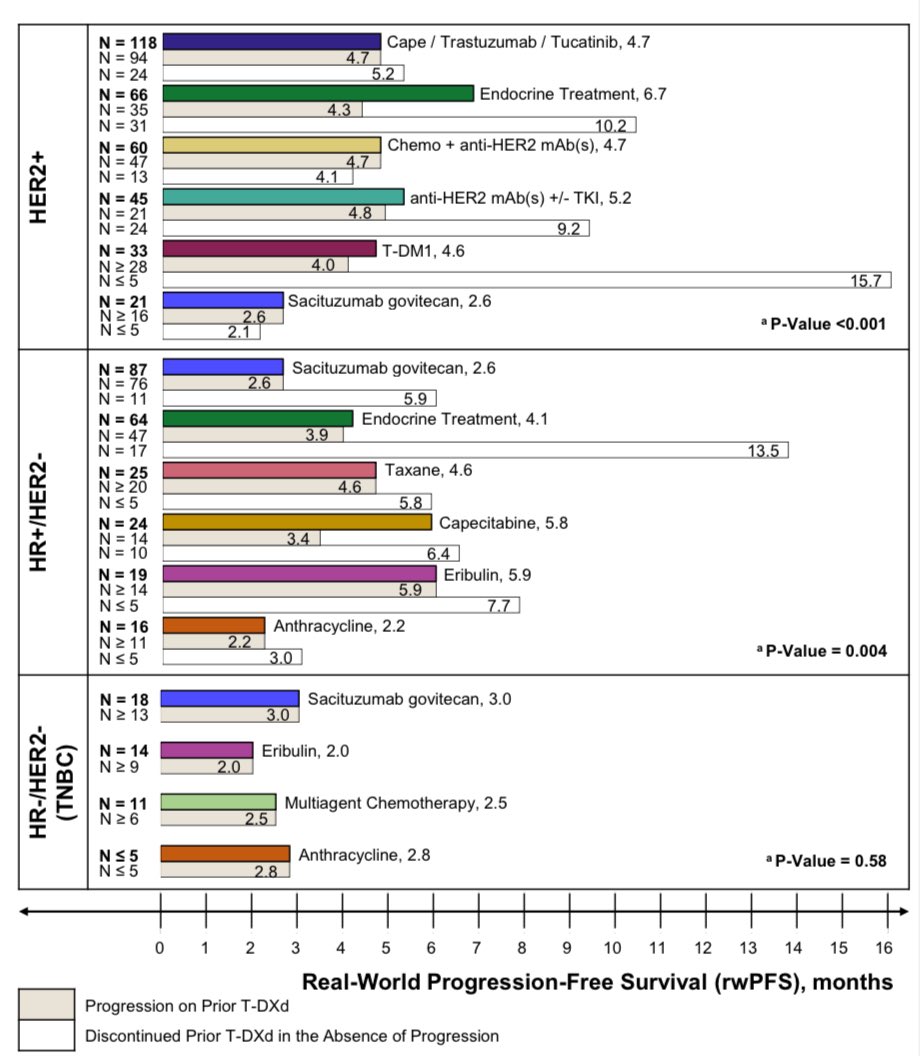
How do different breast cancer treatments perform immediately after T-DXd? In our latest #JNCI paper, we analyzed data from ~800 pts with MBC in Flatiron, finding promising rwPFS with several regimens, yet some degree cross-resistance between T-DXd and SG. https://t.co/xvnA5SG6Yr
📘The contemporary management of prostate cancer
@CACancerJournal
✅Excellent review from epidemiology to survivorship and frail patients
👉https://t.co/bvq4BSqbiV
#cancer#oncology#MedX@OncoAlert