#Σαν_σήμερα στις 7 Ιουνίου 1907 εκτελέστηκε στην περιοχή της Έδεσσας ο Καπετάν Άγρας (Σαράντος Αγαπηνός), ανθυπολοχαγός του πεζικού και επικεφαλής αντάρτικου σώματος μακεδονομάχων.
📷 Ο Τέλλος Άγρας στη λίμνη των Γιαννιτσών.
🔸ΕΙΜ | ΦΑ ΙΕΕΕ
#MacedonianStruggle#TellosAgras
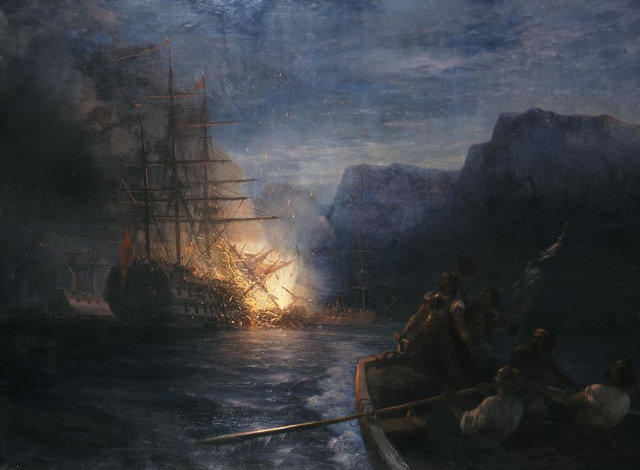
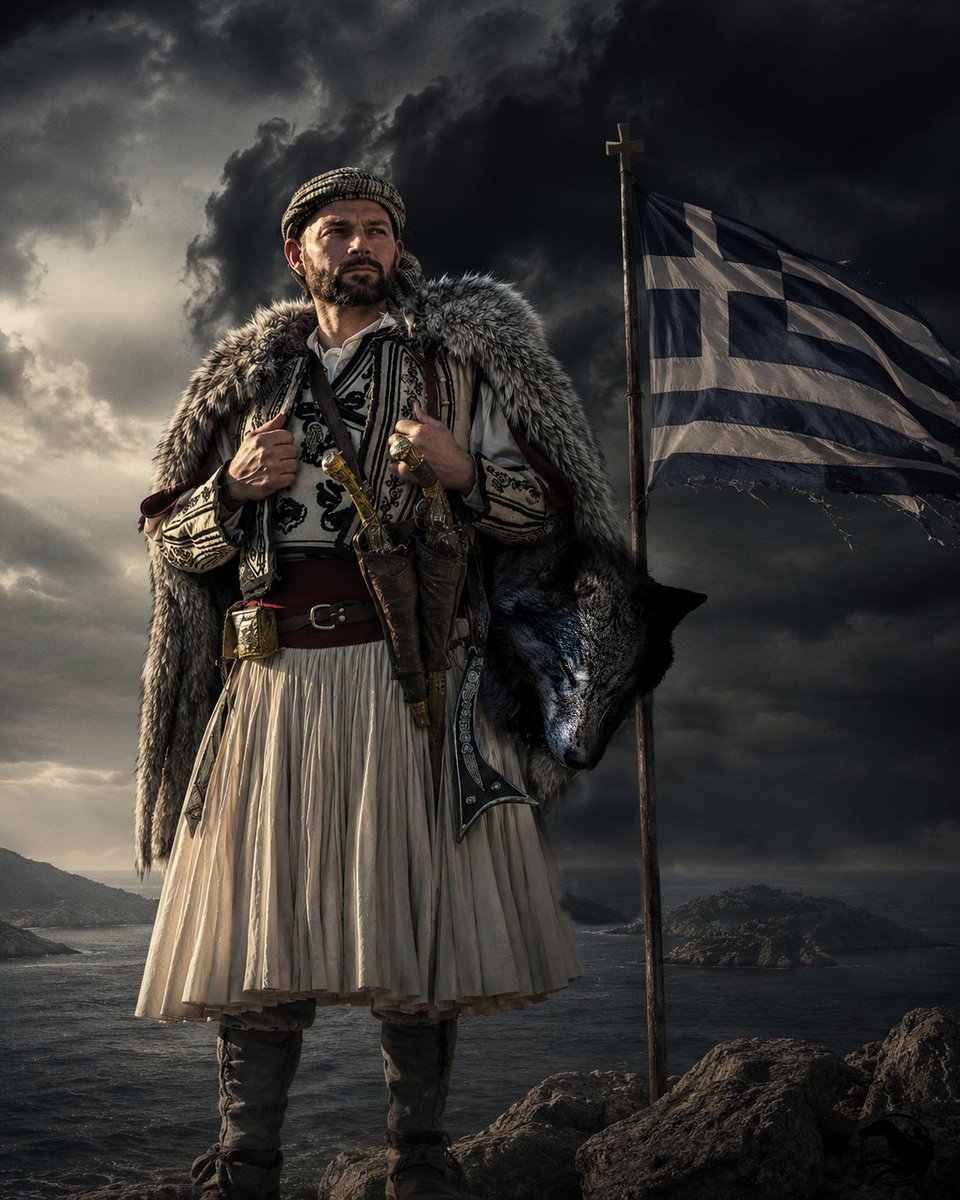
6 ΙΟΥΝΙΟΥ 1822. ΕΛΛΗΝΙΚΗ ΕΠΑΝΑΣΤΑΣΗ. GREEK REVOLUTION. Ο Κων. ΚΑΝΑΡΗΣ πυρπολεί στο λιμάνι της ΧΙΟΥ την Τουρκική Ναυαρχίδα σκοτώθηκε ο Ναύαρχος Kara Ali με 2.000 Οθωμανούς. Ήταν η εκδίκηση των Ελλήνων για την καταστροφή της ΧΙΟΥ. Οι Τούρκοι για εκδίκηση κατέστρεψαν τα Μαστιχοχώρια
Κεφάλι αγάλματος Μ.Αλεξάνδρου
Ο Μ.Αλέξανδρος εικονίζεται σε νεαρή ηλικία,όπως ήταν την εποχή της μοναδικής επίσκεψής του στην Αθήνα,μετά τη μάχη της Χαιρώνειας.Θα το δούμε στο μουσείο της Ακρόπολης.Βρέθηκε το 1886 κοντά στο Ερέχθειο.Θεωρείται πρωτότυπο έργο του Λεωχάρη.
The Spartans disapproved of drunkenness and viewed it as a sign of weakness and lack of self-control. Drunkenness was considered barbaric to the values of restraint and discipline that characterized Spartan life.
One of the ways they cultivated this attitude was through a striking example:
The Spartans often brought the helots to get drunk in public, to show their young the effects of drunkenness and to deter them from consuming excessive wine.
This custom was part of the education of young Spartans and reinforced their aversion to drunkenness. The youths saw the state into which the helots fell when drunk and understood the negative image created by excessive alcohol consumption.
This act, though harsh, was consistent with the broader Spartan upbringing, which relied on practices of direct experience to educate the younger generation. The drunkenness of the helots thus became a "lesson" in restraint and a vivid, albeit cruel, example to avoid.
Source: Plutarch, Parallel Lives: Lycurgus
Το βίντεο που βλέπετε είναι υλικό από την παρουσία του αείμνηστου Κωνσταντίνου Ηλιάκη στις Η.Π.Α. Στις 5/4/2002, στο πλαίσιο εκπαιδευτικού προγράμματος για να γίνει εκπαιδευτής στα τότε νέα F-16 Βlock 52+.
Ο Κρητικός πιλότος διακρίνεται μέσα στην ανθρωποφυγόκεντρο όπου παρέμεινε 17 ολόκληρα λεπτά κλεισμένος μέσα, έχοντας πλήρη επικοινωνία με τους εκπαιδευτές.
4 φορές έφτασε τα 9G (πίεση 9φορές το βάρος του σώματος του), άντεξε την δοκιμασία , ήρεμος όπως πάντα.
ΑΘΑΝΑΤΟΣ !!!
Yesterday the Palace of the Despots at Mystras in Greece was reopened after restoration.
The palace was the residence of the rulers of the Despotate of the Morea, the last province of the Eastern Roman Empire in the Peloponnese. Constantine XI ruled here before becoming emperor.
Crete is around 26 times larger than Malta. Cyprus is 29 times larger than Malta. Malta and Sicily have an EEZ; however, according to Turkey, Crete and Cyprus do not. 🤷♂️
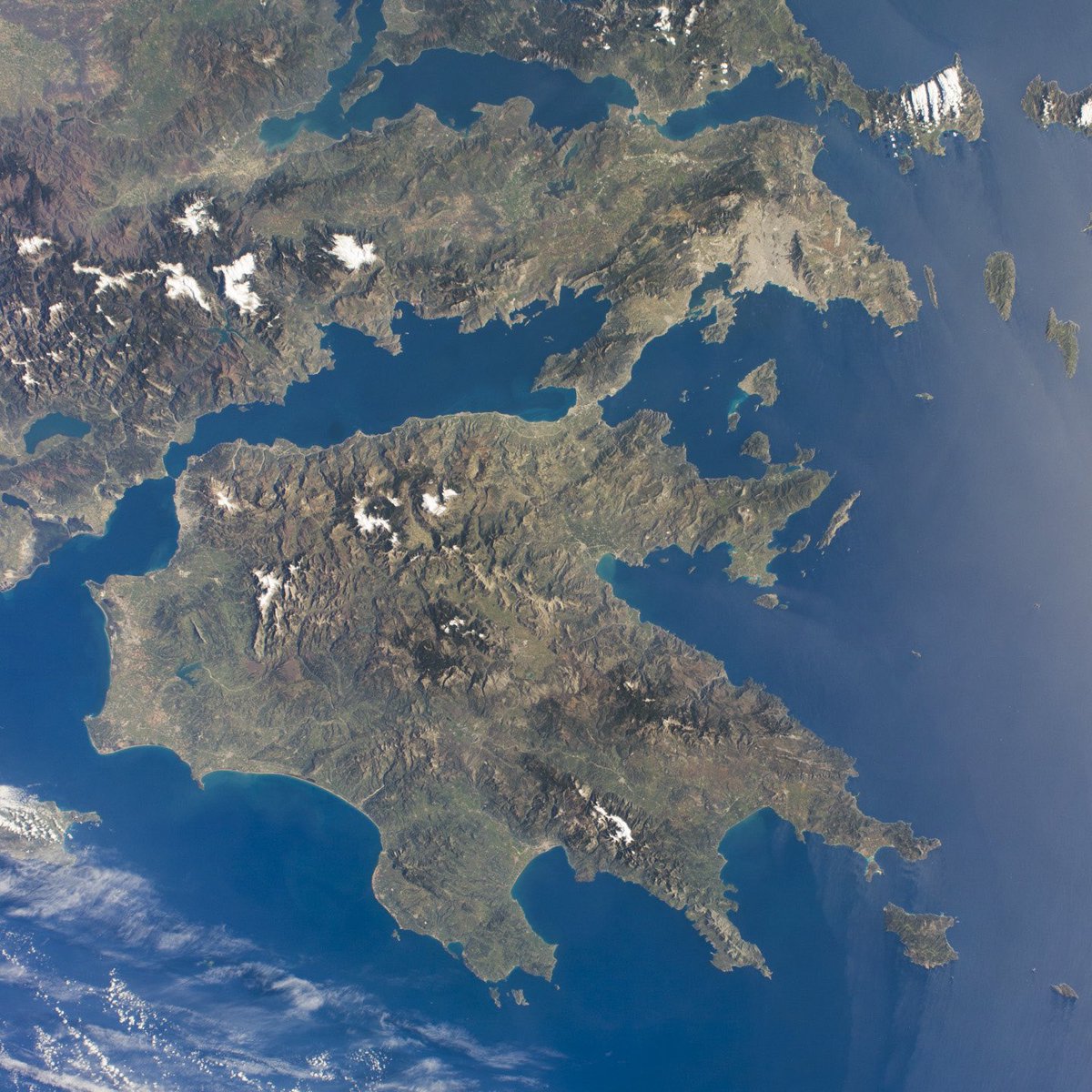
“The beauty of Greece lies mainly in contrast, the contrast between stark promontories and blue sea-gulfs and between barren mountains-sides and fertile valleys.”
-Steven Runciman
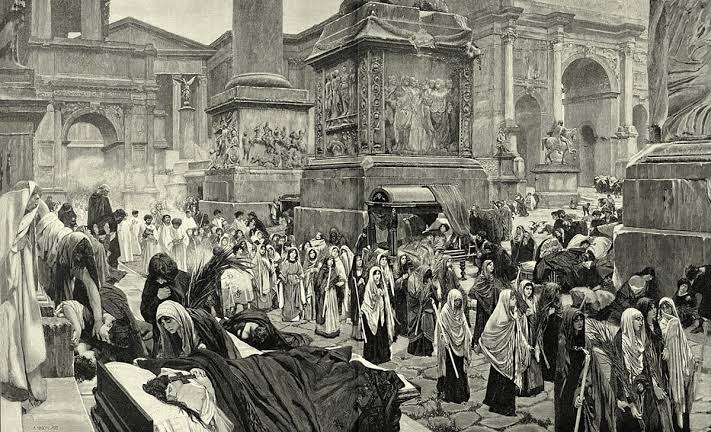
Because the Eastern Romans maintained a secular administration in their government, it required an educational institution to train them.
This is what is known as the “University of Constantinople” - but was it truly a university and was it really a continuous institution?
The “dual role of politician and scholar stemmed from the nature of Byzantine higher education. Since the year 360, holders of the highest posts in the imperial secretariat had been required by law to have completed a course of higher education, and promotions were promised to those who attained distinction in the liberal arts. There was what might be termed a university in Constantinople from at least 425 (when it was reformed with thirty-one chairs) although it is perhaps misleading to use that word to describe it. It was by no means an independent academy dedicated to the pursuit of learning for its own sake. Its main aim was the production of able administrators. It also lacked a corporate identity or name, as it consisted of ad hoc appointments of teachers supported by the emperors.”
“Inevitably there were times when the university flourished and others when it was probably in abeyance. It is impossible to document its continuous existence after c. 600: what we have instead are periodic “refoundations.” There is no evidence for its existence during the eighth century but it was revived during the reign of Michael III (842–867). The emperor’s uncle, the kaisar Bardas, who largely ran the empire, reestablished the university in the palace of the Magnaura, part of the Great Palace complex. There were to be teachers of philosophy, grammar (i.e. literature), astronomy, and geometry and they were to be paid from the treasury rather than be reliant on fees (or bribes) from students. The philosophy teacher was Leo the Mathematician, the most prominent Byzantine scholar of the time. In 1045, the university was again revived and reformed: faculties of Philosophy and Law were created, with Constantine (later Michael) Psellos taking charge of Philosophy with the title “Consul of the Philosophers,” and John Xiphilinos of Law as nomophylax (“Guardian of the Laws”). These two men were also close imperial advisors and played a direct role in making and implementing policy. “
“The capture and sack of Constantinople by the Fourth Crusade in 1204 brought about another hiatus, although there is evidence that traditional higher education did continue on a smaller scale at the court in exile at Nicaea. After the recapture of Constantinople in 1261, Michael VIII Palaiologos (1259–1282) refounded the university once more and entrusted its governance to George Akropolites, one of his high ministers. Higher education remained available in Constantinople until the city fell to the Ottoman Turks in 1453, although toward the end it was probably not funded from the treasury but by private fees.”
“By the mid-fourteenth century, Constantinople had lost its monopoly on higher education. That was largely the result of the decentralization of power. As Byzantine territory shrank and parts of the empire were cut off from Constantinople by land, regional centers tended to be ruled almost autonomously by a junior member of the imperial family. Between 1349 and 1380, the Byzantine holdings in the Peloponnese were administered by Manuel Kantakouzenos who resided in the town of Mistra and bore the title of despot. Thessalonike too had a series of autonomous rulers, starting with empress Anna, the mother of John V Palaiologos (1341–1391). The courts of these provincial despots employed educated administrators and so generated the higher schooling that produced them. The classical scholar Demetrios Triklinios ran a school in Thessalonike and the Platonist philosopher George Gemistos Plethon drew students to study under him at Mistra.”
Source: The Cambridge Intellectual History of Byzantium - Ch. 1 by Jonathan Harris
Η χιονόπτωση τον Μάιο στην Ελλάδα ανέκαθεν ήταν ένα ακραίο και αξιομνημόνευτο φαινόμενο.
- το 536 μ.Χ., το λεγόμενο "έτος δίχως θέρος", τα χιόνια έως τον Μάιο και Ιούνιο (!) κατέστρεψαν τις σοδειές και διευκολύναν την ταχεία μετάδοση της Ιουστινιάνειας Πανώλης
- το 1010 μ.Χ., τα χιόνια τον Μάιο - έως τον Ταϋγετο - προξένησαν μια τεράστια καταστροφή σε καλλιέργειες και κοπάδια στην Πελοπόννησο και στη Θεσσαλία
#Ιστορία
Καλημέρα σας!
Καλή Πρωτομαγιά!
Το στεφάνι είναι ένα πανάρχαιο έθιμο, που συμβολίζει τον ερχομό της άνοιξης και την καλή τύχη. Πλέκεται από λουλούδια και κλαδιά. Κρεμιέται στην εξώπορτα και παραμένει μέχρι του Αγίου Ιωάννη του Κλήδονα (24 Ιουνίου),οπότε και καίγεται στις φωτιές.
Historians are not entirely sure about the exact origin of olive oil. Many sources agree that humans used olive trees in some form or other as far back as the Upper Paleolithic Age, around 12,000 BC....
Many scholars considered that the
existence of the olive tree dates back to 12th Millennium BC, the origin of its cultivation can be traced to Asia Minor some 6,000 years ago. However, most sources commonly attribute first wave of cultivation and commercialization of olive oil to the Phoenicians who were known to distribute olive oil around the Greek isles as far back as 16th Century BC. At first, distribution was largely centered around Crete and its surrounding islands, but by 12th Century BC, olive oil had made its way into mainland Greece and Macedonia before passing on to Egypt. The Phoenicians opened up a number of commercial routes all along the coasts of the Mediterranean Sea. Historically, olive oil was used for many purposes including religious rituals, medicines, fuel in oil lamps, soap-making, and skin care application.
In ancient Egypt, the olive tree and fruit played very important roles in sacred rituals. Olives were destined as food for the pharaohs in their transit to the afterlife, as Egyptians possessed knowledge of the preserving power of this golden liquid. The proof of this is that the great pharaohs were embalmed and anointed with olive oil, so that not only their spirits but also their bodies would travel the long path to eternity in the best possible state of preservation. When the tomb of pharaoh, Tutankamon was discovered in 1922 (as recently as the mid-XX century), the atmosphere was still scented with the aroma of the olive oil used in his embalmment. Alkalies and olive oil were the ingredients in the formula for the soap used by the Egyptians.
The earliest evidence of the olive tree in Egypt can be found in a relief from Dynasty XVIII (1570-1345 BC). Documents reveal that Pharoah Ramses III (1197-1165 BC) promoted cultivating olive trees and offered the oil extracted from olives in Helipolis to the Sun God Ra. Many lamps discovered in the tombs of pharaohs show that olive oil was widely used in Egyptian temples. Wall paintings often showed olive trees that grew in ancient Egypt and olive branches have been found in Tombs to accompany the dead.
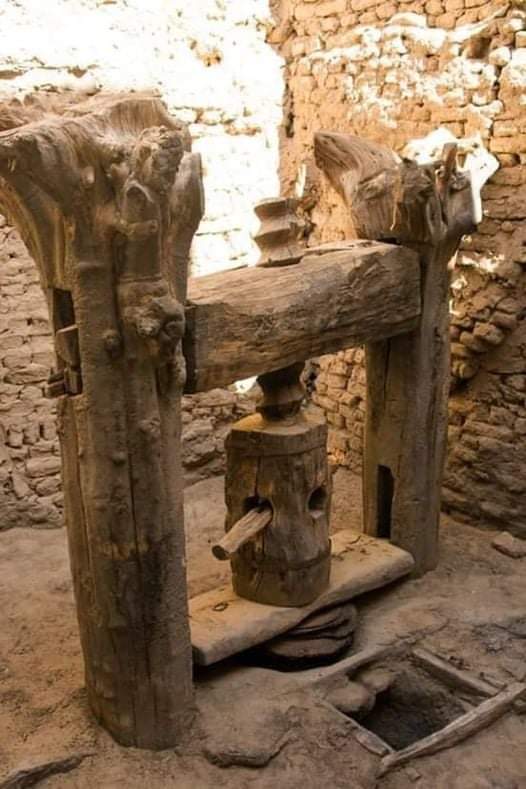
Ancient Egyptians used olive oil extensively including it in their diet, lighting, medicine and for rituals. The existence of olive groves in Thebaid, Alexandria and above all in the Fayoum oasis is recorded in documents from the Graeco-Roman period when olive cultivation expanded rapidly. Nonetheless, it is believed that many of the olives that were consumed in Ancient Egypt were imported from Greece. Scholars believe the ancient olive oil was produced by a process where olives were placed in woven mats and squeezed, with the oil collected in vats.
Olive oil was an important merchandise for trade, olive tree, olives and their oil being treated as a form of wealth, involving known planting methods, harvesting and production: the cultivation implied furrowing the stony soil of the island with a two-pronged plough, and using an irrigation system with ditches and canals. After five years, trees reached production age, and at 20, their most productive period was attained. The harvest was conducted in a simple manner, beating the trees with poles, and then raking to gather up the fallen olives (in many European regions this process remains unchanged). The fruits were soaked in hot water, crushed and placed in barrels of water. When the oil rose to the surface, water was drained to leave the oil.
📷 : A 18th Century CE, Oil Press (Olive Squeezer) in the deserted medieval town of Al-Qasr, Dakhla Oasis, Egypt.
#archaeohistories