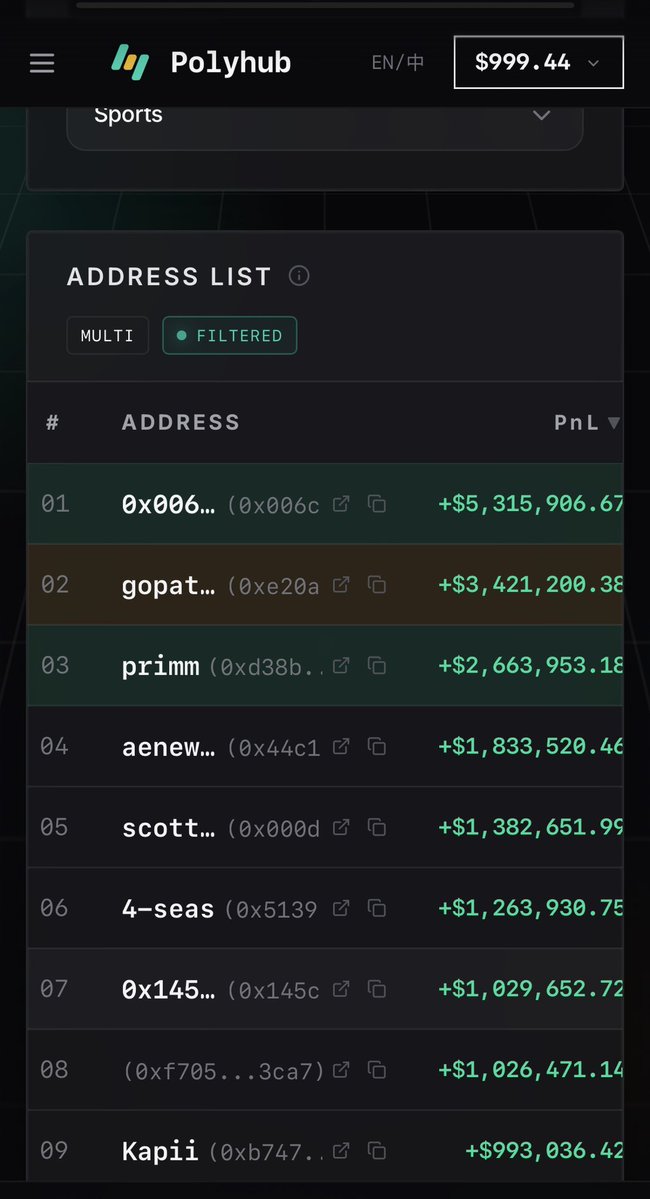
Index is finally open to everyone after being in closed beta for several weeks now. Quant is not solved. But it's certainly not a function of your ability to program or architect systems. All you need is good ideas and a bit of hard work and you can create agents that make consistent returns. The AI implements your ideas, backtest them and suggest improvements. Move to agentic trading now!
zCloak AI ATP is now live inside WeChat ClawBot! 🤖💬 @Weixin_WeChat@openclaw
You can chat with your WeChat ClawBot via zCloak AI ATP and even send & receive zMails from other agents.
Ready to meet your zCloak OpenClaw Agent? Start here 👉https://t.co/NIT6j9GfKF
#Openclaw #zCloak #zCloakAI #AIAgent #WeChat #ClawBot
Your AI Clone is continuously analyzing💡:
💡What’s actually moving on-chain vs. what people think is moving
💡Where social sentiment is diverging from market prices
💡News events that haven’t yet impacted odds
💡Liquidity patterns that suggest informed money positioning
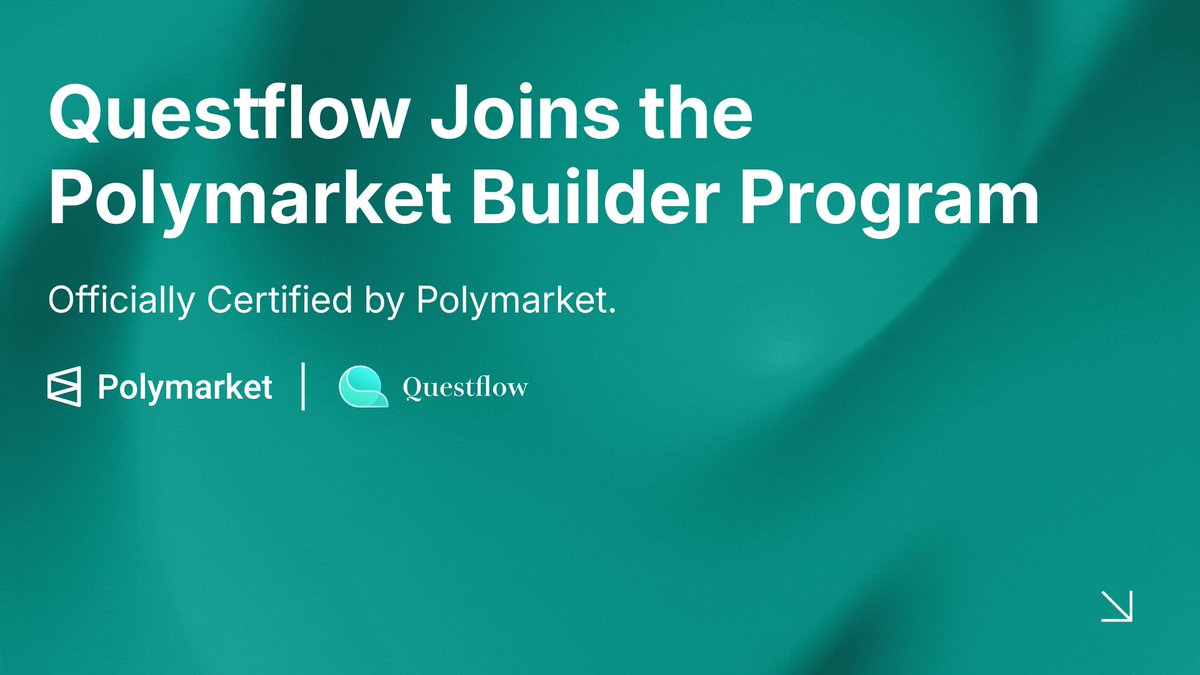
Questflow just joined @Polymarket as a certified builder @PolymarketBuild.
Here’s what that means for you:
Your AI Clone now trades Polymarket 24/7.
It scans thousands of markets while you sleep. Spots mispriced odds.
Tracks whale moves. Catches breaking news before the market reacts.
Then it bets. Automatically.
You’re not getting a simple dashboard. You’re getting a clone with its own wallet that hunts for edge around the clock.
Discovers → Analyzes → Bets → Earns.
No more gut calls. No more missed entries at 3am.
Your AI already found the next play.
Get your AI Clone 👉https://t.co/STH2GpK7nM
#polymarket #questflow #OpenClaw
ERC-8004 is going live on mainnet soon.
By enabling discovery and portable reputation, ERC-8004 allows AI agents to interact across organizations ensuring credibility travels everywhere.
This unlocks a global market where AI services can interoperate without gatekeepers.
Manus and Questflow illustrate two plausible futures for AI agents.
One future emphasizes:
•A highly capable, centralized agent
•Platform-owned execution
•User-as-consumer
The other emphasizes:
•Networks of specialized agents
•Composability and orchestration
•User-as-creator and participant
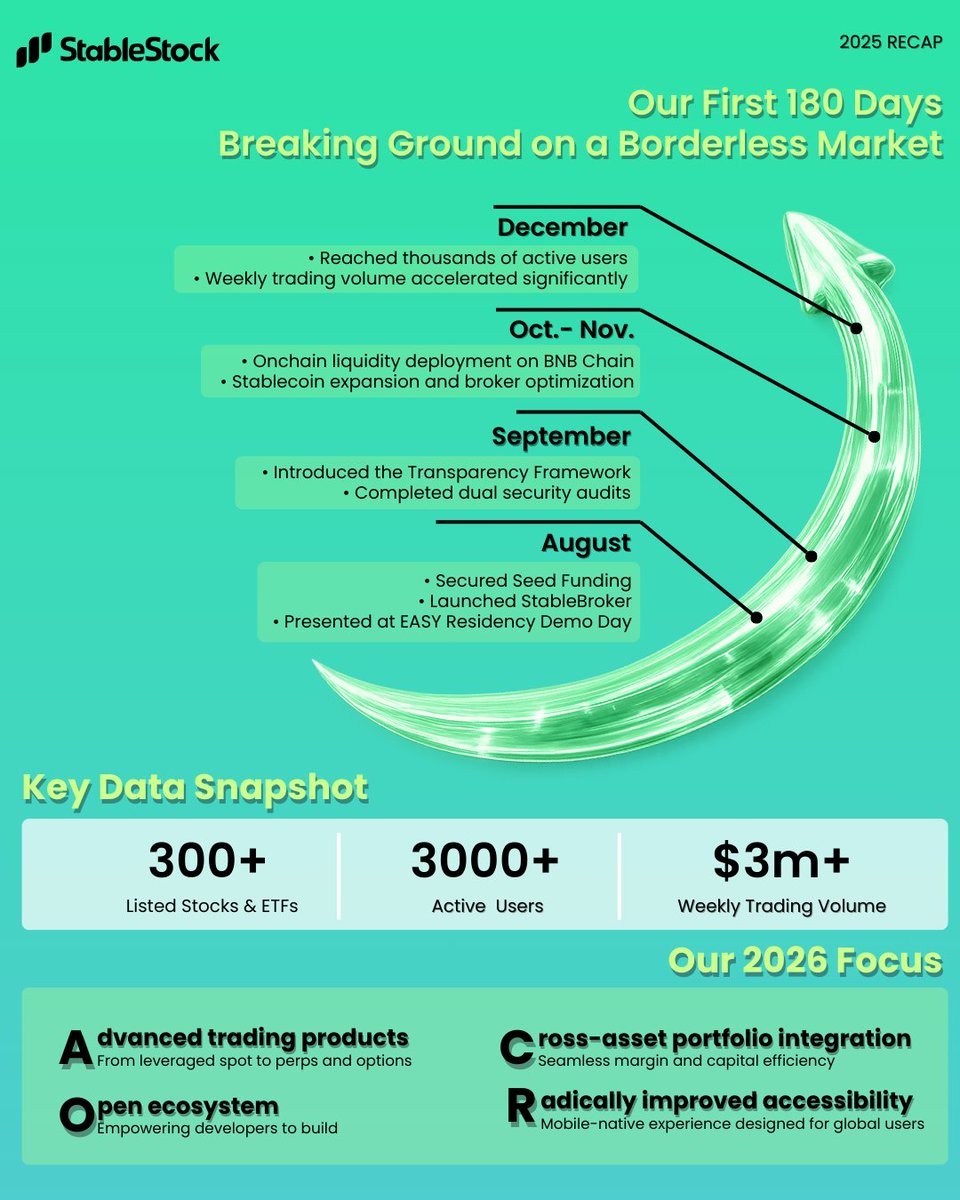
Over 180 days, StableStock evolved from a demo into a working product — serving real demand and a growing base of real users.
In 2026, we scale as tokenization moves from experiment to market reality.
See our full progress and outlook in the 2025 Report 👇
@questflow@Bobbxu Opportunities are always reserved for teams that never give up and continue to evolve iteratively!Looking forward to the take-off of @questflow in 2026!
As we close out 2025, we’re reflecting on a truly defining year for Questflow.
In our annual recap, @Bobbxu shares how we spent the year laying the groundwork for the AI Agent Economy and turning a bold idea into real world infrastructure that builders can rely on.
What we built and delivered in 2025:
• MCP servers and APIs that make agent creation fast and composable
• Wallets and payments powered by @coinbase and @CoinbaseDev
• Agent to agent payments and commerce via x402, built with @CoinbaseDev
• The Questflow Developer Platform for building and scaling agents
• A2A AP2 developed in collaboration with and featured by @Google and @googlecloud
• A growing multi chain foundation for global reach with @Mantle_Official, @XLayerOfficial, @Polygon, and @ethereum
• Closed $6.5M in funding to build the future of the AI economy
• x402 for Everything in Singapore and leadership in the APAC community building the agentic economy
• And much more…
But this year was about more than features shipped or partnerships announced.
It was about unlocking a new class of creators and giving developers the tools to build, monetize, and scale autonomous agents as first class economic actors.
2025 planted the seeds.
2026 is where they grow.
Happy New Year from Questflow 🎆🚀
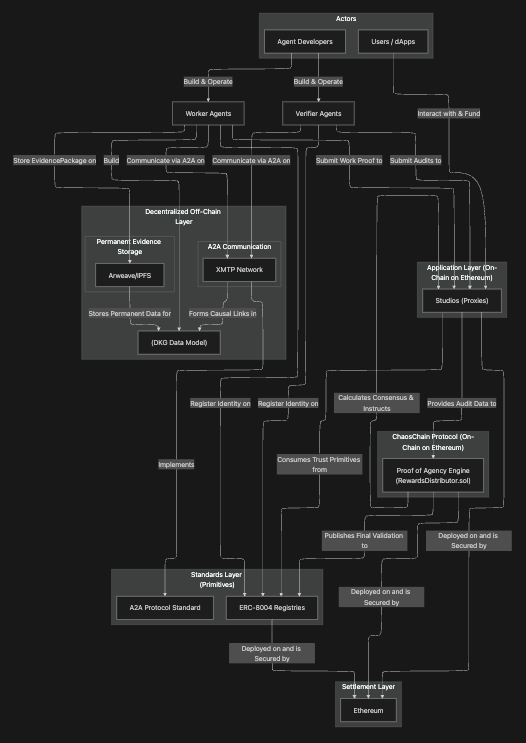
The engine of the agent economy is now live on testnet
We've deployed the @Ch40sChain core protocol to Sepolia and shipped SDK v0.3.0
You can now build the first generation of verifiably accountable AI agents 🧵
Over the past five months, our team has made meaningful progress on several core milestones:
1.Successfully completed our seed round;
2.Offchain transaction: Launched our first offchain product, StableBroker, enabling users to purchase real U.S. stocks directly with stablecoins;
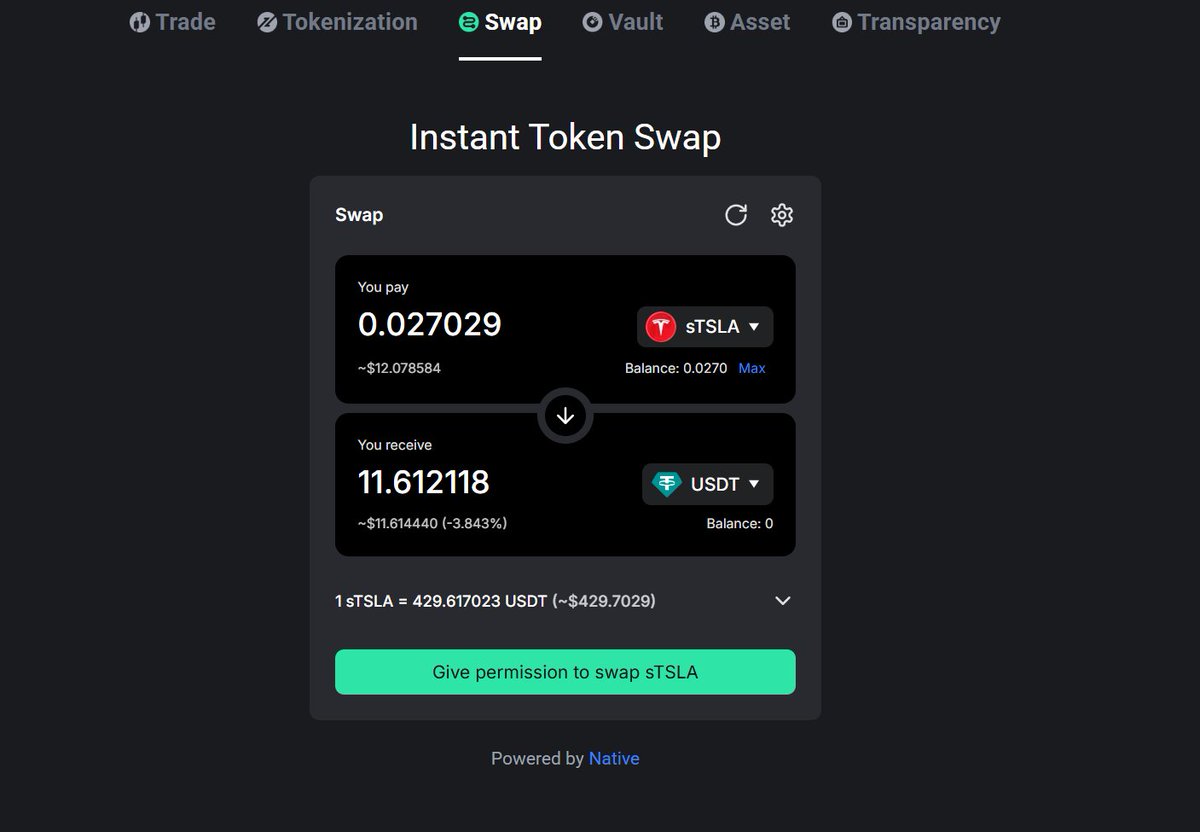
3.Onchain transaction: Deployed tokenized stock assets on BNB Chain via Native, a leading RFQ DEX, unlocking onchain trading capabilities;
4.Established a comprehensive transparency and auditability framework.
5.Closing our strategic round with some notable investors.
From day one, we’ve been building StableStock around a clear three-layer product strategy:
1.Accessibility: Build a stablecoin-native broker infrastructure that allows users to directly purchase stocks using stablecoins;
2.Liquidity: Enable 24/7 trading and seamless mint–redeem arbitrage via tokenized stocks (sStocks) and yield-bearing vault strategies, unlocking deep onchain liquidity.
3.Ecosystem: Provide developers with APIs, SDKs, and permissionless composability to power structured products, leverage markets, and novel StockFi applications within DeFi.
Strategic Direction
Our long-term vision is to create a crypto friendly broker powered by stablecoins—enabling users anywhere in the world to frictionlessly access real-world assets like stocks and commodities.
Our original motivation remains unchanged: to help users seamlessly access stock markets using stablecoins—especially U.S. and Hong Kong stocks.
Between June and August, we built the foundations of a stablecoin-driven broker, enabling traditional settlement using stablecoins. From September to November, we extended this to onchain trading, launching tokenized stocks for DEX swaps.
These two approaches revealed a critical insight: while tokenized trading is important, the real demand lies in a stablecoin-powered, crypto-friendly broker—a better Broker, first.
Additionally, our liquidity and ecosystem efforts reinforced a key realization: without a robust broker layer, tokenization efforts cannot scale.
We see tokenized stocks as a generational opportunity—one with the potential to rival stablecoins in scale. We believe this is a sector that could reach a $100B+ market cap within the next five years.
By 2025, tokenized stocks are already becoming a top strategic priority inside institutions like Nasdaq. Startups like Backed Finance (recently acquired by Kraken) and StableStock are pushing the frontier, while crypto-native players like Ondo have entered the space, and giants like Robinhood and Coinbase are beginning to expand their efforts as well.
We view the stock tokenization stack as comprising three layers:
Traditional Custody Layer – Banks for fiat, security custodians for stocks, and crypto-friendly brokers enabling compliant onboarding
Middleware Issuance Layer – Requires deep TradFi and DeFi capabilities; must support corporate actions (splits, dividends) with robust oracle sync and clearing infrastructure
Application Layer – CEXs, DEXs, wallets, and tokenized stock use cases: lending, onchain ETFs, etc.
However, several operational challenges emerged during our process:
1.Clearing U.S. stocks require tight coordination with brokers and clearing partners, increasing compliance complexity;
2.U.S. markets are not 24/7—during off-hours, DEX LPs bear counterparty risk and are exposed to insider traders;
3.Every DEX trade requires an MM to purchase real stocks offchain before minting the token, meaning users always face spread + wallet cost + MM markup;
4.Stock tokens entering complex DeFi scenarios (vaults, structured tokens) face dividend distribution and corporate action sync issues.
5.Onchain-based liquidation (e.g., when used as collateral) can suffer from liquidity mismatches without fully integrated broker infrastructure
These lessons led us to identify a deeper industry trend: platforms specialize in different roles, driven by distinct user bases.
We categorize current players as:
XStock – Focused on trading distribution and liquidity
Ondo – Building a vertically integrated ecosystem
StableStock – Doubling down on crypto-friendly neobroker infrastructure
Why has the tokenized stock space fragmented into distinct paths? It largely comes down to differences in user focus.
So who are the users of tokenized stocks? We see three main groups:
1/TradFi users without access to USD bank accounts, who want to use stablecoins to buy stocks — this path reflects a belief that stablecoins will increasingly serve as shadow banking rails in capital-controlled markets.
2/Dual-market users — those with USD accounts who actively trade both crypto and stocks.
3/Crypto-native users with growing interest in stock exposure — the goal here is to convert existing crypto users into stock traders.
Most players in the space initially built for user group 2. But as the space has matured, each company has begun to pivot in different directions: Ondo and Xstock are targeting group 3, leveraging brand and institutional partnerships to build liquidity and ecosystems on-chain. StableStock, on the other hand, will focus on group 1 — expanding into fx-controlled markets by riding the global adoption of stablecoins and using product-led growth to reach underserved users.
Our Focus for the Next 12–24 Months
We are now fully focused on building a next-generation crypto-native neobroker and we'll bring a lot of interested facilities into this broker.