People won’t remember your mistakes.
Give it a few years, everyone’s too busy living their own lives.
The truth is no one’s thinking about you as much as you think they are.
So take the risk. Build the life you actually want.
Because the cost of playing it safe is waking up bitter, anxious, and unable to be happy for anyone, especially yourself.
Let's decode what actually happened here.
Axios reported that Trump exploded at Netanyahu. Called him "fucking crazy." Said "you'd be in prison if it weren't for me." Said "everybody hates you now."
The journalist is Barak Ravid again, we talked about it. Israeli. Based in Washington. Covers the Netanyahu-US relationship for Axios, and every latest deals to calm the markets.
This is the same journalist who wrote the exact same type of story about Biden. There is literally a book chapter about this pattern. It is called "Fuming Biden." The same reporter. The same format. The same function. Different president.
Now watch the response.
Mark Levin, a close ally of both Trump and Netanyahu, did not deny the story. He demanded an FBI investigation into who leaked it. When your defense is "this should never have leaked" instead of "this never happened," you have confirmed the call happened.
But here is the part that matters.
Why would Levin, a friend to BOTH men, confirm the most explosive account of their relationship ever published?
Because it serves both.
Trump gets to look tough. Not Netanyahu's puppet. Willing to put Israel in its place. His base loves it.
Netanyahu gets cover. He "paused" the Beirut strike, but not because Iran threatened him. Because his "friend" asked him to. His base loves it too.
And look at what actually changed on the ground. Nothing.
Israel cancelled the Beirut strike. But the ground invasion of Lebanon continues. The IDF is still miles deep. A soldier died today from a Hezbollah drone. Netanyahu's office said: "position unchanged."
The performance was perfect. Trump gets the headline. Netanyahu gets the cover. The deal gets another 48 hours of "progress." Markets get a reason to breathe.
And the war continues exactly as planned.
This is the same playbook. Every time public opinion turns against the war, a story appears showing the US president is "furious" with Israel. It creates the illusion of restraint while changing nothing.
Biden was "furious" for 14 months. The war never stopped.
Trump is "furious" now. The ground invasion is expanding.
The visible game is: Trump controls Netanyahu.
The real game is: both men are performing for their audiences while the machine moves forward.
Nothing has been signed. Nothing has stopped. The war is not winding down. It is being managed.
Neither one controls the other. They walk arm in arm. Know that.
WORLD, MEET $BELG. 🇧🇪
The official @RoyalBelgianFA Fan Token™ arrives on @socios.
FTO starts on 𝟎𝟑 𝐉𝐮𝐧𝐞 @ 𝟏𝟎:𝟎𝟎 𝐂𝐄𝐒𝐓.
A new way to back the Red Devils starts here. ⤵️
https://t.co/W8VqOheRQD
☀️ West-Europa ligt vanmiddag geheel in de zon, veroorzaakt door een groot en krachtig hogedrukgebied! Het levert een mooi plaatje op vanuit de ruimte:
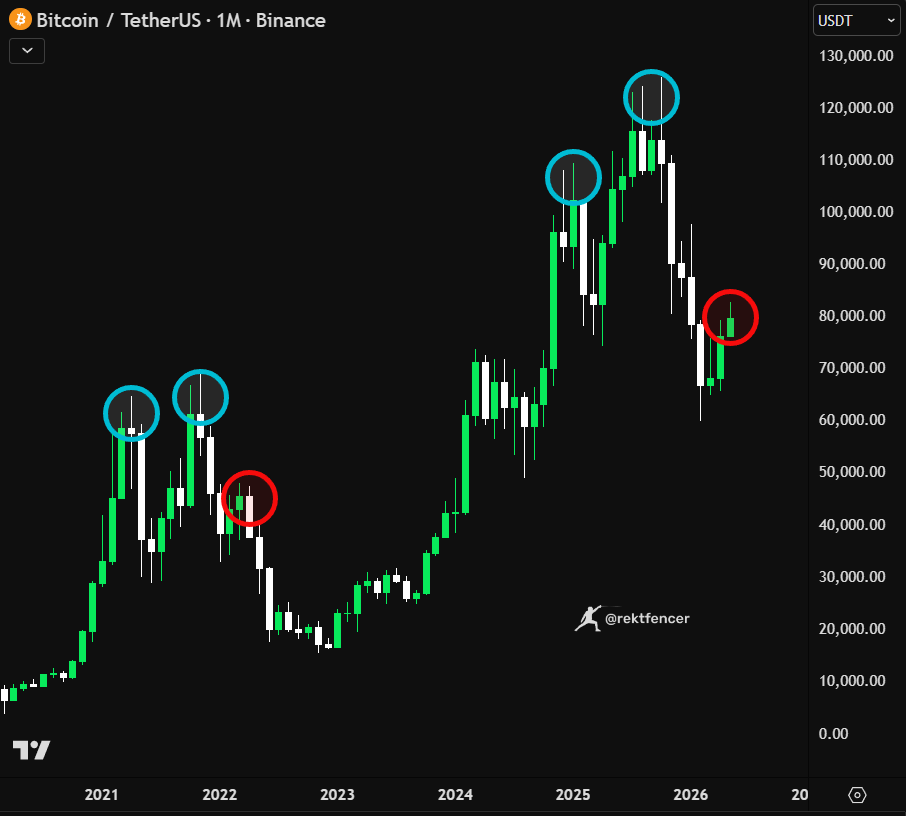
Reintroduce old conflict -> market dumps -> offer conflict resolution -> market pumps
Higher-highs, higher-lows and a perpetual wall of worry
This is the game
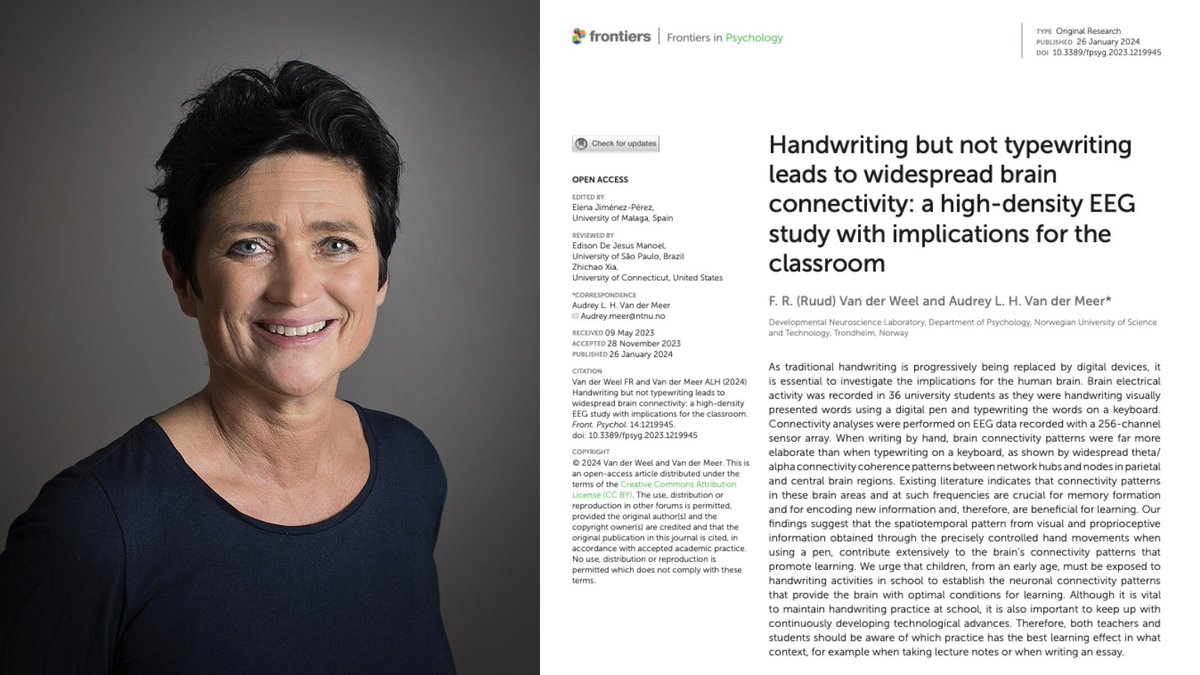
A Norwegian neuroscientist spent 20 years proving that the act of writing by hand changes the human brain in ways typing physically cannot, and almost nobody outside her field has read the paper.
Her name is Audrey van der Meer.
She runs a brain research lab in Trondheim, and the paper that closed the argument was published in 2024 in a journal called Frontiers in Psychology. The finding is brutal enough that it should have changed every classroom on Earth.
The experiment was simple. She recruited 36 university students and put each one in a cap with 256 sensors pressed against their scalp to record brain activity. Words flashed on a screen one at a time.
Sometimes the students wrote the word by hand on a touchscreen using a digital pen, and sometimes they typed the same word on a keyboard. Every neural response was recorded for the full five seconds the word stayed on screen.
Then her team looked at the part of the data most researchers had ignored for years, which is how different parts of the brain were communicating with each other during the task.
When the students wrote by hand, the brain lit up everywhere at once.
The regions responsible for memory, sensory integration, and the encoding of new information were all firing together in a coordinated pattern that spread across the entire cortex. The whole network was awake and connected.
When the same students typed the same word, that pattern collapsed almost completely.
Most of the brain went quiet, and the connections between regions that had been alive seconds earlier were nowhere to be found on the EEG.
Same word, same brain, same person, and two completely different neurological events.
The reason turned out to be something nobody had really paid attention to before her work. Writing by hand is not one motion but a sequence of thousands of tiny micro-movements coordinated with your eyes in real time, where each letter is a different shape that requires the brain to solve a slightly different spatial problem.
Your fingers, wrist, vision, and the parts of your brain that track position in space are all working together to produce one letter, then the next, then the next.
Typing throws all of that away. Every key on a keyboard requires the exact same finger motion regardless of which letter you are pressing, which means the brain has almost nothing to integrate and almost no problem to solve.
Van der Meer said it plainly in her interviews.
Pressing the same key with the same finger over and over does not stimulate the brain in any meaningful way, and she pointed out something that should scare every parent who handed their kid an iPad.
Children who learn to read and write on tablets often cannot tell letters like b and d apart, because they have never physically felt with their bodies what it takes to actually produce those letters on a page.
A decade before her, two researchers at Princeton ran the same fight using a completely different method and ended up at the same answer. Pam Mueller and Daniel Oppenheimer tested 327 students across three experiments, where half took notes on laptops with the internet disabled and half took notes by hand, before testing everyone on what they actually understood from the lectures they had watched.
The handwriting group won by a wide margin on every question that required real understanding rather than surface recall.
The reason was hiding in the transcripts of what the two groups had actually written down.
The laptop students typed almost word for word, capturing more total content but processing almost none of it as they went, while the handwriting students physically could not write fast enough to transcribe a lecture in real time, which forced them to listen carefully, decide what actually mattered, and put it in their own words on the page.
That single act of choosing what to keep was the learning itself, and the keyboard had quietly skipped the choosing and skipped the learning along with it.
Two studies. Two countries. Same answer.
Handwriting makes the brain work. Typing lets it coast.
Every note you have ever typed instead of written went into your brain through a thinner pipe. Every meeting, every book highlight, every idea you captured on your phone instead of on paper was processed at half depth.
You did not forget those things because your memory is bad. You forgot them because typing never woke the part of the brain that would have made them stick.
The fix is the thing your grandmother already knew.
Pick up a pen. Write the thing down. The slower road is the faster one.
Today, Venice passed 3,000,000 users.
First million: 13 months
Second million: 7 months
Third million: 3 months
To every builder, creator, and free thinker who chooses privacy: this is your milestone.
3 million registered users achieved this morning in the sunny lagoon of https://t.co/MtRCdjvV1s 🌅
• 3 million who wanted a ChatGPT that didn't spy on them
• 3 million who wished to avoid the intellectual degradation of paternalistic censorship
• 3 million sovereigns avoiding a future of serfdom
We don't store or log your prompts.
We don't package your personal life to be sold to advertisers.
We don't train on your conversations or share them with any criminal or government (redundant?) who asks for them.
• Text, image, video
• 230+ models
• Web, app, and API
Unrestricted intelligence for today's sovereign individual, whether human or agentic.
Try for free at https://t.co/MtRCdjvV1s
AntSeed is out of stealth https://t.co/qeKE2NqVzr
and launching https://t.co/qfee7rSsih today for $DIEM holders.
The open market for AI inference. Permissionless peer-to-peer. Onchain payments. No gatekeepers.
🧵
Good news for the $LINK Marines, it looks better than it has looked in over a year.
Major accumulation range below key support, which has now been reclaimed.
If the market behaves, could see this move towards $13 in the coming weeks.
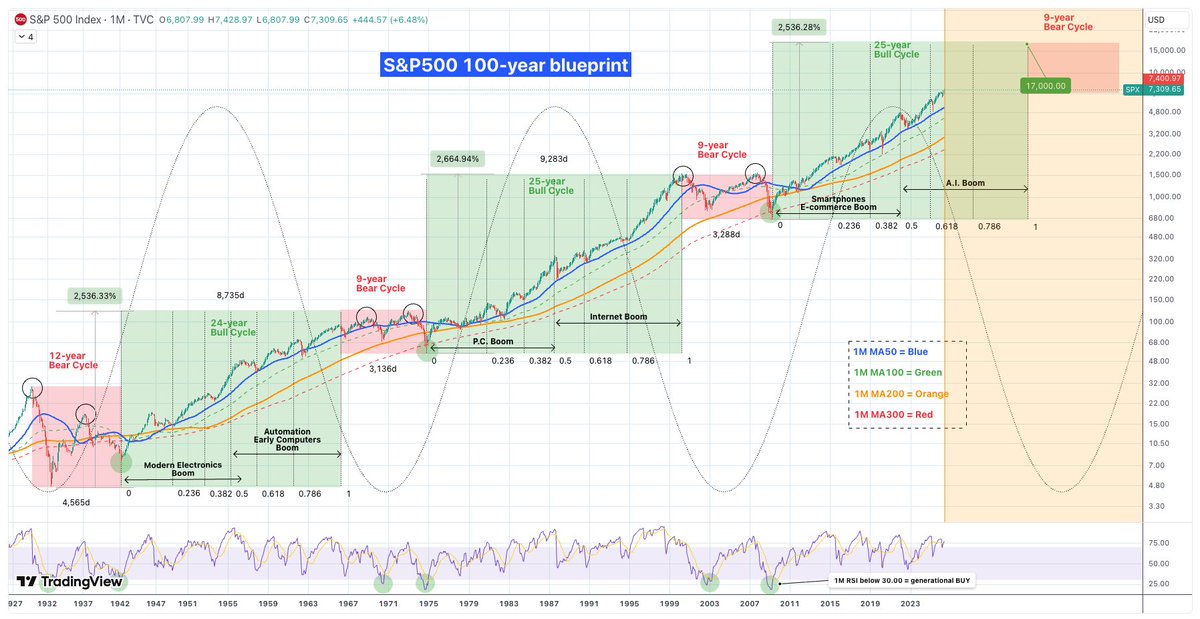
Der 100-Jahre-Plan für den Aktienmarkt
Wenn du dir die letzten 100 Jahre anschaust, siehst du ein klares Muster: Der Markt wiederholt immer wieder die gleichen Zyklen. Seit der Großen Depression 1930 gab es drei große Abwärtsphasen und drei Aufwärtsphasen .
Wir stecken gerade mitten im dritten großen Bullenmarkt.
Die schlechten Zeiten (Bärenmärkte)
Diese Phasen dauerten meistens etwa 9 Jahre (die Weltwirtschaftskrise von 1930 war mit 12 Jahren eine Ausnahme). Ein typisches Zeichen war, dass der Markt zweimal oben und zweimal unten „anklopfte“, bevor es wieder aufwärts ging. Oft krachte der Kurs bis zu einer bestimmten langfristigen Linie (dem 300er-Schnitt im Monatschart) und startete von dort aus neu durch.
Die guten Zeiten (Bullenmärkte)
Die ersten beiden großen Aufwärtsphasen dauerten jeweils 24 und 25 Jahre. Das Spannende: Sobald der Markt einmal Fahrt aufgenommen hatte, fiel er fast nie unter eine bestimmte grüne Linie (den 100er-Schnitt). Die blaue Linie (50er-Schnitt) war dabei immer die beste Chance, um günstig nachzukaufen, wenn es mal zwischendurch ruckelte.
Warum steigt der Markt so extrem?
Hinter jedem Bullenmarkt steckt eine neue Technologie:
Früher waren es industrielle Durchbrüche.
Dann kam der Internet-Boom.
Heute erleben wir den E-Commerce- und Social-Media-Boom.
Klar, irgendwann platzen diese Blasen immer, weil die Leute übertreiben. Aber die Technik bleibt! Das Internet ist nicht verschwunden, nur weil die Kurse im Jahr 2000 abgestürzt sind – es wurde zum Fundament für alles, was wir heute nutzen.
Der KI-Boom
Wir sind jetzt im zweiten Teil des aktuellen Aufschwungs, und der wird von der Künstlichen Intelligenz getrieben. Wahrscheinlich wird diese Blase um das Jahr 2034 platzen. Das wird wehtun, aber danach wird KI das feste Rückgrat unserer gesamten Wirtschaft sein.
Im Grunde sind die letzten 100 Jahre eine Kette von Erfindungen, die die Kurse immer höher treiben. Die Abstürze zwischendurch sind nur dazu da, die heiße Luft rauszulassen und Platz für neues Geld und die nächste Technologie zu machen.
Was bedeutet das für dich heute?
Wenn dieser Zyklus so läuft wie die letzten beiden, könnte der S&P 500 bis auf 17.000 Punkte steigen.
Es wird zwischendurch immer wieder Korrekturen geben. Der Zoll-Crash Anfang 2025 war so ein Moment, hat aber die wichtige blaue Linie nicht ganz berührt.
Schau auf den RSI-Anzeiger. Wenn der unter 30 fällt, ist das eine Chance des Jahrzehnts. Das ist in 100 Jahren erst sechsmal passiert – und jedes Mal war es der perfekte Zeitpunkt zum Kaufen.
Liken, Folgen, Speichern, Kommentieren, Teilen.
Danke für den Support 🫶😊🫶