BD² has released the largest integrated dataset in the history of psychiatry to accelerate discovery in #bipolar disorder research.
📊 Historic Scale: Data from 615 participants across 6 sites.
🧬 Deep Phenotyping: Combined clinical, MRI imaging, wearable sensors, and biomarkers.
🔓 Open Science: Standardized data now available to qualified researchers to accelerate personalized care.
Learn more about the data: https://t.co/MCf3dNODzy
#WorldBipolarDay
🔬AKAP11 is a strong risk gene identified for #BipolarDisorder. The protein it encodes interacts with GSK3β, a proposed target of lithium.
Discoveries like this could deepen understanding of bipolar disorder and help inform more targeted treatments.
▶️ https://t.co/klBon3J9ot
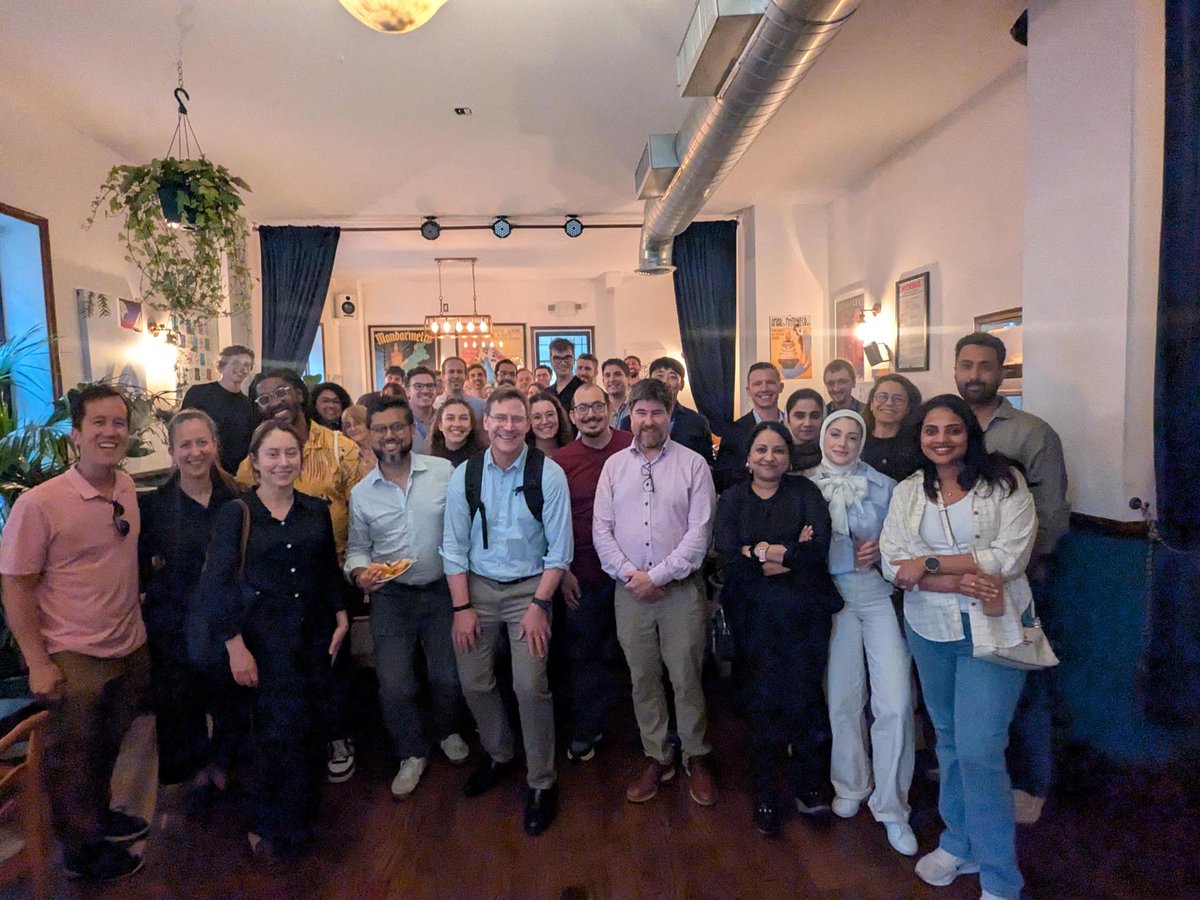
🧠Great to see the BD² community at NYC Neuromodulation 2026—sharing ideas, connecting across the field, and bringing our neuromodulation teams together.
🧬 Across 12 sites and with 1,500 active participants, the BD² Integrated Network is advancing #BipolarDisorder research by combining deep phenotyping, whole-genome sequencing, and real-world clinical data.
@dr_altimusprime and Benjamin Neale, PhD, joined @sanogenetics’ The Genetics Podcast to discuss the network’s progress and potential to improve health outcomes.
▶️ Watch the episode: https://t.co/jqoPlO66Mn
⏰ Final reminder: Applications for the BD² Data Science Fellowship close July 31.
Postdocs can apply for up to $125,000 per year over two years to advance data-driven #BipolarDisorder research using existing BD² datasets.
Apply: https://t.co/qd9knrkwRK
🚀 We’re hiring a Director of Partnerships at BD².
Help build a development program that fuels breakthrough discoveries in bipolar disorder research. We’re seeking a leader to shape our strategy, grow our community, and scale our impact.
🔗Apply: https://t.co/I8ZyyiEiNM
🧬 Applications are open for the BD² Data Science Fellowship.
Postdocs can apply for up to $125,000 per year over two years to advance data-driven #BipolarDisorder research using existing BD² datasets.
Apply by July 31: https://t.co/qd9knrkwRK
🧠 What if we could better treat bipolar disorder by first understanding the brain circuits that drive it?
BD² PI @IgnacioSaezPhD and his team at @IcahnMountSinai are using deep brain stimulation and advanced neural recordings to map the circuits underlying mood regulation—bringing us closer to personalized treatments.
Scientists at the Broad Institute developed a genome sequencing method that cuts costs by 75% while maintaining quality—enabling large-scale studies across underrepresented populations.
BD² is proud to help support research that is changing the field and making research more accessible for future breakthroughs that will improve lives.
Broad scientists developed the Blended Genome Exome (BGE) sequencing method, which delivers high-quality, unbiased data at a lower cost than existing gold-standard methods and makes large-scale genetic studies more feasible. https://t.co/WG1wLHda7U
🔬 BD² is helping bring greater precision to bipolar disorder research.
BD² Lead PI Ziad Nahas, MD, MSCR, and his team at @umnmedschool are using advanced tools to better understand the individual neurobiological patterns that underlie mood episodes, insights that could support better diagnosis, prediction, and personalized care.
Siloed data defeats research potential. Integration and collaboration unlock what isolated datasets can't. Learn more from Mojib Javadi, BD²'s Data Coordinating Center Lead.
🔗 https://t.co/l4wuME3xYh
▶️ https://t.co/IJKHE6wqdz
BD²’s Integrated Network connects longitudinal research with clinical care to advance precision medicine for bipolar disorder.
@Dr_AltimusPrime and @EmilyBaxi joined the Empowered Patient Podcast to discuss BD²’s data release, longitudinal cohort study, and more.
🎧 Listen: https://t.co/0AnApFZ7au
🔬 What does bipolar disorder research look like from inside BD²’s Integrated Network?
@umichmedicine hosted an “Inside the Study” webinar featuring researchers, clinicians, and people living with bipolar disorder discussing the network’s work to improve diagnosis and treatment.
▶️ Watch here: https://t.co/D5vRNmPcru
🧬What can genetics tell us about bipolar disorder?
On The Genetics Podcast, @dr_altimusprime and Benjamin Neale, PhD, discuss BD²’s work to identify rare variants, connect genetics with deep phenotyping, and advance precise care that helps people with bipolar thrive.
🎙️Tune in to Episode 243 of #TheGeneticsPodcast 🚀
This week, we’re joined by Dr. Cara Altimus, CEO of BD², and Dr. Benjamin Neale, Associate Professor at Harvard Medical School and Massachusetts General Hospital. Listen in to hear how rare variant discovery is revealing stronger genetic signals in bipolar disorder, how BD² is building a deeply phenotyped longitudinal cohort to connect biology with real-world patient experience, and why the goal is not just better diagnosis and treatment, but helping people with bipolar disorder thrive.
Available here👇
🎧 https://t.co/EF5NCJr7fJ
📽️ https://t.co/PYnUrEIH3p
BD² believes science moves faster when barriers come down.
We’re proud to endorse ASAPbio’s Preprint Policy Framework to advance a new way of communicating scientific research. This work is accelerating open science and connecting discovery to care by breaking down communication barriers.
🔗 https://t.co/zAzb6IEbwX
🧠 “By releasing these data to the public, we can massively expand the capacity to generate insights—beyond any single investigator or network.” —
@KateBurdick2, PhD, on the BD² Integrated Network data release
🧬Explore the data: https://t.co/aIvYhVflXO
▶️Watch: https://t.co/zhtP4G7W83
Matthew Woodworth, a member of Team Tam (@jenny_m_tam), shares how lived experience and brain organoid research inform his work to better understand bipolar disorder.
His story highlights the power of empathy, open conversation, and science to help reduce stigma.
🔗Read the full Q&A: https://t.co/mIQZNM8xGc
🧬 New Opportunity: BD² Data Science Fellowship
BD² is accepting applications for postdoctoral researchers applying data science expertise to existing BD² datasets.
New funding is available to support up to 8 fellowships advancing data-driven #BipolarDisorder research.
Apply by July 31: https://t.co/3Y9E3giemk
We’re hiring a Science Communications Manager.
Help shape BD²’s voice and translate complex bipolar disorder research into clear, compelling stories for funders, advocates, researchers, and the public.
Great for a strategic science storyteller motivated by mental health research.
🔗 Apply: https://t.co/FeFC0VBiSo