New paper alert 🚨
This one about the vision of @BD2Discoveries. Together we’re leveraging collaboration at all levels - funders, scientists, clinicians, and individuals with bipolar
https://t.co/OmLNhdW2dV
Bipolar Funding Consortium Aims to Unravel Disorder's Genetics, Reduce Healthcare Disparities. The ambitious set of projects aims to improve our understanding of bipolar disorder and inform care across the entire spectrum of research and clinical practice. https://t.co/0jCzafIRno
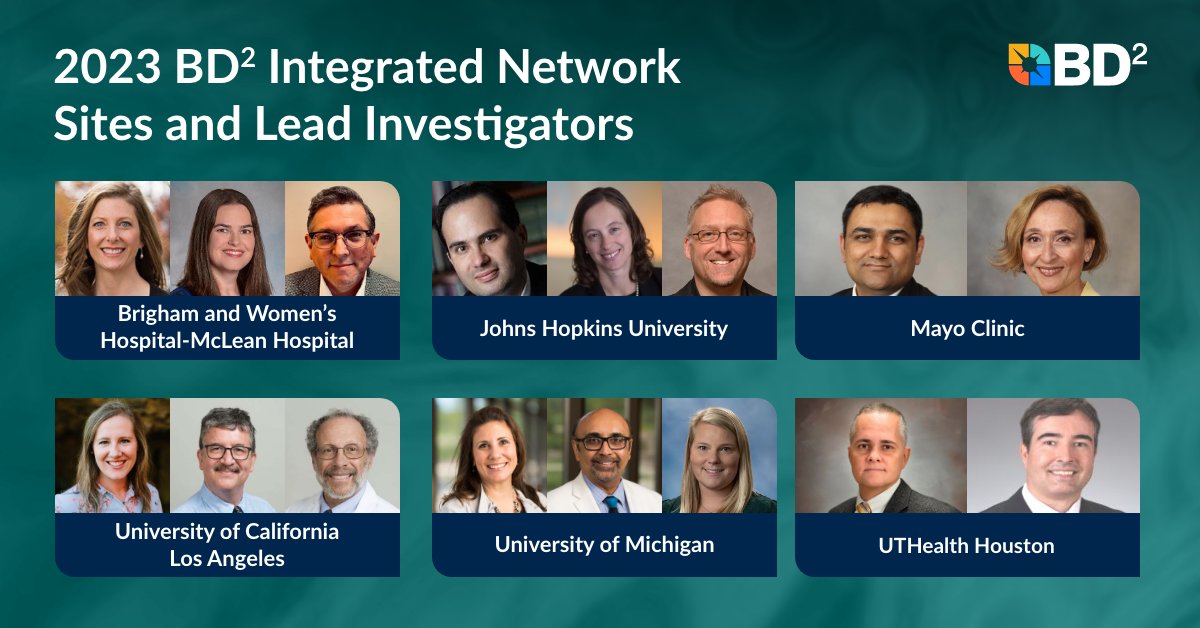
Celebrating the launch of the BD2 Integrated Network. This will be one of the most important initiatives for Bipolar Disorder and psychiatry more generally - bringing together rigorous science and meaningful improvement to care in a single network. Congrats to inaugural sites!
Congratulations to our Integrated Network inaugural sites! Researchers and clinicians from leading institutions will collaborate to accelerate the translation of research findings to improved care for people living with #bipolardisorder. Learn more: https://t.co/SsbJ7iTyyI
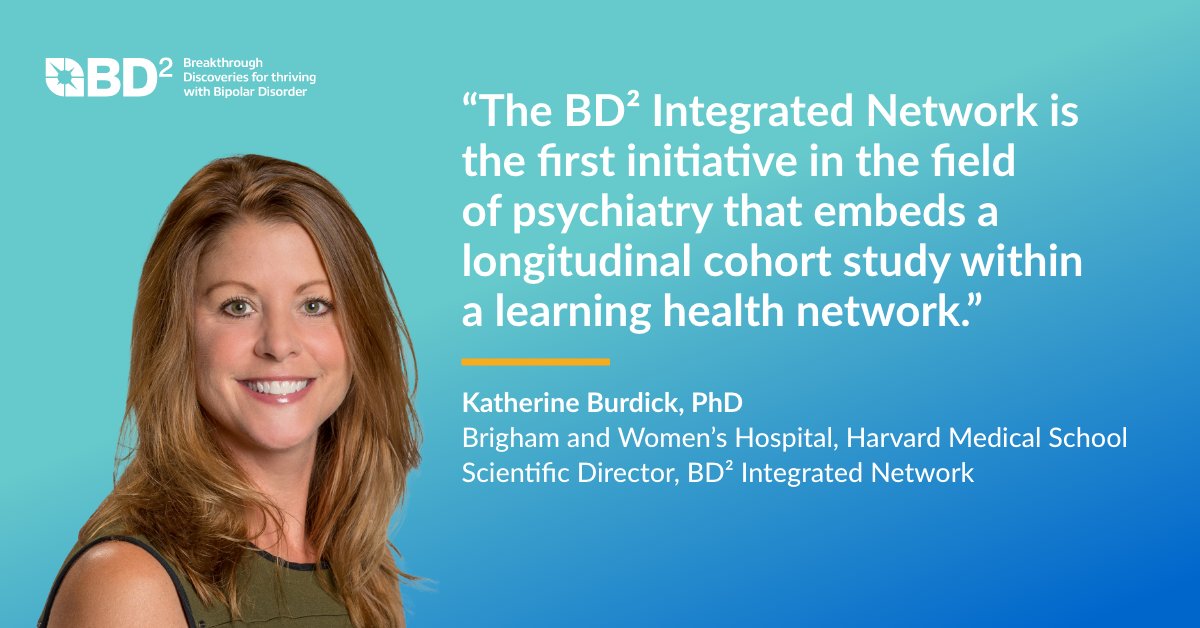
BD²'s Scientific Steering Committee chair @KateBurdick2 shares the impact BD²'s Integrated Network will have on transforming our understanding of #bipolardisorder and accelerating the treatment and care of people living with #bipolar disorder.
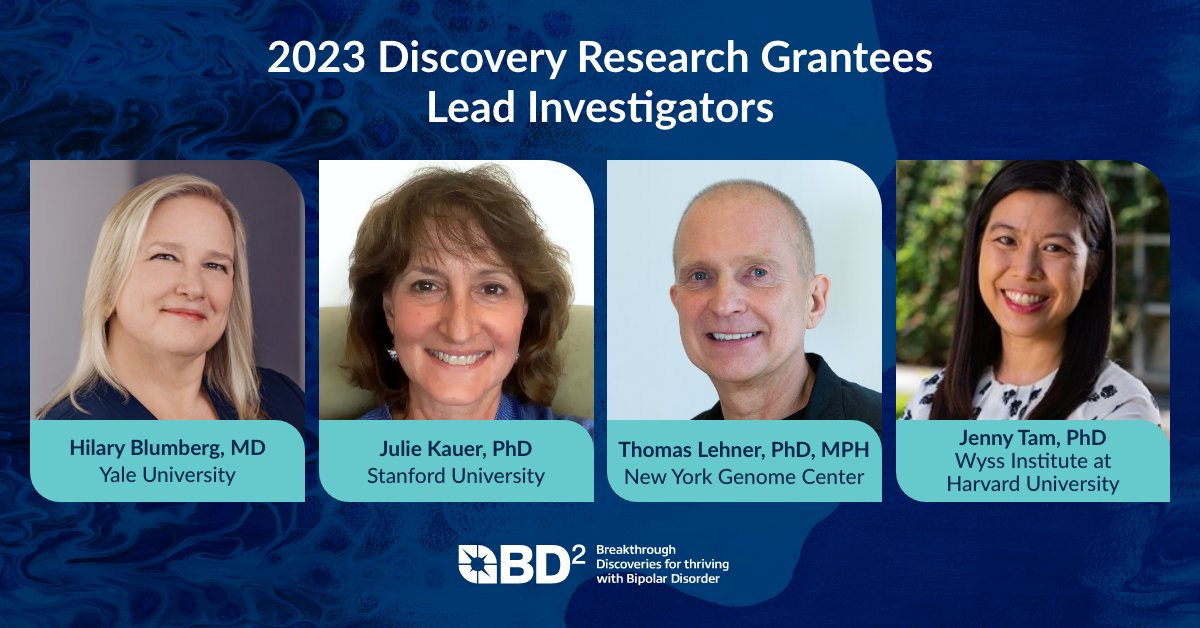
🚨$18M in funding awarded🚨
Congratulations to our 2023 Discovery Research grantees! Teams at @YalePsych, @StanfordMed, @nygenome, & @WyssInstitute will advance biological understanding of #bipolar disorder through research & collaboration. Learn more: https://t.co/cEhlPB99pl
Today at 2pm EST, BD²’s Managing Director @Dr_AltimusPrime will join the “Breaking Silos and Bridging Borders” panel hosted by @EU_Brain for Brain Health & Research Day at #UNGA78.
Make sure to register for the livestream: https://t.co/Vg28brPwFe
BD² is officially 1 year old and we've got a lot in store in the coming weeks! Sign up for our newsletter to be the first to know about updates on the forefront of #bipolar disorder research. https://t.co/32u3I4rEMM
#BipolarDisorder can be particularly difficult to diagnose and treat. Now, researchers are looking to genetics and neurobiology to better understand its underlying mechanisms and improve clinical outcomes, @MelissaSuran reports. #MedicalNews https://t.co/Ql9J13Ijpt
MI Philanthropy is #hiring! Are you interested in accelerating research on #bipolardisorder? We are looking for a driven biomedical, clinical scientist, or public health professional to lead project management and implementation for @BD2Discoveries.
https://t.co/tEazjkVoZC
#BipolarDisorder can be particularly difficult to diagnose and treat. Now, researchers are looking to genetics and neurobiology to better understand its underlying mechanisms and improve clinical outcomes, @MelissaSuran reports. https://t.co/TEWAfKyr7v #MedicalNews
JAMA featured BD2 and the great unmet need in bipolar research and care today - huge thank you to the JAMA team and all the BD2 champions.
https://t.co/lzGJb4z0ev
There are >40M people with #bipolardisorder. Our goal is to create interventions that allow them all to thrive. Our approach focuses on accelerating the translation of discoveries to improved clinical care.
See how the model works 👉 https://t.co/t6PLAQhu6Z
#WorldBipolarDay
The Brain- Omics program is our third program announcement focused on dedicated funding to use advanced technologies to study brain tissue. Multi-institutional partnerships are welcome!
BD²'s Brain Omics Platform will apply an unprecedented approach and leverage exciting advances in technology to enable omic investigations on individual types of cells in the brain. #openscience#neuroscience Learn more: https://t.co/YPfiHe1bTI
@dunn@janellison@DavidBaszucki@BD2Discoveries@KerryDolan Andy - thank you so much for all you have done to bring awareness and understanding to bipolar. We are so excited for all that this investment will do for the community
🚨Exciting news: I'm thrilled to announce the launch of @BD2Discoveries, a collective force transforming what we know about and how we treat #bipolardisorder. Visit our new website: https://t.co/V0wK7Qj99p
#openscience#neuroscience