🚨 Croatia is in. 🇭🇷
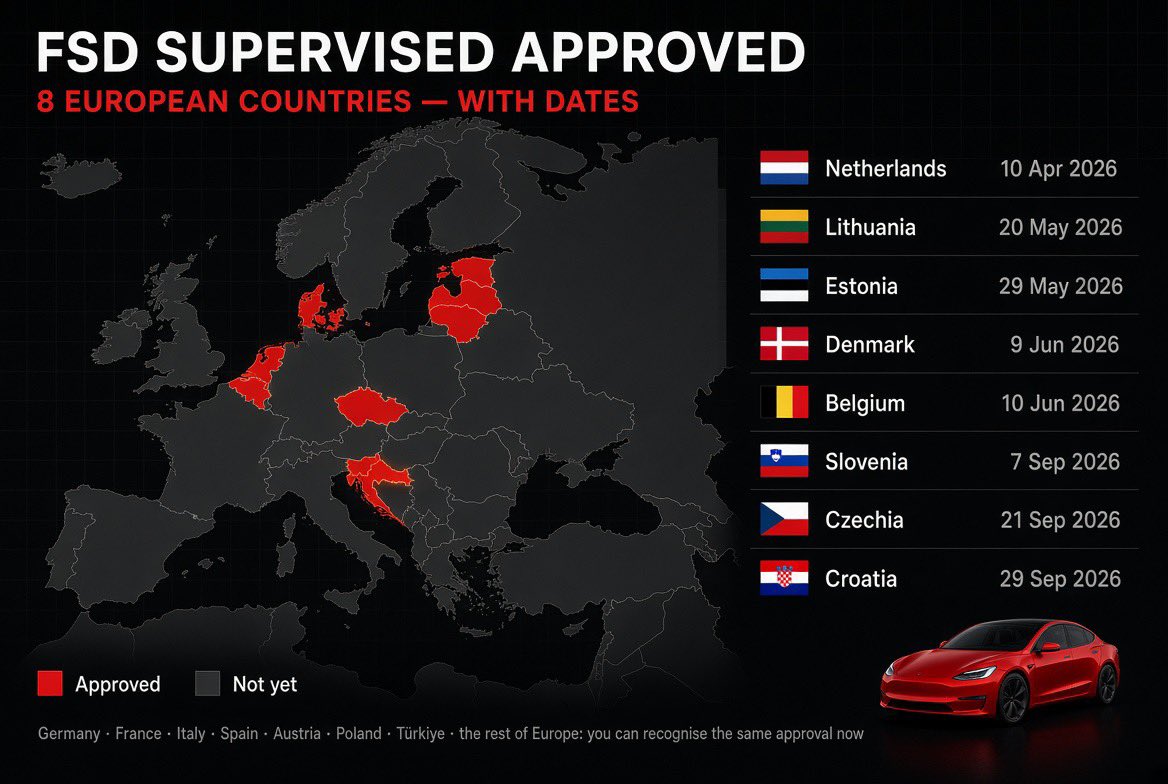
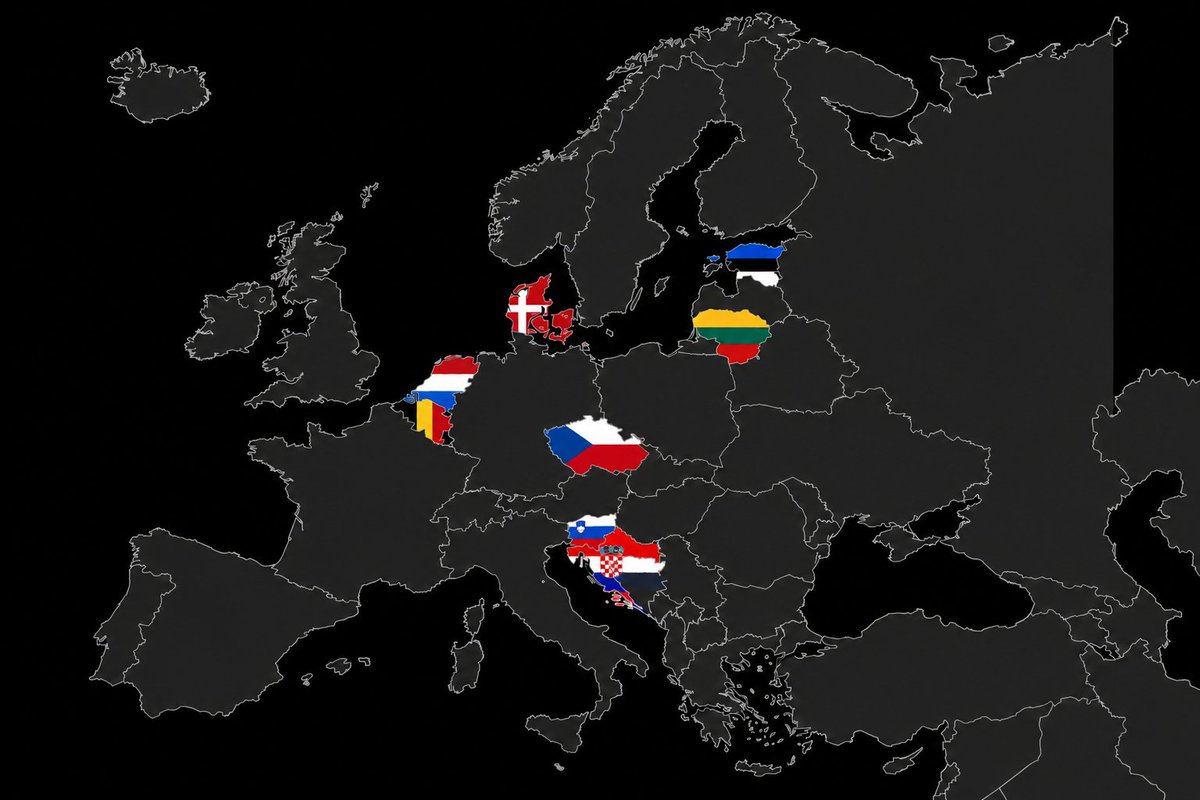
FSD Supervised is now approved in 8 European countries:
🇳🇱 Netherlands — 10 April
🇱🇹 Lithuania — 20 May
🇪🇪 Estonia — 29 May
🇩🇰 Denmark — 9 June
🇧🇪 Belgium — 10 June
🇸🇮 Slovenia — 7 September
🇨🇿 Czechia — 21 September
🇭🇷 Croatia — 29 September
Three countries in one month. Same Dutch RDW approval. Same software. Same safety case.
Germany, France, Italy, Spain, Austria, Poland, Sweden, Finland, Ireland, Portugal, Greece, Hungary, Slovakia, Romania, you do not have to wait for Brussels.
You can recognise the existing type approval now, the way these eight already did.
An EU-wide vote is not expected before December. Every month in between is another month of preventable crashes on European roads.
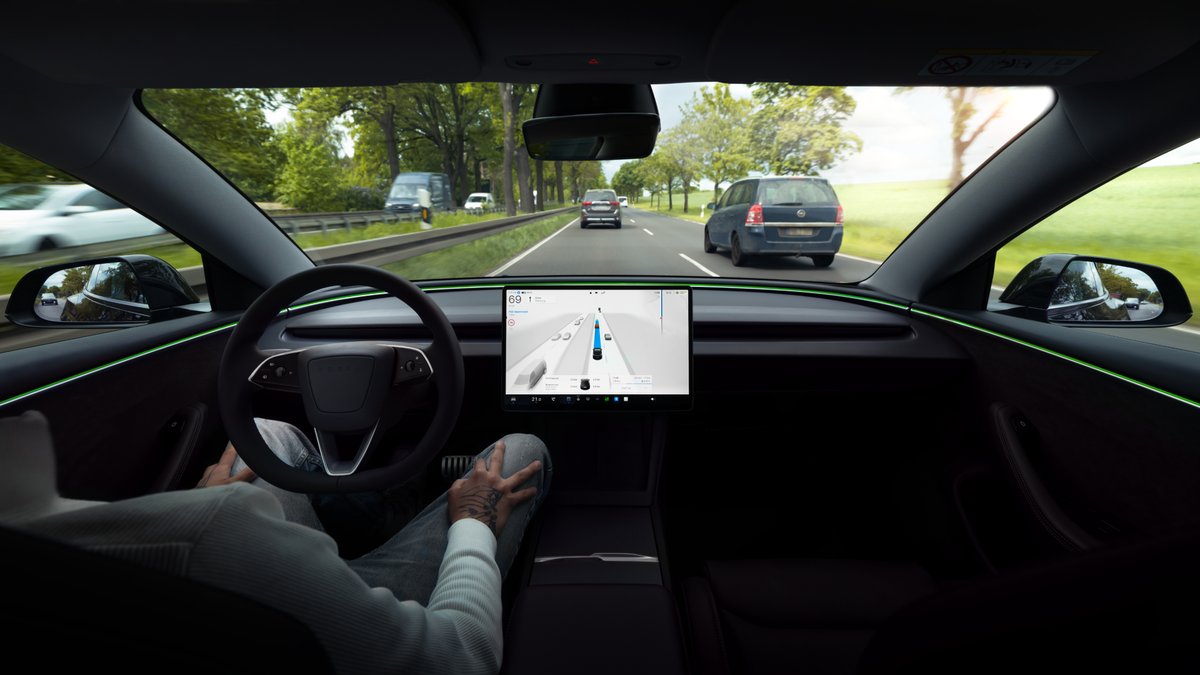
FSD Supervised is already on public roads in Europe. It does not become safer by staying locked behind a border.
Approve it. Let drivers use it. Let the data speak. 🇪🇺🇹🇷⚡️
@BMV @Minist_Transport @MIT_GOV @interiorgob @bmk @MI_GOV_PL@Trafikverket@TraficomFinland @Transport_Irl @governopt @yme_gov @kormany_hu@a_uraloglu, @UABakanligi, @KarayollariGM@teslaeurope
#FSD #Tesla #Europe #RoadSafety
Die einen zahlen 5% Gehaltserhöhung freiwillig, stellen Leute ein und bauen weitere Produktionen auf. Die anderen haben zwar Tarifverträge, müssen aber hunderttausende Stellen abbauen, Werke schließen und verkaufen zunehmen weniger Autos.
https://t.co/A4enwIO6uw
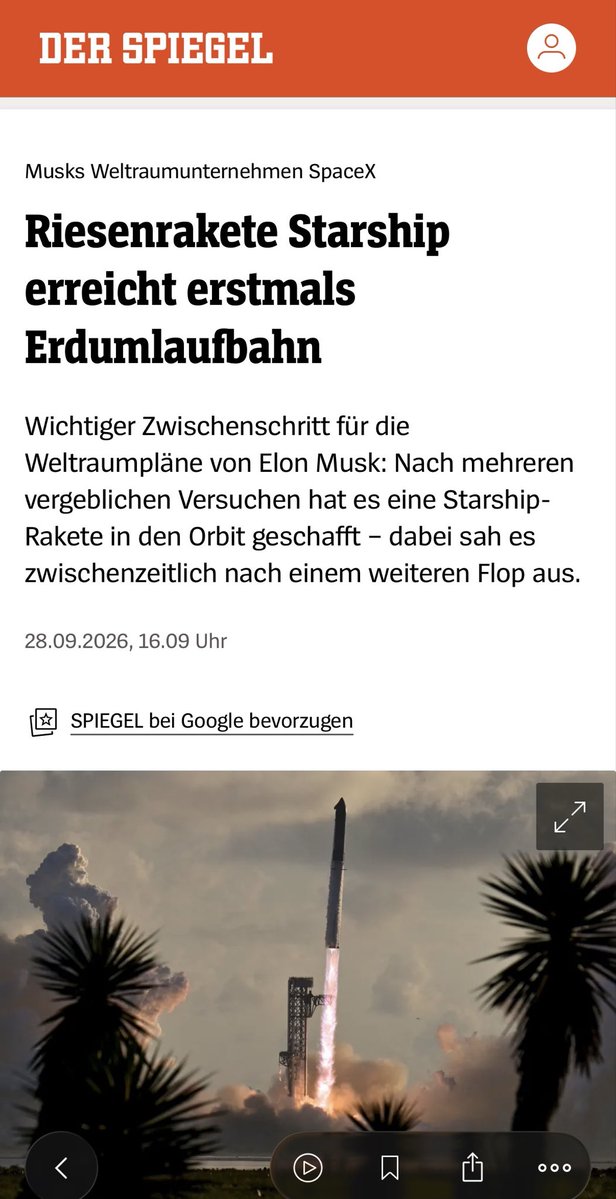
Das Starship hat gestern 26 Satelliten im Weltall ausgesetzt. Bei vollständiger Wiederverwendung aller Raketenstufen kann Elon Musk den Preis je Flug auf unter 10 Mio. USD drücken.
Zum Vergleich: Der Start einer NASA-Rakete mit über 100 Tonnen Nutzlast kostet derzeit etwa 2,5 Mrd. USD. 5 Starts der Ariane 6-Rakete, die nur 21 Tonnen ins All transportieren kann, kosten etwa 500 Mio. USD.
Im Klartext: Elon Musk hebt den Markt mit einer Kostenersparnis von über 98 % aus den Angeln. Privates Unternehmertum zeigt staatlichen Behörden was Effizienz bedeutet.
Die @derspiegel Redakteure haben Null Ahnung von der Materie und hauen ihren Unsinn ohne Prüfung raus.
Bei den bisherigen Startversuchen war ein Orbit nie geplant, weil ein unkontrollierbarer, 120 Tonnen schwerer Edelstahlkoloss eine ernste Gefahr darstellt, der für lange Zeit im All verweilt. Durch den bisherigen Suborbitbetrieb fällt Starship in kurzer Zeit immer wieder zur Erde zurück. Das ist eine Sicherungsmaßnahme.
Diesmal war sich SpaceX ihrer Sache so sicher, wie angekündigt, dass der Orbit durch die FAA genehmigt wurde. Das signalisiert den Reifegrad des Projektes.
Der einzige Unterschied zwischen diesem Flug und den vorherigen, ist ein 12 Sekunden lange Zündung eines der 6 Triebwerke, die Starship von einer Suborbit Umlaufbahn in den Orbit brachte. 12 Sekunden!
Sprich, dass hätten SpaceX schon immer so tun können, haben das bewusst rein aus Sicherheitsgründen nie getan und damit ist eben nicht so, wie es das unqualifizierte BS Geschwafel des Spiegel darstellen will.
Dazu wurden heute 20 Starlink Satelliten der neuesten Generation V3 abgesetzt, die so leistungsstark sind, dass man mit „nur“ 37 Starshipflügen mit je 60 Starlinksatelliten, die weltweite Internetkapazität abdecken könnte. Aber die „Qualitätsmedien“ haben ja, wie man hier sehen kann, niemanden mehr, der neutral und inhaltlich recherchieren kann.
Ich hatte den SpaceX Entwicklungsansatz mal erklärt, aber nimmt sich ja keiner der darüber schreibt zu Herzen, dabei ist es ja kostenlos.
FSD Supervised jetzt auch in Kroatien! 🇭🇷
Damit wächst die Liste in Europa weiter:
✅ 🇳🇱 Niederlande – 10.04.2026
✅ 🇱🇹 Litauen – 20.05.2026
✅ 🇪🇪 Estland – 29.05.2026
✅ 🇩🇰 Dänemark – 09.06.2026
✅ 🇧🇪 Belgien – 10.06.2026
✅ 🇸🇮 Slowenien – 07.09.2026
✅ 🇨🇿 Tschechien – 21.09.2026
✅ 🇭🇷 Kroatien – 29.09.2026 🆕
Von 1 auf 8 Länder in weniger als sechs Monaten. 🇪🇺
@teslaeurope More and more countries are adopting the temporary approval from the RDW in Netherlands.
🇳🇱 Netherlands - 10 April
🇱🇹 Lithuania - 20 May
🇪🇪 Estonia - 29 May
🇩🇰 Denmark - 9 June
🇧🇪 Belgium - 10 June
🇸🇮 Slovenia - 7 September
🇨🇿 Czech Republic - 21 September
🇭🇷 Croatia - Today
🇭🇷 Croatia is the 8th country regulating FSD Supervised!
As predicted, smaller 🇪🇺 European countries continue to approve "FSD Supervised," given that the EU-wide vote has been delayed and it remains unclear when it will take place.
Germany, France, Italy, and Spain are major nations with strong automotive industries and they have a vested interest in protecting that sector by stalling the vote. No one will admit it but they all know it.
The easiest path for them is simply to make no decision at all and they disregard the safety of the citizens which is a crime. Instead, they claim they need to test the system first, a stance that is frankly ridiculous given the data already provided by the RDW.
What insights could two test vehicles possibly yield that the RDW has not already obtained through years of extensive testing and its comprehensive dataset?
Accidents occur daily across Europe because regulators prefer inaction. This failure is reminiscent of the automotive industry’s delaying tactics regarding the introduction of seatbelts: a technology that undoubtedly saves lives every day has been deliberately held back for the sake of profit.
Lets keep the pressure because every EU country approving the system changes the calculation of those countries who delay it.
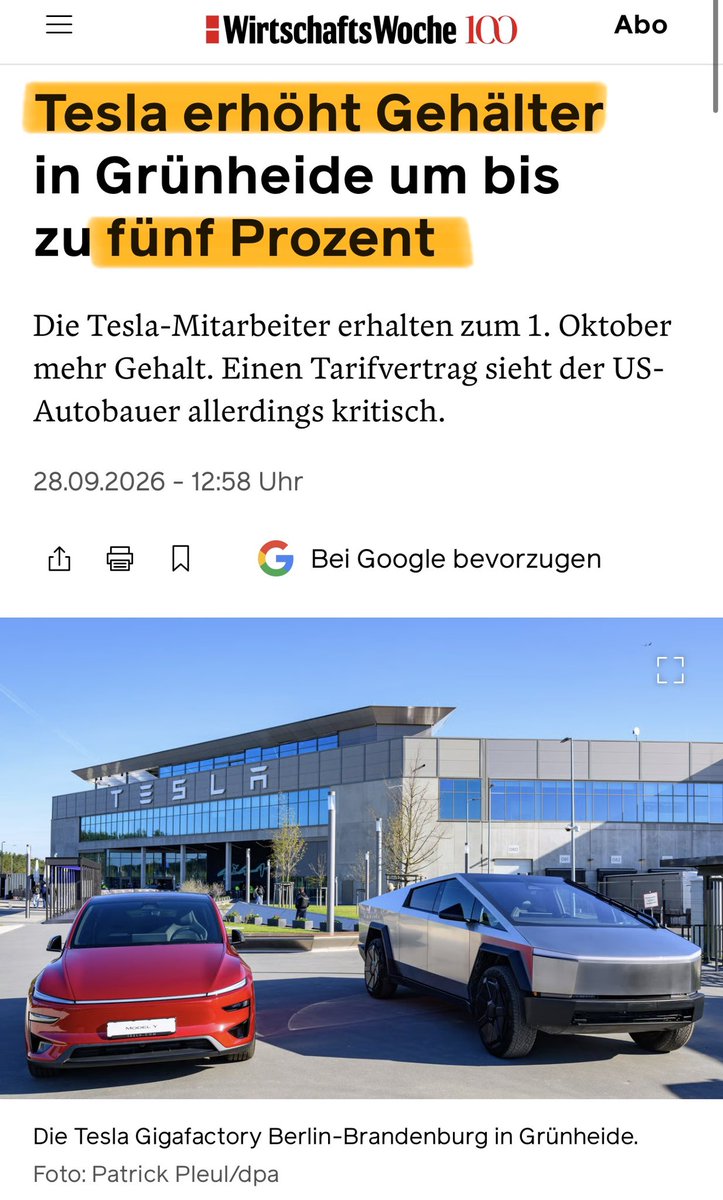
🚨Tesla erhöht die Gehälter in der Giga Berlin – ohne Gewerkschaft, ohne Tarifvertrag und ohne großes Tamtam. 🇩🇪
Ab dem 1. Oktober gibt es erneut mehr Geld:
✅ Produktion: +5 %
✅ Facharbeiter: +4 % + leistungsbezogener Bonus
✅ Einstiegsgehalt Produktion: rund 45.750 € pro Jahr
Und das ist kein Einzelfall: Laut Tesla wurden die Entgelte seit Produktionsstart 2022 jedes Jahr erhöht.
Ohne Tarifrunde. Ohne monatelanges Verhandeln. Einfach mehr Geld für die Mitarbeiter.
Call to action for Tesla owners and everyone who wants safer European roads
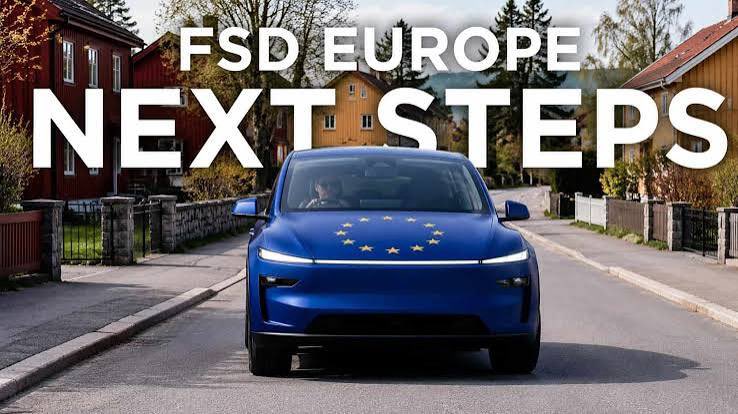
On 6 October 2026, the EU Technical Committee on Motor Vehicles (TCMV) is scheduled to meet again on the Dutch request to authorise Tesla FSD (Supervised) across the Union. Previous meetings discussed the file and then deferred a vote. That delay is no longer acceptable.
If you own a Tesla — or if you simply want fewer collisions on public roads — write to your country’s TCMV delegates and national type-approval authority now. Ask them for two things:
1. Put a formal vote on the 6 October agenda.
2. Vote yes.
FSD (Supervised) is not unsupervised robotaxis. It is an SAE Level 2 system: the driver must stay alert and remains legally responsible. The Netherlands’ RDW granted a provisional EU type approval after 18 months of track and public-road testing. Lithuania, Estonia, Denmark, Belgium, Slovenia and Czechia have already recognised that approval nationally. Seven member states have therefore already decided the technology can be used on their roads. An EU-wide decision still requires a qualified majority: at least 15 of 27 states representing 65% of the EU population.
Why the evidence supports a vote, not another postponement
Tesla’s published European evidence dashboard (customer driving in approved countries) reports 4.1× fewer collisions with FSD Supervised engaged than with manually driven Teslas that already have active safety features on — across more than 102 million km. On highways the reported improvement was larger; on other roads it was still clearly positive. Reuters independently checked the collision counts behind that European comparison.
The same pattern appears in other large fleets: fewer collisions per kilometre, fewer automatic emergency-braking events, and smoother driving metrics when the system is engaged under supervision. Human error still dominates European fatality statistics. Every extra quarter of committee delay is another quarter in which drivers who already paid for the hardware cannot use a tool that, on the available fleet data, reduces crash rates relative to the same cars driven by hand.
Regulators have legitimate questions — speed-limit behaviour, winter roads, urban cyclists, driver monitoring. Those questions belong in a vote with conditions, not in an endless loop of “continuation of discussions.” Article 39 of Regulation (EU) 2018/858 exists so that a novel system can be authorised after a member-state assessment, not so that the file sits on the agenda indefinitely.
European institutions cannot treat 2026 road safety as if it were still 2018. Society already lives with cameras, maps, over-the-air updates and supervised automation. Bureaucracy that cannot schedule a yes-or-no decision after months of presentations is falling behind the risk it claims to manage.
What to write (keep it short)
• Identify yourself as a constituent / Tesla owner / road-safety advocate.
• State that TCMV should vote on 6 October on the Netherlands’ Article 39 request.
• Ask your representative to support EU-wide authorisation of FSD (Supervised), with whatever monitoring conditions the committee considers necessary.
• Cite the Dutch testing period, the seven national recognitions, and the European collision-rate comparison.
Send the same message to your transport ministry and your national type-approval body (RDW equivalent: KBA, RAR, UTAC/ministry, Transportstyrelsen, Traficom, etc.).
Safer roads are not a slogan. They are a decision. Ask for that decision on 6 October.
@KRoelandschap@Scrin_Mais@NotAnFSDTracker@FSDWatcherDE @FSD_NL @tpgoebel@Tesla@teslaeurope@Tesla_AI
List of EU Member State representatives in the TCMV⬇️
Following the postponement of an 🇪🇺 EU-wide vote on whether to approve or reject “FSD Supervised,” I expect that more countries in particular smaller ones will move to regulate the system, since it is unclear whether a vote will even take place in December.
Every three-month delay is a win for all other automakers, as they know full well that they don’t have anything that even comes close to “FSD Supervised,” and won’t have anything like it in the coming years.
Why would anybody buy a BEV that doesn't have a system that drives itself and the promise to become fully autonomous in the future?!
Tesla and Elon will continue to discuss the topic with Transportation Ministries all over Europe and those who understand what is best for their citizens and want to reduce accidents will not hesitate and approve it.
Having said that some countries with strong automotive industries, such as 🇩🇪 Germany, will continue to put forward excuses and demands to delay the vote because by doing that, they can avoid a decision and keep the system in limbo.
The automotive lobby groups will spread fear, uncertainty and doubt and work overtime to delay and deny an EU-wide vote further. In a world where data and facts matter the system would have been approved long ago.
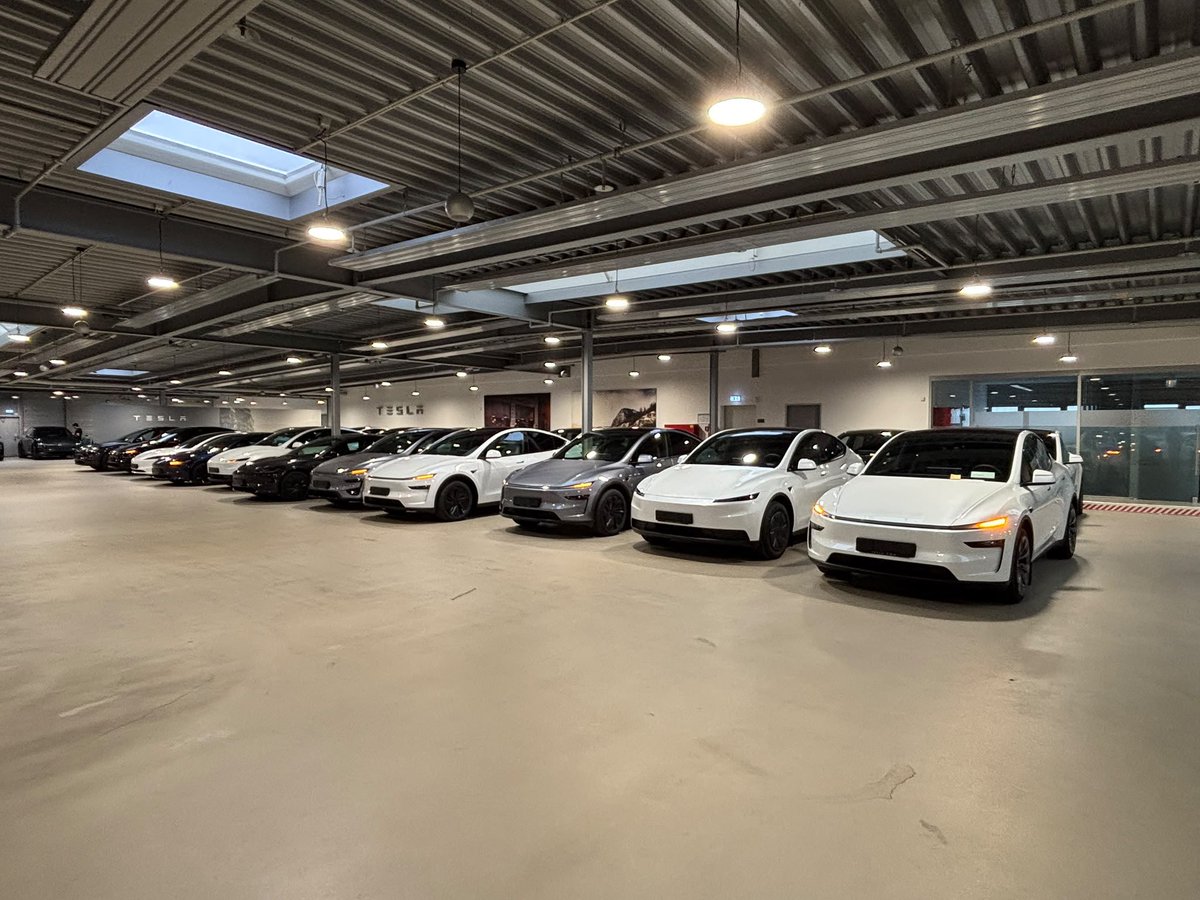
📍Viele Tesla Fahrer in Deutschland 🇩🇪 regen sich gerade darüber auf, dass sich ihre Tesla-Auslieferungen teilweise nach hinten verschieben.
Was man dabei aber kaum mitbekommt:
Die Auslieferungszentren fahren aktuell teilweise wirklich am Anschlag.
Ralf die Maschine aka @N628TS unterstützt morgen wieder bei den Auslieferungen und allein dort sind für einen einzigen Tag über 90 Fahrzeugübergaben geplant. 🤯
90 Autos.
An einem Tag.
An einem Standort.
!!!!!!!!!!!!!!!!
Und das Spannende: Sogar Mitglieder aus Tesla-Clubs unterstützen teilweise ehrenamtlich bei solchen Auslieferungstagen.
Nicht, um Tesla-Mitarbeiter zu ersetzen, sondern auch, um gerade den vielen Kunden, die zum ersten Mal einen Tesla kaufen, noch ein bisschen Erfahrung, Erklärung und Beratung mitzugeben.
Und jetzt schaut mal zu klassischen Autohäusern anderer Hersteller:
Bei vielen wäre es allein von der Struktur und den Abläufen kaum vorstellbar, 90 Neuwagen an einem Tag an Kunden zu übergeben.
Tesla hat diesen Prozess extrem auf Durchsatz getrimmt und trotzdem sind die Mengen aktuell offenbar so hoch, dass jede helfende Hand zählt.
Wenn man das mal im Hintergrund mitbekommt, versteht man auch besser, was bei Tesla gerade an Auslieferungsvolumen durchläuft.
It is so interesting that 'AI might kill us all' gets 1000000000x more views and attention than 'AI is helping cure cancer' and 'AI just made everyone far smarter'.
I guess the world will continue improving while everyone freaks out.
THE SAME AS IT HAS ALWAYS BEEN.
As usual, regulatory authorities keep delaying proven and working measures to reduce accidents, injuries, and fatalities on Europes roads out of ignorance, protectionism toward the domestic auto industry, and incompetence, without ever being held accountable.
Its a shame!
Die Bestellfristen für den VW ID.Polo gehen rauf bis auf 24 Monate. Einige meinen nun, dass würde Habecks Empfehlung an VW belegen, ein billiges Auto anzubieten.
Allerdings hatte Habeck als Preis dafür 20.000 Euro genannt. Der ID.Polo startet nackt bei 25 T€ und eine Wärmepumpe sollten sie mindestes einbauen, damit die Reichweite im Winter nicht zusammenbricht, dann sind es 25 T€.
Dafür bekommen Sie ein Auto mit 34 kWh Akku und 334 km WLTP-Reichweite: Autobahn können Sie damit weitgehend vergessen. Sinnvoll wird der VW für die Meisten erst mit dem 52 kWh Akku: Dann landen Sie mit Wärmepumpe und sonst nackt bei 35 T€ und 454 km Reichweite.
Für 2 T€ mehr bekommen Sie aber schon ein wesentlich besser ausgestattetes Tesla Model 3 mit 572 km Reichweite und Zugang zu den günstigen Supercharger-Ladesäulen.
Fazit aus meiner Sicht:
- Mit Habecks 20 T€ Idee hat ID.Polo nicht viel zu tun
- Der VW ist teuer: Da muss man VW-Fanboy/girl sein
Sinnvoll ist der ID.Polo für Einige vielleicht als kleines Stadtauto oder Kurzstrecken-Zweitwagen oder eben für die Elon-Hater, die können aber auch zu Hyundai, Kia, BYD oder Renault schauen.
1. We will keep accelerating. Our AI efforts are only 3 years old, vs 6 and 10 years old for Anthropic and OpenAI. If our second derivative remains strong, SpaceX will reach pole position in about 6 months.
2. Once you far exceed the caliber of intelligence needed for a class of tasks, additional intelligence is pointless. You don’t need (and it would be cruel to put) Newton-level intelligence in your toaster!
3. Hardware is hard. Bringing massive compute online rapidly is incredibly difficult. SpaceX has demonstrated exceptional ability in this regard and will only get better.