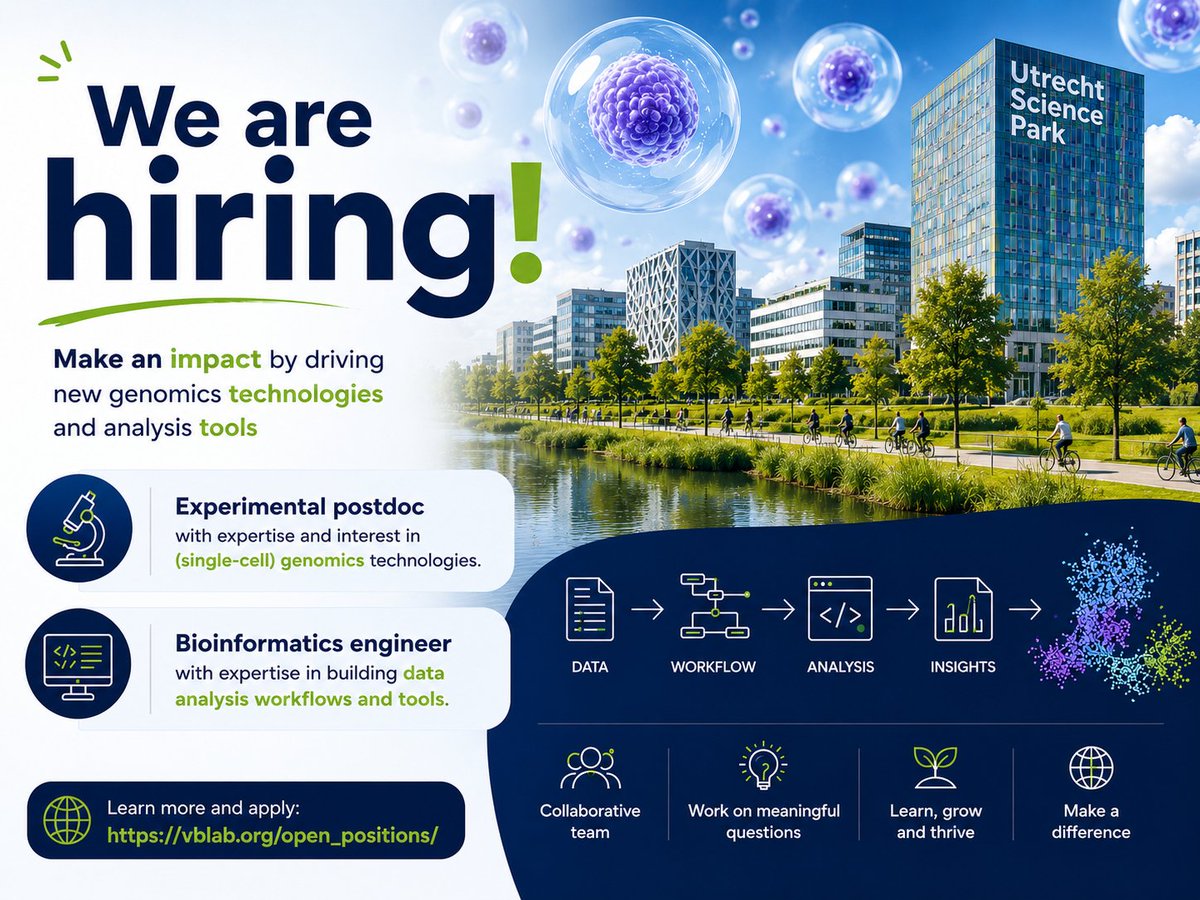
We are #hiring!
Come join us at Utrecht University (NL) and help centralize our ongoing #genomics efforts into a new core unit, embedded in our inter-divisional lab. We are looking for a #Postdoc in #molecular biology and a #Bioinformatics engineer. Please apply/forward.
We compared genomes at every level, from the nucleotide to the chromosome, and from the single gene or TE to the whole proteome. The findings were almost too many for a single publication... almost. 😇 https://t.co/j8YzsLGjWX
Prof Berend Snel gave the first keynote at the Utrecht Bioinformatics Center 10th annual symposium @ubc_utrecht, remembering his talk on the year of inauguration. Bioinformatics has moved forward in and out of Utrecht, but plenty of data-driven opportunities remain!
Of course, the Jaeger source code is completely open, we even made it available through BioConda and PyPi https://t.co/ST8dZLw9SK - we look forward to hearing your opinion about it! Many thanks to @LKaderali @BEDutilh @lingyi_owl@Piotr_Rozwalak@EHauptfeld
After three years of hard work, I’m thrilled to share the brainchild of my PhD project.
Jaeger: a deep learning tool for identifying bacteriophage sequences in metagenomes! 🧬🦠 Empowering exploration of the viral world with greater accuracy and insight.
https://t.co/xdsCOHvJKV
Jaeger: an accurate and fast deep-learning tool to detect bacteriophage sequences
- Jaeger is a new deep-learning tool that excels in detecting bacteriophage genome fragments with high accuracy, achieving sensitivity (0.87) and precision (0.92) in benchmarks against state-of-the-art methods.
- A significant innovation is Jaeger's speed—it's 20 times faster in CPU mode and up to 140 times faster with GPU acceleration, making it an ideal choice for large-scale virus detection tasks in metagenomic data.
- Jaeger applies a dilated Convolutional Neural Network (CNN) to directly recognize protein-level signatures from six-frame translated nucleotide sequences, outperforming traditional approaches.
- The tool also includes a reliability score system that alerts users when predictions might need human verification, improving decision-making for high-stakes virome studies.
- Jaeger was tested on over 16,000 metagenomic assemblies from the MGnify database, detecting over 5 million putative phage contigs across diverse environmental samples.
- Benchmark results highlight Jaeger's superior performance, particularly its ability to distinguish phages from non-phage sequences, including eukaryotic genomes.
@LKaderali @BEDutilh @SwapnilDoijad@Piotr_Rozwalak
💻Code: https://t.co/qwUICoZs6B
📜Paper: https://t.co/zSF5l9j9Jy
To learn about the latest views, disputes and future research directions on the origin of the eukaryotic cell, read our review in @Nature here:
https://t.co/49fPxj23QB
Non-paywalled version here: https://t.co/87oj4ajiwh
An unbroken thread links us to the first cells. But understanding our ancestry still requires studying the most impactful and mysterious evolutionary transition: the origin of the eukaryotic cell
Here we summarise current views in light of the latest advances. Exciting times!
Many novel Asgard genomes, cultivated Lokiarchaeia, new phylogenetic analyses: what insights do these and other recent studies provide into the enigmatic origin of eukaryotes? In this review in @Nature , we discuss the latest findings and open questions: https://t.co/LnGcoz50ot
Once more, it seems the #archaeal ancestor of eukaryotes was more complex than previously thought! 😀 (reminds me of the unicellular ancestor of animals). In this occasion, it is the use of de novo protein structure modeling & sensitive sequence similarity algorithms that helped identify hundreds of new ‘isomorphic’ eukaryotic signature proteins. Great idea! @koestlste@Ettema_lab @JvHooff @kassiani_panag@DanielTamarit @val_deanda @archaeal #Asgard #evolution
Due to their unique exploration challenges, the data from emerging #singlecell#epigenomics protocols can be difficult to work with. We present sincei, a toolkit for exploring sc(epi)genomics data directly from BAM files, using bash one-liners or #python https://t.co/rcYrZ6VZwA
Glad to have been part of this tremendous effort by @koestlste @JvHooff @Ettema_lab & others!
Read Stephan's thread to find out how he used protein structural predictions to discover 'isomorphic' eukaryotic signature proteins beyond what sequence similarity searches can find! 👇
Kick-off of the symposium to celebrate the PhD defense of @xin43617988@BinfUtrecht@_Westerdijk_ looking forward to reflect on her work of the last four years
Congrats @fabaiwu and all main authors! Glad to have been able to participate on this interesting project.
Make sure to read Fabai's thread for a nice summary of the main findings! 👇
Happy to share our work on the pan-mitogenome of Fusarium oxysporum. Pangenome graphs work great for large-scale comparison of mitogenomes! Frequent genetic exchange shapes the pan-mitogenome of the fungal plant pathogen Fusarium oxysporum https://t.co/VjyaP1qUzd
Asgardarchaeum abyssi helps validate the Asgardarchaeota phylum name in accordance with the @seq_code. We hope this brings stability to archaeal taxonomy by preserving this taxon name used in 500+ papers!
And indeed, more on this theme soon!
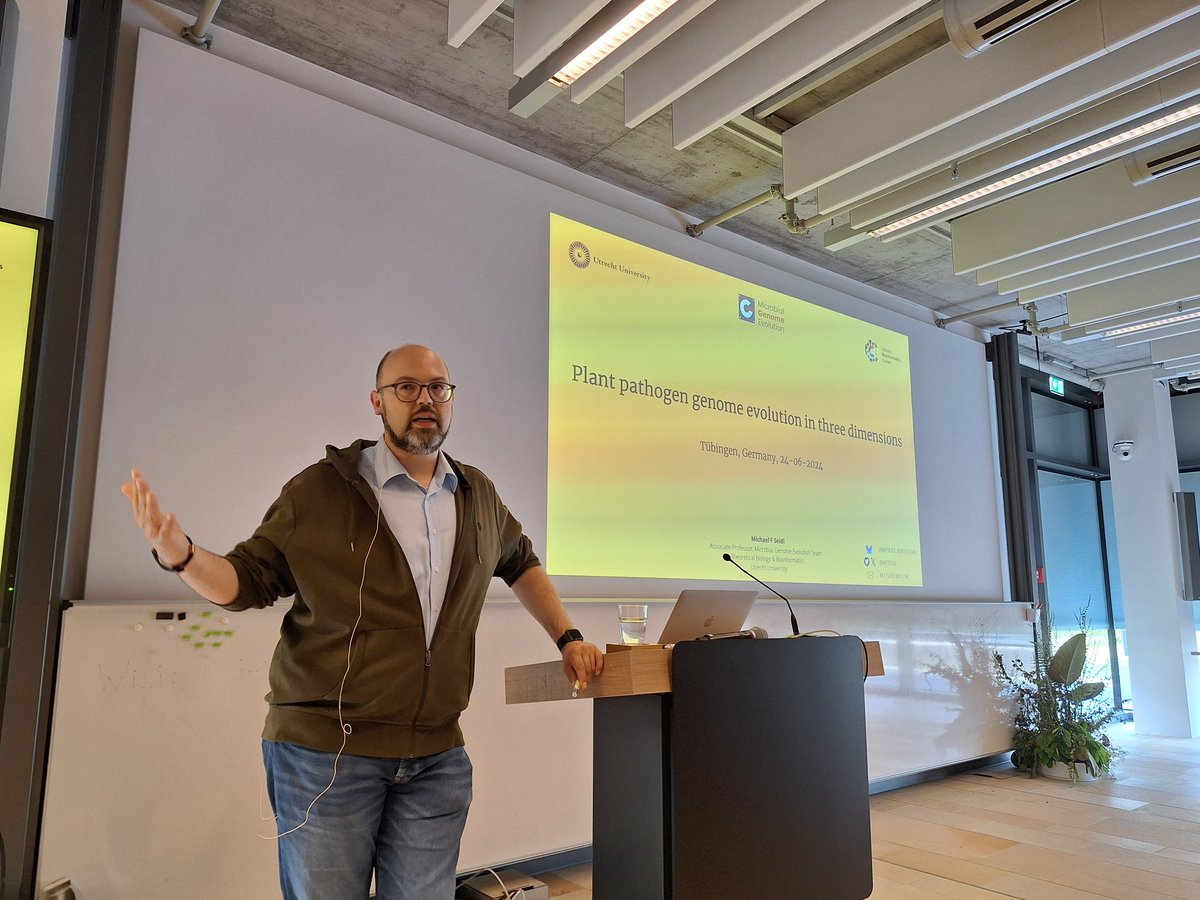
It is my great pleasure to host Michael Seidl @MFSeidl from @BinfUtrecht for our @MPI_Bio seminar series! Beautiful plant pathogen genomics from primary sequence analysis to the 3D organisation of the genome 🤩🧬
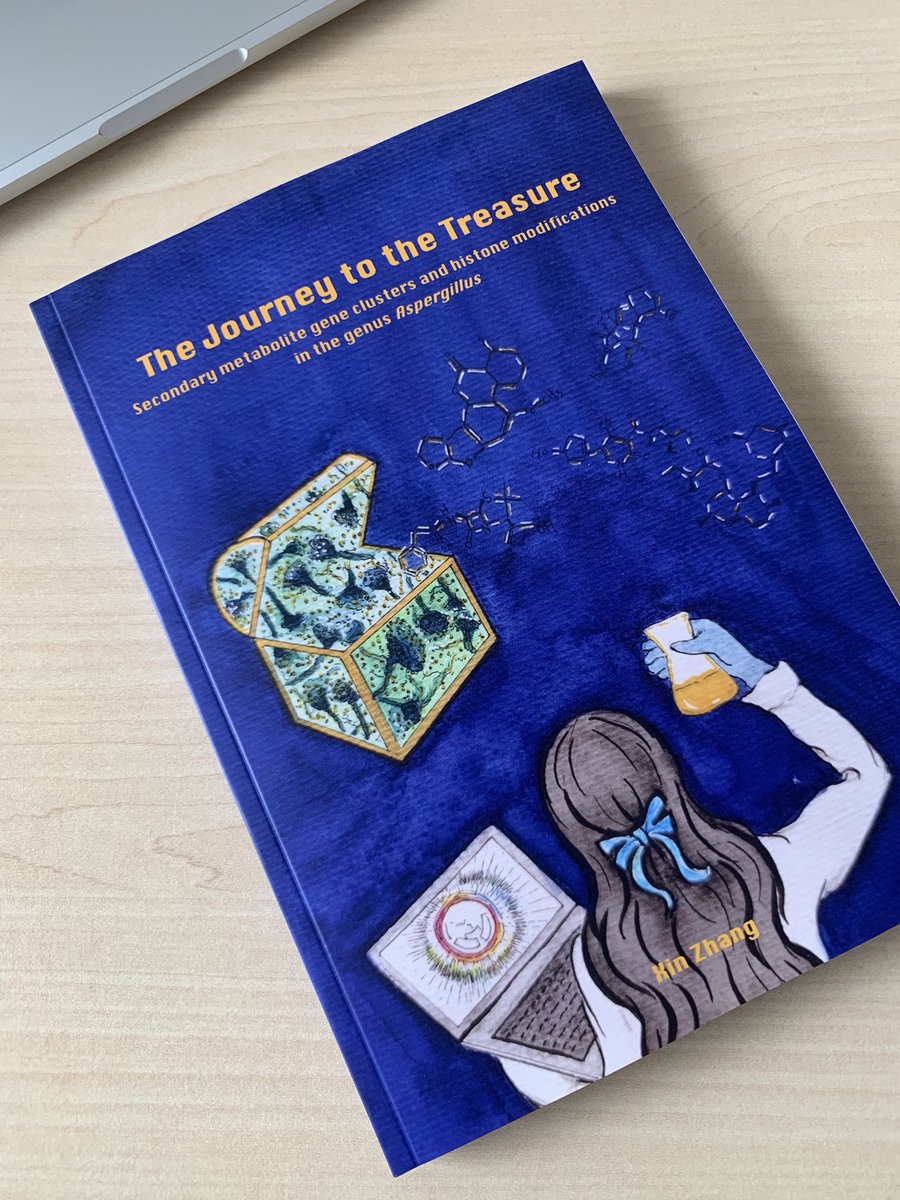
Always a very special day to receive the final product of a PhD trajectory. Congratulations @xin43617988 really looking forward to your defense! @BinfUtrecht@_Westerdijk_