Digital assets are for everyone.
Now security is too.
Free regulated, insured custody, available to every investor.
Sign up today: https://t.co/bwECwM3so2
About 6 million BTC has a public key visible onchain, and a visible public key is what leaves a coin exposed to a future quantum attack.
Roughly 3.7 million of that BTC can still be moved by its owners. That window gives holders time to act before Q-Day arrives.
BitGo’s new quantum-risk tools for BTC wallets include a Quantum Risk Score, a Fix Exposed Addresses workflow, and safer default address settings.
Learn how institutions can reduce exposure ahead of time:
https://t.co/S1T8qb4iaC
Picture a grocery store that restocks itself. An AI agent watches inventory, places the order, and pays for it, all without a human touching the process.
Kris Gower of Circle walks through what that looks like once stablecoins become the currency AI agents use to transact on their own, using USDC as his example. He takes it a step further with a manufacturing scenario that’s almost entirely mechanical, start to finish, down to the payment itself.
New Episode of From the Vault: The BitGo Podcast 🎙️
What does it actually take to run a global markets business for digital assets? Spot trading, derivatives, financing, asset management, and research, all under one roof.
@GregCipolaro, BitGo’s Head of Research, and Pete Janney, Head of Global Markets, talk through how those pieces fit together, market volatility, bitcoin as collateral, and more.
Happy Friday ☀️ Your Digital Asset Report is in!
Bitcoin touched $62,000 this week before falling below 60,000 on Friday. It did bounce briefly alongside Anthropic’s record-breaking IPO, which briefly pushed the company’s valuation above $2 trillion. Strategy had a rough stretch too, with shares falling to $93 as the company kept buying through the dip.
Also, a new survey showing 21% of Gen Z now owns crypto, Russia easing restrictions on retail Bitcoin trading, and the World Bank exploring stablecoin infrastructure with Citi and Circle.
Watch now. 👇
Clearer regulation is driving institutional interest in digital assets across Asia-Pacific, according to BitGo APAC Managing Director @angelaonchain.
Speaking with @Bloomberg at the Singapore Fintech Festival, she shared how BitGo is expanding in the region.
Watch the full interview. 👇
https://t.co/Z3mBdSgi1x
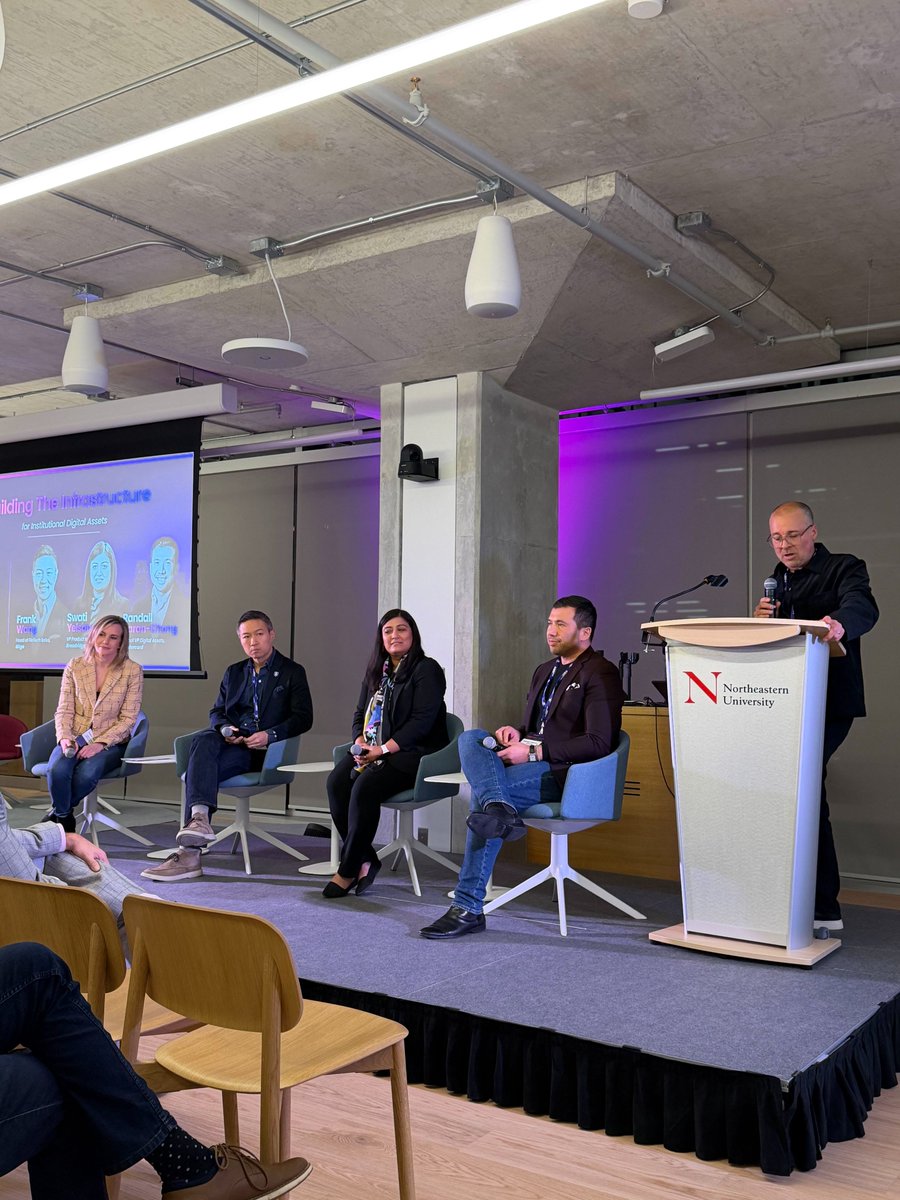
Frank Wang, BitGo’s Managing Director and Head of North America Fintech Sales, joined the “Building the Infrastructure for Institutional Digital Assets” panel at Tokenize North in Toronto 🍁
A great conversation on what it takes to bring institutions onchain.
Every crypto cycle ends roughly the same way: a blowup near the midterms, a bottom, then a climb back up. BitGo CEO @mikebelshe has lived through three of them.
At Cantor Convergence in Miami Beach, he told @CNBC why he thinks this cycle is tracking the same pattern, in a conversation that also brought in Cathie Wood of ARK Invest and Yoni Assia of eToro on where Bitcoin goes once the dust settles.
Bitcoin held for spending, long-term savings and multigenerational wealth has different requirements.
As ownership becomes more institutional or long term, custody has to support stronger controls around authority, approvals and succession.
Our report with @BespokeGroupCO walks through how purpose should shape the custody model.
Read the report: https://t.co/jPPBxXUyKM
Keone Hon, co-founder of Monad, describes his project as keeping the old and rebuilding everything else. The old part is Ethereum’s interface for writing smart contracts. The rest got rebuilt from scratch.
He walks through parallel execution, the idea that modern computers use many threads at once, and why most blockchains have never actually taken advantage of that.
Global liquidity. Flexible execution.
BitGo Global Markets connects institutions to aggregated liquidity across exchanges, market markets, and OTC counterparties through our Global Liquidity Layer.
Execute trades electronically via REST, FIX, and Websocket APIs, request firm quotes with RFQ, or work directly with our OTC desk via voice and chat.
Different strategies call for different execution methods. Choose the approach that fits your order size, timing, and trading objectives.
Explore institutional execution through BitGo Global Markets: https://t.co/Dk1PP4LPsA
Access to the most advanced AI defense tools shouldn’t come down to who’s on a government list. That’s the argument @mikebelshe makes at DAS2026 Asia, talking about why export controls on frontier AI models put smaller, unlisted companies at a real disadvantage.
He argues the restriction could end up helping the wrong people more than it protects anyone, and explains why BitGo pushed back on it directly.
The Q3 13F filings are in, and institutions bought spot bitcoin ETFs while BTC climbed 43%.
Hedge funds, trusts, banks, brokerages and foundations all added exposure over the quarter.
13Fs are a snapshot as of 9/30 and do not reflect changes in positioning since. They do offer one data point on institutional participation during the quarter.
Our CISO Richard Reinders spoke on the Main Stage at NABS yesterday, joining a panel on “Exploit to Evidence: Securing Digital Assets, Pursuing Accountability.”
This chat looked at what happens after an exploit, from locking down digital assets to building the evidence that holds bad actors accountable.
Thanks to @NABSummit for having him.
Many custodians advertise cold storage, and for some of them it is a software wallet running in the cloud.
A key that lives on an internet-connected system can be exposed by a single breach, and everything behind that key goes with it.
BitGo stores keys offline in physical vaults, spread across geographically distributed facilities, with hardware security modules and 2-of-3 multi-signature controls. More than one approval is required before funds move.
That is real cold storage, and BitGo custody is now free for individuals.
Sign up today: https://t.co/jRfITxzlHX
Q3 13F filings just landed, and they offer a useful look at who is actually buying spot bitcoin ETFs.
Financial advisors account for the largest share of reported holdings, which means bitcoin exposure is being placed directly into client portfolios at scale.
Banks, trusts, and sovereign wealth funds hold smaller positions, but their presence in the filings would have been hard to imagine a few years ago.
Stablecoins had their moment. @keoneHD, co-founder of Monad, thinks the next wave looks different: tokenized equities, moving alongside stablecoins rather than replacing them.
He gets into why market access is only half the story, and what composability actually unlocks once equities start living onchain.